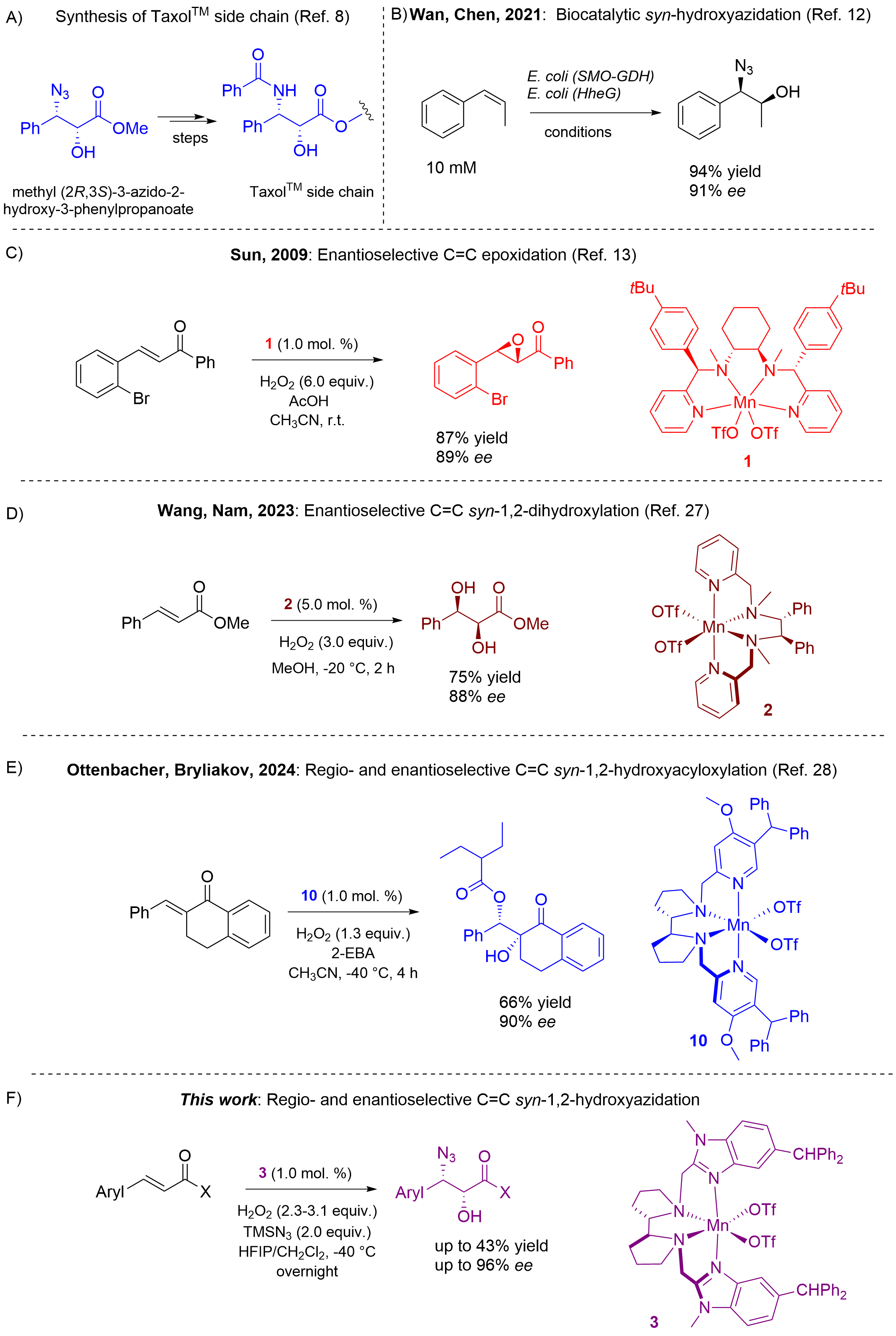
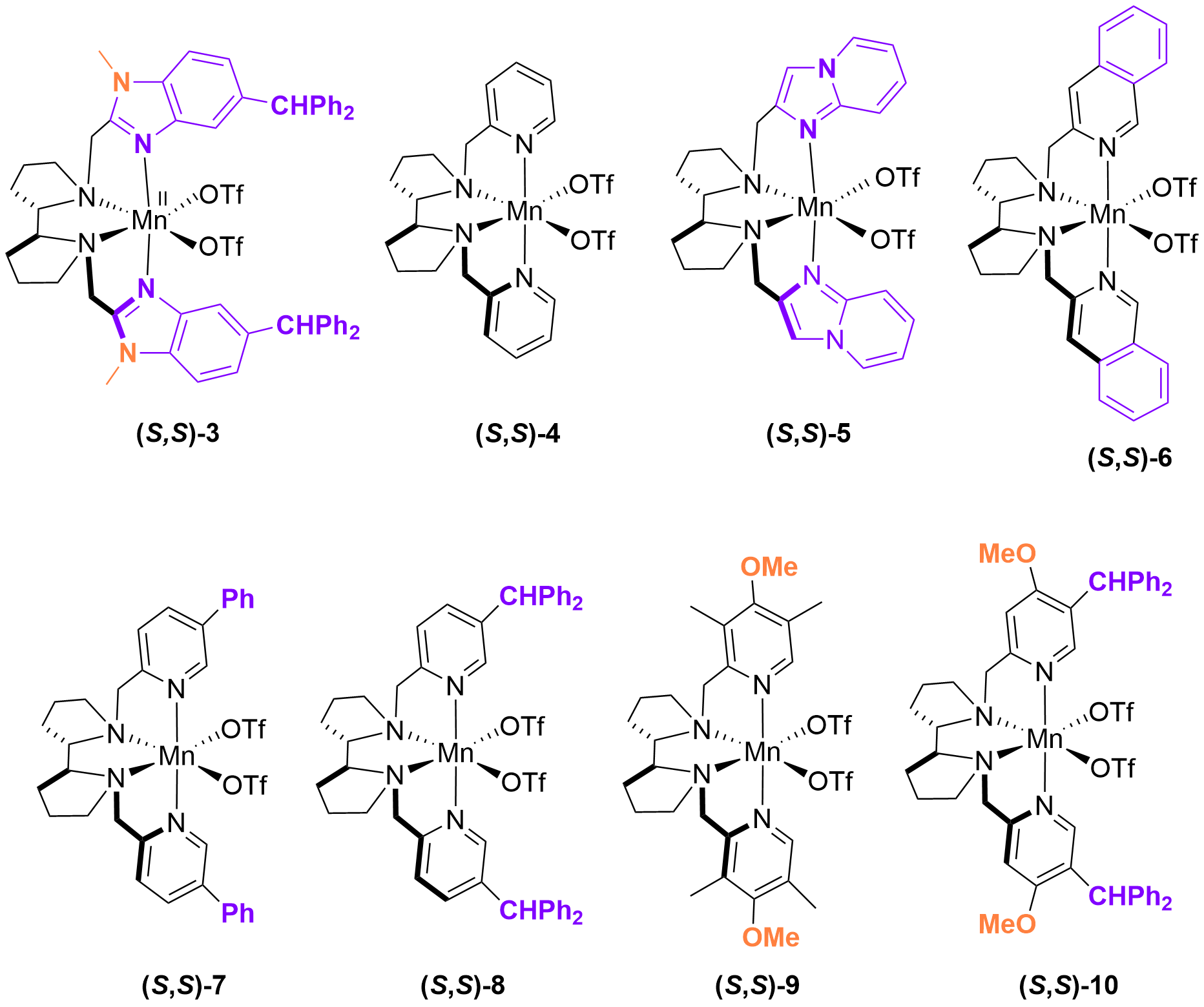
| [1] | J. Hamilton-Miller, W. Brumfitt, Infection, 1974, 2, 82-94. | | [2] | L. Sun, Y. Peng, W. Yu, Y. Zhang, L. Liang, C. Song, J. Hou, Y. Qiao, Q. Wang, J. Chen, M. Wu, D. Zhang, E. Li, Z. Han, Q. Zhao, X. Jin, B. Zhang, Z. Huang, J. Chai, J.-H. Wang, J. Chang, J. Med. Chem., 2020, 63, 8554-8566. | | [3] | K. Klumpp, V. Lévêque, S. Le Pogam, H. Ma, W.-R. Jiang, H. Kang, C. Granycome, M. Singer, C. Laxton, J. Q. Hang, K. Sarma, D. B. Smith, D. Heindl, C. J. Hobbs, J. H. Merrett, J. Symons, N. Cammack, J. A. Martin, R. Devos, I. Nájera, J. Biol. Chem., 2006, 281, 3793-3799. | | [4] | H. X. Ding, K. K. C. Liu, S. M. Sakya, A. C. Flick, C. J. O’Donnell, Bioorg. Med. Chem., 2013, 21, 2795-2825. | | [5] | M. Meldal, C. W. Tornøe, Chem. Rev., 2008, 108, 2952-3015. | | [6] | R. Li, D. J. Jansen, A. Datta, Org. Biomol. Chem., 2009, 7, 1921-1930. | | [7] | P. Thirumurugan, D. Matosiuk, K. Jozwiak, Chem. Rev., 2013, 113, 4905-4979. | | [8] | D.-M. Gou, Y. C. Liu, C. S. Chen, J. Org. Chem., 1993, 58, 1287-1289. | | [9] | L. Thijs, J. J. M. Porskamp, A. A. W. M. van Loon, M. P. W. Derks, R. W. Feenstra, J. Legters, B. Zwanenburg, Tetrahedron, 1990, 46, 2611-2622. | | [10] | H. Sugihara, K. Daikai, X.-L. Jin, H. Furuno, J. Inanaga, Tetrahedron Lett., 2002, 43, 2735-2739. | | [11] | M. Lanier, M. Le Blanc, R. Pastor, Tetrahedron, 1996, 52, 14631-14640. | | [12] | J.-F. Wu, N.-W. Wan, Y.-N. Li, Q.-P. Wang, B.-D. Cui, W.-Y. Han, Y.-Z. Chen, iScience, 2021, 24, 102883. | | [13] | M. Wu, B. Wang, S. Wang, C. Xia, W. Sun, Org. Lett., 2009, 11, 3622-3625. | | [14] | R. V. Ottenbacher, K. P. Bryliakov, E. P. Talsi, Adv. Synth. Catal., 2011, 353, 885-889. | | [15] | O. Y. Lyakin, R. V. Ottenbacher, K. P. Bryliakov, E. P. Talsi, ACS Catal., 2012, 2, 1196-1202. | | [16] | I. Garcia-Bosch, L. Gómez, A. Polo, X. Ribas, M. Costas, Adv. Synth. Catal., 2012, 354, 65-70. | | [17] | D. Shen, B. Qiu, D. Xu, C. Miao, C. Xia, W. Sun, Org. Lett., 2016, 18, 372-375. | | [18] | R. V. Ottenbacher, D. G. Samsonenko, E. P. Talsi, K. P. Bryliakov, ACS Catal., 2016, 6, 979-988. | | [19] | J. Du, C. Miao, C. Xia, Y.-M. Lee, W. Nam, W. Sun, ACS Catal., 2018, 8, 4528-4538. | | [20] | R. V. Ottenbacher, V. I. Kurganskiy, E. P. Talsi, K. P. Bryliakov, Adv. Synth. Catal., 2021, 363, 2778-2782. | | [21] | B. Wang, J. Lin, Q. Sun, C. Xia, W. Sun, ACS Catal., 2021, 11, 10964-10973. | | [22] | J. Tian, J. Lin, J. Zhang, C. Xia, W. Sun, Adv. Synth. Catal., 2022, 364, 593-600. | | [23] | A. G. Medvedev, D. A. Grishanov, A. A. Mikhaylov, A. V. Churakov, T. A. Tripol’skaya, R. V. Ottenbacher, K. P. Bryliakov, A. I. Shames, O. Lev, P. V. Prikhodchenko, Inorg. Chem., 2022, 61, 8193-8205. | | [24] | C. Miao, B. Wang, Y. Wang, C. Xia, Y.-M. Lee, W. Nam, W. Sun, J. Am. Chem. Soc., 2016, 138, 936-943. | | [25] | N. Choukairi Afailal, S.-C. Chan, M. Costas, Angew. Chem. Int. Ed., 2025, 64, e202504356. | | [26] | R. V. Ottenbacher, A. A. Bryliakova, V. I. Kurganskii, P. V. Prikhodchenko, A. G. Medvedev, K. P. Bryliakov, Chem. Eur. J., 2023, 29, e202302772. | | [27] | J. Chen, J. Zhang, Y. Sun, Y. Xu, Y. Yang, Y.-M. Lee, W. Ji, B. Wang, W. Nam, B. Wang, J. Am. Chem. Soc., 2023, 145, 27626-27638. | | [28] | V. A. Sherstyuk, R. V. Ottenbacher, E. P. Talsi, K. P. Bryliakov, ACS Catal., 2024, 14, 498-507. | | [29] | J. Chen, W. Song, Y.-M. Lee, W. Nam, B. Wang, Coord. Chem. Rev., 2023, 477, 214945. | | [30] | K. P. Bryliakov, Coord. Chem. Rev., 2024, 508, 215793. | | [31] | R. V. Ottenbacher, D. P. Lubov, D. G. Samsonenko, A. A. Nefedov, K. P. Bryliakov, J. Catal., 2024, 429, 115275. | | [32] | R. V. Ottenbacher, D. G. Samsonenko, A. A. Nefedov, E. P. Talsi, K. P. Bryliakov, J. Catal., 2021, 399, 224-229. | | [33] | R. V. Ottenbacher, D. G. Samsonenko, E. P. Talsi, K. P. Bryliakov, ACS Catal., 2014, 4, 1599-1606. | | [34] | R. V. Ottenbacher, D. G. Samsonenko, A. A. Nefedov, K. P. Bryliakov, J. Catal., 2022, 415, 12-18 | | [35] | V. I. Kurganskiy, R. V. Ottenbacher, M. V. Shashkov, E. P. Talsi, D. G. Samsonenko, K. P. Bryliakov, Org. Lett., 2022, 24, 8764-8768. | | [36] | The effect of azide source on the activation of bis-amino-bis-pyridylmethyl Mn complexes was scrutinized in Ref. [31]. Solid azide sources, such as NaN3, Bu4N3 were shown [31] to be poor additives, deteriorating the catalytic conversions and entailing the need for unacceptably high excess of H2O2 (6-10 equiv.). An additional drawback is the difficulties with maintaining reaction mixture homogeneity when using NaN3 or Bu4N3, which did not allow reducing the temperatures below -10…-20 °C. That is why solid azide sources were not used in this work. | | [37] | V. I. Kurganskiy, A. A. Bryliakova, A. G. Medvedev, M. V. Shashkov, K. P. Bryliakov, ACS Catal., 2025, 15, 14938-14954. | | [38] | R. V. Ottenbacher, D. G. Samsonenko, A. A. Bryliakova, A. A. Nefedov, K. P. Bryliakov, J. Catal., 2023, 425, 32-39. | | [39] | W. Sun, Q. Sun, Acc. Chem. Res., 2019, 52, 2370-2381. | | [40] | R. V. Ottenbacher, E. P. Talsi, K. P. Bryliakov, Chem. Rec., 2018, 18, 78-90. | | [41] | N. Choukairi Afailal, M. Borrell, M. Cianfanelli, M. Costas, J. Am. Chem. Soc., 2024, 146, 240-249. | | [42] | Log {(100+ee) /(100-ee)} plots vs. non-polar σp Hammett substituent parameters showed inferior correlations for both complexes. | | [43] | In the case of catalyst 10, the point corresponding to p-Me-substituted chalcone (the least electron-deficient substrate in the series) dropped out of the common trend;the reason for this discrepancy is not clear at the moment. | | [44] | Our preliminary data show that a similar deviation for p-Me substituted chalcone may be the case for Mn-catalyzed epoxidations of chalcones in the media of poly-β-fluorinated alcohols; this work is in progress. | | [45] | The term Log {(100+ee)/(100-ee)}, equivalent to Log (kmajor/kminor), is proportional to the ΔΔG≠ (where ΔΔG≠ is the free energy difference between the two diastereomeric transition states leading to two enantiomeric products): Log {(100+ee)/(100-ee)} = -ΔΔG≠/2.303RT, cf. Refs. [ 28] and [41]. | | [46] | A. A. Afon’kin, L. M. Kostrikin, A. E. Shumeiko, A. F. Popov, A. A. Matveev, V. N. Matvienko, A. F. Zabudkin, Russ. Chem. Bull., 2012, 61, 2149-2162. |
|

 )
)