
Chinese Journal of Catalysis ›› 2026, Vol. 91: 315-326.DOI: 10.1016/S1872-2067(26)65200-X
• Articles • Previous Articles Next Articles
Xuanrui Yang, Wenxuan Huang, Jianhua Shen*( ), Chunzhong Li*(), Yihua Zhu*()
Received:2025-12-09
Accepted:2026-02-21
Online:2026-12-18
Published:2026-10-13
Supported by:Xuanrui Yang, Wenxuan Huang, Jianhua Shen, Chunzhong Li, Yihua Zhu. Electrocatalysts based on oxygen vacancy-induced frustrated Lewis pairs for selective electrooxidation of ethylene glycol to formic acid[J]. Chinese Journal of Catalysis, 2026, 91: 315-326.
Add to citation manager EndNote|Ris|BibTeX
URL: https://www.cjcatal.com/EN/10.1016/S1872-2067(26)65200-X
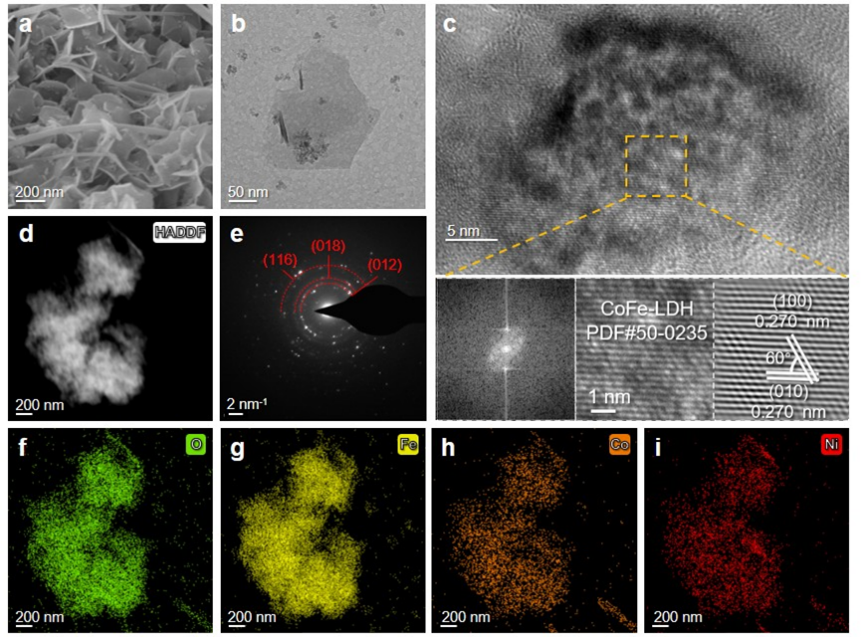
Fig. 1. Morphological and elemental characterization of CoNiFe-LDH/CoFoam. SEM image (a), TEM image (b), HRTEM image (c), HAADF-STEM image (d), SAED pattern (e), and elemental mapping images (f-i).
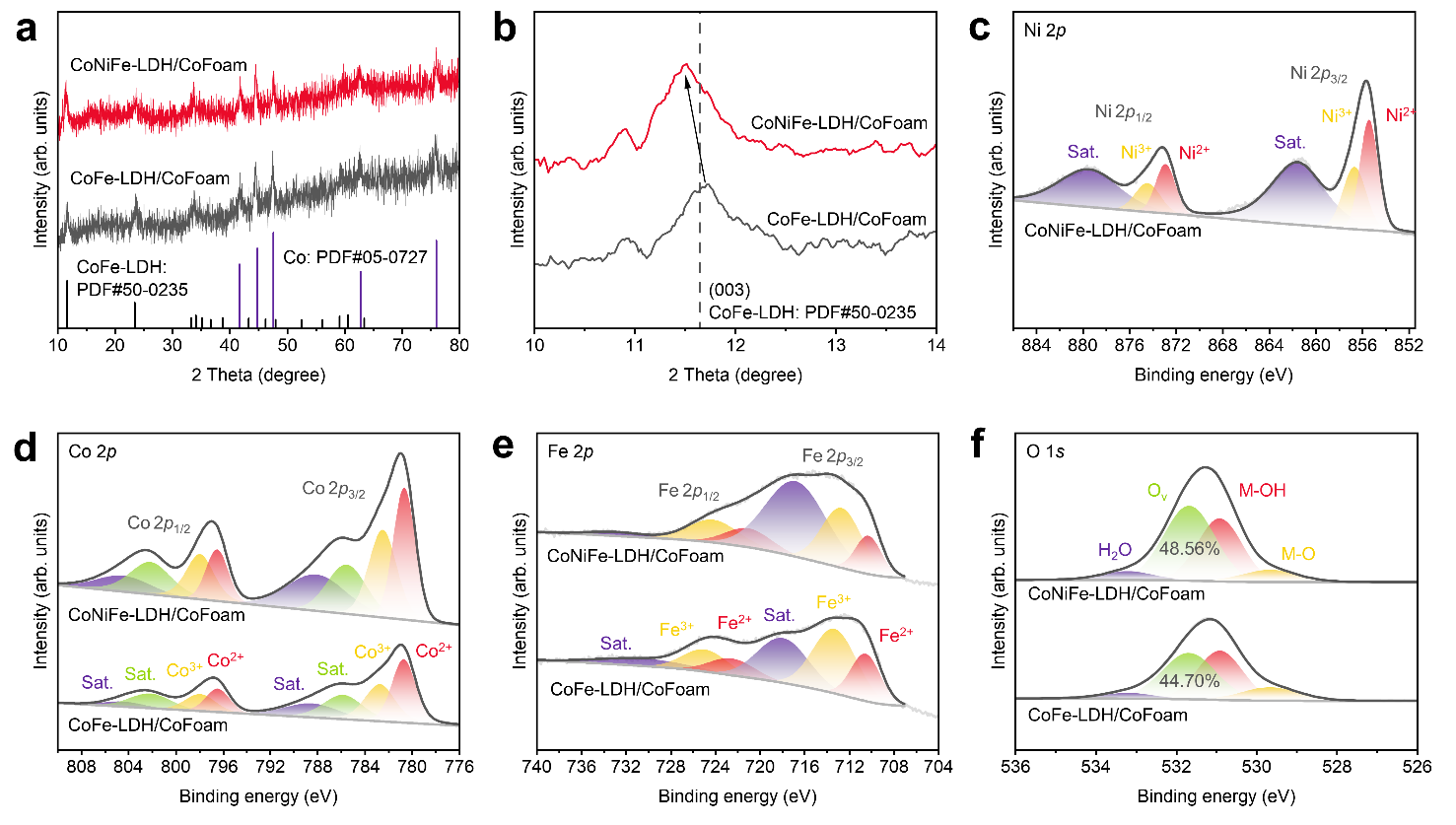
Fig. 2. XRD patterns (a) and smoothed XRD patterns (b) of CoFe-LDH/CoFoam and CoNiFe-LDH/CoFoam. High-resolution XPS spectra of Ni 2p (c), Co 2p (d), Fe 2p (e), and O 1s (f) for CoFe-LDH/CoFoam and CoNiFe-LDH/CoFoam.
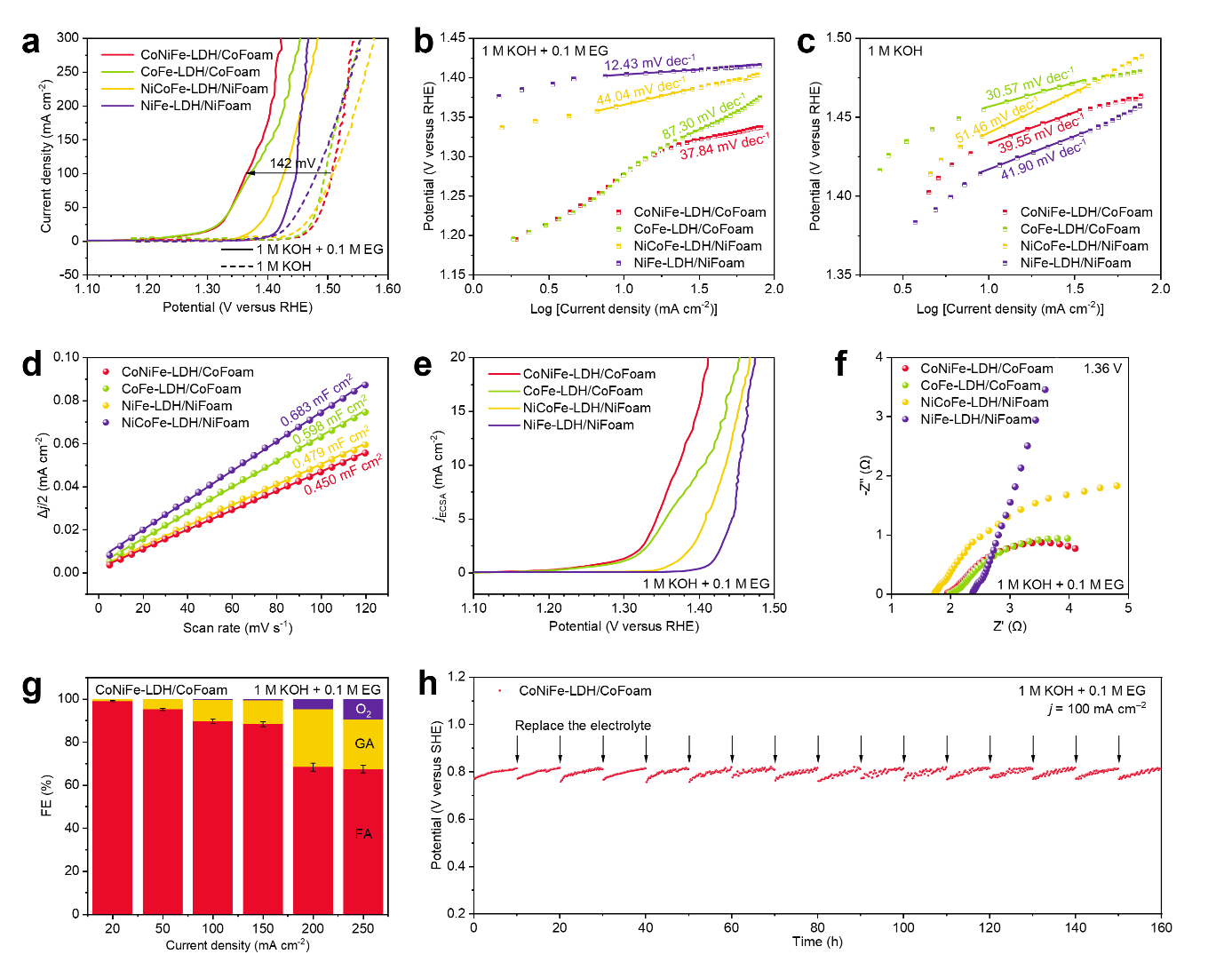
Fig. 3. Comprehensive electrocatalytic performance and analysis of different samples. (a) SCV polarization curves for EGOR and OER of each sample. (b) Tafel plots for EGOR. (c) Tafel plots for OER. (d) Cdl of each sample. (e) ECSA-normalized SCV curves for EGOR. (f) Nyquist plots at 1.36 V vs. RHE for all samples. (g) FE distribution of CoNiFe-LDH/CoFoam at different current densities. (h) Chronopotentiometric stability test of CoNiFe-LDH/CoFoam at 100 mA cm-2.
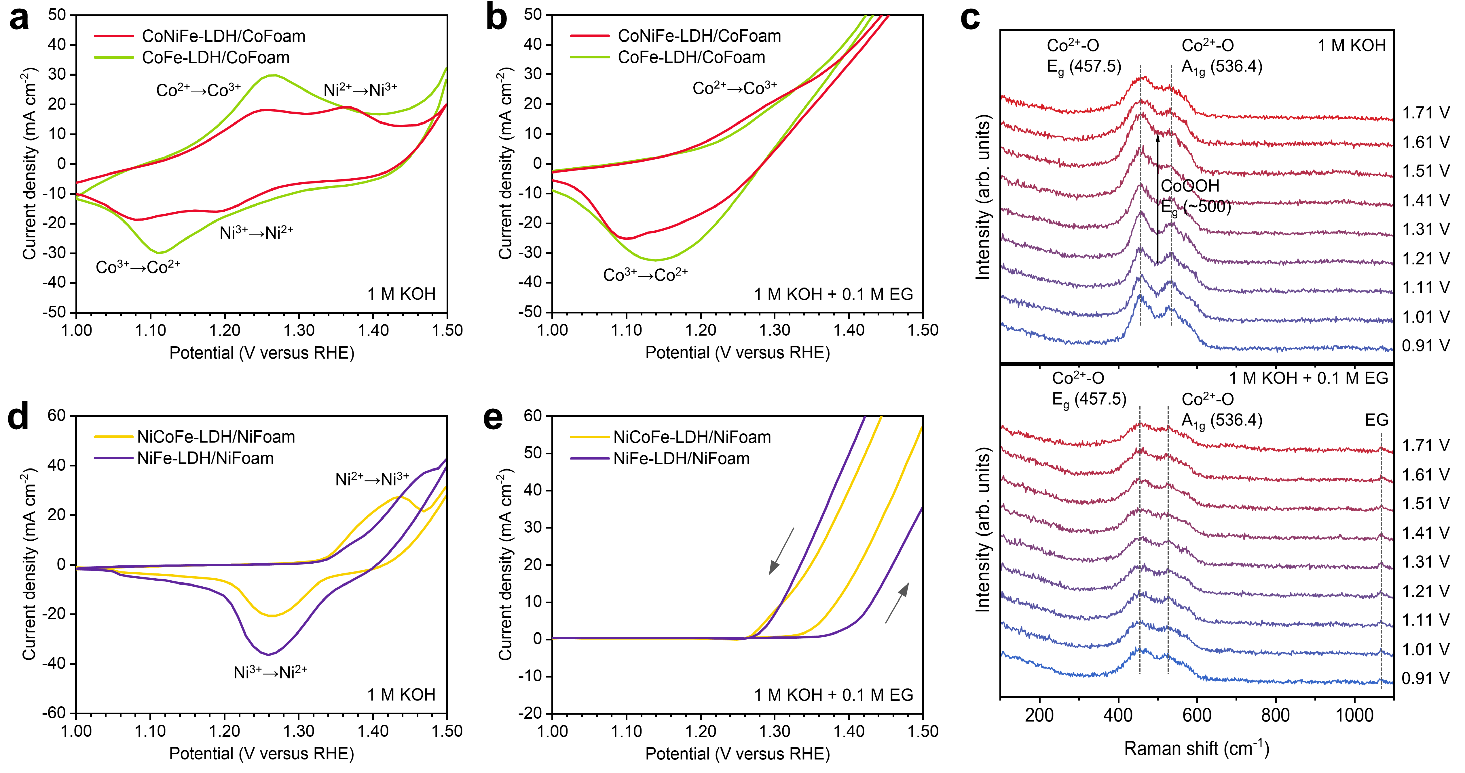
Fig. 4. (a,b) Forward and reverse LSV curves of the samples in OER system at a scan rate of 2 mV s-1 without iR compensation. (c) In-situ Raman spectra of CoNiFe-LDH/CoFoam in OER and EGOR systems. (d,e) Forward and reverse LSV curves of the samples in EGOR system at a scan rate of 2 mV s-1 without iR compensation.
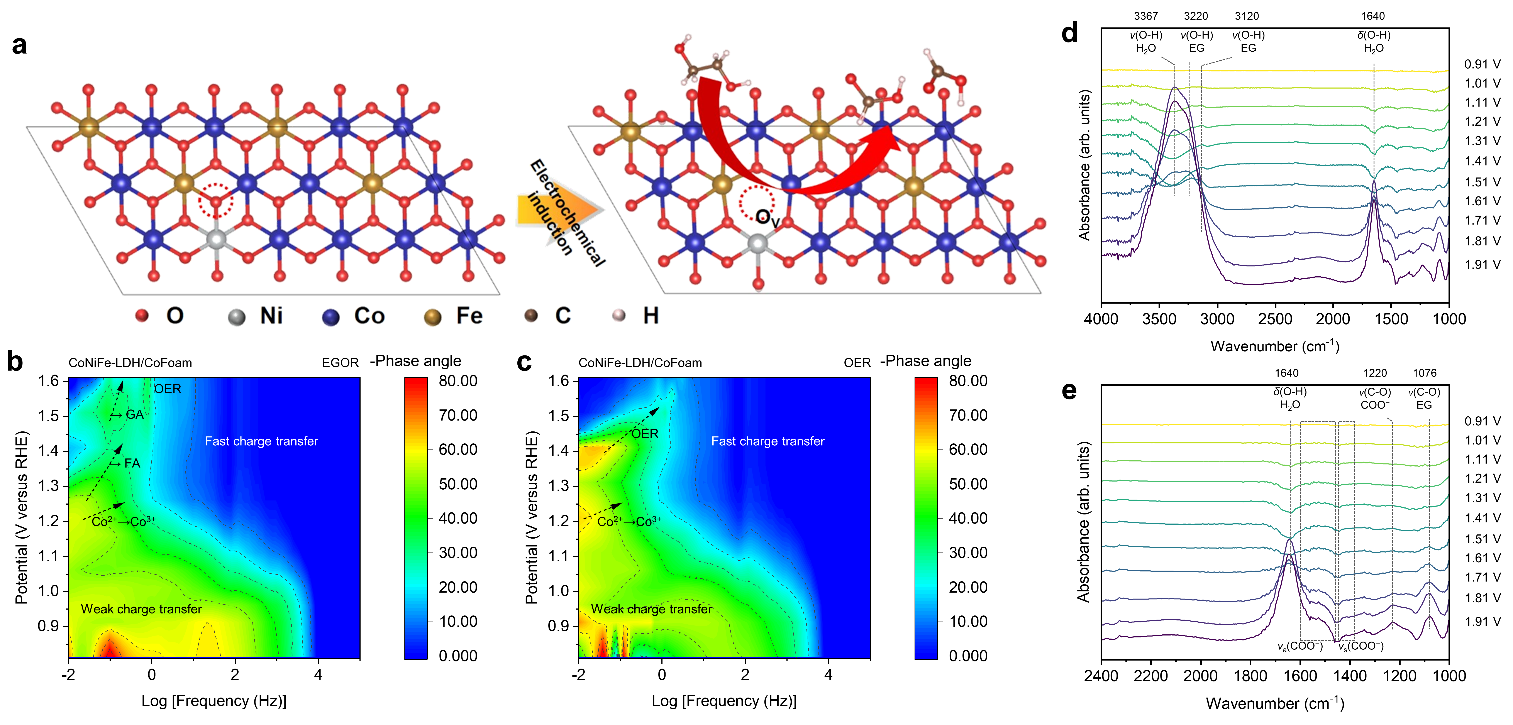
Fig. 5. (a) Schematic diagram of the activated process. Operando EIS of CoNiFe-LDH/CoFoam under EGOR (b) and OER (c) conditions. (d,e) In-situ ATR-SEIRAS spectra of CoNiFe-LDH/CoFoam during EGOR in 1 mol L-1 KOH + 0.1 mol L-1 EG.
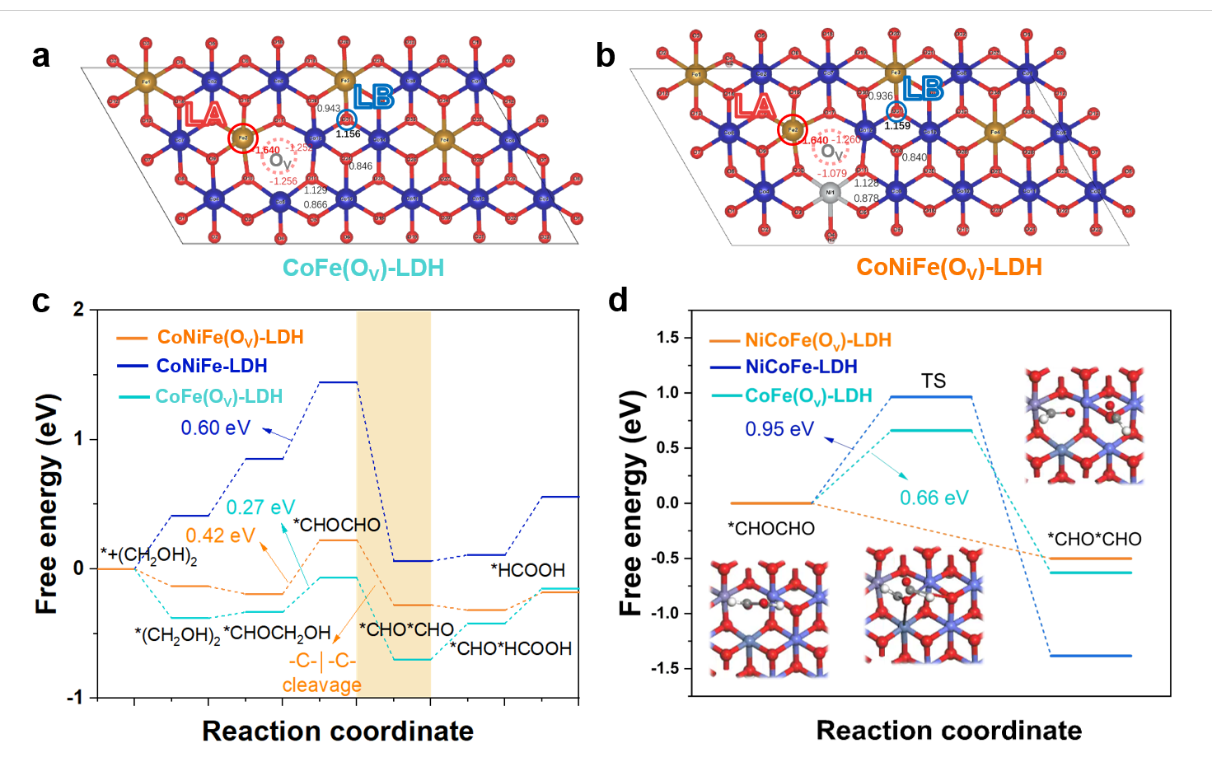
Fig. 6. Bader charge analysis of CoFe(Ov)-LDH (a) and CoNiFe(Ov)-LDH (b). (c) Gibbs free energy profile of the EGOR pathway. (d) The TS calculation of the C-C bond breaking process from *CHOCHO to *CHO*CHO on the surface of different catalysts.
|
| [1] | Qi Tang, Bomiao Wang, Chongtai Wang, DaoXiong Wu, Ziming Cheng, Huimin Han, Leiyun Han, Huaxia Chen, Yingjie Hua. The regulation of interface structure improves the performance of the MoxOy/Co3O4 electrocatalytic oxygen evolution reaction in acidic media [J]. Chinese Journal of Catalysis, 2026, 88(9): 295-306. |
| [2] | Yaowen Wei, Jianwei Wang, Hao Guo, Tao Ban, Yufeng Yue, Di Hu, Haibao Huang. Highly selective oxidation of methane to acetic acid enabled by deficient UiO-66 under mild conditions [J]. Chinese Journal of Catalysis, 2026, 88(9): 356-368. |
| [3] | Haoye Wang, Bingjie Qiu, Richard, Jr L. Smith, Xinhua Qi. Electrocatalytic nitrate reduction systems for chemical production: Mechanisms, process engineering and challenges [J]. Chinese Journal of Catalysis, 2026, 88(9): 129-182. |
| [4] | Jianping Zhang, Kun Zhang, Yinglong Weng, Nannan Li, Tingting Huang, Yitong Lu, Tingyu Sun, Xiaotong Han, Jieshan Qiu. Bioinspired acetate-mediated proton shuttling toward robust oxygen evolution [J]. Chinese Journal of Catalysis, 2026, 87(8): 282-294. |
| [5] | Wei Zuo, Mingyu Liu, Shengjun Sun, Yu Yang, Zixiao Li, Xixi Zhang, Chaoxin Yang, Hefeng Wang, Imran Shakir, Xuefei Liu, Qian Liu, Xuping Sun, Bo Tang. Synergistic chloride resistance via hydrogen‒bond network dynamic optimization and electrostatic repulsion for alkaline seawater oxidation [J]. Chinese Journal of Catalysis, 2026, 87(8): 295-304. |
| [6] | Zi-Hang Wang, Wei Zhong, Si-Qi Li, Bin Sun, Hao Lan, Xiao-Yu Zhang, Xin Wang, Yu Chen, Xuan Ai. The C-C bond cleavage inhibition and intermediates adsorption enhancement co-boost the selective electrooxidation of ethylene glycol on silver-palladium hollow nanocubes [J]. Chinese Journal of Catalysis, 2026, 86(7): 191-200. |
| [7] | Junyan Liu, Tao Shao, Xun Peng, Shengwei Liu. Ligand-defect synergistic catalyst for localized CO2 concentration enhancement in electrochemical reduction of low concentration CO2 [J]. Chinese Journal of Catalysis, 2026, 86(7): 265-276. |
| [8] | Chenyu Bu, Zhuoran Lu, Zhongcheng Xia, Yun Fan, Cairong Wang, Yutong Huang, Shuangyin Wang, Yuqin Zou. Interfacial two-site synergy for biomass electro-oxidation in a near-neutral electrolyte [J]. Chinese Journal of Catalysis, 2026, 86(7): 160-170. |
| [9] | Chao Wang, Kun Feng, Liangshuyu Tang, Wujun Zhang, Muyu Zhou, Jialu Li, Tianyu Shao, Flemming Besenbacher, Yanbin Shen, Jun Zhong, Ren Su. In-situ developed active sites of MOFs in aqueous electrocatalytic ammoxidation [J]. Chinese Journal of Catalysis, 2026, 86(7): 171-180. |
| [10] | Chen Cao, Shirui Cui, Feng Shi, Yanqin Li, Chunyang Zhao, Wei Hu, Zelong Li, Yu Tang. Lanthanum-mediated single-atom dispersion of Ir and Dynamic oxygen replenishment in acidic water oxidation [J]. Chinese Journal of Catalysis, 2026, 86(7): 236-243. |
| [11] | Yuxi Ren, Baorong Xu, Yu Jin, Hang Xiao, Ranran Niu, Wei Liu, Honghui Ou, Guidong Yang. Homojunction-driven d-band engineering in NiMoO4 for selective electrochemical nitrogen reduction to ammonia [J]. Chinese Journal of Catalysis, 2026, 85(6): 216-225. |
| [12] | Baolong Zhang, Bin Sun, Xingpeng Liu, Wenyu Liu, Shaonan Gu, Guowei Zhou. Defect-engineered S-scheme charge transfer in TiO2/Zn0.5Cd0.5S heterojunction for high-efficiency photocatalytic hydrogen evolution [J]. Chinese Journal of Catalysis, 2026, 84(5): 117-129. |
| [13] | Mingtao Chu, Huimin Zhang, Bianqing Ren, Jing Cao, Teng Zhang, Ping Song, Zizhun Wang, Ce Han, Weilin Xu. Amorphous-crystalline heterostructured RuMoNiN/Ni-MoO2 for highly efficient and stable alkaline hydrogen evolution reaction [J]. Chinese Journal of Catalysis, 2026, 84(5): 96-105. |
| [14] | Tao Wei, Zhanpeng Liang, Boxin Zhang, Yunhao Xu, Zhaoxue Sun, Minghao Duo, Minghui Chen, Sheng Zhang, Bao Zhang. Efficient electrocatalytic CO2 reduction by crystalline polymetallophthalocyanine covalent organic frameworks unprecedentedly constructed involving 4-dimethylaminopyridine (DMAP)-type nucleophilic catalyst [J]. Chinese Journal of Catalysis, 2026, 83(4): 319-329. |
| [15] | Runlin Ma, Xiandi Ma, Hejing Wang, Xu Zhang, Yongzheng Fang, Menggai Jiao, Zhen Zhou. Bifunctional electrocatalysis of hydrazine oxidation and hydrogen evolution reactions on 2D CoX (X = P, S, As, Se): Insights from DFT calculations [J]. Chinese Journal of Catalysis, 2026, 82(3): 115-124. |
| Viewed | ||||||
|
Full text |
|
|||||
|
Abstract |
|
|||||


