
Chinese Journal of Catalysis ›› 2027, Vol. 92: 428-441.DOI: 10.1016/S1872-2067(26)65238-2
• Articles • Previous Articles Next Articles
Haoran Weia,1, Wei Zhaob,1, Junlei Zhanga,*( ), Guojia Yua, Fang Yangd, Xiaobing Wange, Wuwan Xiongf, Shijie Lic,*()
Received:2026-05-25
Accepted:2026-07-10
Online:2027-01-02
Published:2026-10-30
Contact:
*E-mail: jlzhang2018@163.com (J. Zhang),About author:First author contact:1 Contributed equally to this work.
Supported by:Haoran Wei, Wei Zhao, Junlei Zhang, Guojia Yu, Fang Yang, Xiaobing Wang, Wuwan Xiong, Shijie Li. B→Co electron donation programs Lewis-basic sites in cobalt boride for selective inner-sphere peroxymonosulfate activation[J]. Chinese Journal of Catalysis, 2027, 92: 428-441.
Add to citation manager EndNote|Ris|BibTeX
URL: https://www.cjcatal.com/EN/10.1016/S1872-2067(26)65238-2
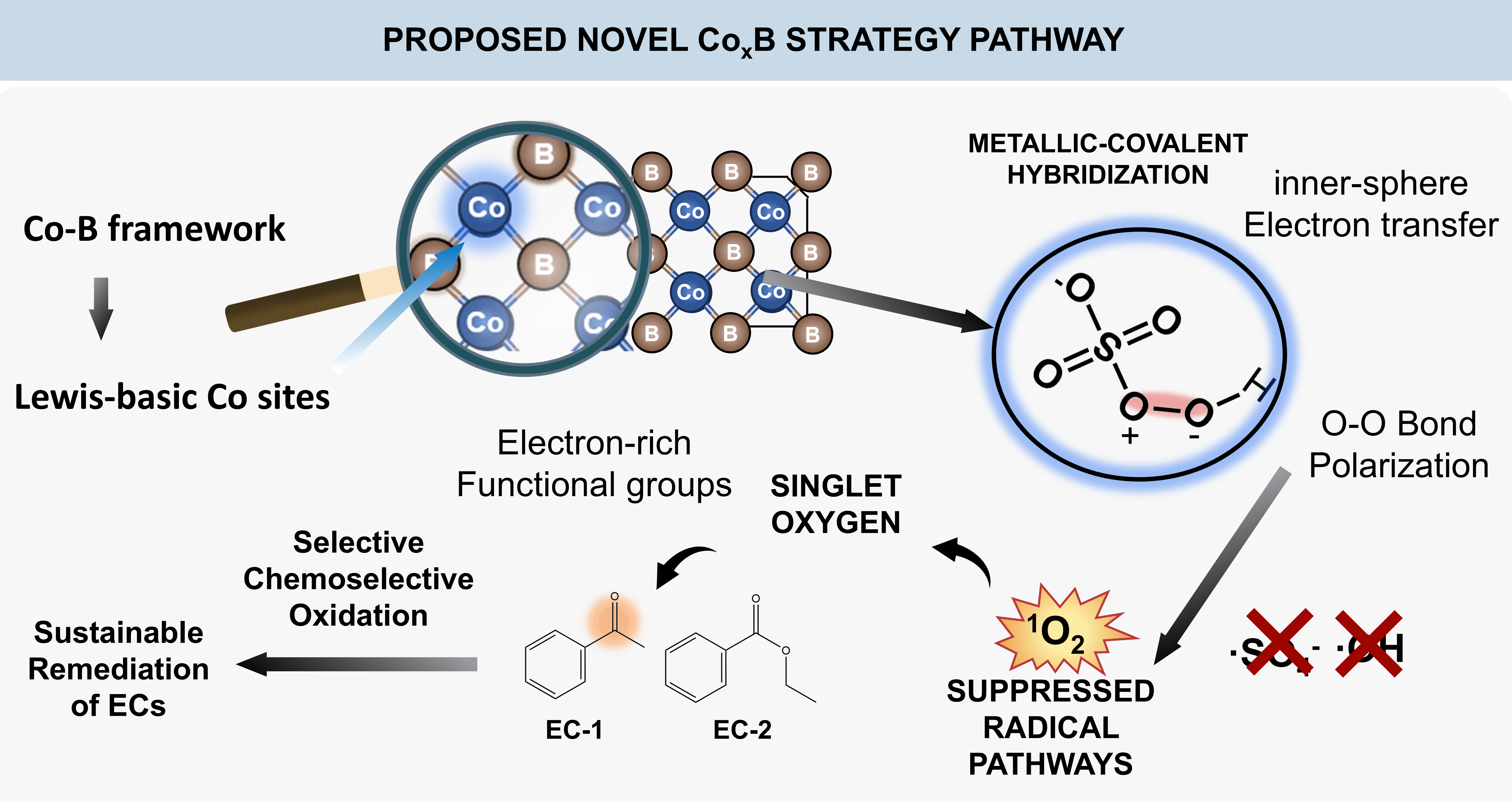
Scheme 1. Hypothesis for selective non-radical PMS activation on programmed CoxB.
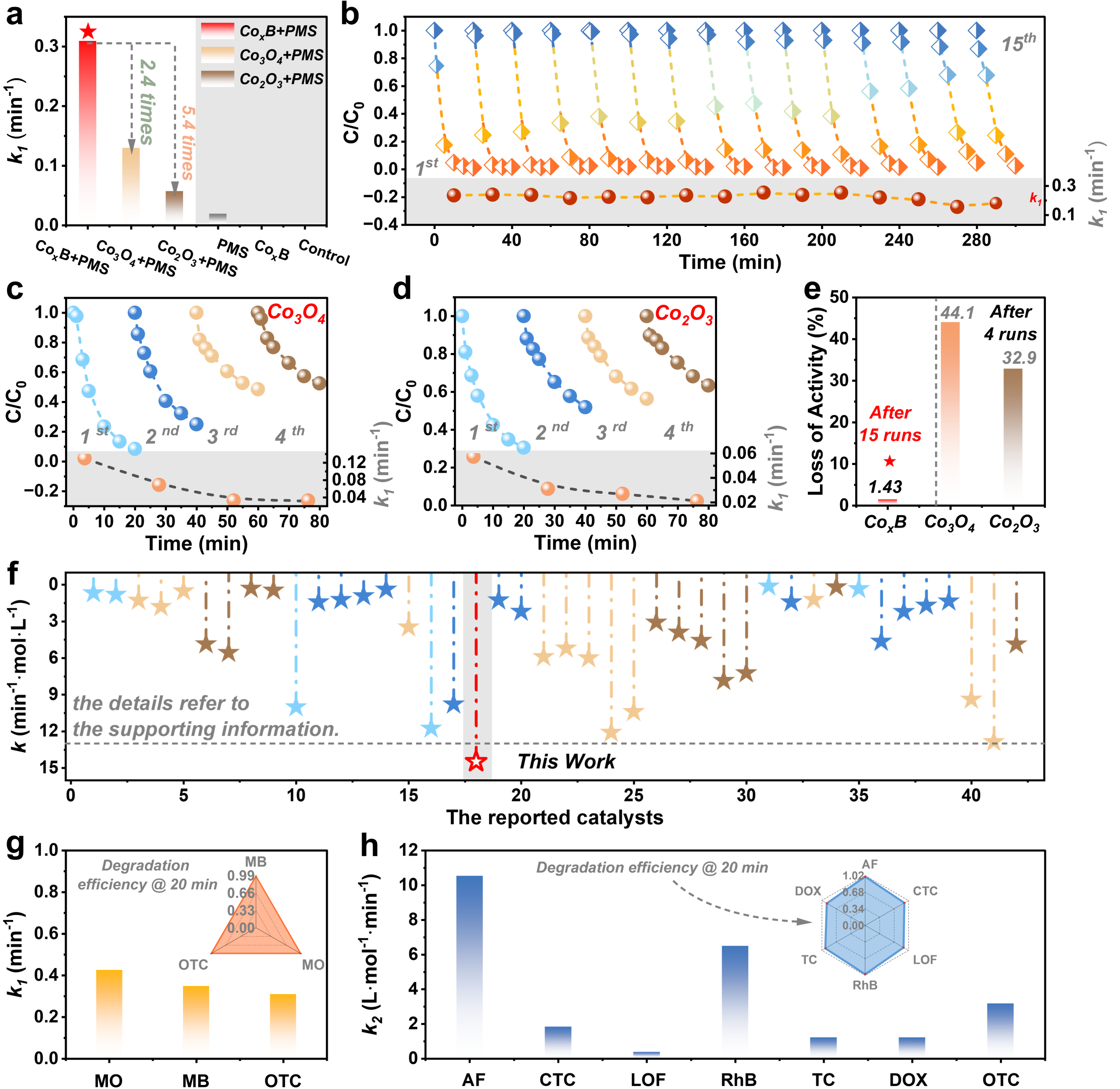
Fig. 1. (a) Degradation performance (pseudo-first-order rate constant, k1) for OTC removal using PMS activated by CoxB, Co3O4, and Co2O3. Cycling stability under identical conditions for CoxB (15 cycles) (b), Co3O4 (4 cycles) (c), and Co2O3 (4 cycles) (d). (e) Activity decline percent comparison after repeated use. (f) Benchmarking of CoxB against representative cobalt-based PMS activators (details and references in Table S1). (g) Catalytic degradation of MB, MO and OTC with fitted pseudo-first-order rate constants (k1). (h) Catalytic degradation of AF, CTC, LOF, RhB, TC, DOX and OTC with corresponding pseudo-second-order rate constants (k2). Reaction conditions: OTC 40 mg·L-1; catalyst 15 mg; deionized water 20 mL; PMS 0.7 g·L-1; 20 °C; pH = 6.4; MB, MO, AF, CTC, LOF, RhB, TC, and DOX 40 mg·L-1.
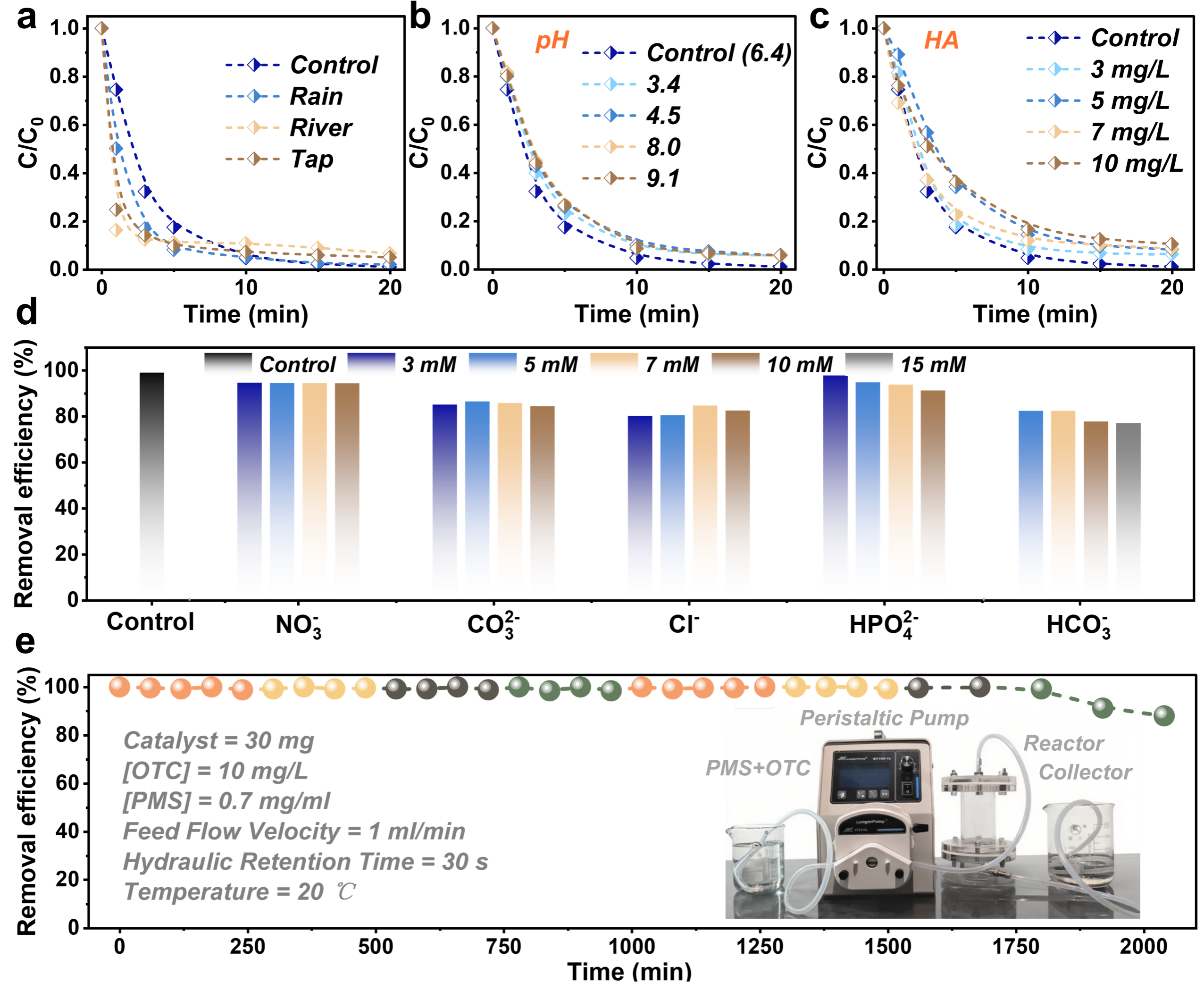
Fig. 2. (a) OTC degradation by CoxB/PMS in different water matrices (rainwater, river water, tap water). (b) Effect of initial pH. (c) Effect of humic acid (HA). (d) Influence of coexisting anions (NO3-, CO32-, HPO42-, Cl-, HCO3-). (e) Continuous-flow OTC degradation and photo of the apparatus (catalyst 30 mg; OTC 10 mg·L-1; PMS 0.7 g·L-1; flow 1 mL·min-1; Room temperature).
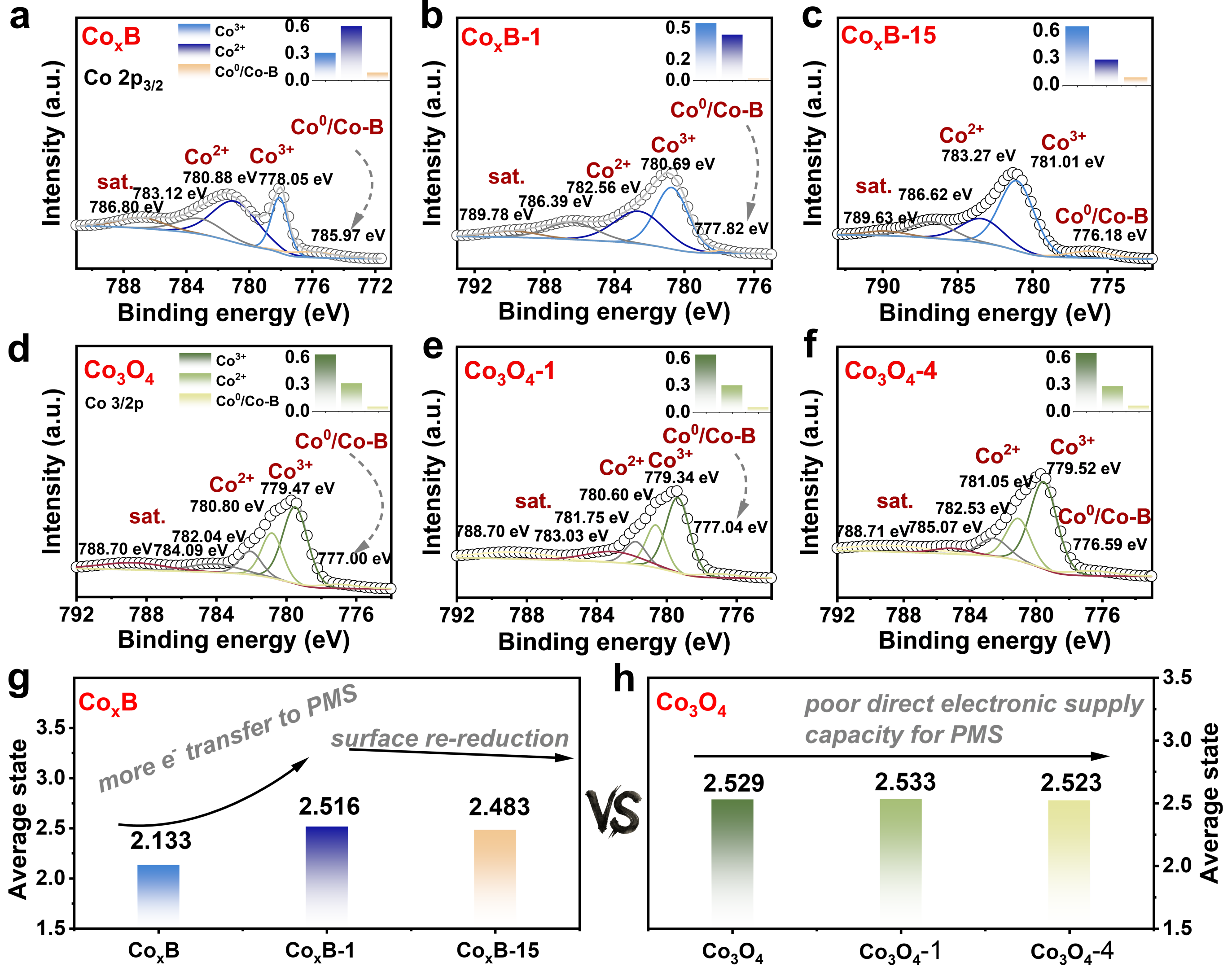
Fig. 3. HR-XPS spectra of Co 2p3/2 and the corresponding average Co valence state during successive catalytic cycles. (a-c) CoxB samples (fresh, after 1 cycle [CoxB-1], and after 15 cycles [CoxB-15]). (d-f) Co3O4 samples (fresh, after 1 cycle [Co3O4-1], and after 4 cycles [Co3O4-4]). Evolution of the average Co valence state for CoxB (g) and Co3O4 (h).
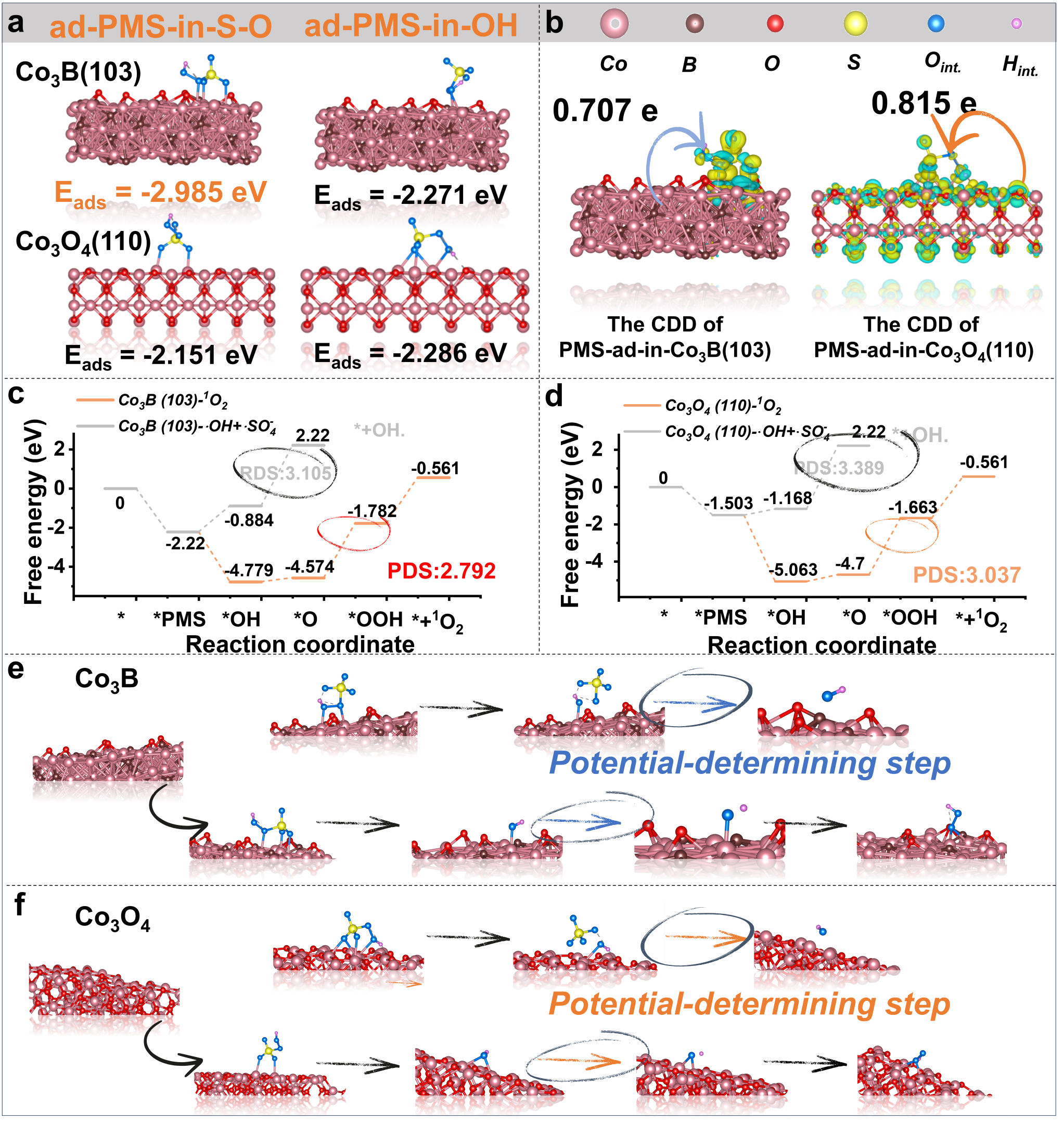
Fig. 4. (a) Optimized adsorption configurations and adsorption energies (Eads) of PMS on CoxB and Co3O4 surfaces through S-O and O-H binding modes. (b) Differential charge density maps comparing electron transfer in PMS activation: significant electron accumulation (yellow)/depletion (cyan) on CoxB versus minimal redistribution on Co3O4. Calculated Gibbs free energy diagrams for PMS activation on CoxB (c) and Co3O4 (d). Proposed PMS activation pathways favoring singlet-oxygen-associated non-radical oxidation on CoxB (e) and radical oxidation on Co3O4 (f).
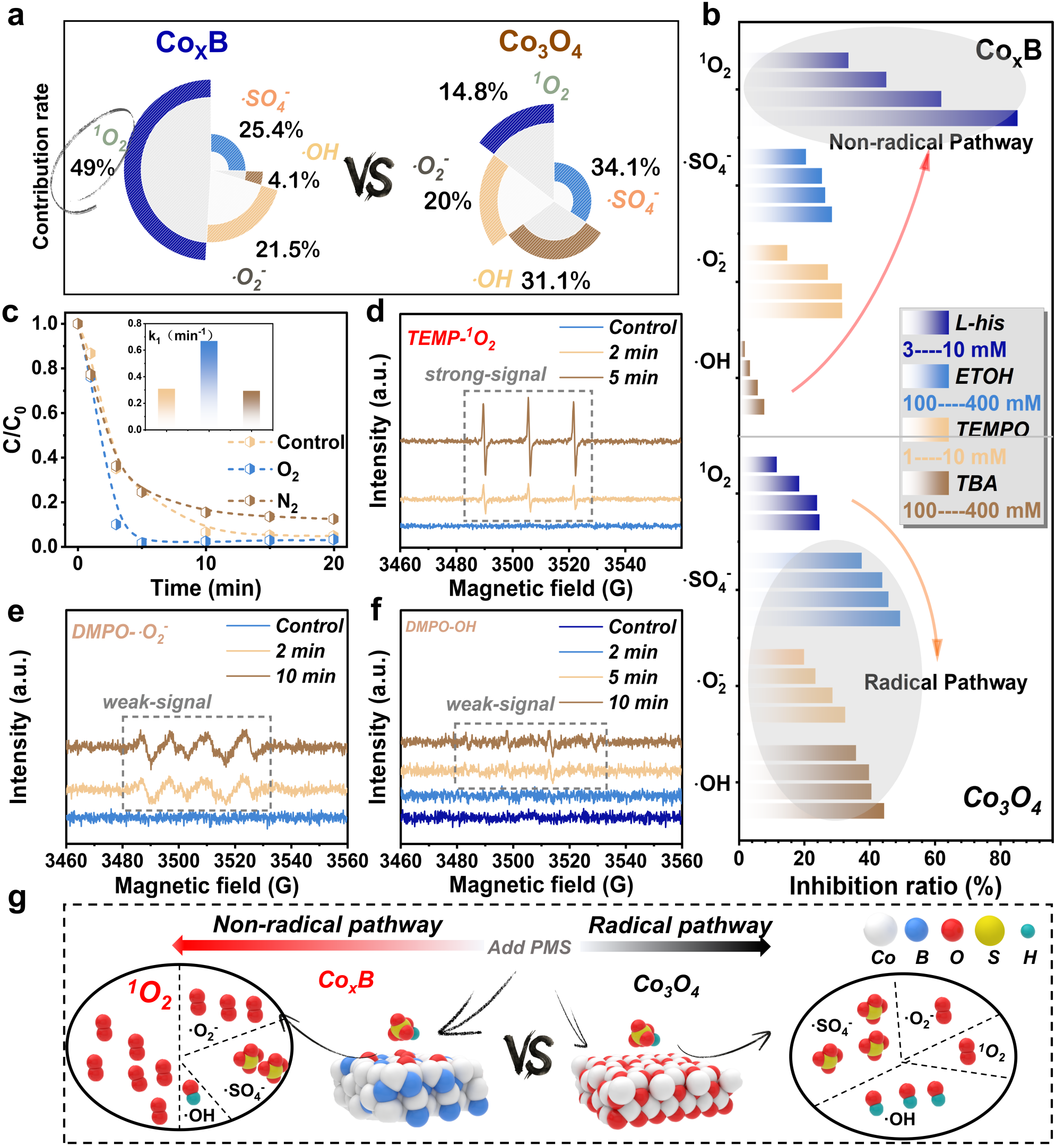
Fig. 5. (a) Apparent relative importance of ROS-related pathways estimated from concentration-dependent inhibition experiments. (b) Quenching efficiencies of specific scavengers in the CoxB/PMS system for OTC degradation: L-histidine (1O2), TEMPO (•O2), ethanol (•OH and •SO4-), and tert-butanol (•OH). (c) Dissolved oxygen experiment evaluating its role in degradation. (d) TEMP-trapped EPR spectra for singlet oxygen (1O2). (e) Methanol-based DMPO EPR spectra for superoxide radicals (•O2-). (f) Aqueous DMPO EPR spectra for hydroxyl radicals (•OH). (g) Schematic illustration of reactive species generation pathways over CoxB vs. Co3O4.
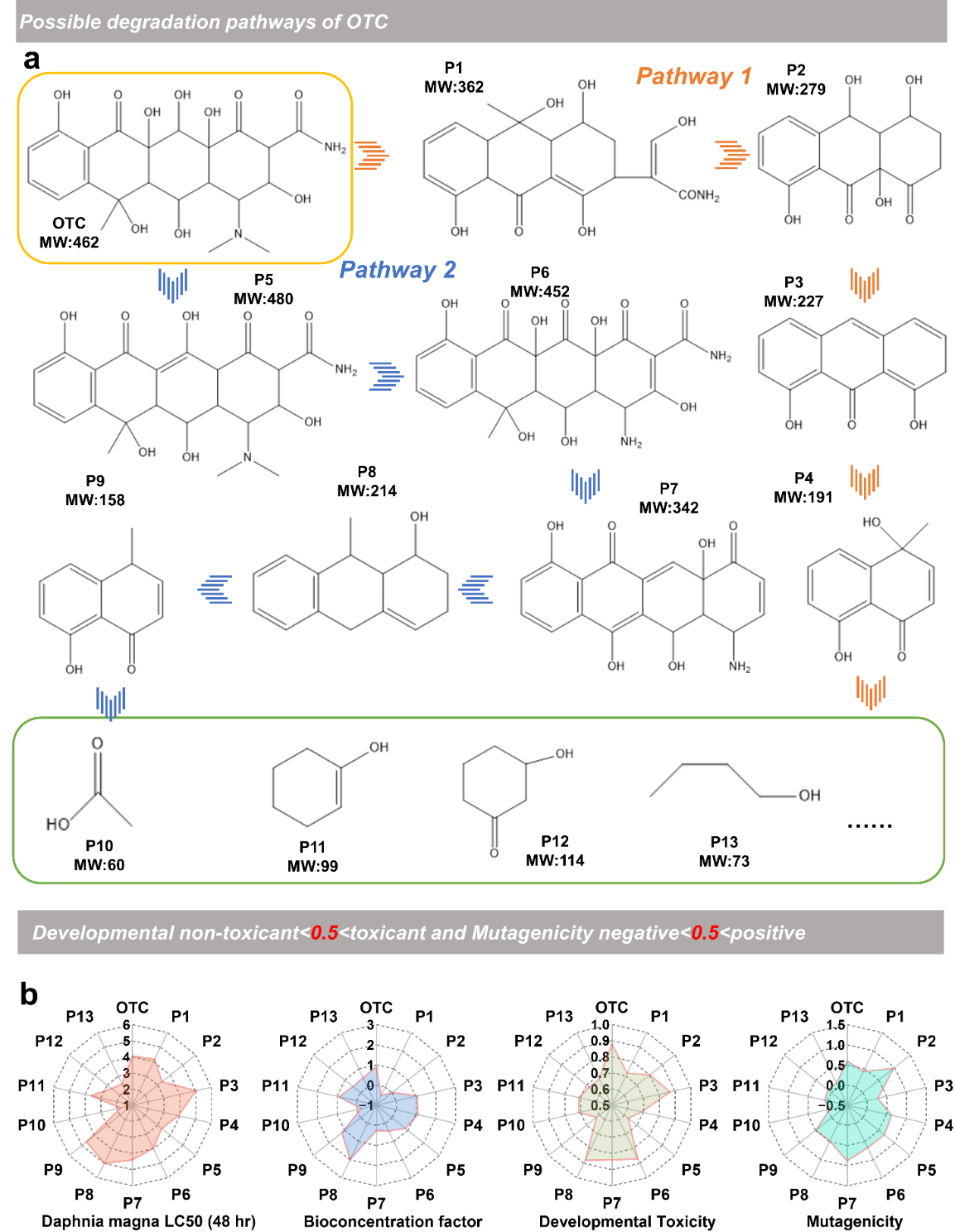
Fig. 6. (a) Proposed PMS-mediated degradation pathways of OTC. (b) Predicted toxicity profiles of the resulting transformation products.
|
| [1] | Yan Wang, Xiaorui Yan, Zeyang Sun, Jinjun Liu, Yiwen Wang, Chenchao Hu, Yilin Deng, Meng Xie, Jimin Xie, Wei Zhang, Yuanguo Xu. Synergistic catalysis of oxygen vacancy and S-scheme heterojunction in NiFe2O4‒x/NiS regulates peroxymonosulfate activation for enhanced photo-Fenton-like reaction [J]. Chinese Journal of Catalysis, 2025, 79(12): 186-204. |
| [2] | Chen Xu, Di Song, Xinggang Liu, Fang Deng, Yongcai Zhang, Mingshan Zhu, Xijun Liu, Jianping Zou, Xubiao Luo. Quantitative correlation of Fe(III) electronic structure regulation in peroxymonosulfate activation via atomic cobalt doping AgFeO2 [J]. Chinese Journal of Catalysis, 2025, 77(10): 87-98. |
| [3] | Junlei Zhang, Wencong Liu, Biao Liu, Xiaoguang Duan, Zhimin Ao, Mingshan Zhu. Is single-atom catalyzed peroxymonosulfate activation better? Coupling with metal oxide may be better [J]. Chinese Journal of Catalysis, 2024, 59(4): 137-148. |
| [4] | Cheng Cheng, Wei Ren, Hui Zhang, Xiaoguang Duan, Shaobin Wang. Single-atom iron catalysts for peroxymonosulfate-based advanced oxidation processes: Coordination structure versus reactive species [J]. Chinese Journal of Catalysis, 2024, 59(4): 15-37. |
| [5] | Longxing Hu, Guihua Deng, Wencong Lu, Yongsheng Lu, Yuyao Zhang. Peroxymonosulfate activation by Mn3O4/metal-organic framework for degradation of refractory aqueous organic pollutant rhodamine B [J]. Chinese Journal of Catalysis, 2017, 38(8): 1360-1372. |
| [6] | SHEN Xiaochen, DAI Min, GAO Ming, ZHAO Bin, DING Weiping. Solvent effects in the synthesis of CoB catalysts on hydrogen generation from hydrolysis of sodium borohydride [J]. Chinese Journal of Catalysis, 2013, 34(5): 979-985. |
| Viewed | ||||||
|
Full text |
|
|||||
|
Abstract |
|
|||||


