
催化学报 ›› 2026, Vol. 89: 102-126.DOI: 10.1016/S1872-2067(26)65142-X
廖光健, 吕文博, 王志超, 陈朱琦, 尹国川( )
)
收稿日期:2026-03-10
接受日期:2026-04-16
出版日期:2026-10-18
发布日期:2026-09-01
通讯作者:
*电子信箱: gyin@hust.edu.cn (尹国川).基金资助:
Guangjian Liao, Wenbo Lv, Zhichao Wang, Zhuqi Chen, Guochuan Yin()
Received:2026-03-10
Accepted:2026-04-16
Online:2026-10-18
Published:2026-09-01
Contact:
*E-mail:gyin@hust.edu.cn(G. Yin).
About author:Dr. Guochuan Yin (School of Chemistry and Chemical Engineering, Huazhong University of Science and Technology) received B.S. degree from Zhejiang University in 1990, and Ph.D. from Dalian Institute of Chemical Physics, Chinese Academy of Sciences in 1998. He joined Kyushu University in Japan as a JSPS follow in 1999, worked as a postdoc in University of Kansas, USA in 2001, and finally back to China in 2008 as a professor in Huazhong University of Science and Technology. His research covers homogeneous catalytic oxidations, C-H activation, biomass utilizations, and wastewater treatment, and most recently focuses on Lewis acid promoted catalysis by redox metal ions and complexes for homogeneous oxidation and C-H activation. He has published more than 120 peer-reviewed papers.
Supported by:摘要:
双金属及多金属催化在各种生物氧化与化学氧化中发挥着重要作用, 但它们的协同机制一直模糊不清, 尤其是复杂的生物催化与化学多相催化氧化过程, 为研究它们的协同机制带来了巨大的挑战. 本质上讲, 生物催化、化学均相催化与多相催化遵循相同的化学原理, 因此, 这些模糊的协同催化机制可以通过构建均相催化模型来开展研究, 进而为设计新的催化剂、理解生物催化的机制提供理论依据. 事实上, 自上世纪90年代起, 通过第二金属离子作为路易斯酸调控活性金属氧物种的研究就逐渐引起了关注, 并在近10余年取得了长足进步, 进而发展起了路易斯酸调控过渡金属催化氧化反应的催化剂设计理念.
本文系统总结了通过模型化合物研究路易斯酸调控各类过渡金属活性氧物种物理化学性能与氧化性能的最新研究进展, 以及进一步的催化剂设计应用研究成果. 首先, 在早期研究中, 研究人员利用各种稳定的高价过渡金属氧阴盐, 包括高锰酸盐、铬酸盐、高铁酸盐及钌酸根盐等作为金属活性氧物种的来源, 研究了路易斯酸如何调控它们的氧化反应性能. 以此为契机, 利用来源于过渡金属配合物的相对稳定的中间体作为平台, 包括(1)高价金属氧中间体, 如铁(IV)氧、锰(IV/V)氧、钴(IV)氧和铬(V)氧等; (2)金属过氧中间体, 如铁(III)过氧、钴(III)过氧和铜(II)过氧等; 以及(3)金属超氧中间体, 如铁(III)超氧和铬(III)超氧, 研究不同酸性强弱的路易斯如何调控其在电子转移、氧原子转移和氢原子转移中的反应性能, 为进一步的催化剂设计提供了理论依据. 同时, 研究人员也利用各种合成过渡金属配合物研究路易斯酸对其物理化学性能, 特别是氧化还原电位的影响, 初步总结出路易斯酸调控过渡金属活性氧物种反应性能的规律. 与此同时, 研究人员还发展了路易斯酸调控的各种过渡金属配合物催化氧化反应, 特别是路易斯酸促进过渡金属配合物活化氧气参与的催化氧化反应, 为氧气的近室温活化与催化氧化的催化剂设计提供了新的思路.
综上, 目前路易斯酸调控过渡金属活性氧物种的氧化性能研究已取得了系统性的研究成果, 我们期望这些成果能帮助理解发生在生物氧化与化学氧化中的各种双金属及多金属协同催化机制, 并有助于相应的催化剂设计, 服务于社会.
廖光健, 吕文博, 王志超, 陈朱琦, 尹国川. 路易斯酸对金属活性氧物种氧化性能的调控与催化[J]. 催化学报, 2026, 89: 102-126.
Guangjian Liao, Wenbo Lv, Zhichao Wang, Zhuqi Chen, Guochuan Yin. Modulating the oxidative reactivity of the metal active oxygen moieties by Lewis acid for catalysis[J]. Chinese Journal of Catalysis, 2026, 89: 102-126.
| LA | t/min | Products (%) | ||
|---|---|---|---|---|
| cyclohexanone | cyclohexanol | cyclohexylchloride | ||
| -b | 240 | 60 | n.d. | n.d. |
| ZnCl2 | 5 | 65 | 3 | 3 |
| Zn(OAc)2 | 210 | 60 | n.d. | — |
| FeCl3 | 5 | 60 | 3.5 | 0.5 |
| AlCl3 | 2 | n.d. | n.d. | 3 |
| LiCl | 60 | 69 | n.d. | 2 |
| Li(OAc)2 | 240 | 64 | 6 | — |
| BF3·HOAc | 5 | 50 | n.d. | — |
| PPh4Cl | 480 | 65 | n.d. | 1.5 |
Table 1 The influence of LA on cyclohexane oxidation by BaRu(O)2(OH)3a.
| LA | t/min | Products (%) | ||
|---|---|---|---|---|
| cyclohexanone | cyclohexanol | cyclohexylchloride | ||
| -b | 240 | 60 | n.d. | n.d. |
| ZnCl2 | 5 | 65 | 3 | 3 |
| Zn(OAc)2 | 210 | 60 | n.d. | — |
| FeCl3 | 5 | 60 | 3.5 | 0.5 |
| AlCl3 | 2 | n.d. | n.d. | 3 |
| LiCl | 60 | 69 | n.d. | 2 |
| Li(OAc)2 | 240 | 64 | 6 | — |
| BF3·HOAc | 5 | 50 | n.d. | — |
| PPh4Cl | 480 | 65 | n.d. | 1.5 |
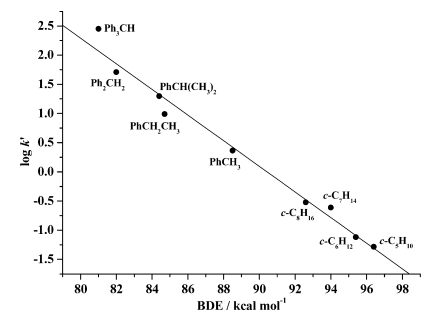
Fig. 1. Plot of logk vs. BDE of the C-H bond for BF3-promoted oxidation by MnO4- in CH3CN at 298 K. Reprinted with permission from Ref. [49]. Copyright 2006, American Chemical Society.
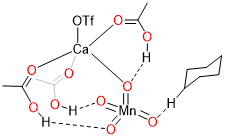
Fig. 2. The structure of the active form of MnO4-/HOAc/Ca2+ for oxidation. Reprinted with permission from Ref. [55]. Copyright 2022, Royal Society of Chemistry.
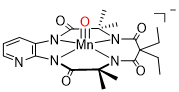
Fig. 3. The structure of MnV(O)(TAMAL) complex. Reprinted with permission from Ref. [63]. Copyright 1998, American Chemical Society.
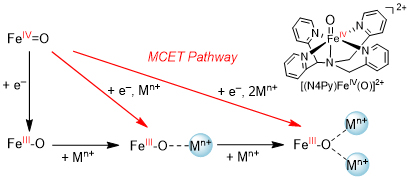
Scheme 1. LA-accelerated electron transfer by the iron(IV) oxo complex. Reprinted with permission from Ref. [65]. Copyright 2011, American Chemical Society.
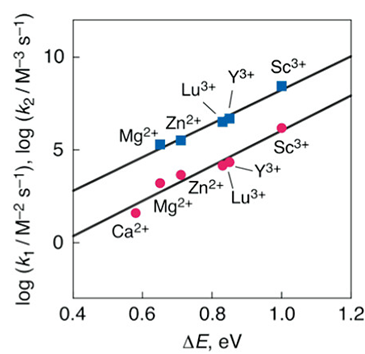
Fig. 4. Plots of log k1 (red circles) and log k2 (blue squares) vs. ?E for electron transfer from Fc to the [(N4Py)FeIV(O)]2+ complex. Reprinted with permission from Ref. [65]. Copyright 2011, American Chemical Society.
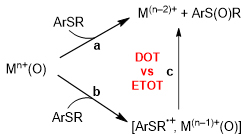
Scheme 2. LA-modulated mechanism shift for thioaniosole oxygenation (DOT: direct oxygen transfer, ETOT: electron transfer followed by oxygen transfer). Reprinted with permission from Ref. [68]. Copyright 2011, American Chemical Society.
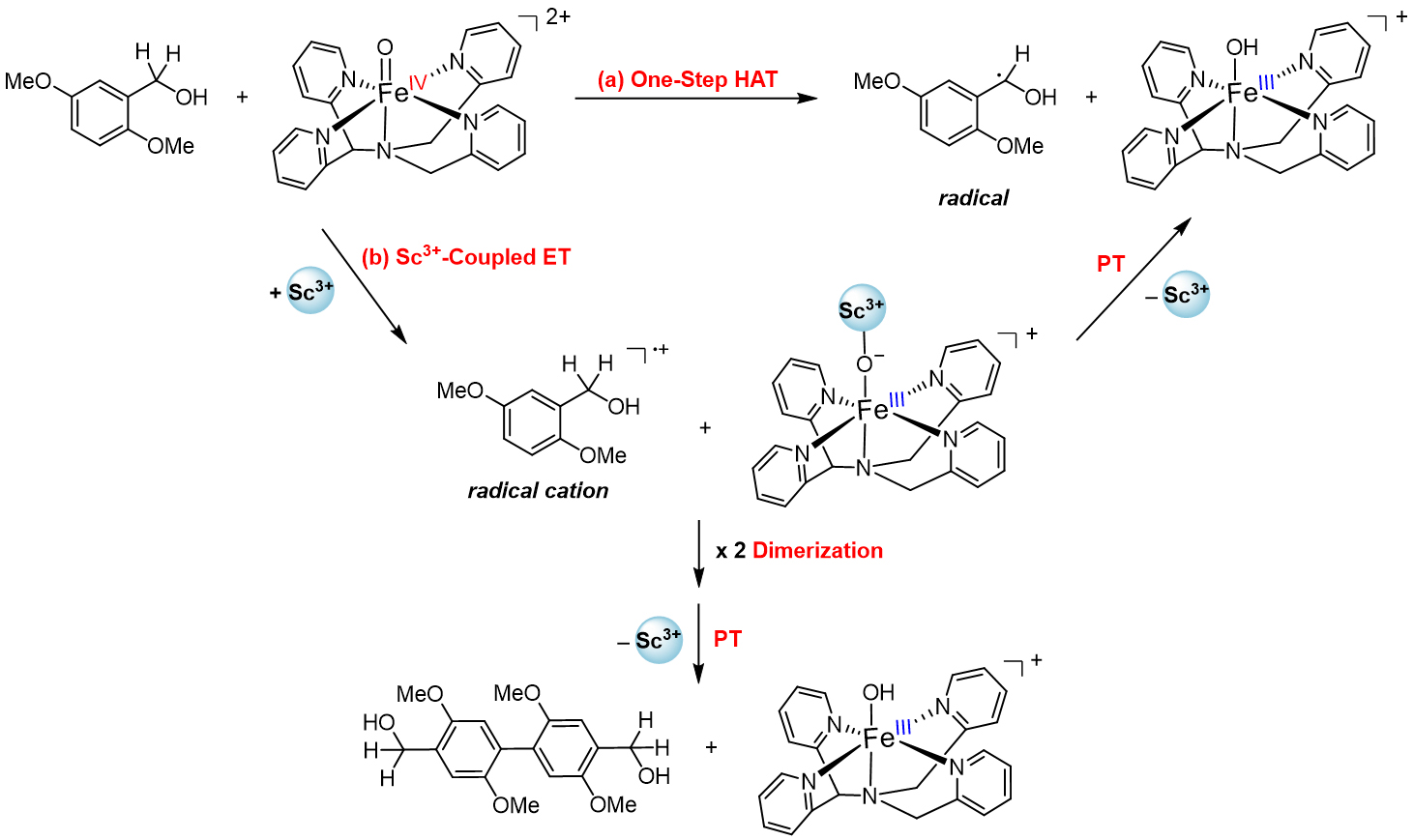
Scheme 3. Mechanism shift by Sc3+-modulated 2,5-dimethoxybenzyl alcohol oxidation by the [(N4Py)FeIV(O)]2+ complex (ET: electron transfer, PT: proton transfer, HAT: hydrogen atom transfer). Reprinted with permission from Ref. [70]. Copyright 2012, American Chemical Society.
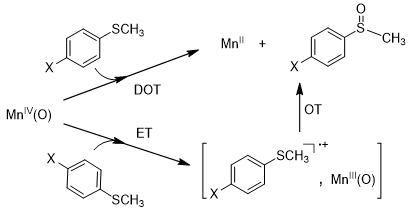
Scheme 4. LA-modulated mechanism shift for thioanisole oxidation by MnIV(O)(N4Py) complex (DOT: direct oxygen transfer, ET: electron transfer, OT: oxygen transfer). Reprinted with permission from Ref. [73]. Copyright 2013, American Chemical Society.
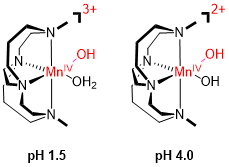
Fig. 5. pH dependent net charge and functional group of the MnIV(Me2EBC)(OH)22+ complex. Reprinted with permission from Ref. [77]. Copyright 2012, American Chemical Society.
| Temperature (K) | k23+ | k22+ | k23+/k22+ |
|---|---|---|---|
| 293 | (9.09 ± 0.07) × 10-4 | (8.68 ± 0.08) × 10-4 | 1.05 |
| 303 | (1.73 ± 0.08) × 10-3 | (1.52 ± 0.01) × 10-3 | 1.14 |
| 313 | (2.86 ± 0.09) × 10-3 | (2.90 ± 0.09) × 10-3 | 0.99 |
Table 2 The influence of the net charge on the hydrogen atom abstract rate of the MnIV-OH moiety.
| Temperature (K) | k23+ | k22+ | k23+/k22+ |
|---|---|---|---|
| 293 | (9.09 ± 0.07) × 10-4 | (8.68 ± 0.08) × 10-4 | 1.05 |
| 303 | (1.73 ± 0.08) × 10-3 | (1.52 ± 0.01) × 10-3 | 1.14 |
| 313 | (2.86 ± 0.09) × 10-3 | (2.90 ± 0.09) × 10-3 | 0.99 |
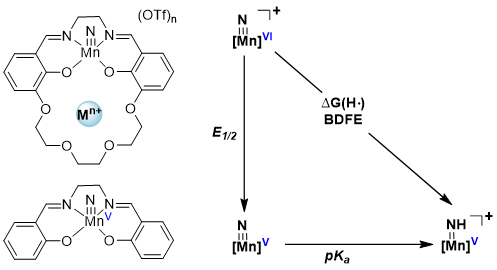
Fig. 6. Manganese(V) nitride complexes appended with a crown ether to contain LA, and their thermodynamic cycle to determine the BDFE of the N-H bond. Reprinted with permission from Ref. [80]. Copyright 2022, American Chemical Society.
| Complex | E1/2a (V vs. Fc) | pKab | N-H BDEc |
|---|---|---|---|
| MnV≡N(salen) | 0.43 | 8.0-9.4 | 73-75 |
| MnV≡N(salen)-Na+ | 0.59 | 6.2-8.0 | 75-77 |
| MnV≡N(salen)-K+ | 0.62 | 6.2-8.0 | 75-78 |
| MnV≡N(salen)-Ba2+ | 0.80 | 0.2-2.6 | 71-75 |
| MnV≡N(salen)-Sr2+ | 0.88 | 0.2-2.6 | 73-76 |
| MnV≡N(salen)-La3+ | 1.02 | < 0.2 | < 76 |
| MnV≡N(salen)-Eu3+ | 1.13 | < 0.2 | < 79 |
Table 3 The influence of the net charge on the redox potential, pKa, and the BDFE of the N-H bond.
| Complex | E1/2a (V vs. Fc) | pKab | N-H BDEc |
|---|---|---|---|
| MnV≡N(salen) | 0.43 | 8.0-9.4 | 73-75 |
| MnV≡N(salen)-Na+ | 0.59 | 6.2-8.0 | 75-77 |
| MnV≡N(salen)-K+ | 0.62 | 6.2-8.0 | 75-78 |
| MnV≡N(salen)-Ba2+ | 0.80 | 0.2-2.6 | 71-75 |
| MnV≡N(salen)-Sr2+ | 0.88 | 0.2-2.6 | 73-76 |
| MnV≡N(salen)-La3+ | 1.02 | < 0.2 | < 76 |
| MnV≡N(salen)-Eu3+ | 1.13 | < 0.2 | < 79 |
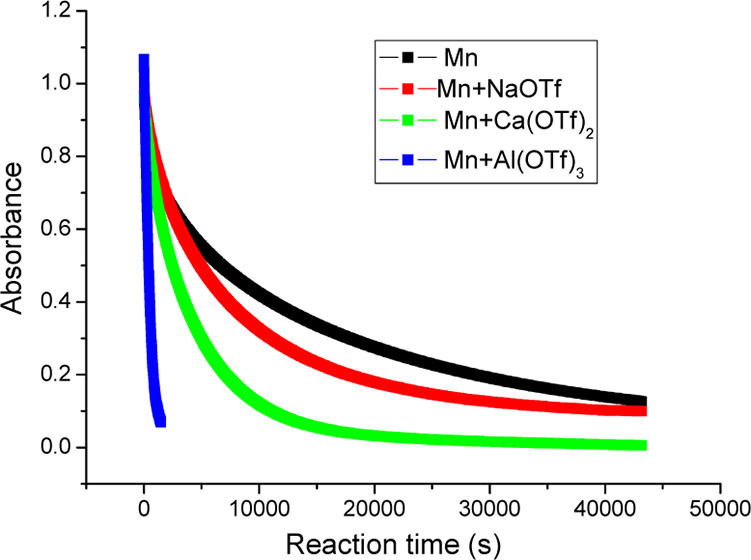
Fig. 7. LA-modulated oxygenation kinetics for PPh3 by Mn(Me2EBC)(OH)2 complex in acetone at 293 K. Reprinted with permission from Ref. [82]. Copyright 2013, American Chemical Society.
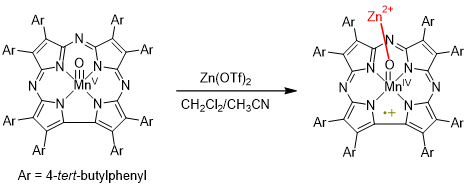
Scheme 5. Zn2+-induced valence tautomerization of the (TBP8Cz)MnV(O) complex. Reprinted with permission from Ref. [83]. Copyright 2012, American Chemical Society.
| Substrate | Lewis acid | k2 (L/(mol·s)) | k2LA/k2none |
|---|---|---|---|
| 2,4-DTPB | Zn2+ | 17 ± 1 | 5.9 |
| B(C6F5)3 | 107 ± 8 | 37 | |
| none | 2.9 ± 0.1 | — | |
| 2,4,6-TTBP | Zn2+ | 0.157 ± 0.008 | 2.1 |
| B(C6F5)3 | 9.5 ± 0.7 | 130 | |
| none | 0.074 ± 0.007 | — |
Table 4 Comparing the rate constants for oxidation of phenol substrates by the (TBP8Cz)MnV(O) complex.
| Substrate | Lewis acid | k2 (L/(mol·s)) | k2LA/k2none |
|---|---|---|---|
| 2,4-DTPB | Zn2+ | 17 ± 1 | 5.9 |
| B(C6F5)3 | 107 ± 8 | 37 | |
| none | 2.9 ± 0.1 | — | |
| 2,4,6-TTBP | Zn2+ | 0.157 ± 0.008 | 2.1 |
| B(C6F5)3 | 9.5 ± 0.7 | 130 | |
| none | 0.074 ± 0.007 | — |
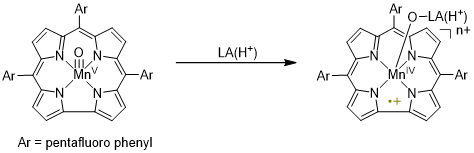
Scheme 6. Proton or Zn2+-induced valence tautomerization of the (tpfc)MnV(O) complex. Reprinted with permission from Ref. [90]. Copyright 2016, John Wiley and Sons.
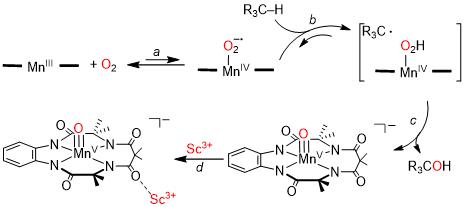
Scheme 7. Synthesis of Sc3+ ion-bound MnV(O)(TAML) complex. Reprinted with permission from Ref. [91]. Copyright 2016, American Chemical Society.
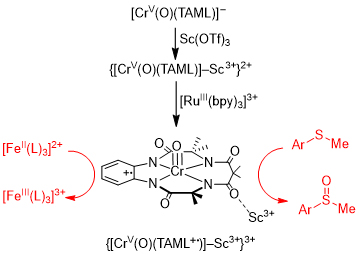
Scheme 8. Synthesis and reactivity of the {[(TAML+?)CrV(O)]-Sc3+}3+ complex. Reprinted with permission from Ref. [92]. Copyright 2021, American Chemical Society.
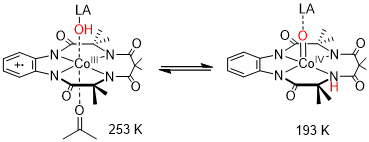
Scheme 9. Temperature dependent Co-OH(LA) TAML intermediate. Reprinted with permission from Ref. [94]. Copyright 2024, American Chemical Society.
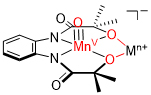
Fig. 8. LA-bound MnV(O)(HMPAB) complex. Reprinted with permission from Ref. [96]. Copyright 2021, American Chemical Society.
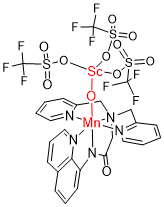
Fig. 9. DFT optimized structure of the [(dpaq)MnIV(O)]+-Sc(OTf)3 complex. Reprinted with permission from Ref. [98]. Copyright 2019, American Chemical Society.
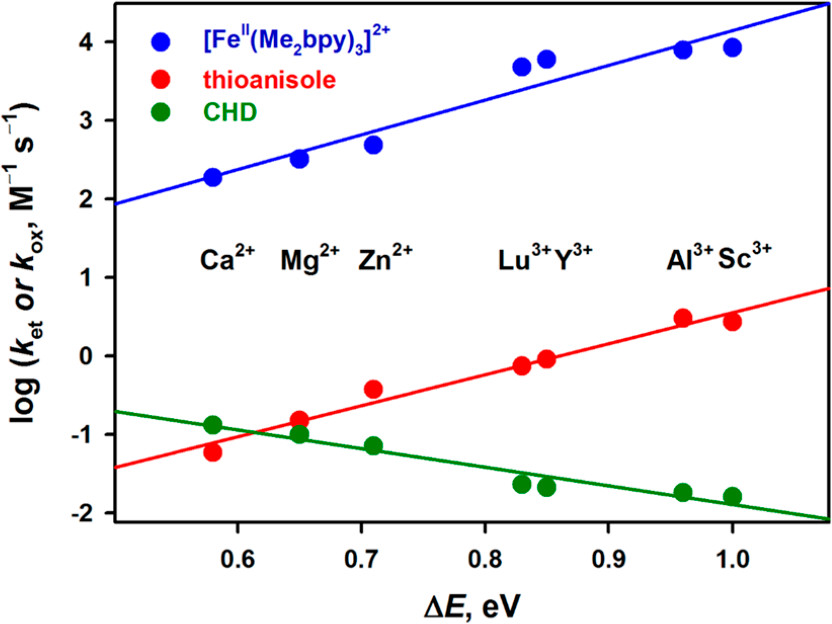
Fig. 10. Plot of logarithm of the second-order rate constants in oxygen atom transfer (red line), electron transfer (blue line) and hydrogen atom abstract (green line) vs. a quantitative measure of Lewis acidity of metal ions (ΔE). Reprinted with permission from Ref. [98]. Copyright 2019, American Chemical Society.
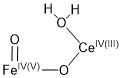
Fig. 11. Identified FeIV-O-CeIV unit in (MCP)FeII complex catalyzed water oxidation with CAN. Reprinted with permission from Ref. [100]. Copyright 2015, Springer Nature.
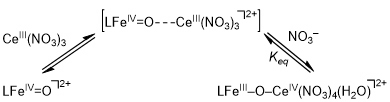
Scheme 10. Equilibrium between [LFeIV=O]2+ and [LFeIII-O-CeIV]2+ moieties trough [LFeIV=O···CeIII]2+ intermediate. Reprinted with permission from Ref. [101]. Copyright 2017, John Wiley and Sons.
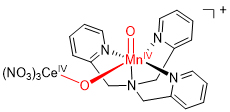
Fig. 12. Structure of μ-O bridged (TPA)MnIV=O with CeIV complex. Reprinted with permission from Ref. [102]. Copyright 2024, American Chemical Society.
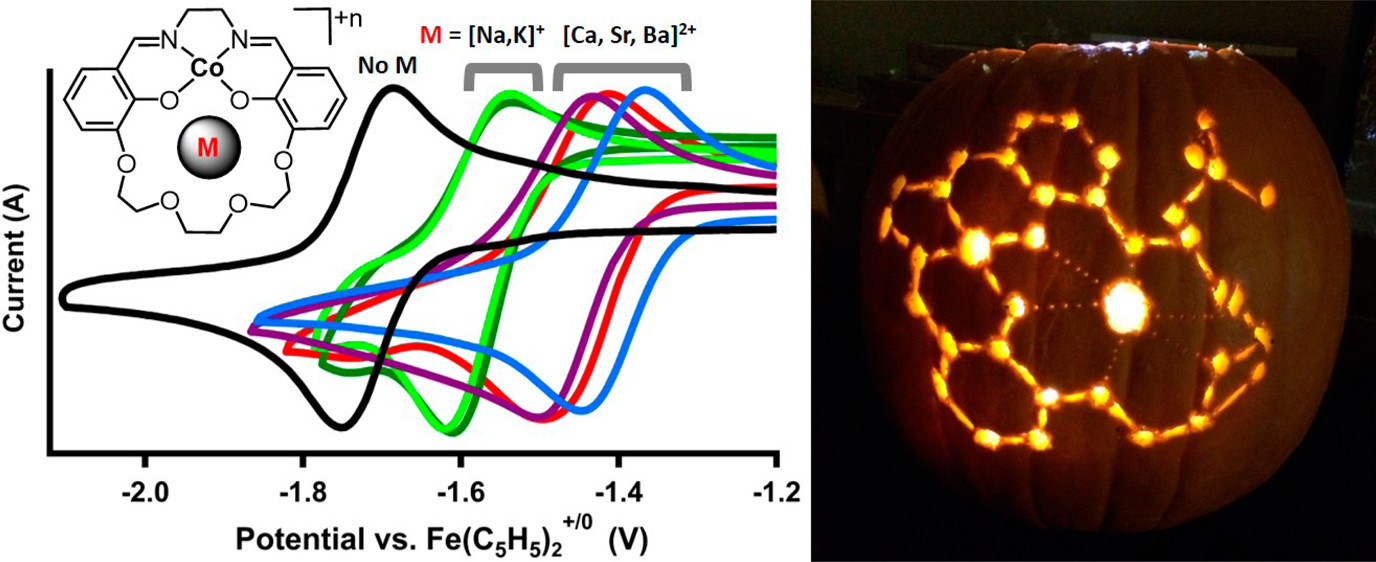
Fig. 13. Cyclic voltammograms of the CoII/I couples of Co(Salen-OMe) and Co(Salen)/LAs in 0.5 mol/L tetrabutylammonium hexafluorophosphate in DMF under N2. Reprinted with permission from Ref. [103]. Copyright 2017, American Chemical Society.
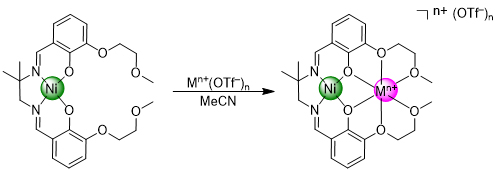
Scheme 11. Synthesis of LAs bound NiII(Salen) complexes with acyclic “tiera”. Reprinted with permission from Ref. [105]. Copyright 2024, American Chemical Society.
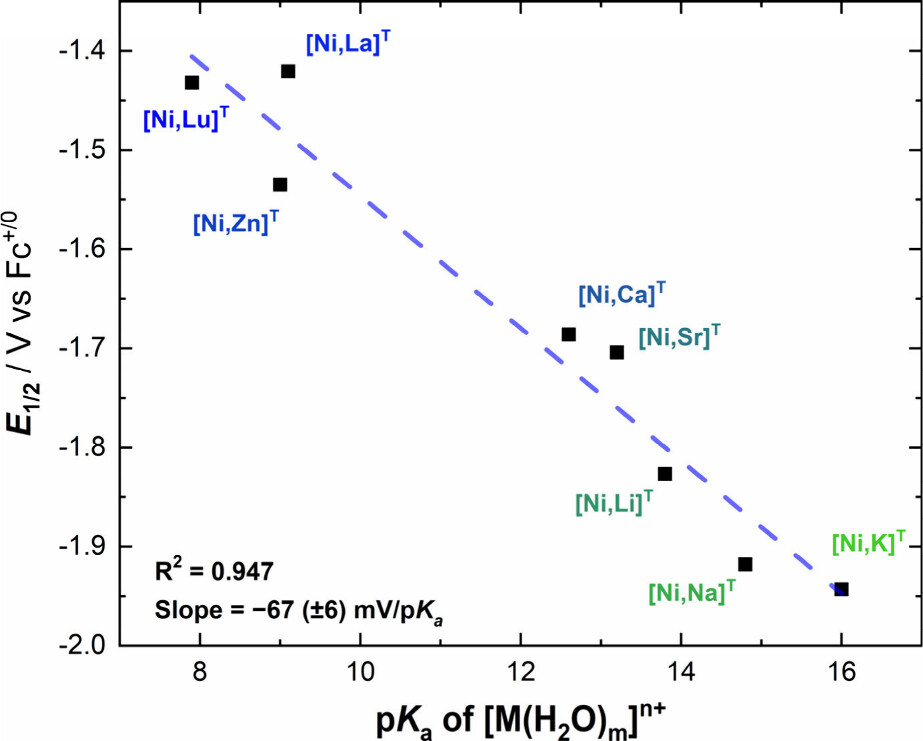
Fig. 14. Plot of the formal NiII/I couple of the LA bound NiII(Salen) complexes vs the pKa of the relevant NiII(Salen)(aqua) complexes. Reprinted with permission from Ref. [105]. Copyright 2024, American Chemical Society.
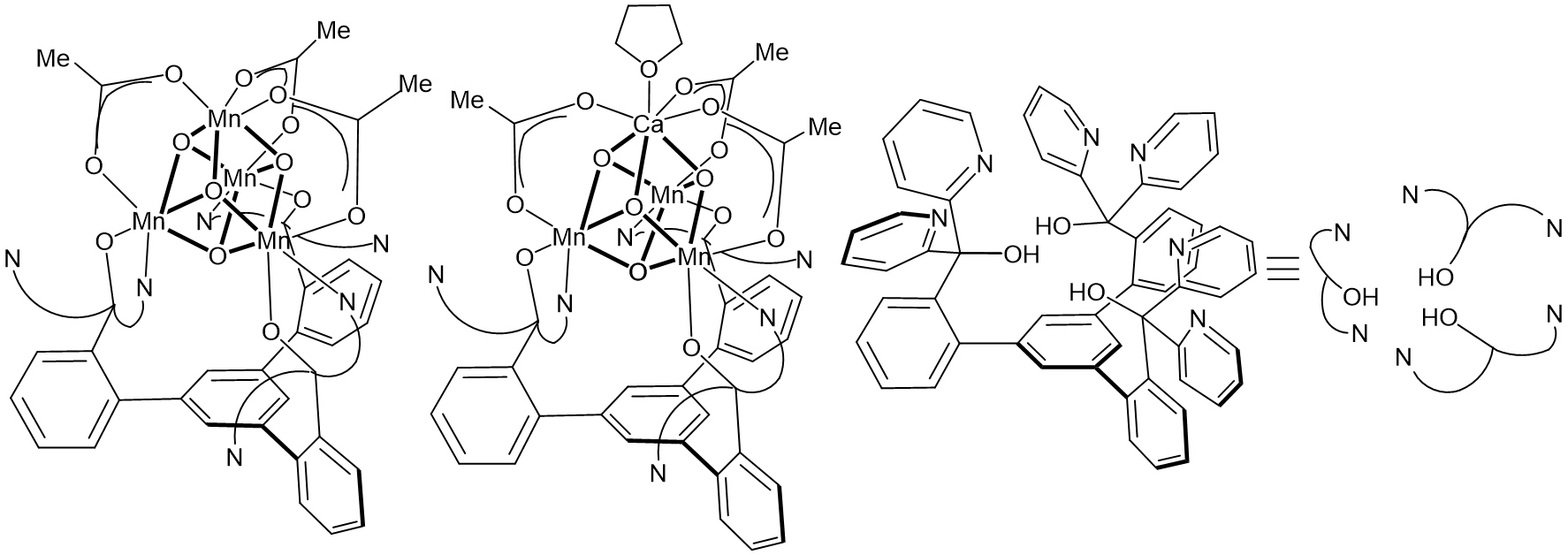
Fig. 15. The structures of the full manganese cubane and its Ca2+ incorporated cubane. Reprinted with permission from Ref. [106]. Copyright 2011, The American Association for the Advancement of Science.
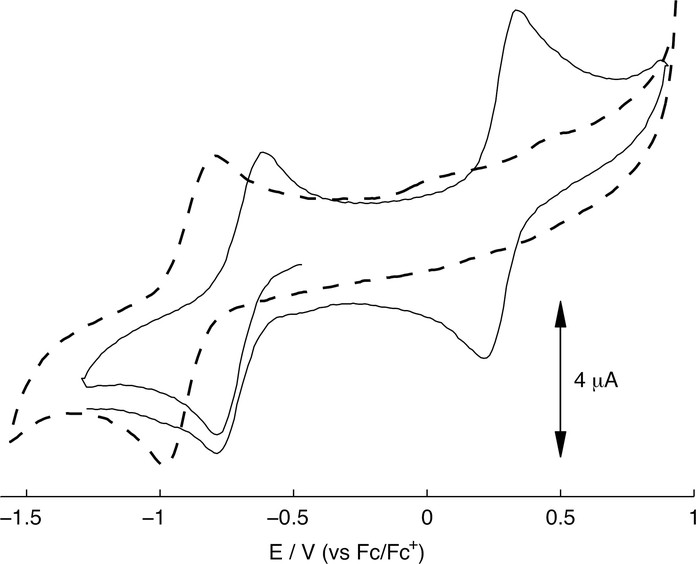
Fig. 16. Cyclic voltammograms of [MnIV2MnIII2O4]6+ (solid trace, DMA solution) and [MnIV3CaO4]6+ (dashed trace, DMF solution) with 0.1 M nBu4NPF6. Reprinted with permission from Ref. [106]. Copyright 2011, The American Association for the Advancement of Science.
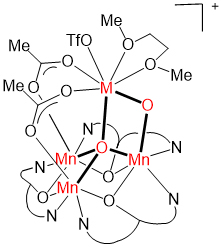
Fig. 17. Structure of LA incorporated Mn3LA(μ4-O)(μ2-O) core. Reprinted with permission from Ref. [109]. Copyright 2013, Springer Nature.
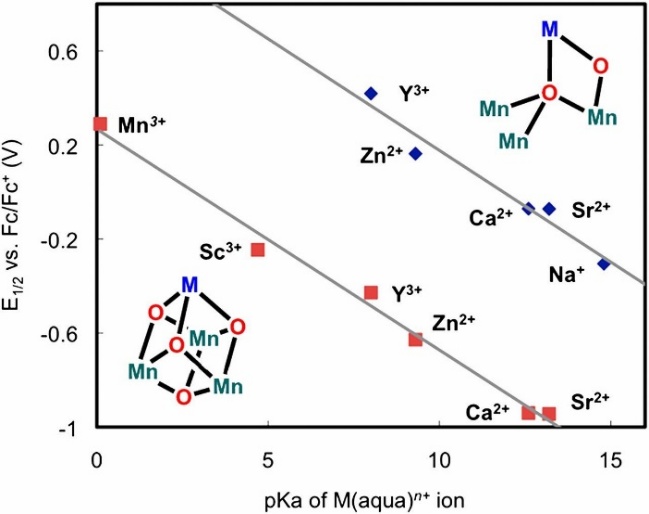
Fig. 18. The correlation of the redox potentials of the Mn3LA(μ4-O)(μ2-O) and Mn3LA(μ3-O)4 complexes with the Lewis acidity of LA, M(aqua)n+. Reprinted with permission from Ref. [108]. Copyright 2013, National Academy of Sciences.
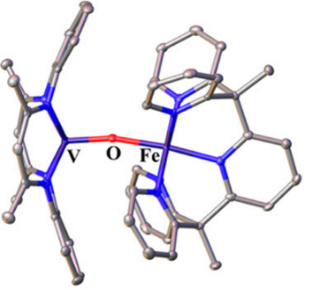
Fig. 19. Exampled heterobimetallic complexes composed of VIV=O→FeIIPy5Me2 unit. Reprinted with permission from Ref. [112]. Copyright 2015, American Chemical Society.
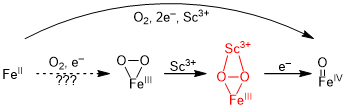
Scheme 12. Proposed mechanism for LA-assisted dioxygen activation by iron(II) complex toward the iron(IV) oxo formation. Reprinted with permission from Ref. [117]. Copyright 2013, American Chemical Society.
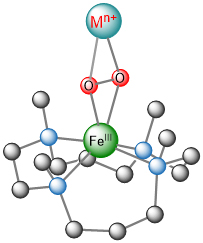
Fig. 20. Structure of the LA bound [(TMC)FeIII(O2)]+ complexes. Reprinted with permission from Ref. [125]. Copyright 2016, John Wiley and Sons.
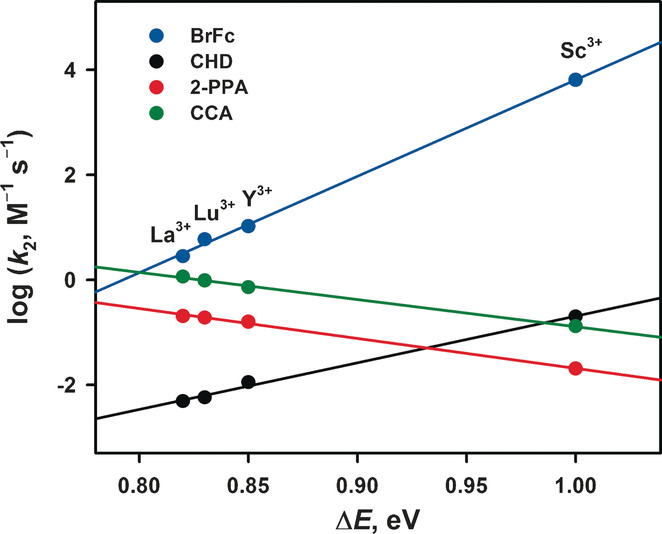
Fig. 21. Plots of logk2 values of electron transfer from BrFc, hydrogen atom abstract from 1,4-cyclohexadiene (CHD), deformylation from 2-PPA and CCA by the LA bound [(TMC)FeIII(O2)]+ complexes. Reprinted with permission from Ref. [125]. Copyright 2016, John Wiley and Sons.
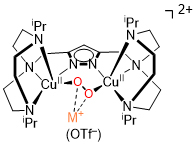
Fig. 22. The structure of alkali metal ions side-on bound CuII2(μ-η1:η1-O2) complexes. Reprinted with permission from Ref. [128]. Copyright 2021, American Chemical Society.
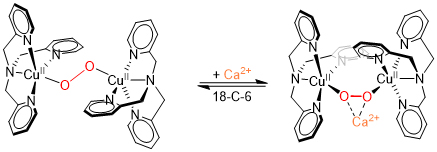
Fig. 23. Ca2+ binding mediated interconversion of cis and trans-peroxo dicopper cores. Reprinted with permission from Ref. [129]. Copyright 2021, John Wiley and Sons.
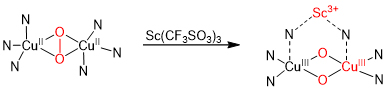
Scheme 13. LA-modulated cleavage of the bis(μ-peroxo) bridge in the [(MeAN)2CuII2(O22-)]2+ toward LA bound dicopper(III) bis(μ-oxo) species. Reprinted with permission from Ref. [130]. Copyright 2017, American Chemical Society.
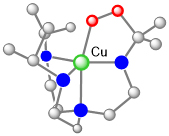
Fig. 24. DFT structure of the [Cu(iPr2-tren-C(CH3)2O2)]+ complex. Reprinted with permission from Ref. [131]. Copyright 2020, American Chemical Society.
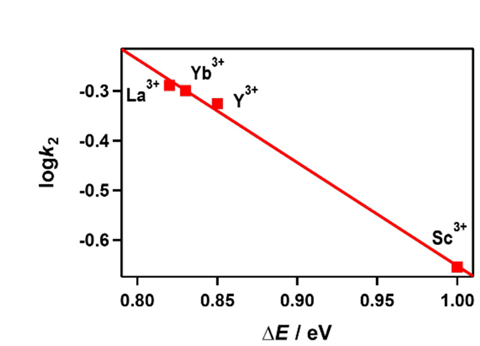
Fig. 25. Plot of logk2 values of the deformylation reaction of the [Cu(iPr2-tren-C(CH3)2O2)]+ complex with CCA in the presence of LA. Reprinted with permission from Ref. [131]. Copyright 2020, American Chemical Society.
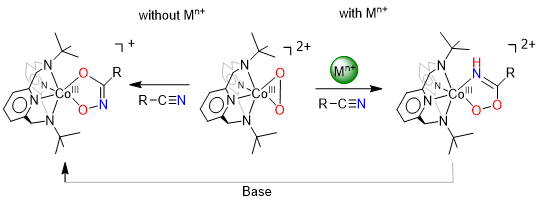
Scheme 14. LA modulated oxidative reactivity of the [CoIII(TBDAP)(O2)]+ complex. Reprinted with permission from Ref. [132]. Copyright 2021, American Chemical Society.
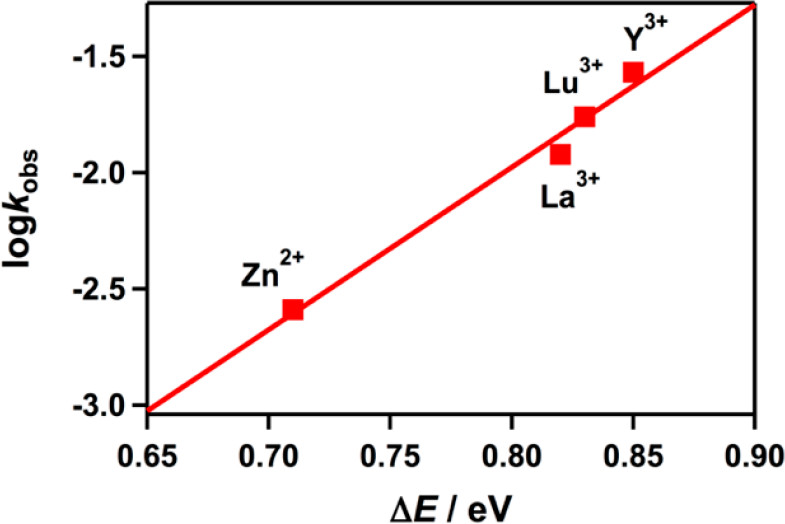
Fig. 26. Plot of logkobs vs the Lewis acidity of metal ions (ΔE) for the reaction of the [CoIII(TBDAP)(O2)]+ with acetonitrile. Reprinted with permission from Ref. [132]. Copyright 2021, American Chemical Society.
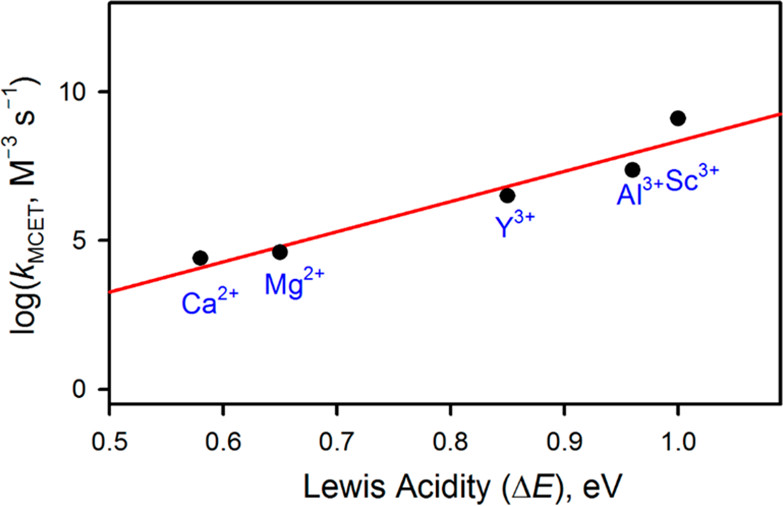
Fig. 27. Plot of logk2 vs Lewis acidity (ΔE) of the redox-inactive metal ions. Reprinted with permission from Ref. [137]. Copyright 2020, American Chemical Society.
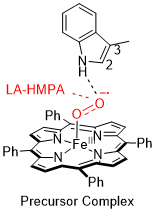
Fig. 28. Proposed precursor complex prior to indole oxygenation by (TPP)iron(III) superoxo complex. Reprinted with permission from Ref. [138]. Copyright 2024, John Wiley and Sons.
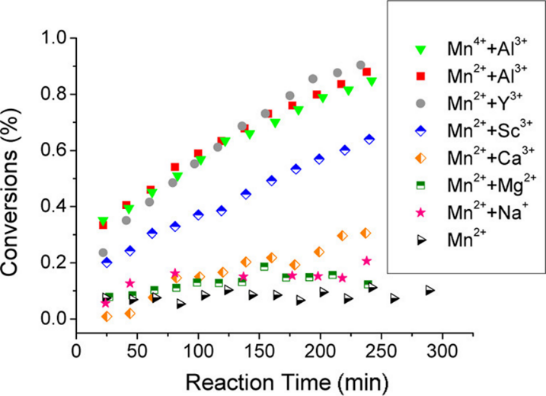
Fig. 29. LA-accelerated sulfide oxygenation by Mn(Me2EBC)Cl2 with PhIO. Reprinted with permission from Ref. [82]. Copyright 2013, American Chemical Society.
| LA | Conv. (%) | Epoxide (%) |
|---|---|---|
| — | 7.6 | 6.4 |
| Na+ | 9.9 | 6.0 |
| Mg2+ | 92.6 | 80.5 |
| Ca2+ | 93.5 | 77.4 |
| Yb3+ | 100 | 67.1 |
| Al3+ | 100 | 79.7 |
| Sc3+ | 100 | 94.4 |
Table 5 LA-modulated cyclooctene epoxidation by Mn(BPMEN)Cl2 catalyst with PhI(OAc)2.
| LA | Conv. (%) | Epoxide (%) |
|---|---|---|
| — | 7.6 | 6.4 |
| Na+ | 9.9 | 6.0 |
| Mg2+ | 92.6 | 80.5 |
| Ca2+ | 93.5 | 77.4 |
| Yb3+ | 100 | 67.1 |
| Al3+ | 100 | 79.7 |
| Sc3+ | 100 | 94.4 |
| Additives | Con. (%) | Epoxide (%) | |
|---|---|---|---|
| none | 9.9 | 4.1 | |
| BA | HOAc | 23.7 | 5.9 |
| HCl | 28.1 | 10.5 | |
| HClO4 | 59.0 | 36.3 | |
| HOTf | 61.9 | 40.3 | |
| LA | NaOTf | 33.3 | 24.7 |
| Mg(OTf)2 | 46.2 | 41.8 | |
| Zn(OTf)2 | 66.6 | 63.3 | |
| Y(OTf)3 | 98.8 | 84.4 | |
| Yb(OTf)3 | 90.1 | 81.2 | |
| Al(OTf)3 | 97.8 | 91.4 | |
| LA with H2O | Al(OTf)3 + H2O (10 μL) | 87.0 | 76.1 |
| Al(OTf)3 + H2O (20 μL) | 53.9 | 44.6 | |
| Al(OTf)3 + H2O (40 μL) | 29.6 | 18.0 | |
Table 6 LA and BA-modulated olefin oxygenation by Mn(TPA)Cl2 complex with PhI(OAc)2.
| Additives | Con. (%) | Epoxide (%) | |
|---|---|---|---|
| none | 9.9 | 4.1 | |
| BA | HOAc | 23.7 | 5.9 |
| HCl | 28.1 | 10.5 | |
| HClO4 | 59.0 | 36.3 | |
| HOTf | 61.9 | 40.3 | |
| LA | NaOTf | 33.3 | 24.7 |
| Mg(OTf)2 | 46.2 | 41.8 | |
| Zn(OTf)2 | 66.6 | 63.3 | |
| Y(OTf)3 | 98.8 | 84.4 | |
| Yb(OTf)3 | 90.1 | 81.2 | |
| Al(OTf)3 | 97.8 | 91.4 | |
| LA with H2O | Al(OTf)3 + H2O (10 μL) | 87.0 | 76.1 |
| Al(OTf)3 + H2O (20 μL) | 53.9 | 44.6 | |
| Al(OTf)3 + H2O (40 μL) | 29.6 | 18.0 | |
| LA | Conv. (%) | Epoxide (%) |
|---|---|---|
| none | 38.0 | 20.2 |
| NaOTf | 49.7 | 21.2 |
| Mg(OTf)2 | 44.1 | 24.1 |
| Ca(OTf)2 | 45.3 | 31.1 |
| Zn(OTf)2 | 70.1 | 42.3 |
| Ba(OTf)2 | 47.2 | 20.2 |
| Y(OTf)3 | 63.1 | 33.1 |
| Yb(OTf)3 | 64.5 | 36.0 |
| Al(OTf)3 | 97.5 | 62.4 |
| Sc(OTf)3 | 99.9 | 64.3 |
| HOTf a | 58.5 | 31.6 |
Table 7 LA-modulated catalytic epoxidation of cyclooctene by Fe(BPMEN)(OTf)2 with aqueous H2O2.
| LA | Conv. (%) | Epoxide (%) |
|---|---|---|
| none | 38.0 | 20.2 |
| NaOTf | 49.7 | 21.2 |
| Mg(OTf)2 | 44.1 | 24.1 |
| Ca(OTf)2 | 45.3 | 31.1 |
| Zn(OTf)2 | 70.1 | 42.3 |
| Ba(OTf)2 | 47.2 | 20.2 |
| Y(OTf)3 | 63.1 | 33.1 |
| Yb(OTf)3 | 64.5 | 36.0 |
| Al(OTf)3 | 97.5 | 62.4 |
| Sc(OTf)3 | 99.9 | 64.3 |
| HOTf a | 58.5 | 31.6 |
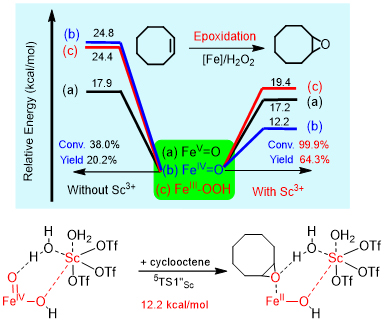
Scheme 15. The activation barriers of the potential active oxygen intermediates in Fe(BPMEN)(OTf)2-catalzyed cyclooctene epoxidation in the absence/presence of Sc(OTf)3 with aqueous H2O2. Reprinted with permission from Ref. [150]. Copyright 2017, American Chemical Society.
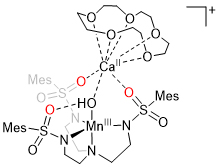
Fig. 30. The structure of the MnIII(μ-OH)Ca2+ generated through dioxygen oxidation of the [MnIIMST]- complex in the presence of Ca(OTf)2/15-crown-5. Reprinted with permission from Ref. [157]. Copyright 2011, American Chemical Society.
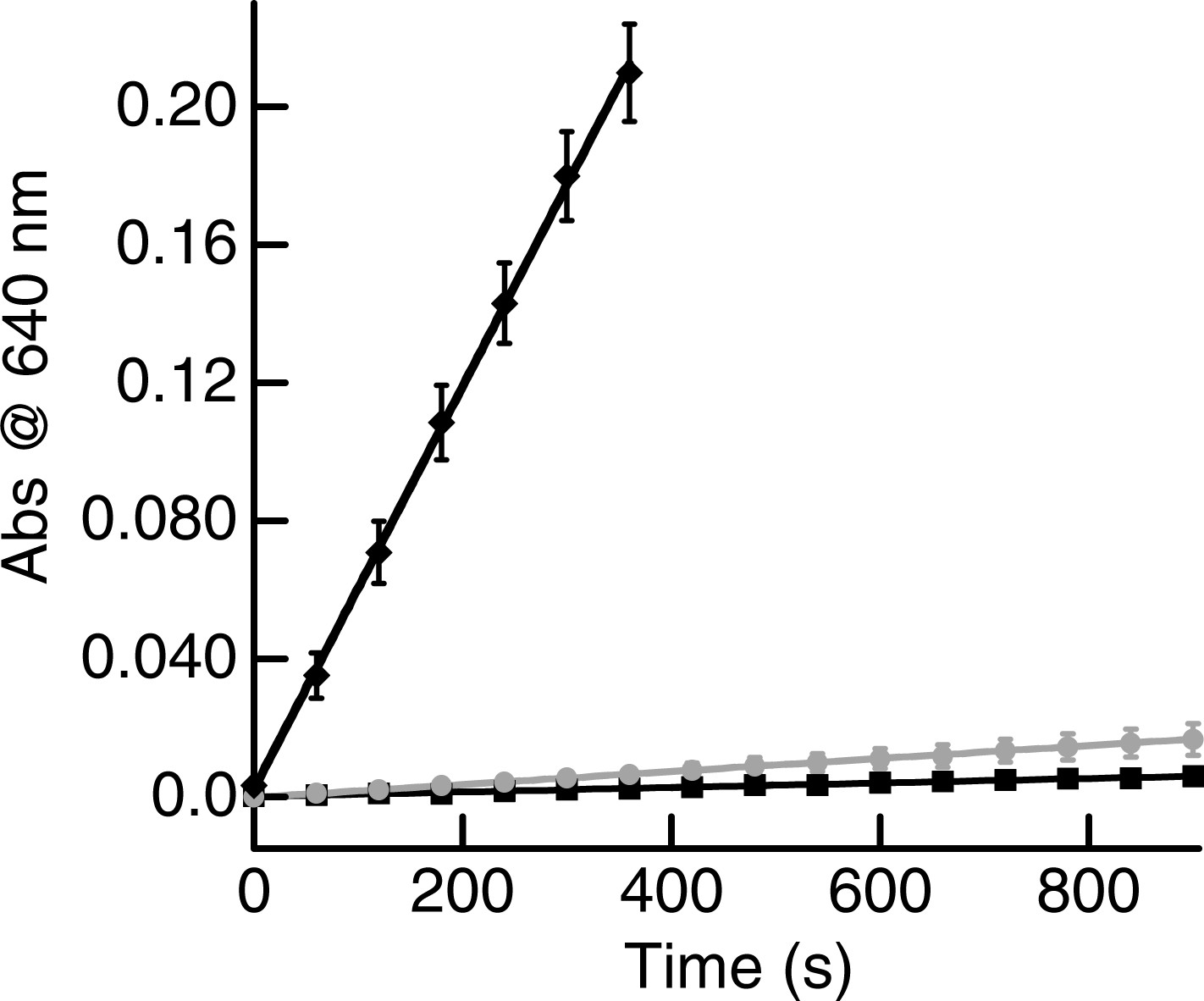
Fig. 31. Initial kinetics of the reaction of [MnIIMST]- complex with dioxygen alone ((black, ?) in the presence of Ca(OTf)2/15-crown-5 (black, ?) or Ba(OTf)2/18-crown-6 (gray, ?) in CH2Cl2 at room temperature. Reprinted with permission from Ref. [157]. Copyright 2011, American Chemical Society.
| LA | Time (h) | Con. (%) | Benzene (%) |
|---|---|---|---|
| None | 24 | 30.3 | 10.4 |
| NaOTf | 24 | 32.2 | 14.5 |
| Mg(OTf)2 | 24 | 62.2 | 44.8 |
| Ca(OTf)2 | 24 | 70.1 | 52 |
| Ba(OTf)2 | 16 | 71.3 | 59.2 |
| Zn(OTf)2 | 16 | 99.2 | 85.3 |
| Y(OTf)3 | 8 | 99.5 | 82.3 |
| Al(OTf)3 | 8 | 99.6 | 83.3 |
| Sc(OTf)3 | 8 | 99.4 | 85.3 |
Table 8 LA-promoted dioxygen activation by the [VIV(O)Cl(TPA)]PF6 complex toward catalytic hydrogen abstraction from 1,4-cyclohexadiene.
| LA | Time (h) | Con. (%) | Benzene (%) |
|---|---|---|---|
| None | 24 | 30.3 | 10.4 |
| NaOTf | 24 | 32.2 | 14.5 |
| Mg(OTf)2 | 24 | 62.2 | 44.8 |
| Ca(OTf)2 | 24 | 70.1 | 52 |
| Ba(OTf)2 | 16 | 71.3 | 59.2 |
| Zn(OTf)2 | 16 | 99.2 | 85.3 |
| Y(OTf)3 | 8 | 99.5 | 82.3 |
| Al(OTf)3 | 8 | 99.6 | 83.3 |
| Sc(OTf)3 | 8 | 99.4 | 85.3 |
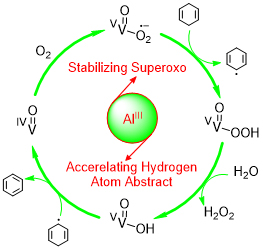
Scheme 16. Proposed mechanism for LA-promoted dioxygen activation and catalytic hydrogen abstraction by the [VIV(O)Cl(TPA)]PF6 complex. Reprinted with permission from Ref. [159]. Copyright 2017, American Chemical Society.
| LA | Conv. (%) | Aldehyde (%) | Epoxide (%) |
|---|---|---|---|
| none | 63 | 6 | 50 |
| NaOTf | 63 | 7 | 51 |
| Ca(OTf)2 | 62 | 7 | 50 |
| Mg(OTf)2 | 65 | 6 | 52 |
| Ba(OTf)2 | 61 | 6 | 51 |
| Y(OTf)3 | 40 | 5 | 30 |
| Al(OTf)3 | 89 | 9 | 77 |
| Sc(OTf)3 | 81 | 8 | 70 |
Table 9 LA-modulated dioxygen activation and catalysis by FeII(4-Me-BPMEN)(OTf)2 complex toward β-methyl-styrene epoxidation.
| LA | Conv. (%) | Aldehyde (%) | Epoxide (%) |
|---|---|---|---|
| none | 63 | 6 | 50 |
| NaOTf | 63 | 7 | 51 |
| Ca(OTf)2 | 62 | 7 | 50 |
| Mg(OTf)2 | 65 | 6 | 52 |
| Ba(OTf)2 | 61 | 6 | 51 |
| Y(OTf)3 | 40 | 5 | 30 |
| Al(OTf)3 | 89 | 9 | 77 |
| Sc(OTf)3 | 81 | 8 | 70 |
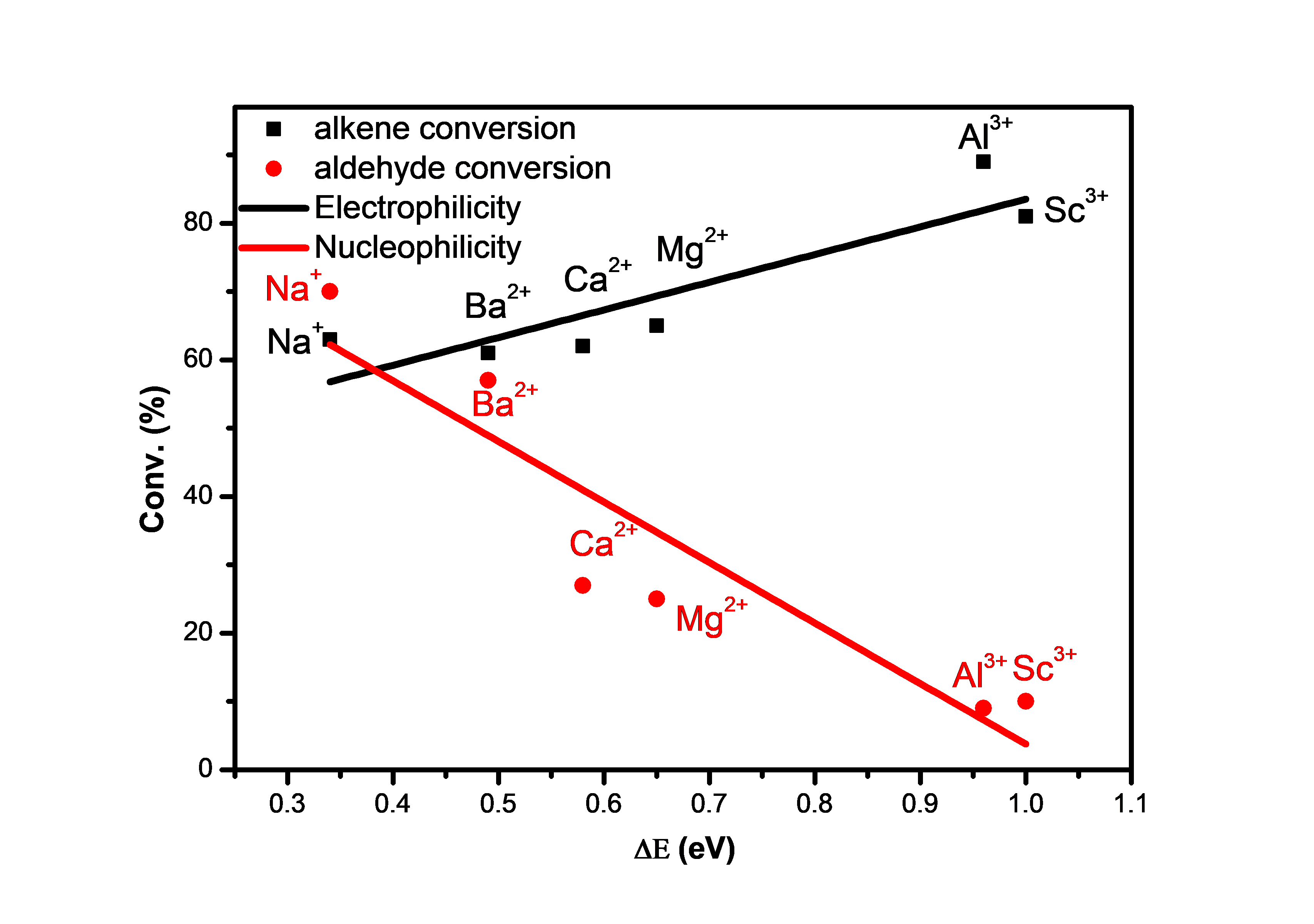
Fig. 32. LA-modulated amphoterically catalytic activity of Fe(4-Me-BPMEN)(OTf)2 in olefin oxygenation and 2-PPA deformylation. Reprinted with permission from Ref. [161]. Copyright 2026, Elsevier.
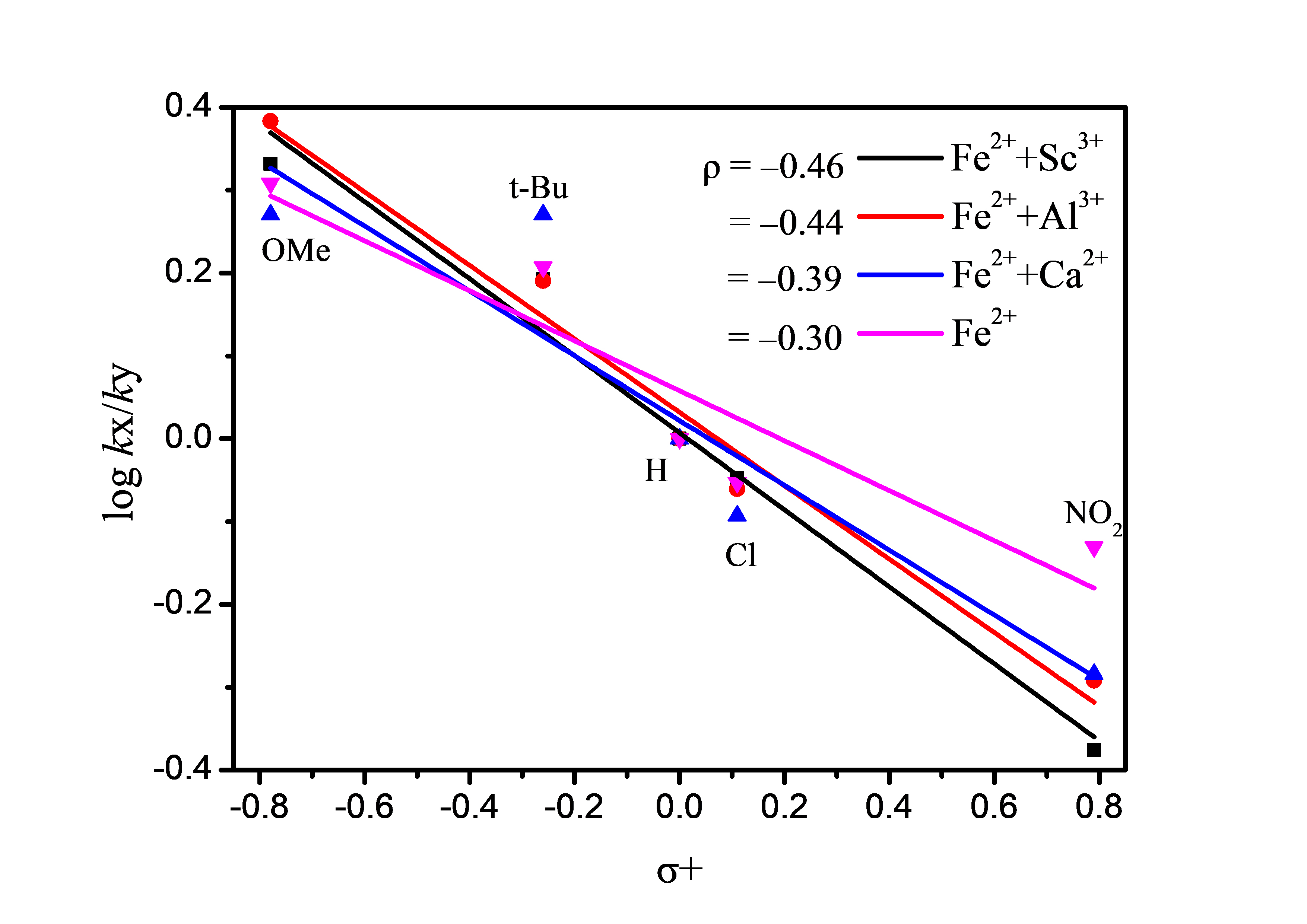
Fig. 33. Hammett plot for relative reactivities of styrene to para-substituted styrene catalyzed by Fe(BPMEN)(OTf)2 in the presence of different LAs. Reprinted with permission from Ref. [160]. Copyright 2022, Royal Society of Chemistry.
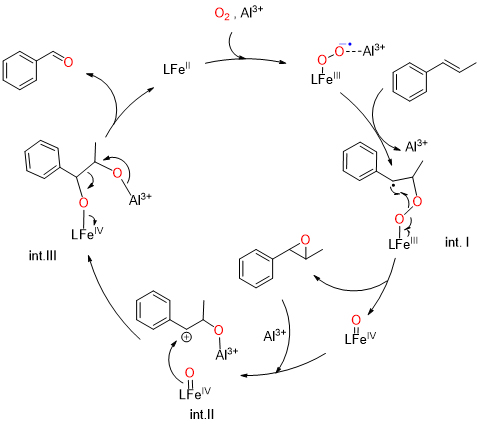
Scheme 17. Proposed mechanism for LA-improved olefin oxygenation by iron(II) complex through dioxygen activation. Reprinted with permission from Ref. [161]. Copyright 2026, Elsevier.
|
| [1] | 唐祺, 王博邈, 王崇太, 吴道雄, 程子鸣, 韩慧敏, 韩雷云, 陈华夏, 华英杰. 界面结构调控提高酸性介质中MoxOy/Co3O4电催化氧析出反应的性能[J]. 催化学报, 2026, 88(9): 295-306. |
| [2] | 高梓皓, 黄凯, 徐庆玲, 王鑫, 刘志成, 邵斌, 胡军. 催化微环境调控促进高效CO2捕集与原位乙烷氧化脱氢制乙烯[J]. 催化学报, 2026, 88(9): 322-334. |
| [3] | Vladimir I. Kurganskii, Dmitry P. Lubov, Alexander G. Medvedev, 王瑞虎, Konstantin P. Bryliakov. 非血红素锰配合物催化的缺电子烯烃仿生不对称顺式羟基叠氮化反应[J]. 催化学报, 2026, 88(9): 468-477. |
| [4] | 曾悦, 王泓升, 轩靖, 肖萍, 冯瑶瑶, 吕帅, 朱君江. CeO2/Co3O4催化剂界面相互作用的尺寸依赖性: 从单原子到纳米颗粒[J]. 催化学报, 2026, 88(9): 478-491. |
| [5] | 朱君江, 许凯强. CdS/NiPc S-型光催化剂及其增强的光催化产过氧化氢性能[J]. 催化学报, 2026, 88(9): 5-8. |
| [6] | 魏耀文, 王建伟, 郭皓, 班涛, 岳玉峰, 胡地, 黄海保. 缺陷UiO-66催化剂在温和条件下实现甲烷高选择性氧化制乙酸[J]. 催化学报, 2026, 88(9): 356-368. |
| [7] | 李东珀, 毛倩倩, 熊超, 系璐颖, 聂宇, 徐啸天, 纪红兵. 构建钌卟啉共价有机框架催化金刚烷C-H键空气氧化接力实现烯烃环氧化[J]. 催化学报, 2026, 88(9): 442-456. |
| [8] | Sathi Chatterjee, 李红梅, 刘康, 林璋, 柴立元, 刘敏. 二维(2D)材料上的单原子催化剂用于光催化CO2还原: 基础、设计与新兴策略[J]. 催化学报, 2026, 88(9): 86-128. |
| [9] | 张家雨, 王昆, 于晶露, 徐凯洋, 杨璐, 饶佳丽, 宋树芹, 王毅. Mn掺杂调控NiCo LDH活性位点用于H2O2与甲酸盐的节能耦合电合成[J]. 催化学报, 2026, 88(9): 307-321. |
| [10] | 张颖贞, 张伟, 黄章政, 蔡伟龙, Yun Hau Ng, 黄剑莹, 赖跃坤. 锰掺杂触发NiSe2催化剂动态相变以促进尿素氧化反应[J]. 催化学报, 2026, 88(9): 335-346. |
| [11] | 张心怡, 董威辰, 曹毅, 周彩霞, 郭家秀, 张海龙. Cu-KFI分子筛催化剂上甲烷直接转化高效连续合成甲醇[J]. 催化学报, 2026, 88(9): 369-381. |
| [12] | 王松玲, 黄安华, 尹风星, 卢瑞祥, 刘文刚, 张云, 乔波涛. 原位合成双氧水用于甲烷高选择性氧化制甲醇[J]. 催化学报, 2026, 88(9): 347-355. |
| [13] | 刘淑芳, 陈锋宇, 李思媛, 叶宇昕, 欧阳钢锋. 氧中心有机自由基最新研究进展: 表征、合成及应用[J]. 催化学报, 2026, 88(9): 183-206. |
| [14] | 张盛鑫, 李安琦, 虞周楠, 李林, 刘晓艳, 刘伟, 王爱琴, 张涛. 铂镍单原子合金催化剂在一氧化碳还原一氧化氮反应中协同效应的最大化[J]. 催化学报, 2026, 88(9): 422-431. |
| [15] | 张可可, 张富林, 王月欣, 黄凤伟, 熊康慧, 顾向奎, 郎贤军. 调控亚乙烯基连接的噻吩并噻吩共价有机框架的电子推拉效应以增强选择性光催化[J]. 催化学报, 2026, 87(8): 206-216. |
| 阅读次数 | ||||||
|
全文 |
|
|||||
|
摘要 |
|
|||||


