
Chinese Journal of Catalysis ›› 2026, Vol. 88: 35-85.DOI: 10.1016/S1872-2067(26)65105-4
• Reviews • Previous Articles Next Articles
Wenmin Leia, Yan Zhanga, Dalin Suna, Lin Bana, Heng Zhoua, Song Yanga,*( ), Liquan Jingb,*(), Jinguang Huc,*(), Heng Zhanga,*()
Received:2025-12-11
Accepted:2026-01-30
Online:2026-09-18
Published:2026-07-18
About author:Song Yang is a distinguished professor at Guizhou University, China. He obtained his Ph.D. from Guizhou University in 2005 and accepted a postdoctoral position in the University of Texas Southwestern Medical Center at Dallas, USA. He was awarded with China National “Ten-Thousand-Talent Plan” and Distinguished Professor of Cheung Kong Scholars Program. His research interests include biofuels, discovery of new agrochemicals, and nanomaterials. He has authored over 50 patents and more than 300 scientific papers in international journals (H-index: 79). He is currently editor-in-chief of Current Catalysis and associate editor of Current Nanoscience.Supported by:Wenmin Lei, Yan Zhang, Dalin Sun, Lin Ban, Heng Zhou, Song Yang, Liquan Jing, Jinguang Hu, Heng Zhang. Transition-metals photocatalysts for lignin valorization toward sustainable biofuel production[J]. Chinese Journal of Catalysis, 2026, 88: 35-85.
Add to citation manager EndNote|Ris|BibTeX
URL: https://www.cjcatal.com/EN/10.1016/S1872-2067(26)65105-4

Fig. 1. (a) Photocatalytic conversion of lignin into fuel pathways. (b) Statistical analysis of publications on photocatalytic conversion of lignin into fuels and precursors, 2014-2025.

Fig. 2. (a) Statistical distribution of transition metal catalysts for photocatalytic lignin conversion into fuels and precursors in the periodic table (through 2025). (b) Corresponding statistical chart.
| Ref. | Basic structural characteristics | Bond-breaking mechanism | Actual lignin conversion analysis | Transition metal materials | Gas and liquid fuel co-production | Fuel precursor upgrade | Economic and environmental impact evaluation |
|---|---|---|---|---|---|---|---|
| [ | ✔ | ✔ | × | × | × | × | × |
| [ | ✔ | × | ✔ | × | × | × | × |
| [ | ✔ | × | × | × | × | ✔ | × |
| [ | ✔ | × | ✔ | × | × | ✔ | × |
| [ | × | × | × | × | ✔ | × | × |
| [ | ✔ | × | × | × | × | × | ✔ |
| [ | ✔ | ✔ | × | × | × | × | × |
| [ | × | ✔ | ✔ | × | × | × | × |
| This work | ✔ | ✔ | ✔ | ✔ | ✔ | ✔ | ✔ |
Table 1 A comparison of the current study with other associated publications.
| Ref. | Basic structural characteristics | Bond-breaking mechanism | Actual lignin conversion analysis | Transition metal materials | Gas and liquid fuel co-production | Fuel precursor upgrade | Economic and environmental impact evaluation |
|---|---|---|---|---|---|---|---|
| [ | ✔ | ✔ | × | × | × | × | × |
| [ | ✔ | × | ✔ | × | × | × | × |
| [ | ✔ | × | × | × | × | ✔ | × |
| [ | ✔ | × | ✔ | × | × | ✔ | × |
| [ | × | × | × | × | ✔ | × | × |
| [ | ✔ | × | × | × | × | × | ✔ |
| [ | ✔ | ✔ | × | × | × | × | × |
| [ | × | ✔ | ✔ | × | × | × | × |
| This work | ✔ | ✔ | ✔ | ✔ | ✔ | ✔ | ✔ |

Fig. 3. (a) Typical structural models of lignin. (b) Major monomeric units. (c) Characteristic linkage bonds in lignin. (d) Pretreatment methods for lignin.

Fig. 4. Structural characteristic model of KRL (a) and LS (b). Adapted with permission [49]. Copyright 2017, Wiley-VCH GmbH.
| Lignin category | Extraction conditions | Molecular formula | Molecular weight (g/mol) | Polydispersity (PDI) | Solubility |
|---|---|---|---|---|---|
| Kraft lignin | H2O, NaOH, Na2S, 150-180 °C | C9H8.5O2.1S0.1(OCH3)0.8(CO2H)0.2 | 180 | 2-4 | alkali, strongly polar organic solvents |
| Lignosulfonate (Softwood) | H2O, sulfites, 120-180 °C | C9H8.5O2.5(OCH3)0.85(SO3H)0.4 | 215−254 | 4-9 | water |
| Lignosulfonate (Hardwood) | H2O, sulfites, 120-180 °C | C9H7.5O2.5(OCH3)0.39(SO3H)0.6 | 188 | 4-9 | water |
| Organosolv lignin | High-boiling-point solvents, organic acids, etc., 180-210 °C | C9H8.53O2.45(OCH3)1.04 | ~188 | 2.4-6.4 | alkali, polar organic solvents |
| Steam explosion lignin | H2O, high temperature, and pressure | C9H8.53O2.45(OCH3)1.04 | ~188 | 1.5-2.8 | higher than Kraft lignin in organic solvents |
Table 2 Comparative analysis of lignin traits from diverse isolation techniques [31,55].
| Lignin category | Extraction conditions | Molecular formula | Molecular weight (g/mol) | Polydispersity (PDI) | Solubility |
|---|---|---|---|---|---|
| Kraft lignin | H2O, NaOH, Na2S, 150-180 °C | C9H8.5O2.1S0.1(OCH3)0.8(CO2H)0.2 | 180 | 2-4 | alkali, strongly polar organic solvents |
| Lignosulfonate (Softwood) | H2O, sulfites, 120-180 °C | C9H8.5O2.5(OCH3)0.85(SO3H)0.4 | 215−254 | 4-9 | water |
| Lignosulfonate (Hardwood) | H2O, sulfites, 120-180 °C | C9H7.5O2.5(OCH3)0.39(SO3H)0.6 | 188 | 4-9 | water |
| Organosolv lignin | High-boiling-point solvents, organic acids, etc., 180-210 °C | C9H8.53O2.45(OCH3)1.04 | ~188 | 2.4-6.4 | alkali, polar organic solvents |
| Steam explosion lignin | H2O, high temperature, and pressure | C9H8.53O2.45(OCH3)1.04 | ~188 | 1.5-2.8 | higher than Kraft lignin in organic solvents |

Fig. 5. (a) Energy-level diagram illustrating the conversion of reactants (R) to products (P) via thermal and photocatalytic processes. Here, C, E, and S denote the catalyst, ambient molecules (solvent and atmosphere), and byproducts, respectively. Adapted with permission [77]. Copyright 2020, Royal Society of Chemistry. (b) Representative semiconductor band edge positions based on redox potential. (c) Diagram depicting the mechanism by which lignin is photocatalytically converted into gas and liquid fuels.

Scheme 1. Depolymerization of β-O-4 model C-O bonds through a two-step approach (a) and a one-step approach. Adapted with permission [88]. Copyright 2014, American Chemical Society. Adapted with permission [89]. Copyright 2016, American Chemical Society. (b) The cleavage of C-O bonds mainly involves two methods: two-step depolymerization and one-step depolymerization.: two-step depolymerization and one-step depolymerization. Adapted with permission [90]. Copyright 2020, American Chemical Society. Adapted with permission [91]. Copyright 2024, Elsevier.

Fig. 6. (a) Mechanism of ZT-70 n-n heterojunction depolymerization of the β-O-4 model. Adapted with permission [93]. Copyright 2025, American Chemical Society. (b) Schematic diagram of photocatalytic breakdown pathway of lignin using 10% CN/5CQD/CZS. Adapted with permission [94]. Copyright 2024, Royal Society of Chemistry.
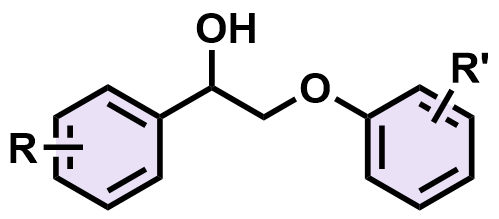
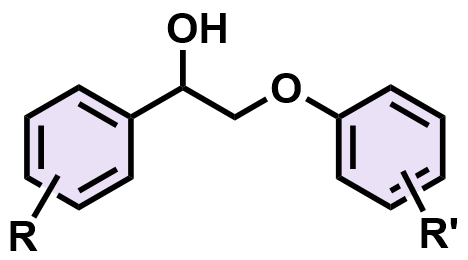
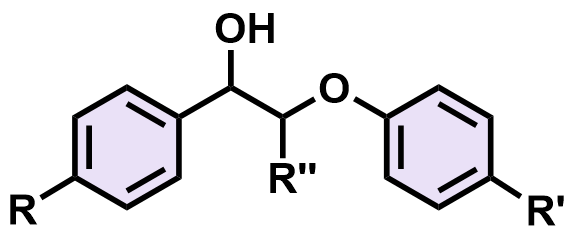
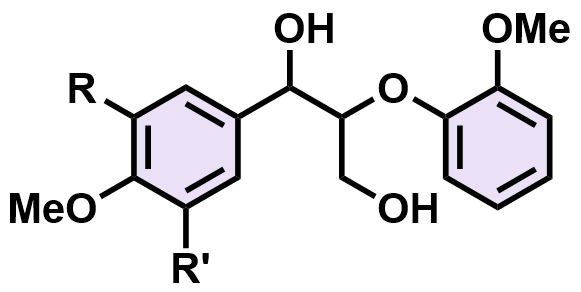
| β-O-4 model compound | Reaction type | Photocatalyst | Conversion (%) | Main products | Ref. | |||||
|---|---|---|---|---|---|---|---|---|---|---|
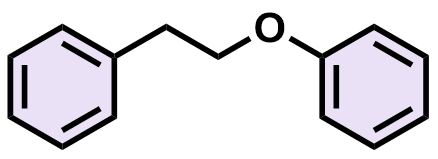 | — | H-TiO2 | 100 | phenol, styrene | [ | |||||
| Ti-N-NPs | 100 | phenol (49%), styrene (51%) | [ | |||||||
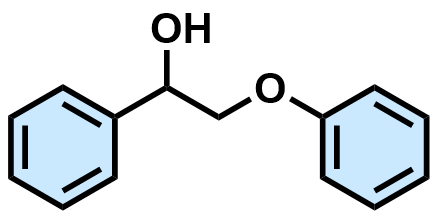 | two-step reaction | Pd/ZnIn2S4, TiO2 | 99 | phenol (93%), acetophenone (90%) | [ | |||||
| g-C3N4/Zn4In2S7 | 99 | phenol (93.4%), acetophenone (75.2%) | [ | |||||||
| CdS-SH/TiO2 | 99 | phenol (85%), acetophenone (87%) | [ | |||||||
| MoS2/ZnIn2S4 | 100 | phenol (86.6%), acetophenone (82.3%) | [ | |||||||
| g-C3N4/CQD/ZnS | 84 | phenol (60%), acetophenone (60.2%) | [ | |||||||
| Au-H-TiO2 | — | phenol, acetophenone (60.2%) | [ | |||||||
| (100) CdS@(220) CdS | 100 | phenol (94.3%), acetophenone (93.4%) | [ | |||||||
| CdSe@CdS | 94 | phenol (67%), acetophenone (66%) | [ | |||||||
| one-step reaction | Cr/ZnIn2S4 | ~100 | phenol (96%), acetophenone (95%) | [ | ||||||
| FeCoRu@SiO2-TiO2 | > 90 | phenol (55.6%), acetophenone (32.8%) | [ | |||||||
| g-C3N4/ZnIn2S4 | 99 | phenol, acetophenone | [ | |||||||
| CdS/UiO-66 | 90 | phenol, acetophenone | [ | |||||||
| Ce2S3/TiO2 | 94.6 | phenol (94%), acetophenone (80%) | [ | |||||||
| SiO2-TiO2 | — | phenol, acetophenone | [ | |||||||
| ZIS | ~100 | phenol (91.2%), acetophenone (91.7%) | [ | |||||||
| Ag2S@CdS | 99 | phenol (95%), acetophenone (91%) | [ | |||||||
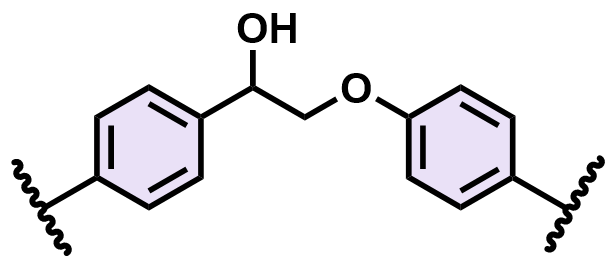 | one-step reaction | Bi2O3/Bi2WO6 | 85.62 | phenol, guaiacol, p-hydroxybenzaldehyde | [ | |||||
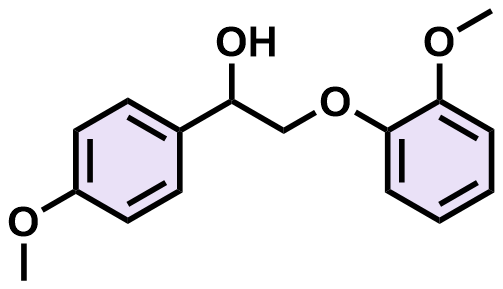 | two-step reaction | CdSe QDs | 90 | 4'-methoxyacetophenone, guaiacol | [ | |||||
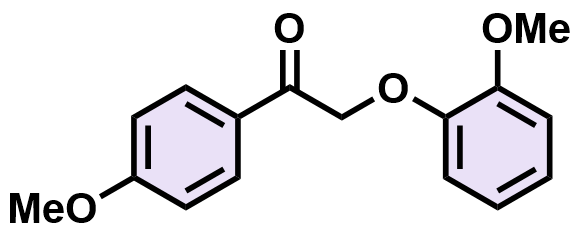 | — | PDI | 86 | phenols, ketones | [ | |||||
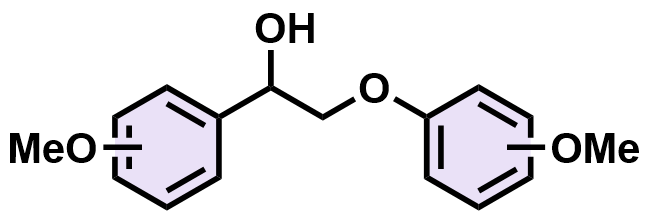 | two-step reaction | NiO/TiO2 | 99 | phenol (96%), acetophenone (78%) | [ | |||||
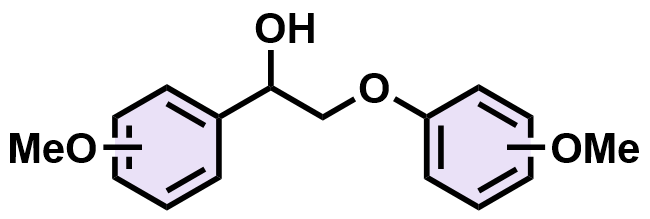 | two-step reaction | TiO2 | 100 | acetophenone (88%), guaiacol (73%) | [ | |||||
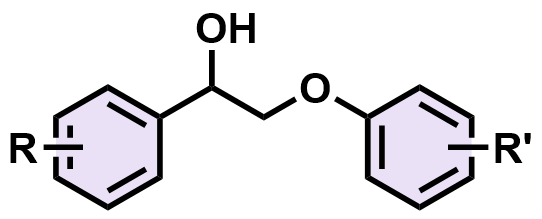 | two-step reaction | ZnIn2S4/TiO2 | 98 | phenol (85%), acetophenone (67%) | [ | |||||
 | two-step reaction | CzCPs | — | phenol (86%), acetophenone | [ | |||||
 | two-step reaction | CuBr2, Zn | > 99 | phenol (98%), acetophenone (99%) | [ | |||||
 | two-step reaction | Zn4In2S7/g-C3N4 | 99 | phenol (87%), acetophenone (86%) | [ | |||||
 | two-step reaction | Ir(ppy)2(bpy)-MCFs | > 90 | 4'-methoxyacetophenone (98%), guaiacol (97%) | [ | |||||
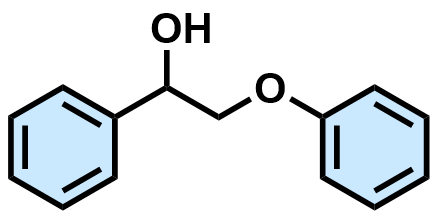 , , 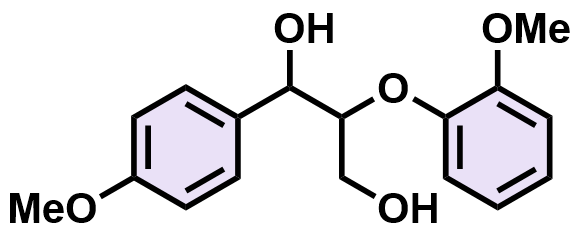 | one-step reaction | ZmIn2Sm+3, m = 1?6 | 99 | phenol (86%), acetophenone (82%) | [ | |||||
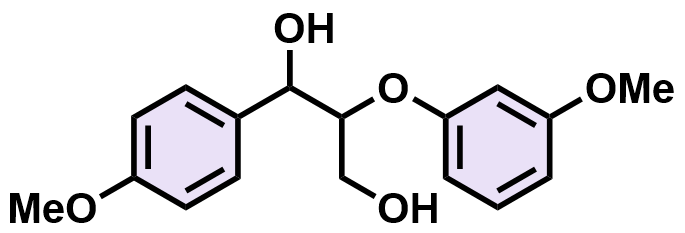 | two-step reaction | [4-AcNH-TEMPO]BF4 (bobbitt salt), [Ir(ppy)2(dtbbpy)]PF6 | — | 4'-Methoxyacetophenone (88%), guaiacol (89%) | [ | |||||
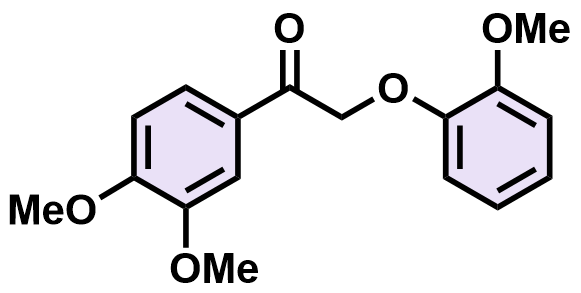 , , 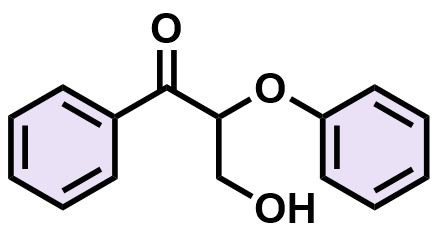 | — | Cu (bathocup)(XantPhos) BF4 | — | acetophenone (70%) | [ | |||||
Table 3 Photocatalytic transformation of β-O-4 lignin models targeting C-O bond cleavage.
| β-O-4 model compound | Reaction type | Photocatalyst | Conversion (%) | Main products | Ref. | |||||
|---|---|---|---|---|---|---|---|---|---|---|
| | — | H-TiO2 | 100 | phenol, styrene | [ | |||||
| Ti-N-NPs | 100 | phenol (49%), styrene (51%) | [ | |||||||
| | two-step reaction | Pd/ZnIn2S4, TiO2 | 99 | phenol (93%), acetophenone (90%) | [ | |||||
| g-C3N4/Zn4In2S7 | 99 | phenol (93.4%), acetophenone (75.2%) | [ | |||||||
| CdS-SH/TiO2 | 99 | phenol (85%), acetophenone (87%) | [ | |||||||
| MoS2/ZnIn2S4 | 100 | phenol (86.6%), acetophenone (82.3%) | [ | |||||||
| g-C3N4/CQD/ZnS | 84 | phenol (60%), acetophenone (60.2%) | [ | |||||||
| Au-H-TiO2 | — | phenol, acetophenone (60.2%) | [ | |||||||
| (100) CdS@(220) CdS | 100 | phenol (94.3%), acetophenone (93.4%) | [ | |||||||
| CdSe@CdS | 94 | phenol (67%), acetophenone (66%) | [ | |||||||
| one-step reaction | Cr/ZnIn2S4 | ~100 | phenol (96%), acetophenone (95%) | [ | ||||||
| FeCoRu@SiO2-TiO2 | > 90 | phenol (55.6%), acetophenone (32.8%) | [ | |||||||
| g-C3N4/ZnIn2S4 | 99 | phenol, acetophenone | [ | |||||||
| CdS/UiO-66 | 90 | phenol, acetophenone | [ | |||||||
| Ce2S3/TiO2 | 94.6 | phenol (94%), acetophenone (80%) | [ | |||||||
| SiO2-TiO2 | — | phenol, acetophenone | [ | |||||||
| ZIS | ~100 | phenol (91.2%), acetophenone (91.7%) | [ | |||||||
| Ag2S@CdS | 99 | phenol (95%), acetophenone (91%) | [ | |||||||
| | one-step reaction | Bi2O3/Bi2WO6 | 85.62 | phenol, guaiacol, p-hydroxybenzaldehyde | [ | |||||
| | two-step reaction | CdSe QDs | 90 | 4'-methoxyacetophenone, guaiacol | [ | |||||
| | — | PDI | 86 | phenols, ketones | [ | |||||
| | two-step reaction | NiO/TiO2 | 99 | phenol (96%), acetophenone (78%) | [ | |||||
| | two-step reaction | TiO2 | 100 | acetophenone (88%), guaiacol (73%) | [ | |||||
| | two-step reaction | ZnIn2S4/TiO2 | 98 | phenol (85%), acetophenone (67%) | [ | |||||
| | two-step reaction | CzCPs | — | phenol (86%), acetophenone | [ | |||||
| | two-step reaction | CuBr2, Zn | > 99 | phenol (98%), acetophenone (99%) | [ | |||||
| | two-step reaction | Zn4In2S7/g-C3N4 | 99 | phenol (87%), acetophenone (86%) | [ | |||||
| | two-step reaction | Ir(ppy)2(bpy)-MCFs | > 90 | 4'-methoxyacetophenone (98%), guaiacol (97%) | [ | |||||
| , | one-step reaction | ZmIn2Sm+3, m = 1?6 | 99 | phenol (86%), acetophenone (82%) | [ | |||||
| | two-step reaction | [4-AcNH-TEMPO]BF4 (bobbitt salt), [Ir(ppy)2(dtbbpy)]PF6 | — | 4'-Methoxyacetophenone (88%), guaiacol (89%) | [ | |||||
| , | — | Cu (bathocup)(XantPhos) BF4 | — | acetophenone (70%) | [ | |||||

Fig. 7. (a) Graphical illustration of the preparation of Ce2S3/TiO2 S-scheme heterojunctions. (b) Schematic diagram of process improvement for Ce2S3/TiO2 S-scheme heterojunction photocatalytic depolymerization of PP-ol. (c) Work function of Ce2S3/TiO2. (d) Schematic diagram of the mechanism of photocatalytic lignin cracking on Ce2S3/TiO2. Reproduced with permission [109]. Copyright 2024, American Chemical Society. Schematic illustration of the preparation (e) and charge density distribution (f) of a half-unit-cell MoS2/ZnIn2S4 monolayer. (g) DFT calculations of BDE for EPP-ol and Cα-H bonds and DF for LCα-H under different conditions. (h) Conversion efficiency and product yield of PP-ol photocatalytic conversion by MoS2/ZIS-300 at different concentrations. (i) Effect of water volume on PP-ol conversion rate and product yield. Reproduced with permission [101]. Copyright 2024, American Chemical Society.

Scheme 2. Primary reaction (a) and minor reaction (b) of C-C bond depolymerization in the β-O-4 model. (c) Proposed mechanism for C-C bond depolymerization in the β-O-4 model.
| β-O-4 model compound | Light source | Photocatalyst | Conversion (%) | Main products | Ref. | |||
|---|---|---|---|---|---|---|---|---|
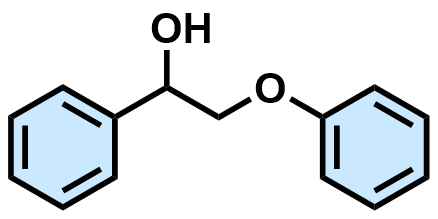 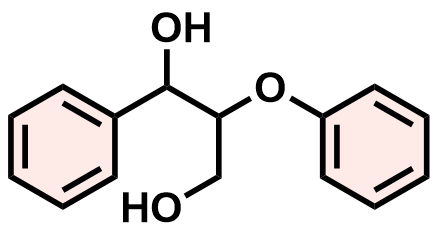 | visible light | C3N4 | 94 | benzaldehyde (60%), benzoic acid (16%) | [137] | |||
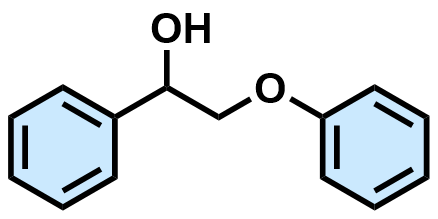 | simulated sunlight | CuO/BiVO4 | 86.5 | aromatic compounds (665.03 μmol gcat−1 h−1) | [138] | |||
 | UV | P2W17V (001)/-TiO2 | 98.8 | benzaldehyde (72%) | [135] | |||
 | visible light | urchin-like Nb2O5 hollow microspheres | 94 | benzaldehyde, phenyl formate, benzoic acid | [134] | |||
  | blue LED | triazine-heptazine-based carbon nitride | 96.1 | benzaldehyde (60.3%), phenyl formate (47.9%) | [139] | |||
 | simulated sunlight | g-C3N4/rGO/CdS | 95 | benzaldehyde (71%), phenyl formate (69%) | [140] | |||
  | visible light | Ru1/MCN | 93 | benzaldehyde (92%), phenyl formate (90%), | [141] | |||
 | simulated sunlight | p-CN/p-PDI | 99 | benzaldehyde (59%), phenyl formate (37%), benzoic acid (7%) | [142] | |||
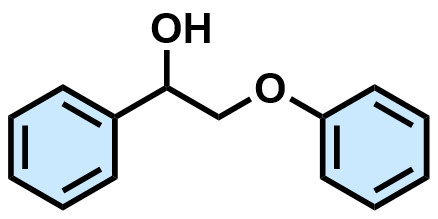 | simulated sunlight | Keplerate polyoxometalates | 97.8 | phenyl formate (8.8%), benzaldehyde (0.2%) | [143] | |||
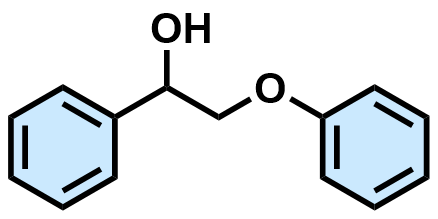 | visible light | Fe/mpg-CN | 98 | benzaldehyde (82%), phenyl formate (36%), benzoic acid (15%) | [144] | |||
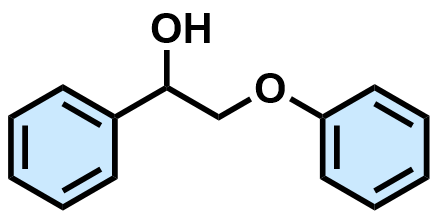 | simulated sunlight | H5PMo10V2O40/ g-C3N4(HPA/CN) | 97.4 | benzaldehyde (62.7%), benzoic acid (42.5%), phenyl formate (16.0%) | [145] | |||
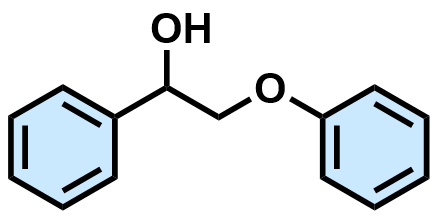 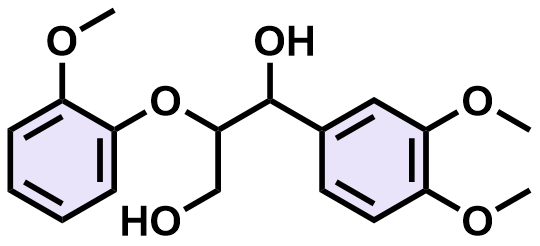 | visible light | Zn/CN | 99 | benzoic acid, benzaldehyde, benzoic acid methyl ester, and ketones | [146] | |||
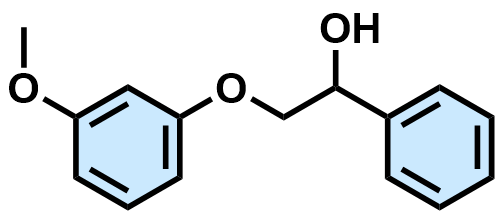 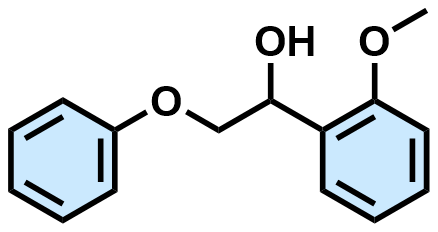 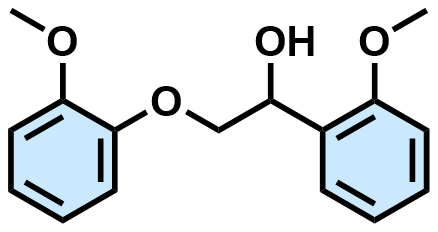 | visible light | g-C3N4/CQDs/WO3 | 99 | benzoic acid, benzaldehyde (83.92%) | [147] | |||
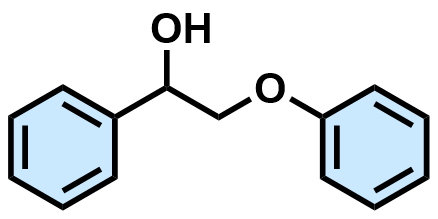 | visible light | g-C3N4 (PTCN) | 97.2 | benzoic acid (22.0%), benzaldehyde (13.0%), and phenyl formate (2.1%) | [148] | |||
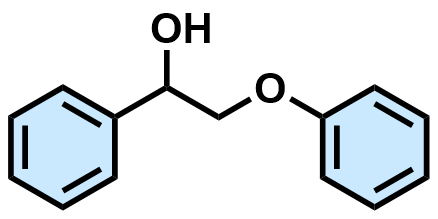 | visible light | Bi/CTF | 78.4 | benzoic acid (65.2%), benzaldehyde (81.4%), and phenyl formate (52.6%) | [149] | |||
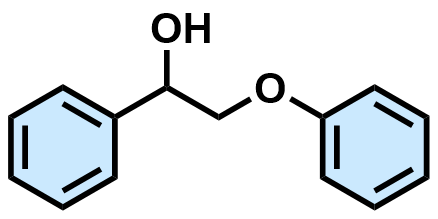 , , 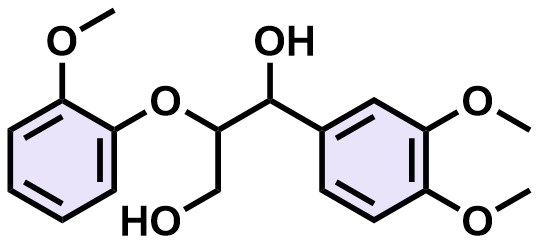 | simulated sunlight | Cu2S/g-C3N4 | 93.2 | aromatic compounds (1346.71 μmol gcat−1 h−1) | [150] | |||
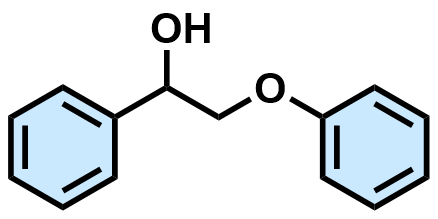 | visible light | M-TiO2/g-C3N4 | 96.8 | benzaldehyde (86.4%) | [75] | |||
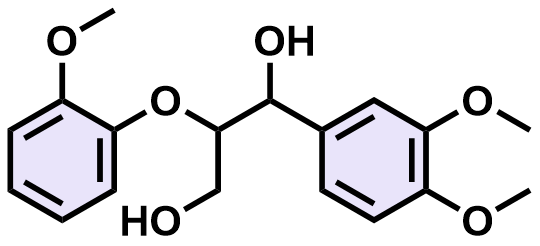 | simulated sunlight | RuC/TiO2 NPs | — | 3,4-dimethoxybenzaldehyde (52%), 2-(2-methoxyphenoxy)- acetaldehyde (36%) | [151] | |||
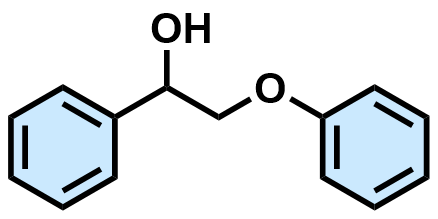 , , 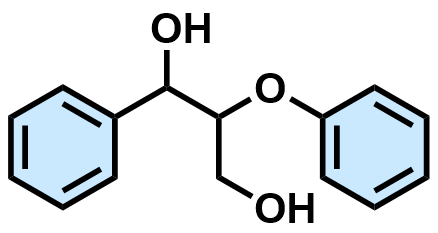 | visible light | CdS/2D g-C3N4 | — | best CRAM (96.5%) | [76] | |||
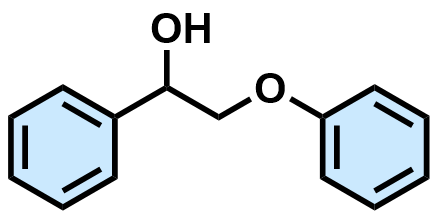 | visible light | R-C3‒xN4 | 89 | benzaldehyde (85%) | [152] | |||
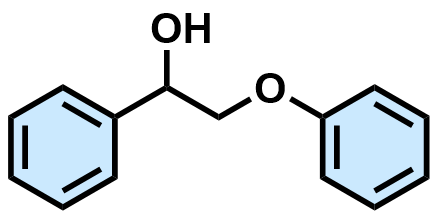
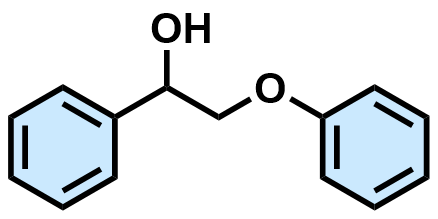
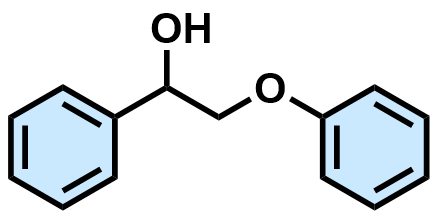
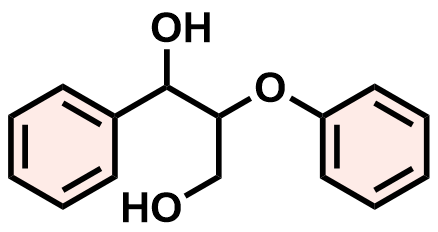
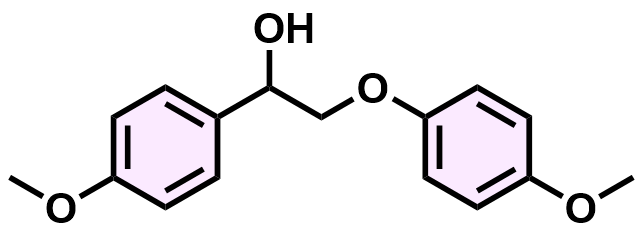
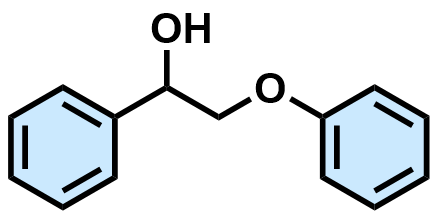
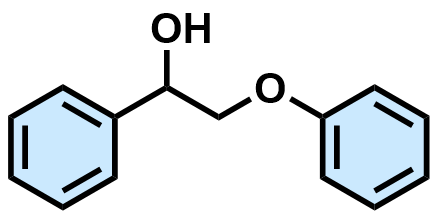
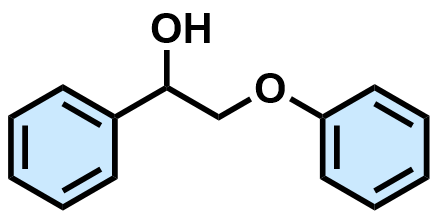
Table 4 Photocatalytic C-C bond cleavage in β-O-4 lignin model compounds.
| β-O-4 model compound | Light source | Photocatalyst | Conversion (%) | Main products | Ref. | |||
|---|---|---|---|---|---|---|---|---|
| | visible light | C3N4 | 94 | benzaldehyde (60%), benzoic acid (16%) | [137] | |||
| | simulated sunlight | CuO/BiVO4 | 86.5 | aromatic compounds (665.03 μmol gcat−1 h−1) | [138] | |||
| | UV | P2W17V (001)/-TiO2 | 98.8 | benzaldehyde (72%) | [135] | |||
| | visible light | urchin-like Nb2O5 hollow microspheres | 94 | benzaldehyde, phenyl formate, benzoic acid | [134] | |||
| | blue LED | triazine-heptazine-based carbon nitride | 96.1 | benzaldehyde (60.3%), phenyl formate (47.9%) | [139] | |||
| | simulated sunlight | g-C3N4/rGO/CdS | 95 | benzaldehyde (71%), phenyl formate (69%) | [140] | |||
| | visible light | Ru1/MCN | 93 | benzaldehyde (92%), phenyl formate (90%), | [141] | |||
| | simulated sunlight | p-CN/p-PDI | 99 | benzaldehyde (59%), phenyl formate (37%), benzoic acid (7%) | [142] | |||
| | simulated sunlight | Keplerate polyoxometalates | 97.8 | phenyl formate (8.8%), benzaldehyde (0.2%) | [143] | |||
| | visible light | Fe/mpg-CN | 98 | benzaldehyde (82%), phenyl formate (36%), benzoic acid (15%) | [144] | |||
| | simulated sunlight | H5PMo10V2O40/ g-C3N4(HPA/CN) | 97.4 | benzaldehyde (62.7%), benzoic acid (42.5%), phenyl formate (16.0%) | [145] | |||
| | visible light | Zn/CN | 99 | benzoic acid, benzaldehyde, benzoic acid methyl ester, and ketones | [146] | |||
| | visible light | g-C3N4/CQDs/WO3 | 99 | benzoic acid, benzaldehyde (83.92%) | [147] | |||
| | visible light | g-C3N4 (PTCN) | 97.2 | benzoic acid (22.0%), benzaldehyde (13.0%), and phenyl formate (2.1%) | [148] | |||
| | visible light | Bi/CTF | 78.4 | benzoic acid (65.2%), benzaldehyde (81.4%), and phenyl formate (52.6%) | [149] | |||
| , | simulated sunlight | Cu2S/g-C3N4 | 93.2 | aromatic compounds (1346.71 μmol gcat−1 h−1) | [150] | |||
| | visible light | M-TiO2/g-C3N4 | 96.8 | benzaldehyde (86.4%) | [75] | |||
| | simulated sunlight | RuC/TiO2 NPs | — | 3,4-dimethoxybenzaldehyde (52%), 2-(2-methoxyphenoxy)- acetaldehyde (36%) | [151] | |||
| , | visible light | CdS/2D g-C3N4 | — | best CRAM (96.5%) | [76] | |||
| | visible light | R-C3‒xN4 | 89 | benzaldehyde (85%) | [152] | |||

Fig. 8. Charge transport pathways in S-scheme (a), type-II (b), and Z-scheme (c) heterojunction systems.

Fig. 9. (a) Synthesis pathways for POSS-PDI, p-CN, and their composite p-CN/P-PDI, along with the proposed photocatalytic selective cleavage mechanism of the β-O-4 model compound within the p-CN/P-PDI S-scheme heterojunction. (b) Schematic diagram of the S-scheme heterojunction charge transfer process. (c) Fluorescence lifetime decay profiles of POSS-PDI, p-CN, and the composite p-CN/P-PDI-3. (d) Electron density difference between p-CN and CPDI (isosurface value: 103 e ??3), with yellow and cyan areas representing charge accumulation and depletion. Reproduced with permission [142]. Copyright 2023, Wiley-VCH GmbH. (e) PP-ol conversion efficiency and product distribution over different catalytic materials. (f) N2 adsorption-desorption isotherms of M-TiO2, g-C3N4, MTCN-10, and O-TiO2. (g) UV-vis reflectance spectra of M-TiO2, g-C3N4, and MTCN-10. (h) EPR spectra of oxygen adducts formed on TEMP-1 and MTCN-10 under dark conditions and after 10 min of illumination. (i) Mechanism of Cα-Cβ bond photolysis of PP-ol catalyzed by MTCN-10. Reproduced with permission [75]. Copyright 2025, Elsevier.

Fig. 10. (a) Proposed mechanism for visible-light-induced C-C bond cleavage in PP-ol. Reproduced with permission [165]. Copyright 2023, American Chemical Society. (b) Postulated pathway for the photocatalytic scission of the Cα-Cβ bond in pp-ol using CB-3. Reproduced with permission [149]. Copyright 2025, Elsevier. (c) Proposed mechanisms for the photocatalytic depolymerization of model compounds by AgI/BSO-5. Reproduced with permission [166]. Copyright 2025, Elsevier. (d) Proposed reaction mechanism for the cleavage of PP-ol on two-dimensional g-C3N4 and Cu/2D g-C3N4 surfaces. Reproduced with permission [167]. Copyright 2025, Elsevier.

Scheme 3. (a) Schematic diagram of 4-O-5 model depolymerization. Adapted with permission [170]. Copyright 2020, Springer Nature. (b) Schematic illustration of α-O-4 model depolymerization. Adapted with permission [171]. Copyright 2024, Royal Society of Chemistry. (c) Schematic illustration of β-1 model depolymerization. Adapted with permission [172]. Copyright 2019, American Chemical Society.
| Model type | Representative structure | Primary bond cleavage | Key active species | Typical products | Ref. |
|---|---|---|---|---|---|
| β-O-4 | PP-ol, MP-ol | C-O (Cβ-O)/C-C (Cα-Cβ) | h+, •O2‒, 1O2 | phenol, acetophenone, benzaldehyde, benzoic acid | [ |
| α-O-4 | benzyl phenyl ether | C-O (Cα-O) | h+, •OH | benzaldehyde, phenol | [ |
| 4-O-5 | Diaryl ether | C-O | carboxyl radical | aromatic carboxylic acids, phenols | [ |
| β-1 | 1,2-diphenylethanol | C-C (Cα-Cβ) | LMCT, alkoxy radical | benzaldehyde, benzoic acid | [ |
| β-5/5-5' | biphenyl-type structure | C-C | •O2‒ | aromatic aldehydes/acids | [ |
Table 5 Summary of model compound types and their cleavage mechanisms.
| Model type | Representative structure | Primary bond cleavage | Key active species | Typical products | Ref. |
|---|---|---|---|---|---|
| β-O-4 | PP-ol, MP-ol | C-O (Cβ-O)/C-C (Cα-Cβ) | h+, •O2‒, 1O2 | phenol, acetophenone, benzaldehyde, benzoic acid | [ |
| α-O-4 | benzyl phenyl ether | C-O (Cα-O) | h+, •OH | benzaldehyde, phenol | [ |
| 4-O-5 | Diaryl ether | C-O | carboxyl radical | aromatic carboxylic acids, phenols | [ |
| β-1 | 1,2-diphenylethanol | C-C (Cα-Cβ) | LMCT, alkoxy radical | benzaldehyde, benzoic acid | [ |
| β-5/5-5' | biphenyl-type structure | C-C | •O2‒ | aromatic aldehydes/acids | [ |

Fig. 11. Summary of different catalysts used for the photocatalytic transformation of model lignin compounds into fuel precursors.

Fig. 12. (a) Diagram illustrating the synthesis of CdS/BiOI with iodine vacancies. (b) SEM micrographs and EDS patterns of C/B-0.75-400. Photocurrent responses (c) and EIS Nyquist spectra (d) for CdS, BiOI, BiOI-VI, C/B-0.75, and C/B-0.75-400. (e) Vanillin yield at different calcination temperatures. (f) Proposed mechanism for SLS photocatalytic production of vanillin on CdS/BiOI with or without iodine vacancies. Reproduced with permission [197]. Copyright 2023, Elsevier. (g) Illustrated schematic of M-TiO2 preparation. (h) XPS spectra of MT400 and MIL-125: O 1s survey scan. Aperture distribution diagrams (i) and corresponding hv curves (j) for MIL-125, MT400, MT500, and MT600. (k) XRD patterns and SEM micrographs of MT400 before and after photocatalytic conversion of SLS. (l) Trapping experiments for vanillin production utilizing MT400. (m) Proposed mechanism of SLS photocatalytic conversion over MT400. Reproduced with permission [198]. Copyright 2021, Elsevier.

Fig. 13. Summary of the actual lignin characteristics of the representative samples and the properties of the catalysts employed in the depolymerization process.

Fig. 14. (a) Schematic diagram of photoreforming lignocellulose to produce H2 using NCNCNx and H2 production co-catalysts. Reproduced with permission [225]. Copyright 2018, American Chemical Society. (b) TAH of lignocellulose. Reproduced with permission [227]. Copyright 2022, Elsevier. (c) Schematic diagram of the indirect oxidation process for the photocatalytic conversion of lignocellulose to H2 using PtSA-CdS. Reproduced with permission [228]. Copyright 2024, Wiley-VCH GmbH. (d) Illustrative diagram depicting synergistic H2 production via photocatalytic biomass conversion on CNx/Co. Reproduced with permission [229]. Copyright 2025, American Chemical Society.

Fig. 15. (a) Schematic preparation of Mo2C catalyst. (b) Glucose molecules adsorbed on the Mo2C surface exhibit a double-vacancy equilibrium structure. Reproduced with permission [239]. Copyright 2024, Wiley-VCH GmbH. (c) Electron density difference of Pt/TiO2-OV(M). (d) 4-MBA oxidation. (e) Electron density difference of Pt/TiO2-OV(M). Reproduced with permission [242]. Copyright 2024. American Chemical Society. Elemental mapping images of Pt-decorated InGaN NWs (f) and FeMn-modified InGaN nanowires (g). (h) Time-resolved PL spectra of InGaN nanowires and Pt/InGaN NWs. (i) Photocatalytic synthesis gas activity of various lignin-derived model compounds. Reproduced with permission [247]. Copyright 2024, Wiley-VCH GmbH. (j) Schematic diagram of the proposed mechanism for generating syngas from lignin at the FeMn/InGaN interface. (k) Quasi-in-situ EPR characterization of lignin reforming over FeMn/InGaN catalysts (l) Stepwise energy of H atom desorption from adsorbed CH3 radical. (m) CO adsorption on Fe4/GaN, Fe3Mn1/GaN, Fe2Mn2/GaN, and Fe1Mn3/GaN models. Green, light blue, purple, bronze, brown, red, and light pink represent Ga, N, Mn, Fe, C, O, and H, respectively. Reproduced with permission [248]. Copyright, 2024, Wiley-VCH GmbH.

Fig. 16. Advantages and challenges of producing gaseous fuels from lignin, and catalyst design strategies.

Fig. 17. Process diagram illustrating the photocatalytic transformation of lignin into fuels.

Fig. 18. (a) Proposed mechanism of Suzuki catalytic coupling under UV irradiation. Reproduced with permission [280]. Copyright 2023, Elsevier. (b) Proposed mechanism for the conversion of benzaldehyde to hydroxybenzaldehyde and benzyl alcohol. Reproduced with permission [276]. Copyright 2020, American Chemical Society. (c) Mechanistic proposal for light-driven C-C coupling of benzyl alcohol. Reproduced with permission [277]. Copyright 2024, Royal Society of Chemistry. (d) Proposed mechanism for photocatalytic C-C coupling of phenylmethanol on Sulfur-doped CdS Nanospheres. Reproduced with permission [282]. Copyright 2025, American Chemical Society. (e) Proposed reaction mechanism of TEMPO (HT-1) (0.05 mmol) with 1a (0.1 mmol) in DMF (2.5 mL). Reproduced with permission [283]. Copyright 2024, Springer Nature. (f) Concentration distribution curves of reactants and products during the cyclization reaction of ethyl benzoate on Cu/C and Pd/C surfaces. Reproduced with permission [284]. Copyright 2024, American Chemical Society.

Fig. 19. Analysis chart of the potential of lignin downstream products as fuel precursors.

Fig. 20. (a) Assessment of ecological effects in lignin photodegradation using different catalytic conditions. (b) Relative percentage contribution of each sub-process to the production of 1 kg of vanillin during catalytic lignin photodegradation. (c) Environmental footprint analysis of SRQHR-activated versus conventional catalyst synthesis routes. (d) Environmental impact evaluation of catalyst reuse during lignin photodegradation. Reproduced with permission [289]. Copyright 2020, Elsevier.

Fig. 21. Summary of transition metal catalysts for the photocatalytic upgrading of lignin to liquid fuel precursors and gaseous fuels.

Fig. 22. Schematic diagram summarizing and outlining the prospects for photocatalytic lignin upgrading to fuels and precursors.
|
| [1] | Shufang Liu, Fengyu Chen, Siyuan Li, Yu-Xin Ye, Gangfeng Ouyang. Recent advances in oxygen-centered organic radicals: Characterization, synthesis, and applications [J]. Chinese Journal of Catalysis, 2026, 88(9): 183-206. |
| [2] | Xiangfeng Chen, Siyu Huang, Yuhang Yang, Jiahao Ni, Cheng Fang, Yang-Fan Xu, Dai-Bin Kuang. Hybrid photocatalysis with halide perovskite materials [J]. Chinese Journal of Catalysis, 2026, 88(9): 9-34. |
| [3] | Hua Gao, Yong Zhu, Zhibing Wen, Ran Zhao, Zhi Chen, Siyao Wang, Shuanglin He, Kuang Peng, Yiwen Tang, Licheng Sun, Fei Li. Efficient and selective photocatalytic CO2 conversion enabled by FePc nanosheets in a dye-sensitized system [J]. Chinese Journal of Catalysis, 2026, 86(7): 350-362. |
| [4] | Yatai Zhou, Chengcheng Yuan, Wei Xia, Jun Wang, Xiaofeng Zhu, Yong Zhang, Bicheng Zhu, Jiaguo Yu. Synergistic optimization of interfacial electron transfer and surface hydrogen adsorption in a CdS/ZnO S-scheme heterojunction by site-specific doping: A DFT study [J]. Chinese Journal of Catalysis, 2026, 86(7): 327-337. |
| [5] | Wei Zhong, Yiyao Gan, Jingtao Wang, Peiyi Yang, Aiyun Meng, Yaorong Su. Achieving near-equilibrium Had adsorption/desorption by introducing asymmetric S-Re-Se modules in a-ReSxSe2-x cocatalysts for enhanced photocatalytic H2 evolution [J]. Chinese Journal of Catalysis, 2026, 85(6): 322-332. |
| [6] | Jia Ruan, Wenjing Chen, Ziqian Li, Peng Hu, Cheng-Yong Su. Intermolecular asymmetric dearomative photocycloaddition of (benzo)furans with excited alkenes via cage-confined catalysis [J]. Chinese Journal of Catalysis, 2026, 85(6): 346-355. |
| [7] | Jing-Yu Li, Yi-Jun Xu. Regioselective ring-opening of epoxides triggered by light [J]. Chinese Journal of Catalysis, 2026, 85(6): 34-46. |
| [8] | Jintao Dong, Rui Zhang, Zhishuai Wang, Shengqun Cao, Lina Li, Gaopeng Liu, Bin Wang, Yixuan Gao, Jiexiang Xia. Construction of S-scheme MnO2/BiOCl heterojunction boosting photocatalytic low-concentration peroxymonosulfate activation for contaminants removal [J]. Chinese Journal of Catalysis, 2026, 85(6): 310-321. |
| [9] | Yi-Wen Han, Run-Yu Liu, Yu-Xin Zhang, Lei Ye, Phuc T. T. Nguyen, Tian-Jun Gong, Xue-Bin Lu, Yao Fu, Ning Yan. Establishing built-in electric field within single-atom-anchored hollow architectures for efficient solar-thermal regulation in plastic photoreforming [J]. Chinese Journal of Catalysis, 2026, 84(5): 301-313. |
| [10] | Ran Sun, Yuqi Zhang, Kunge Hou, Yujie Tan, Xingang Liu, Jianyuan Hou, Weixuan Zhao, Andrew E. H. Wheatley, Renxi Zhang. Designing hydrogen-bonds in covalent organic frameworks: accelerating proton-coupled electron transfer for enhanced photocatalytic H2O2 synthesis [J]. Chinese Journal of Catalysis, 2026, 84(5): 274-287. |
| [11] | Jingyao Wu, Yujing Lv, Qiang Zhao, Shuo Wang, Ying Wang, Na Wen, Zhengxin Ding, Zizhong Zhang, Jinlin Long. Electron-proton duet in covalent organic frameworks for efficient direct oxygen reduction to hydrogen peroxide [J]. Chinese Journal of Catalysis, 2026, 84(5): 288-300. |
| [12] | Jingjing Shi, Yanju Lu, Kui Wang, Zupeng Chen, Junming Xu, Jianchun Jiang. Highly efficient electrocatalytic reductive cleavage of lignin model compounds over Ru@Bi/N-C: Interfacial and defect effects [J]. Chinese Journal of Catalysis, 2026, 84(5): 401-416. |
| [13] | Peng Liu, Lian Duan, Baopeng Yang, Mingwei Sun, Gen Chen, Xiaohe Liu, Min Liu, Ning Zhang. Tuning surface electronic structure of (CuGa)xZn1‒2xGa2S4 photocatalyst for efficient nitrate-to-ammonia conversion [J]. Chinese Journal of Catalysis, 2026, 83(4): 172-182. |
| [14] | Yixin Li, Jianhao Qiu, Guanglu Xia, Qiying Liu, Biyao Fang, Meng Liu, Chen Chen, Jianfeng Yao. Hollow tubular In2O3 modified carbon nitride for photocatalytic high-yield cleavage of lignin C-C bonds under 395 nm light [J]. Chinese Journal of Catalysis, 2026, 83(4): 209-218. |
| [15] | Jinhe Li, Xiaxi Yao, Xiaohui Yu, Xiaosong Zhou, Wei Ren, Lele Wang, Weikang Wang, Qinqin Liu. Simultaneous value-added utilization of photogenerated electrons and holes via plasmon-exciton-phonon synergy in Mo2N QDs/ZnIn2S4 heterojunction [J]. Chinese Journal of Catalysis, 2026, 83(4): 219-230. |
| Viewed | ||||||
|
Full text |
|
|||||
|
Abstract |
|
|||||


