
Chinese Journal of Catalysis ›› 2026, Vol. 90: 145-157.DOI: 10.1016/S1872-2067(26)65189-3
• Articles • Previous Articles Next Articles
Donghang Chena, Junchen Liua, Wei Dengb, Biao Gaoa, Yifu Wanga, Motonori Watanabec, Tatsumi Ishiharac, Limin Guoa,d,e,*( )
)
Received:2026-01-18
Accepted:2026-03-30
Online:2026-11-18
Published:2026-11-19
Supported by:Donghang Chen, Junchen Liu, Wei Deng, Biao Gao, Yifu Wang, Motonori Watanabe, Tatsumi Ishihara, Limin Guo. Diffusion-acidity cooperative effect in ZnZrOx/SAPO-34 tandem catalysts for enhanced CO2-to-propylene conversion[J]. Chinese Journal of Catalysis, 2026, 90: 145-157.
Add to citation manager EndNote|Ris|BibTeX
URL: https://www.cjcatal.com/EN/10.1016/S1872-2067(26)65189-3
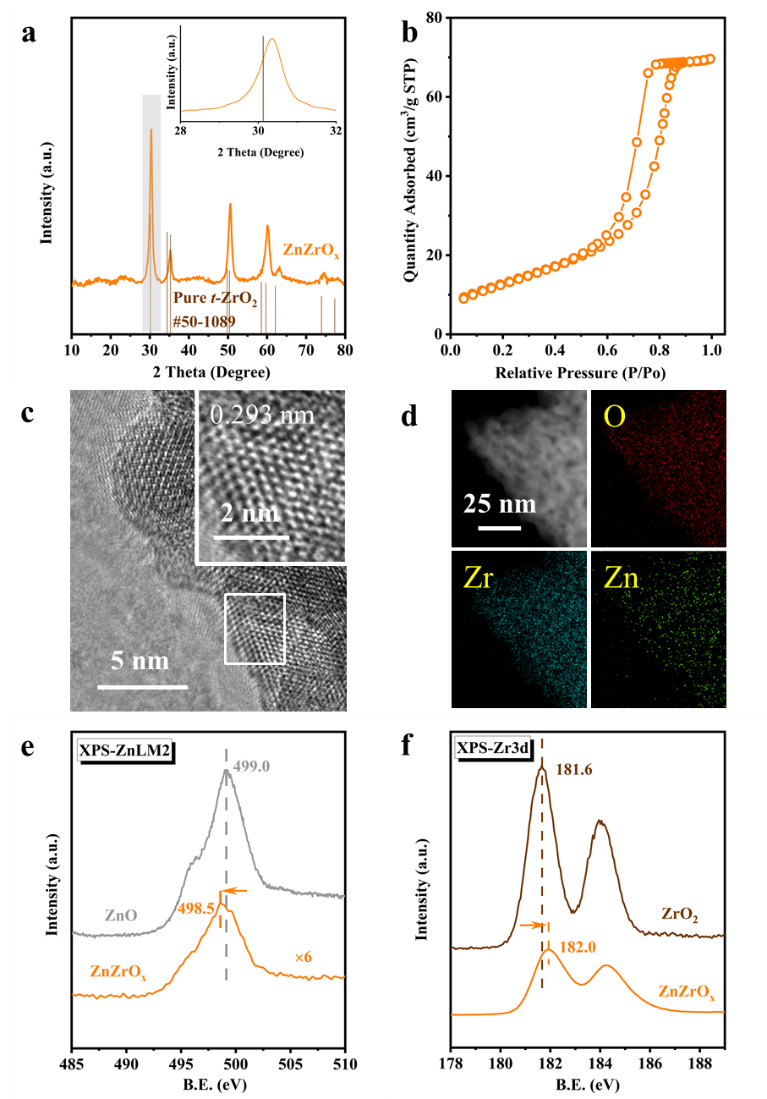
Fig. 1. XRD pattern (a), N2 sorption isotherm (b), HRTEM image (c), aberration-corrected scanning TEM-high-angle annular dark-field images and element distribution (d) of the ZnZrOx catalyst. (e) Zn LMM Auger spectra for ZnZrOx and ZnO. (f) XPS spectra of Zr 3d for ZnZrOx catalysts and ZrO2.
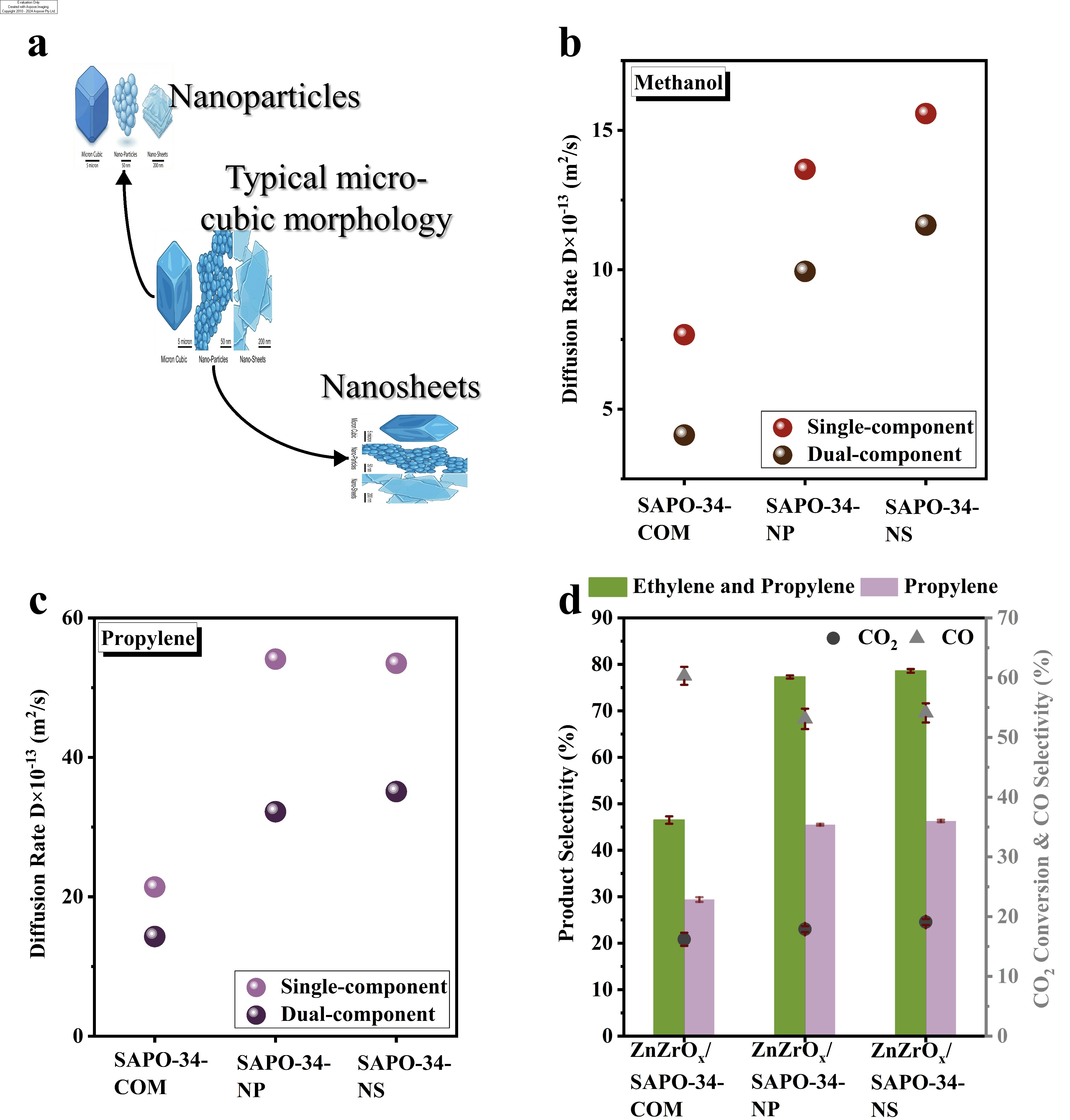
Fig. 2. (a) Schematic illustration of the diffusion enhancement strategy. (b) Intra-diffusion rates of methanol in SAPO-34 zeolites with different morphologies. (c) Intra-diffusion rates of propylene in SAPO-34 zeolites with different morphologies. (d) CO2 hydrogenation performance and product selectivity of the three ZnZrOx/SAPO-34 catalysts under reaction conditions of 370 °C, 3 MPa, and 6000 mL/(g·h).
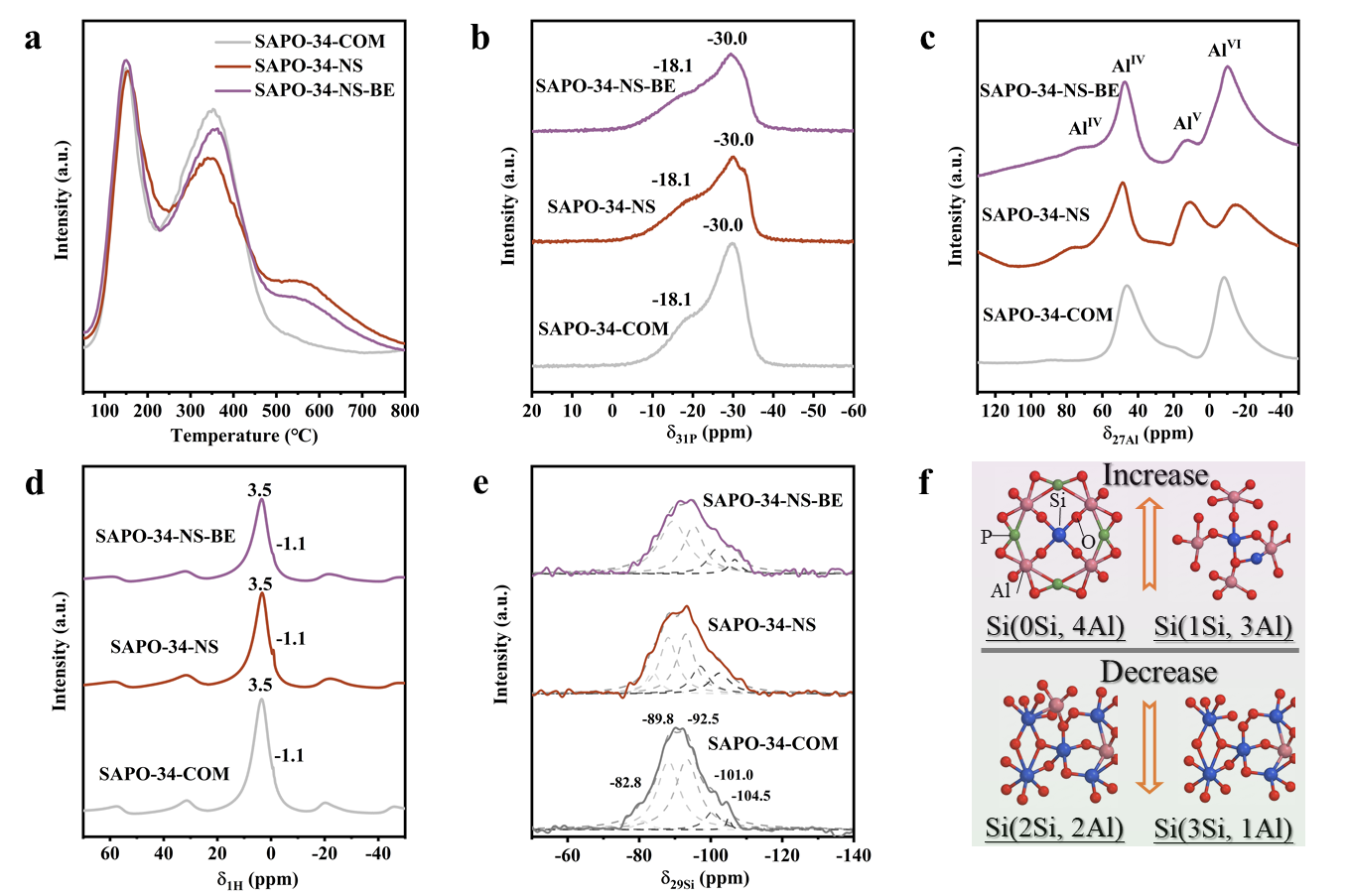
Fig. 3. NH3-TPD profiles (a), 31P MAS NMR spectra (b), 27Al MAS NMR spectra (c), 1H MAS NMR spectra (d), and 29Si MAS NMR spectra (e) of the SAPO-34-COM, SAPO-34-NS, and SAPO-34-NS-BE samples. (f) Schematic illustration of the changes of acid sites.
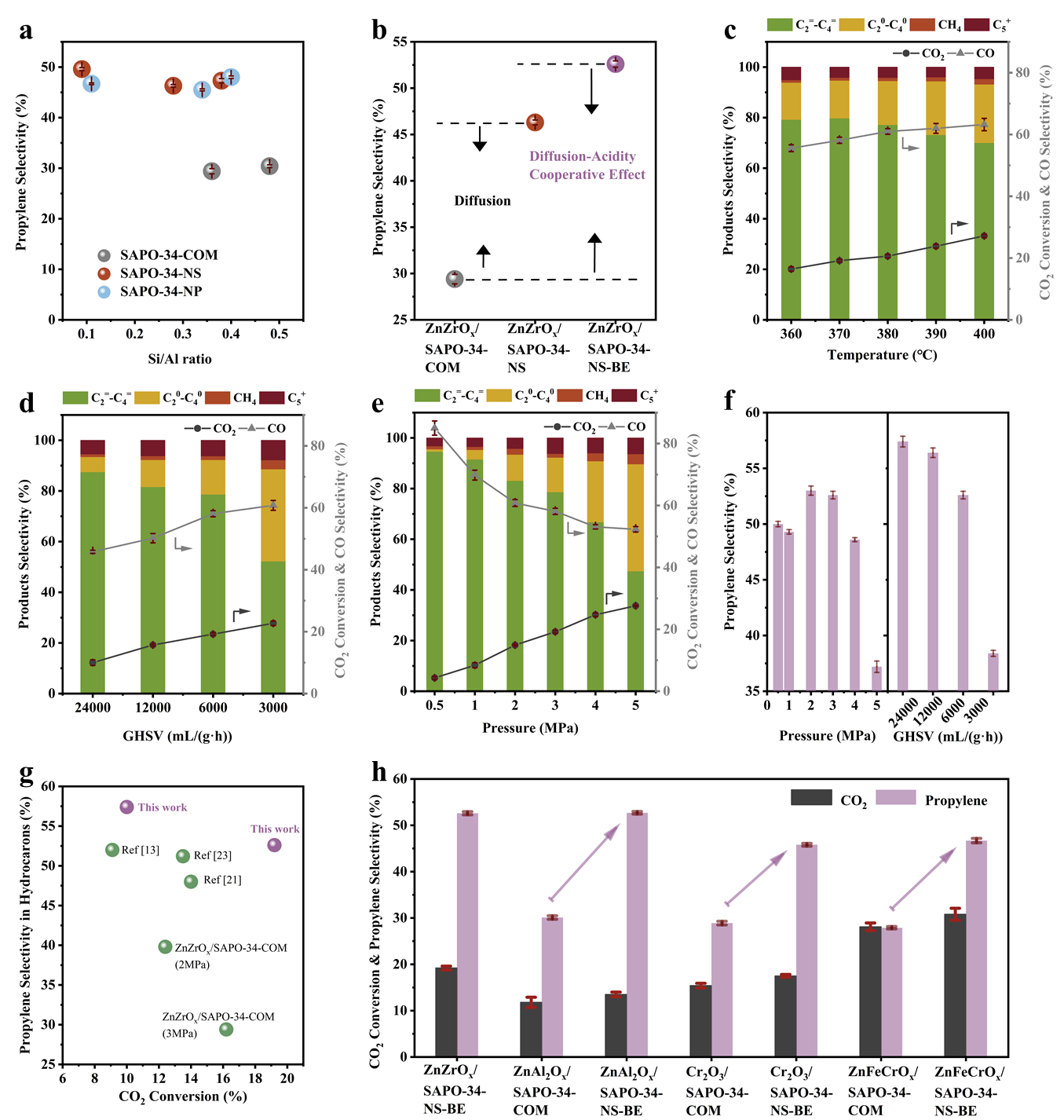
Fig. 4. (a) Relationship between propylene selectivity and Si/Al ratio. (b) Comparison of propylene selectivity between different strategies (based on ZnZrOx/SAPO-34-COM). CO2 hydrogenation performance and product selectivity of ZnZrOx/SAPO-34-NS-BE at different reaction temperatures (3 MPa, 6000 mL/(g·h)) (c), at various GHSVs (370 °C, 3 MPa) (d), at different reaction pressures (370 °C, 6000 mL/(g·h)) (e). (f) Propylene selectivity among hydrocarbon products over ZnZrOx/SAPO-34-NS-BE at varying GHSVs and pressures. (g) Comparison of the catalytic performance in this work with previously reported catalysts. (h) Diffusion-acidity cooperative effect applied in other metal oxide catalysts.
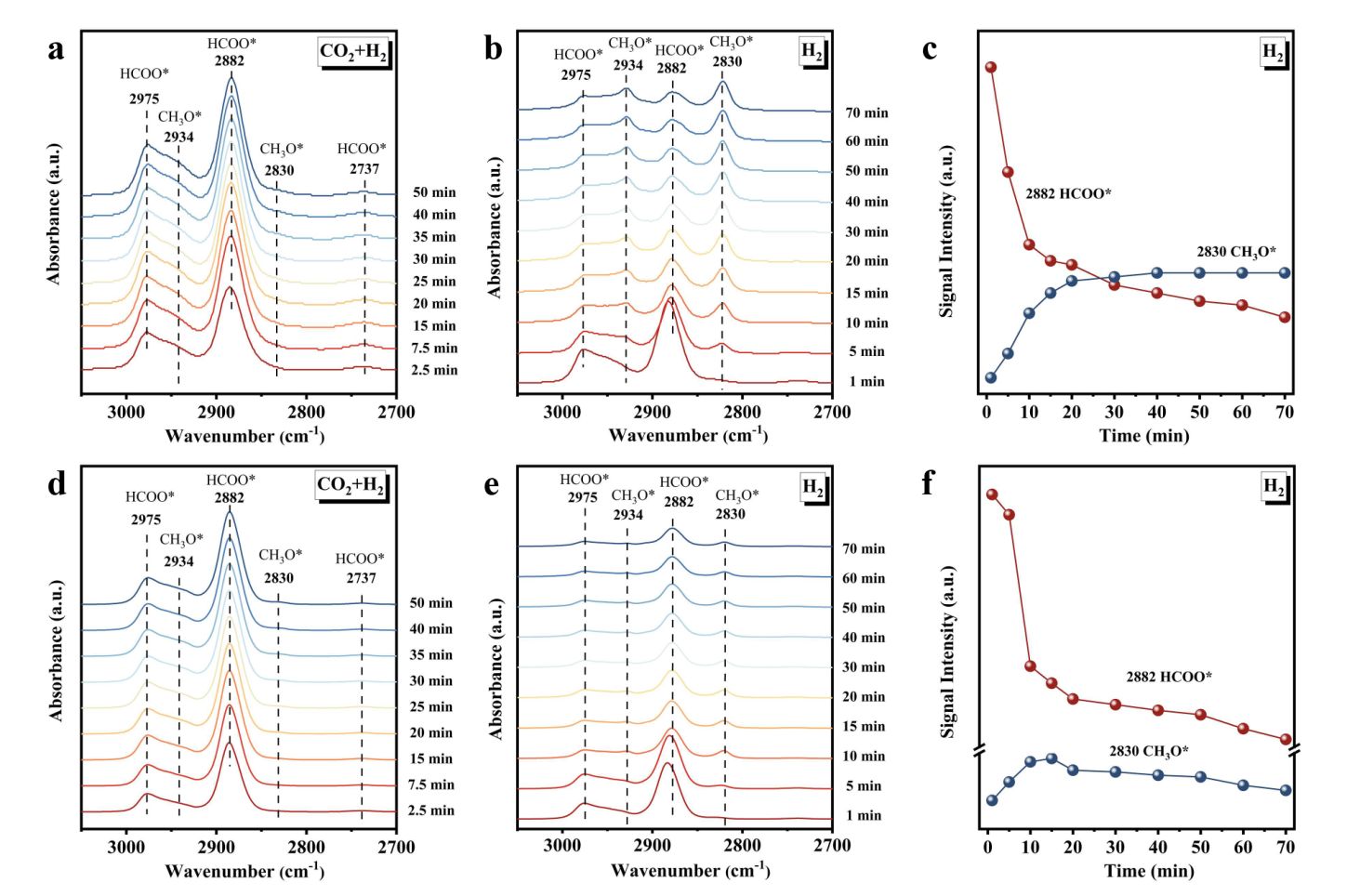
Fig. 5. (a) In-situ DRIFTS spectra of CO2 hydrogenation. In-situ DRIFTS spectra collected after switching off the CO2 feed (b) and temporal evolutions of formate and methoxy species (c) over ZnZrOx/SAPO-34-COM. (d) In-situ DRIFTS spectra of CO2 hydrogenation. In-situ DRIFTS spectra collected after switching off the CO2 feed (e), and temporal evolutions of formate and methoxy species (f) over ZnZrOx/SAPO-34-NS-BE (300 °C and 0.1 MPa).
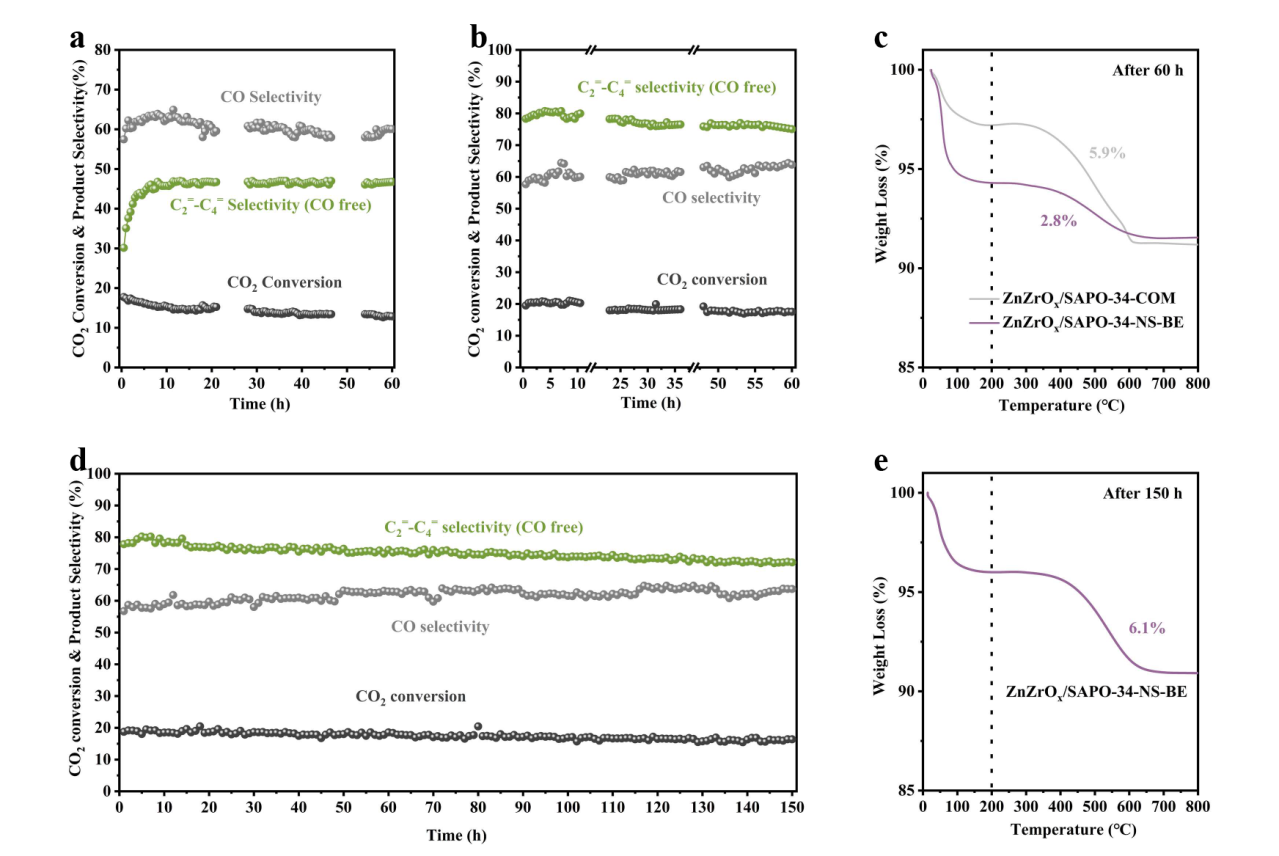
Fig. 6. (a) Stability test of ZnZrOx/SAPO-34-COM over 60 h on stream. (b) Stability test of ZnZrOx/SAPO-34-NS-BE over 60 h on stream. (c) TGA results of the samples after the 60 h stability tests. Stability test of ZnZrOx/SAPO-34-NS-BE over 150 h on stream (d), and TGA results (e) of the samples after the 150 h stability tests.
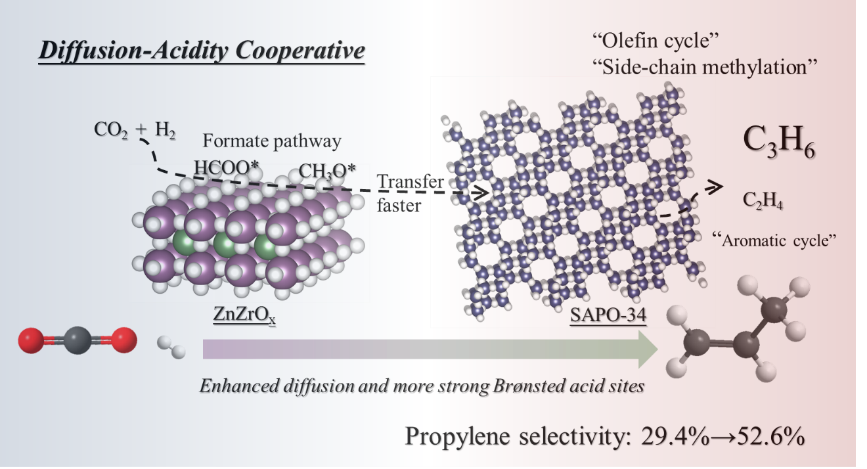
Fig. 7. Schematic illustration of the proposed reaction mechanism of CO2 hydrogenation over the ZnZrOx/SAPO-34.
|
| [1] | Jiyeon Lee, Muhammad Irshad, Wonjoong Yoon, Jaehoon Kim. High-pressure switch: Redirecting CO2 hydrogenation from hydrocarbons to carboxylic acids and alcohols [J]. Chinese Journal of Catalysis, 2026, 87(8): 70-86. |
| [2] | Sen Wang, Shiying Li, Rui Geng, Bo Zhou, Pengfei Wang, Zhangfeng Qin, Mei Dong, Jianguo Wang, Unni Olsbye, Weibin Fan. The smallest Ni species triggering selective hydrogenation of CO2 to methane: Ni dimer embedded in MFI and enhancement of MnOx [J]. Chinese Journal of Catalysis, 2026, 87(8): 113-125. |
| [3] | Xiaojie Liu, Zhifu Yu, Qi Li, Yang Wang, Xinze Bi, Kaixuan Huo, Dingyao Li, Zhiang Yuan, Yifan Yan, Shibin Li, Yiwu Lu, Qiang Liu, Wenhang Wang, Mingbo Wu. Fe-based catalyst for thermo-catalytic CO2 hydrogenation into ethanol: The essential role of water management and Fe-based carbide/oxide ratio [J]. Chinese Journal of Catalysis, 2026, 86(7): 112-124. |
| [4] | Kezhen Lai, Yuxin Sun, Linping Li, Xiaoqing Shi, Xiaosong Zhou, Ning Li, Yangqin Gao, Lei Ge. Defect-mediated dual-site synergy in Zn-CuInS2 enables orbital-tailored high performance photocatalytic CO2-to-ethylene conversion [J]. Chinese Journal of Catalysis, 2026, 85(6): 153-167. |
| [5] | Lanlan Chen, Li Sheng, Yanan Zhou, Qiquan Luo, Zhenyu Li, Wenhua Zhang, Jinlong Yang. Unraveling the superiority of Ni1-MoS2 single-atom catalyst in CO2 hydrogenation to methanol: A DFT combined microkinetic study [J]. Chinese Journal of Catalysis, 2026, 85(6): 143-152. |
| [6] | Ksenia A. Kokina, Anton S. Konopatsky, Ekaterina S. Chikanova, Danil V. Barilyuk, Tatyana O. Teplakova, Denis V. Leybo, Ekaterina V. Sukhanova, Zakhar I. Popov, Alexey Y. Antonov, Olga A. Boeva, Sergey A. Efimov, Dmitry V. Shtansky. Does high-entropy oxide (CrMnFeCoNi)3O4 catalyst require support to improve performance in CO2 hydrogenation? [J]. Chinese Journal of Catalysis, 2026, 85(6): 168-181. |
| [7] | Syeda Sidra Bibi, Sheraz Ahmed, Heuntae Jo, Jaehoon Kim. Turning methanation into chain growth: Na-induced mechanistic bifurcation on Co-ZrOx catalyst [J]. Chinese Journal of Catalysis, 2026, 85(6): 394-411. |
| [8] | Fleur A. E. Bruekers, Tess I. van Benthem, Rajamohanan Sobhana Anju, N. Raveendran Shiju. Phase to performance: The advancing role of molybdenum carbides in reverse water-gas shift reaction [J]. Chinese Journal of Catalysis, 2026, 85(6): 1-12. |
| [9] | Zhiyao Liu, Tangkang Liu, Chuan Qin, Guoliang Liu, Anmin Zheng. Zirconia-mediated interfacial catalysis for CO2 hydrogenation [J]. Chinese Journal of Catalysis, 2026, 84(5): 1-24. |
| [10] | Shican Jiang, Mingyu Yi, Zuozheng Liu, Abhishek Dutta Chowdhury. Linking catalyst synthesis strategies to CO2-modified Fischer-Tropsch performance in iron-carbon systems [J]. Chinese Journal of Catalysis, 2026, 84(5): 236-249. |
| [11] | Xiaoyu Zhou, Wei Zhou, James Paterson, Jamie Southouse, Alexey Fedorov, Christoph R. Müller, Christophe Copéret. Spectroscopically probing the cobalt state in TiO2-supported CO2 hydrogenation catalysts derived from tailored materials via atomic layer deposition and surface organometallic chemistry [J]. Chinese Journal of Catalysis, 2026, 89(10): 402-409. |
| [12] | Wenhui Li, Yangbo Liu, Yilin Zhang, Qingwen Yang, Hong Yang, Xiaowa Nie, Xinwen Guo. Regulation products selectivity on PtCo alloy catalyst in CO2 hydrogenation through enhanced CO competitive adsorption and C-C coupling [J]. Chinese Journal of Catalysis, 2026, 89(10): 378-389. |
| [13] | Wonjoong Yoon, Malayil Gopalan Sibi, Jaehoon Kim. A triple-bed Na-FeAlOx/Zn-HZSM-5@SiO2 catalyst for the stable and direct generation of aromatics via CO2 hydrogenation [J]. Chinese Journal of Catalysis, 2026, 80(1): 330-346. |
| [14] | Xianlong Lu, Lili Wang, Xueyang Zhao, Binbin Pan, Zhendong Li, Xiangfei Du, Shihan Zhang, Fan Dong, Bangwei Deng. Unlocking asymmetric C-C coupling pathways on commercial Cu catalysts via Cu (100) grain boundaries for efficient and durable CO electroreduction [J]. Chinese Journal of Catalysis, 2025, 76(9): 198-209. |
| [15] | Jie Tuo, Zhenteng Sheng, Xianchen Gong, Qi Yang, Peng Wu, Hao Xu. Shape-selective synthesis of para-xylene through tandem CO2 hydrogenation and toluene methylation over ZnCeZrOx/MCM-22 catalyst [J]. Chinese Journal of Catalysis, 2025, 73(6): 174-185. |
| Viewed | ||||||
|
Full text |
|
|||||
|
Abstract |
|
|||||


