
Chinese Journal of Catalysis ›› 2026, Vol. 90: 197-209.DOI: 10.1016/S1872-2067(26)65190-X
• Articles • Previous Articles Next Articles
Tengyuan Gao, Aoyu Shu, Xiufan Liu*( ), Xinhe Wu, Guohong Wang*()
Received:2026-01-25
Accepted:2026-03-20
Online:2026-11-18
Published:2026-11-19
Supported by:Tengyuan Gao, Aoyu Shu, Xiufan Liu, Xinhe Wu, Guohong Wang. Organic-inorganic DVA-COF@TiO2 S-scheme heterojunction for highly selective photocatalytic reduction of CO2 to CO[J]. Chinese Journal of Catalysis, 2026, 90: 197-209.
Add to citation manager EndNote|Ris|BibTeX
URL: https://www.cjcatal.com/EN/10.1016/S1872-2067(26)65190-X
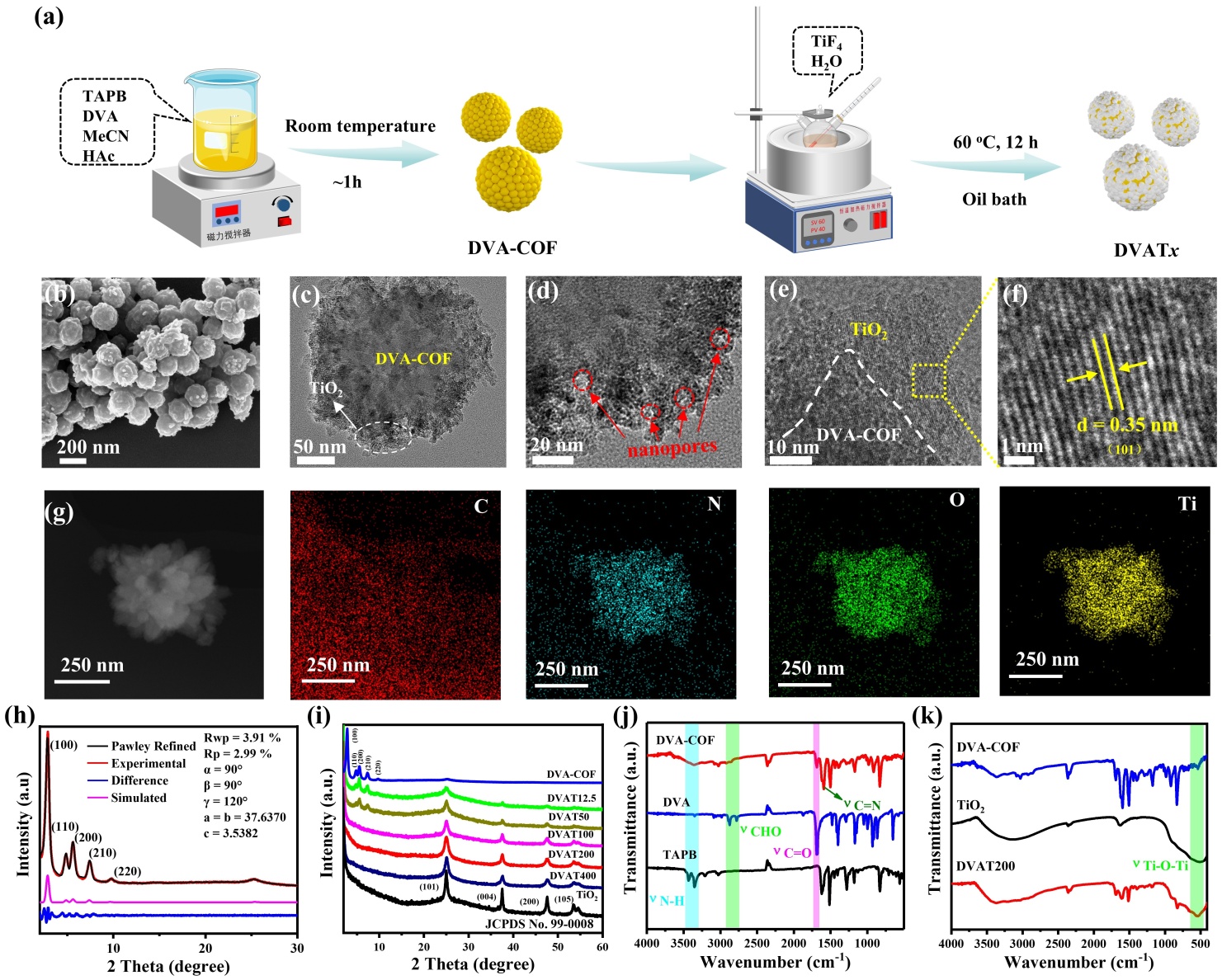
Fig. 1. (a) Schematic representation for preparing samples. (b) SEM image of DVAT200. TEM (c,d) and HRTEM (e,f) images of DVAT200. (g) HAADF image of DVAT200 and the corresponding EDS maps of C, N, O, Ti. (h) The experimental and simulated XRD patterns of DVA-COF. (i) XRD patterns of TiO2, DVA-COF, and DVATx. (j) FT-IR spectra of DVA, TAPB, and DVA-COF. (k) FT-IR spectra of DVA-COF, TiO2, and DVAT200.
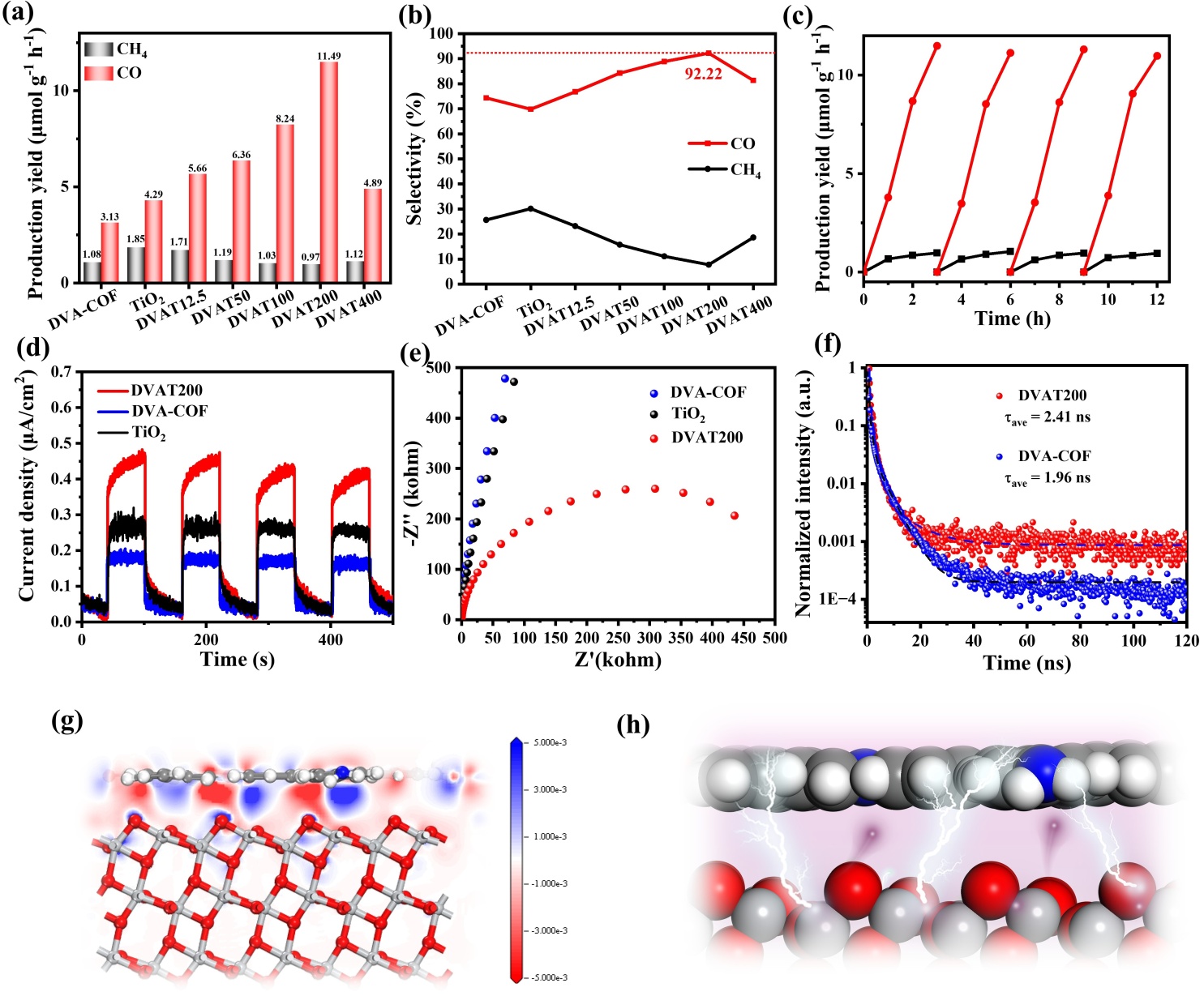
Fig. 2. (a) The photocatalytic CO2 reduction performance of TiO2, DVA-COF, and DVATx. (b) Product selectivity of different samples. (c) Time courses of CO2 reduction in the cycle tests. Photocurrent (d) and electrical impedance (e) plots of TiO2, DVA-COF, and DVAT200. (f) TRPL plots of DVA-COF and DVAT200. (g,h) The differential charge densities side view of DVA-COF@TiO2 hybrid.
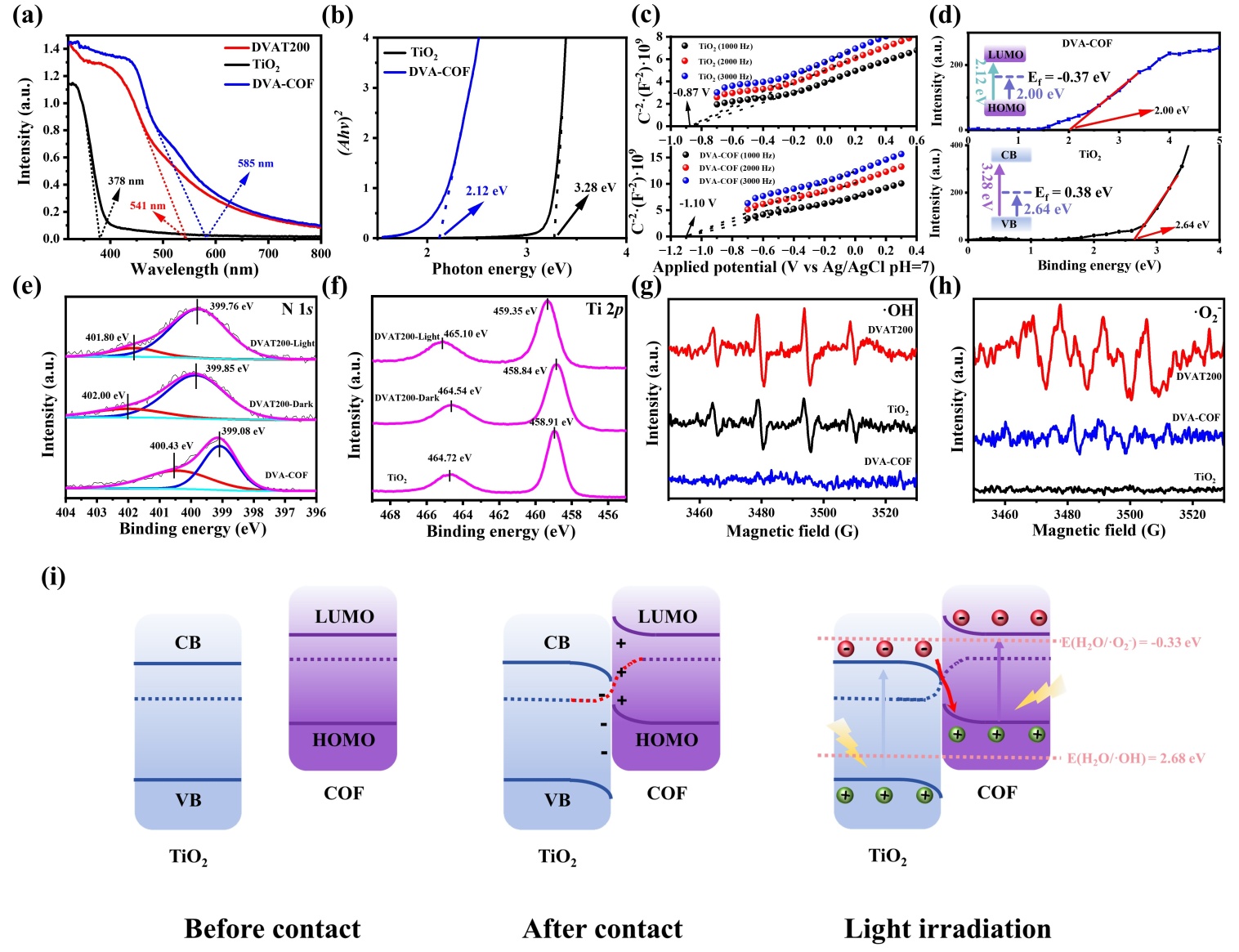
Fig. 3. (a) UV-vis DRS spectra of DVA-COF, TiO2, and DVAT200. (b) Tauc plots of DVA-COF and TiO2. (c) Mott-Schottky plots of TiO2 and DVA-COF. (d) Valence spectra of TiO2 and DVA-COF. XPS high-resolution spectra of N 1s (e) and Ti 2p (f). EPR signals of DMPO-•OH (g) and DMPO-•O2- (h) for DVA-COF, TiO2, and DVAT200. (i) Band diagrams and the charge carrier transfer mechanism of DVA-COF@TiO2
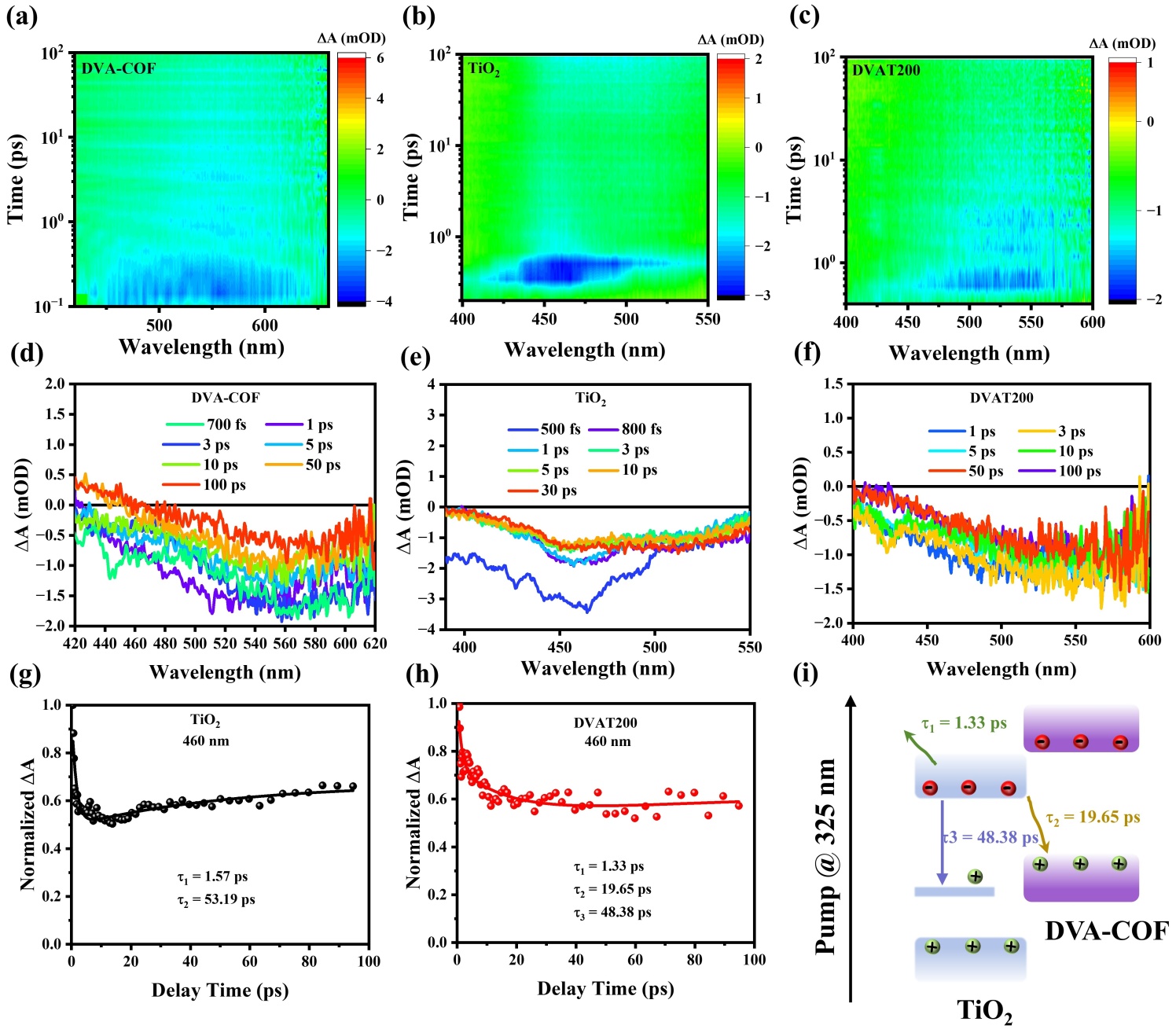
Fig. 4. 2D pseudocolor plots of DVA-COF (a), TiO2 (b), and DVAT200 hybrid (c). Fs-TA spectra of DVA-COF (d), TiO2 (e), and DVAT200 COF heterojunction (f) at indicated delay times under 325 nm pump pulse with average pump power at ~75 mW. Normalized fs-TA decay kinetics curves of TiO2 at 460 nm (g) and DVAT200 hybrid at 460 nm (h). (i) Schematic for the decay pathways of photogenerated electrons in DVAT200 heterojunction.
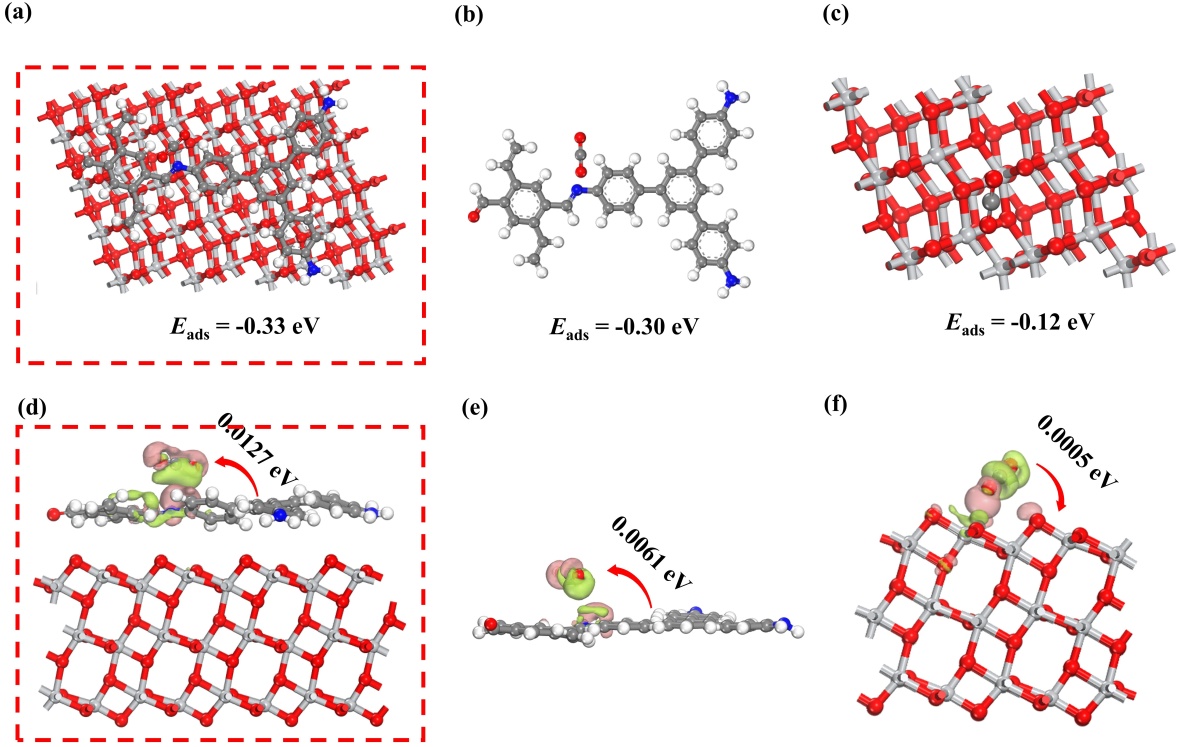
Fig. 5. The adsorption energies of CO2 at the surface of DVAT200 (a), DVA-COF (b), and TiO2 (c). Charge density difference side view and Bader charge calculation results of DVAT200 (d), DVA-COF (e), and TiO2 (f).
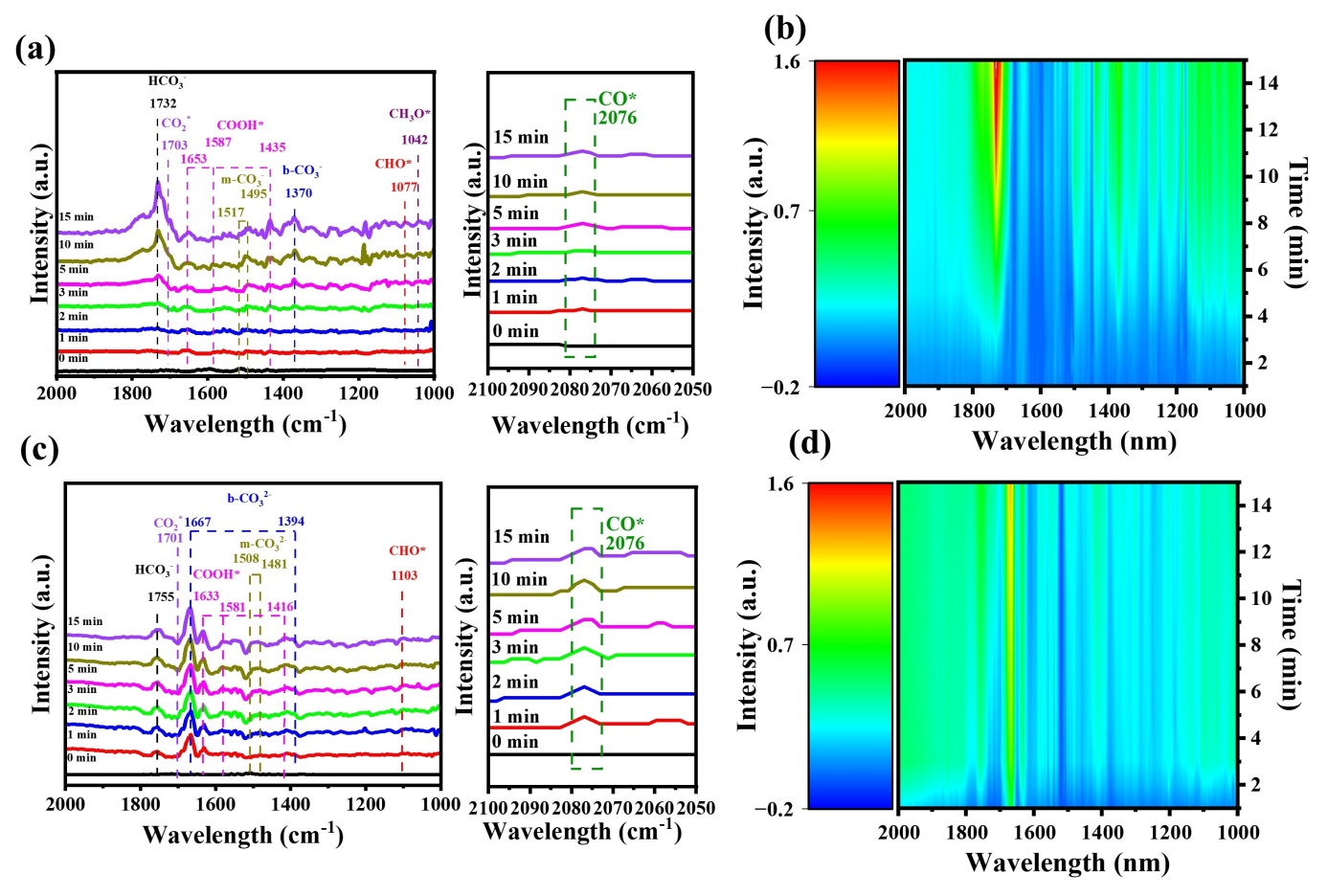
Fig. 6. The in-situ DRIFT spectra and 2D pseudocolor of DVA-COF (a,b) and DVAT200 (c,d).
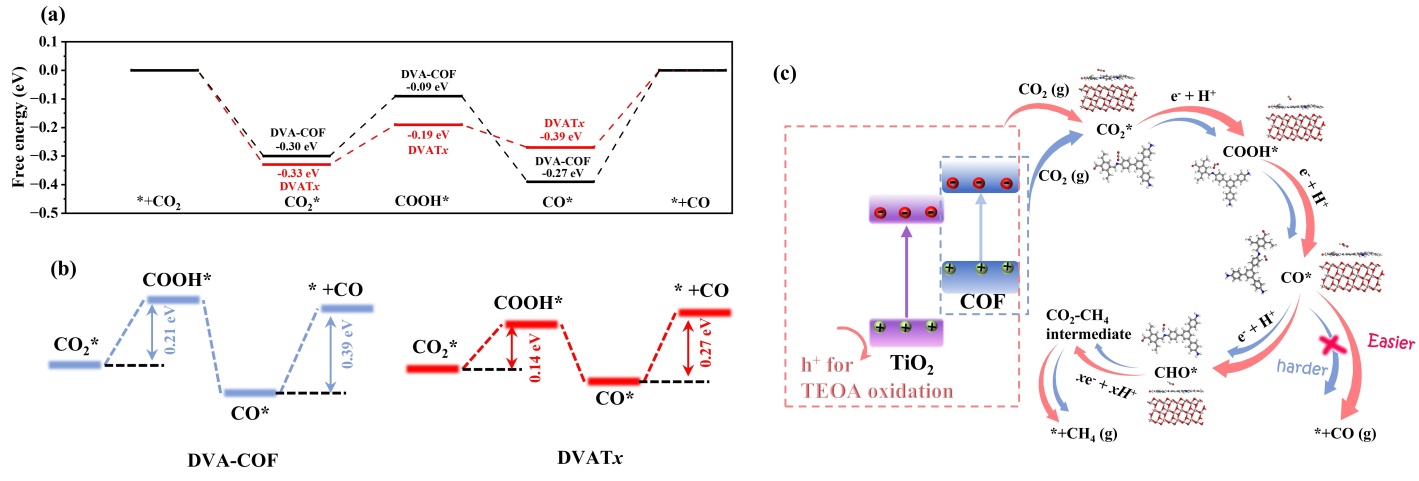
Fig. 7. (a) Free energy diagrams of photocatalytic CO2 reduction to CO at DVAT200 and DVA-COF. (b) Key steps of photocatalytic CO2 reduction to CO on DVA-COF and DVATx. (c) Key steps of photocatalytic CO2 reduction on DVATx and DVA-COF.
|
| [1] | Vladimir I. Kurganskii, Dmitry P. Lubov, Alexander G. Medvedev, Ruihu Wang, Konstantin P. Bryliakov. Bioinspired asymmetric syn-hydroxyazidation of electron-deficient olefins in the presence of nonheme Mn complexes [J]. Chinese Journal of Catalysis, 2026, 88(9): 468-477. |
| [2] | Sathi Chatterjee, Hongmei Li, Kang Liu, Zhang Lin, Liyuan Chai, Min Liu. Single-atom catalysts on two-dimensional (2D) materials for photocatalytic CO2 reduction: Fundamentals, design, and emerging strategies [J]. Chinese Journal of Catalysis, 2026, 88(9): 86-128. |
| [3] | Xiaolong Ma, Zhiqiang Wu, Huiqin Yao, Bin Liu, Zhiliang Jin, Paolo Fornasiero. Charging dynamics engineering: Quantum dots-induced full-space electric field cooperative Ag2S QDs/CoWO₄ S-scheme heterojunction boosting photocatalytic hydrogen evolution [J]. Chinese Journal of Catalysis, 2026, 88(9): 233-246. |
| [4] | Yun Huang, Qi Chen, Yueling Chen, Zefeng Yang, Jionghua Wu, Jimmy C. Yu, Ling Wu. Effective generation of active hydrogen species for nitrogen fixation on Pt/DUT-67(Zr) [J]. Chinese Journal of Catalysis, 2026, 88(9): 247-258. |
| [5] | Fengjuan Guo, Chunyao Ma, Yue Huang, Sitong Hang, Junwei Ma, Hongtao Gao. Unveiling the dominant distal-alternating hybrid mechanism in B-modulated Mo2TiC2Tx/MoO2 MXene for highly selective ambient NRR [J]. Chinese Journal of Catalysis, 2026, 87(8): 269-281. |
| [6] | Gaoxiong Liu, Rundong Chen, Bingquan Xia, Xianlong Zhou, Laiquan Li, Shantang Liu. Thiadiazole-functionalized covalent triazine frameworks for constructing S-scheme heterojunctions enabling boosted H2O2 photosynthesis [J]. Chinese Journal of Catalysis, 2026, 87(8): 170-184. |
| [7] | Hao Wu, Xinyu Zeng, Wang Wang, Bei Cheng, Jingzhao Cheng, Jingsan Xu, Shaowen Cao. The organic-inorganic S-scheme heterojunction with enhanced charge separation simultaneously catalyze the production of hydrogen and imine [J]. Chinese Journal of Catalysis, 2026, 87(8): 185-196. |
| [8] | Xin Yuan, Linyi Wu, Fengying Cao, Lechu Xu, Peng Wang, Hulin Shi, Shuxian Zhong, Lian Liu, Weihao Mo, Leihong Zhao, Song Bai. Light-switchable product selectivity in CO2 photoreduction over hollow plasmonic TiO2/AuCu@COF core-shell architectures [J]. Chinese Journal of Catalysis, 2026, 87(8): 87-99. |
| [9] | Zhaochun He, Chunli Liu, Yonghua Liu, Tao Wang. Boosting homogeneous ammonia synthesis by balancing N≡N activation and N-H formation [J]. Chinese Journal of Catalysis, 2026, 87(8): 316-326. |
| [10] | Xiaokang Jiang, Yongze Gao, Bowen Zhang, Xiaodong Yang, Zhimin Yuan, Zhaoning Xu, Bin Sun, Zaiyong Jiang, Guowei Zhou, Enlong Zhou. Built-in electric field coupled with non-noble metal plasma cocatalyst boosts photocatalytic CO2 reduction of MIL-125 [J]. Chinese Journal of Catalysis, 2026, 87(8): 100-112. |
| [11] | Sen Wang, Shiying Li, Rui Geng, Bo Zhou, Pengfei Wang, Zhangfeng Qin, Mei Dong, Jianguo Wang, Unni Olsbye, Weibin Fan. The smallest Ni species triggering selective hydrogenation of CO2 to methane: Ni dimer embedded in MFI and enhancement of MnOx [J]. Chinese Journal of Catalysis, 2026, 87(8): 113-125. |
| [12] | Keke Zhang, Fulin Zhang, Yuexin Wang, Fengwei Huang, Kanghui Xiong, Xiang-Kui Gu, Xianjun Lang. Tweaking the electron push-pull effect of vinylene-linked thienothiophene covalent organic frameworks for enhanced selective photocatalysis [J]. Chinese Journal of Catalysis, 2026, 87(8): 206-216. |
| [13] | Shijie Li, Rui Li, Yanping Liu, Xin Yu, Deyun Ma, Jianhui Jiang, Xiaosong Zhou, Chunqiang Zhuang, Zaiwang Zhao, Wei Jiang. Augmented reactive oxygen species generation in Ag/AgBr/C3N5 via LSPR-enhanced S-scheme charge transfer for efficient photocatalytic antibiotic wastewater remediation [J]. Chinese Journal of Catalysis, 2026, 87(8): 126-139. |
| [14] | Yang Ding, Yizhen Lu, Tianrong Yu, Mingrui Zhang, Rui Zhao, Ruijie Yang, Qixin Li, Shiqun Wu, Jinlong Zhang. Dual pathways in photo-driven Fischer-Tropsch synthesis for high selective hydrocarbon production [J]. Chinese Journal of Catalysis, 2026, 87(8): 22-46. |
| [15] | Bowen Li, Changlin Lin, Qi Wang, Yongfeng Lun, Jun Fang, Shuqin Song, Yi Wang. Ligand-shell engineering of a Au25 nanocluster boosting CO2 electroreduction to syngas with tunable range proportion [J]. Chinese Journal of Catalysis, 2026, 87(8): 396-409. |
| Viewed | ||||||
|
Full text |
|
|||||
|
Abstract |
|
|||||


