
Chinese Journal of Catalysis ›› 2026, Vol. 89: 279-291.DOI: 10.1016/S1872-2067(26)65164-9
• Article • Previous Articles Next Articles
Jiangyushan Lianga, Abdelkader Labidia, Chuanyi Wanga,b,*( )
)
Received:2026-02-15
Accepted:2026-03-26
Online:2026-10-18
Published:2026-09-01
Contact:
*E-mail:wangchuanyi@sust.edu.cn(C. Wang).
Supported by:Jiangyushan Liang, Abdelkader Labidi, Chuanyi Wang. Unveiling the pathway of water activation and proton transfer in photocatalytic lignin biomass hydrogenolysis over Mo vacancy and Mo-S bond engineered Bi2Mo1-xO6/ZnIn2S4 S-scheme heterojunction[J]. Chinese Journal of Catalysis, 2026, 89: 279-291.
Add to citation manager EndNote|Ris|BibTeX
URL: https://www.cjcatal.com/EN/10.1016/S1872-2067(26)65164-9
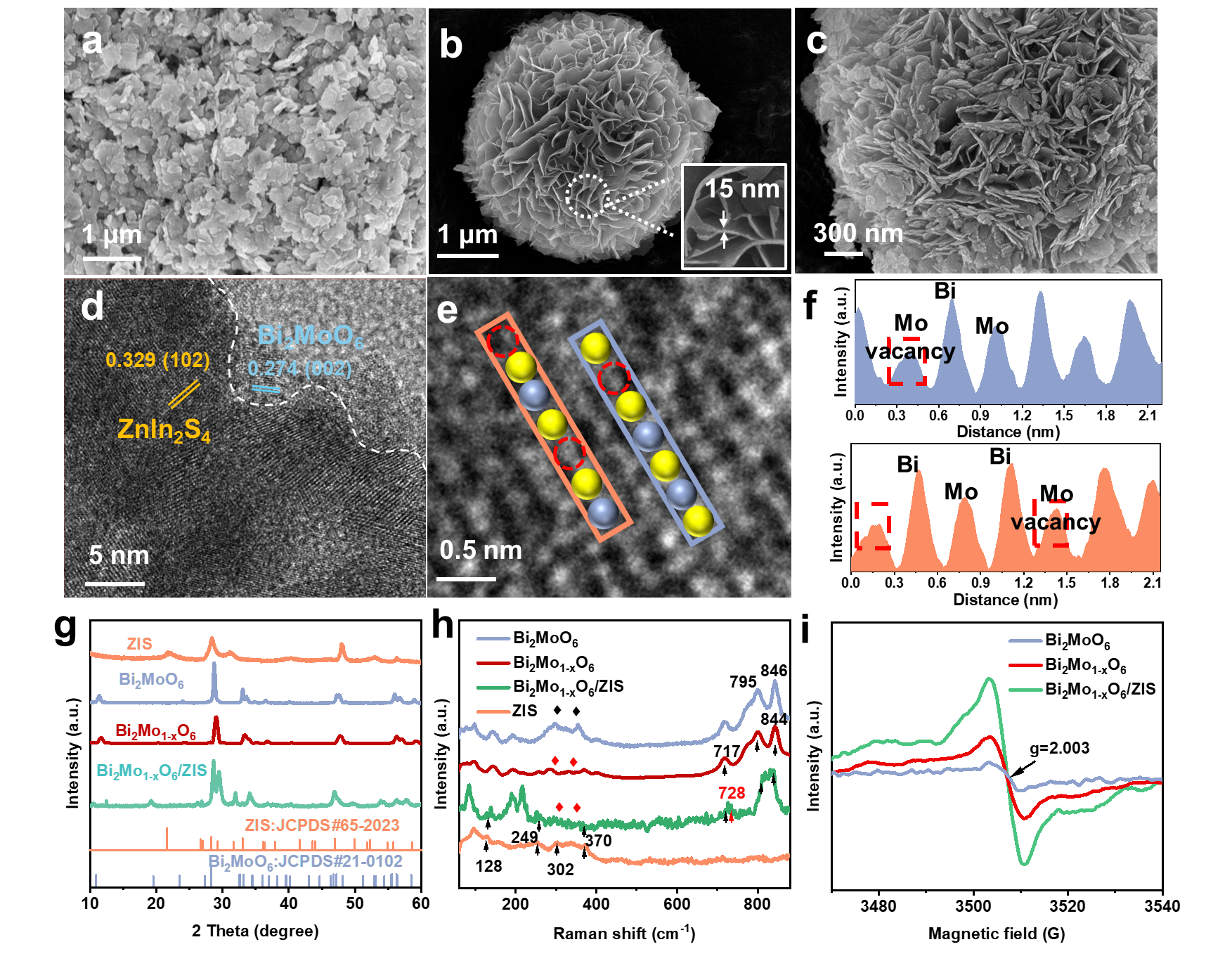
Fig. 1. SEM images of Bi2Mo1-xO6 (a), ZIS (b), and the Bi2Mo1-xO6/ZIS composite (c). HRTEM image (d) and corresponding magnified HRTEM image (e) of the Bi2Mo1-xO6/ZIS composite. (f) Intensity profiles from the blue and orange rectangles in (e). XRD patterns (g) and Raman spectra (h) of Bi2MoO6, ZIS, and the Bi2Mo1-xO6/ZIS composite. (i) EPR spectra of Bi2Mo1-xO6 and Bi2Mo1-xO6/ZIS.
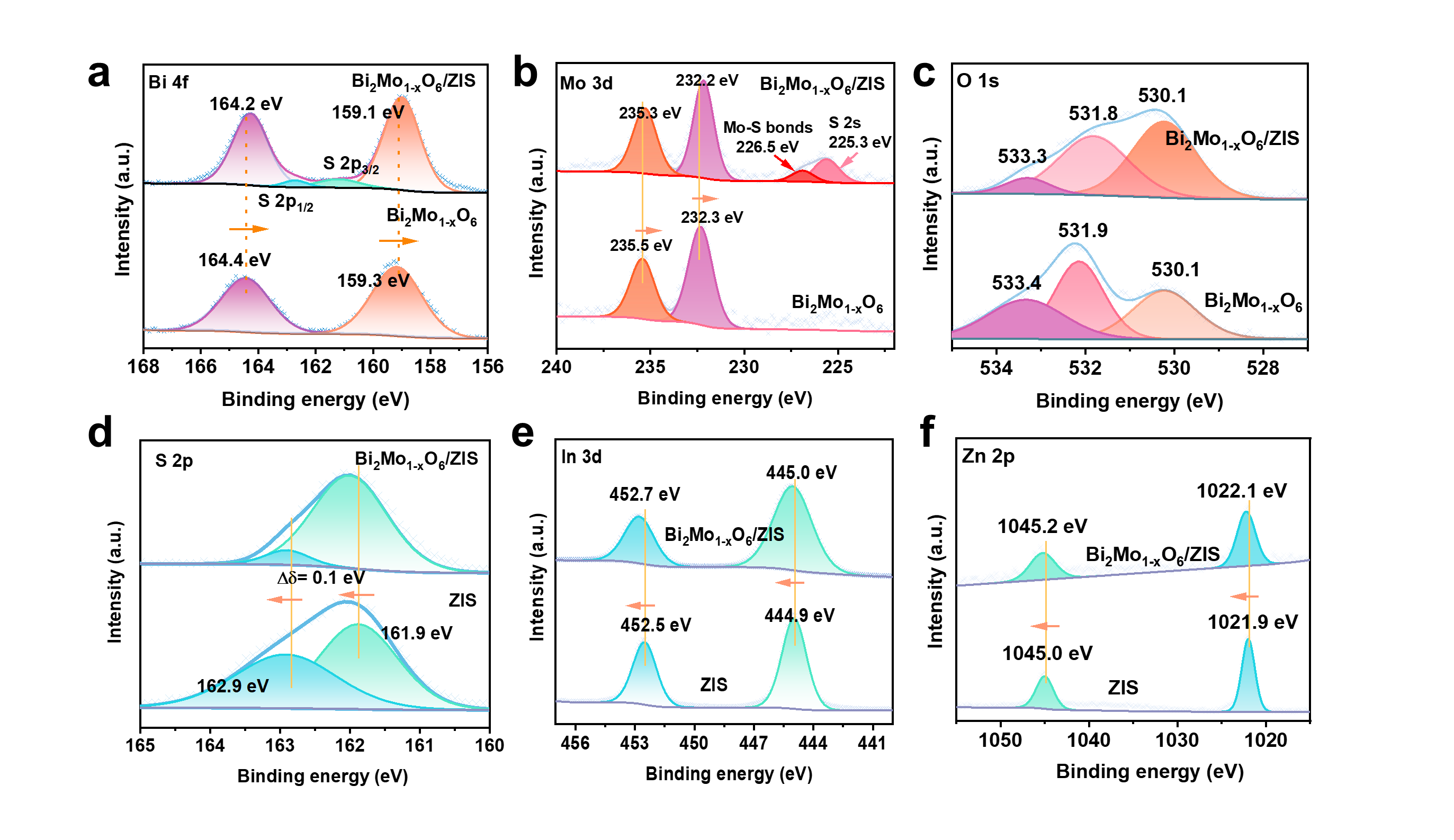
Fig. 2. (a) Bi 4f, (b) Mo 3d, (c) O 1s XPS spectra of Bi2Mo1-xO6/ZIS and Bi2Mo1-xO6. S 2p (d), In 3d (e), and Zn 2p (f) XPS spectra of Bi2Mo1-xO6/ZIS and ZIS.
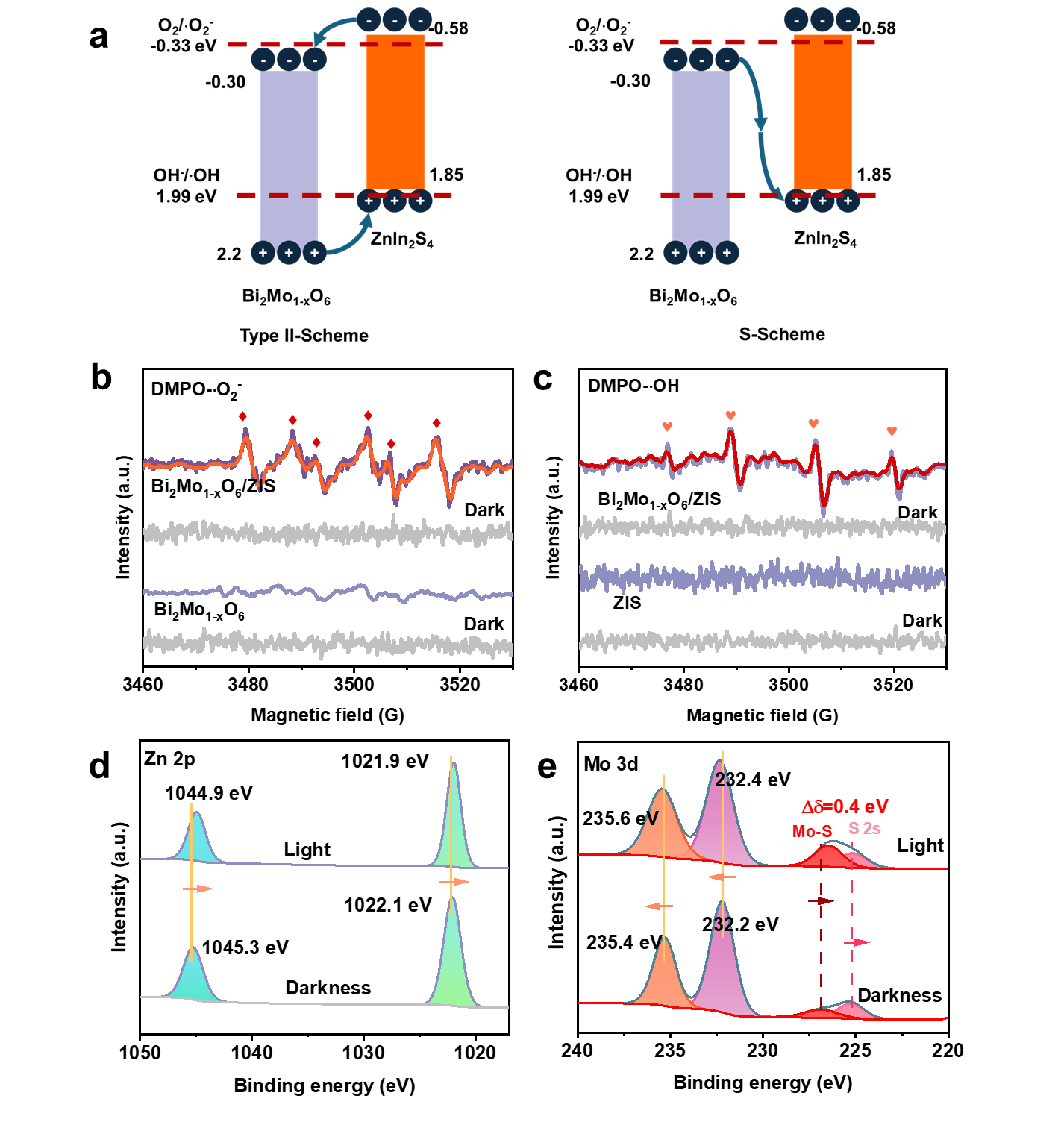
Fig. 3. (a) Schematic illustration of electron flow in the S-scheme heterojunction compared to a conventional type-II junction. In-situ EPR spectra of the Bi2Mo1-xO6/ZIS composite for the detection of •OH (b) and •O2- (c) radicals. In-situ irradiated high-resolution XPS spectra of the Bi2Mo1-xO6/ZIS composite: Zn 2p (d) and Mo 3d (e) regions.
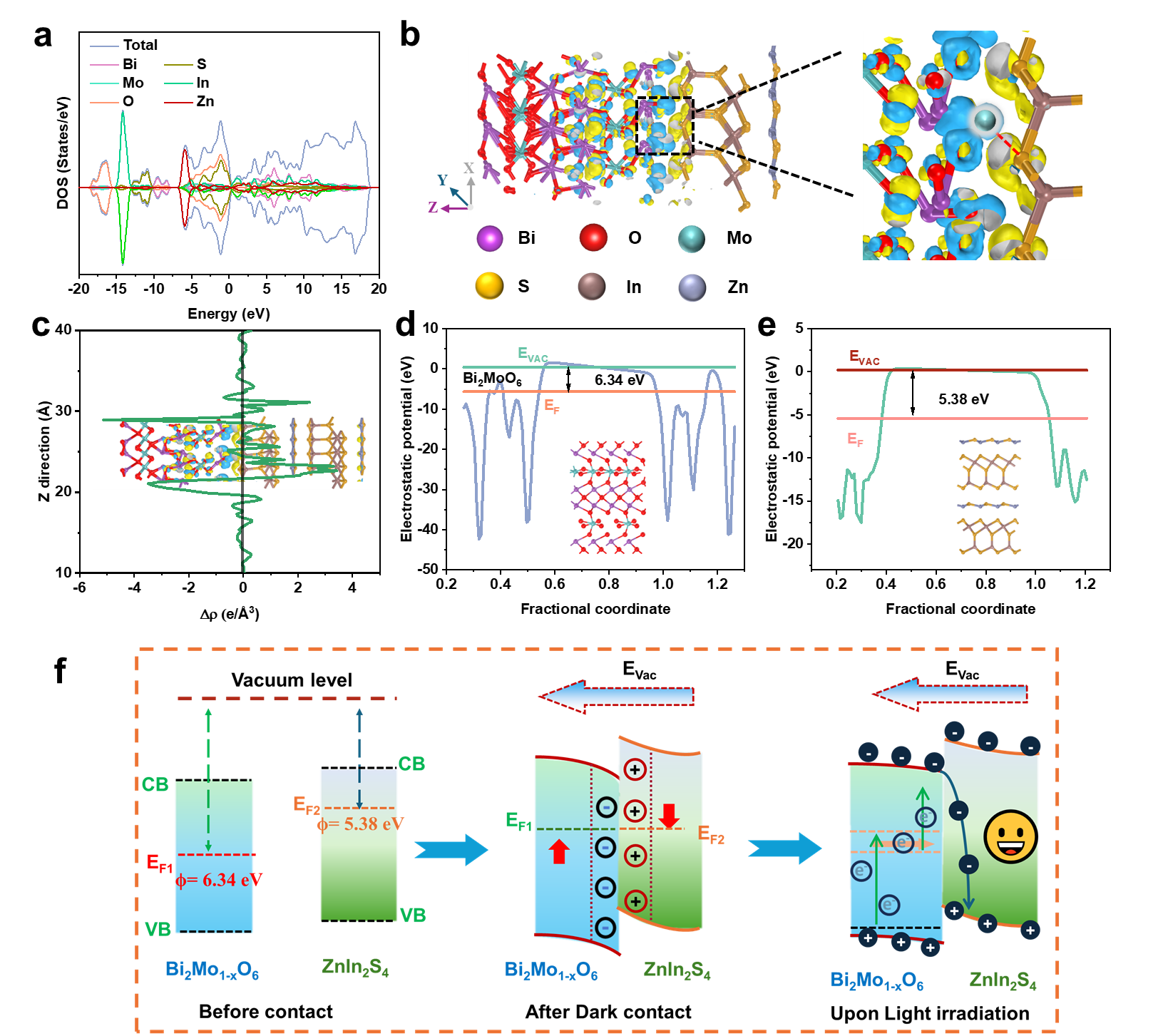
Fig. 4. (a) Calculated PDOS for the Bi2Mo1-xO6/ZIS interface. (b) Charge density difference at the Bi2Mo1-xO6/ZIS interface. Blue and yellow regions represent electron accumulation and depletion, respectively. (c) Calculated interfacial charge density difference of the Bi2Mo1-xO6/ZIS heterojunction. Work functions of Bi2Mo1-xO6 (d) and ZIS (e). (f) Schematic illustration of the S-scheme formation mechanism under light irradiation.
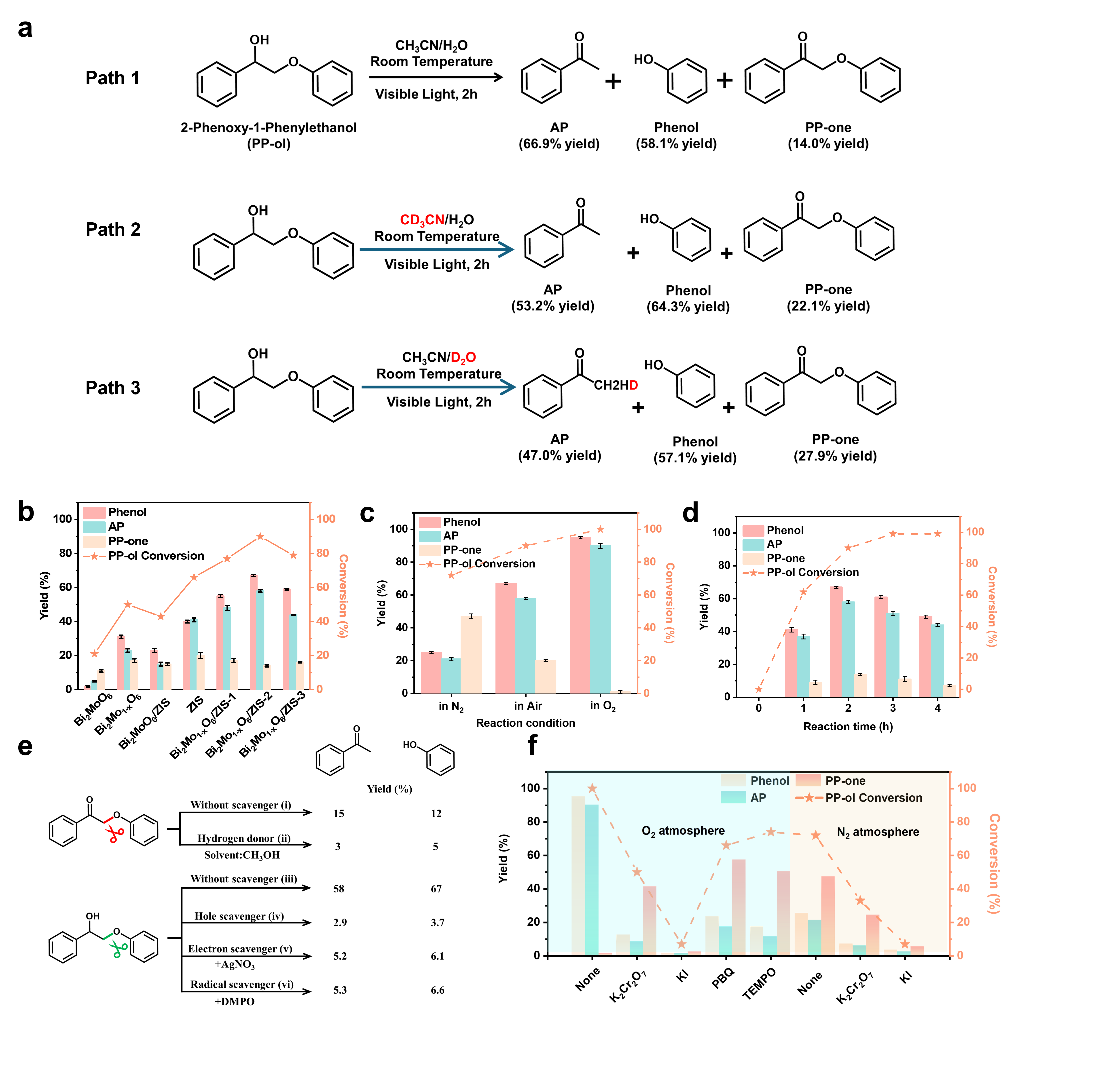
Fig. 5. (a) Investigation of hydrogenation and hydrogen transfer in the reaction. (b) Photocatalytic conversion of PP-ol on various samples. (c) Photocatalytic depolymerization of PP-ol over the Bi2Mo1-xO6/ZIS heterojunction photocatalyst under different gas atmospheres. (d) Extent of PP-ol depolymerization at different reaction times. Scavenger experiments (e) and trapping studies (f) for the photocatalytic conversion of PP-ol under distinct atmospheres.
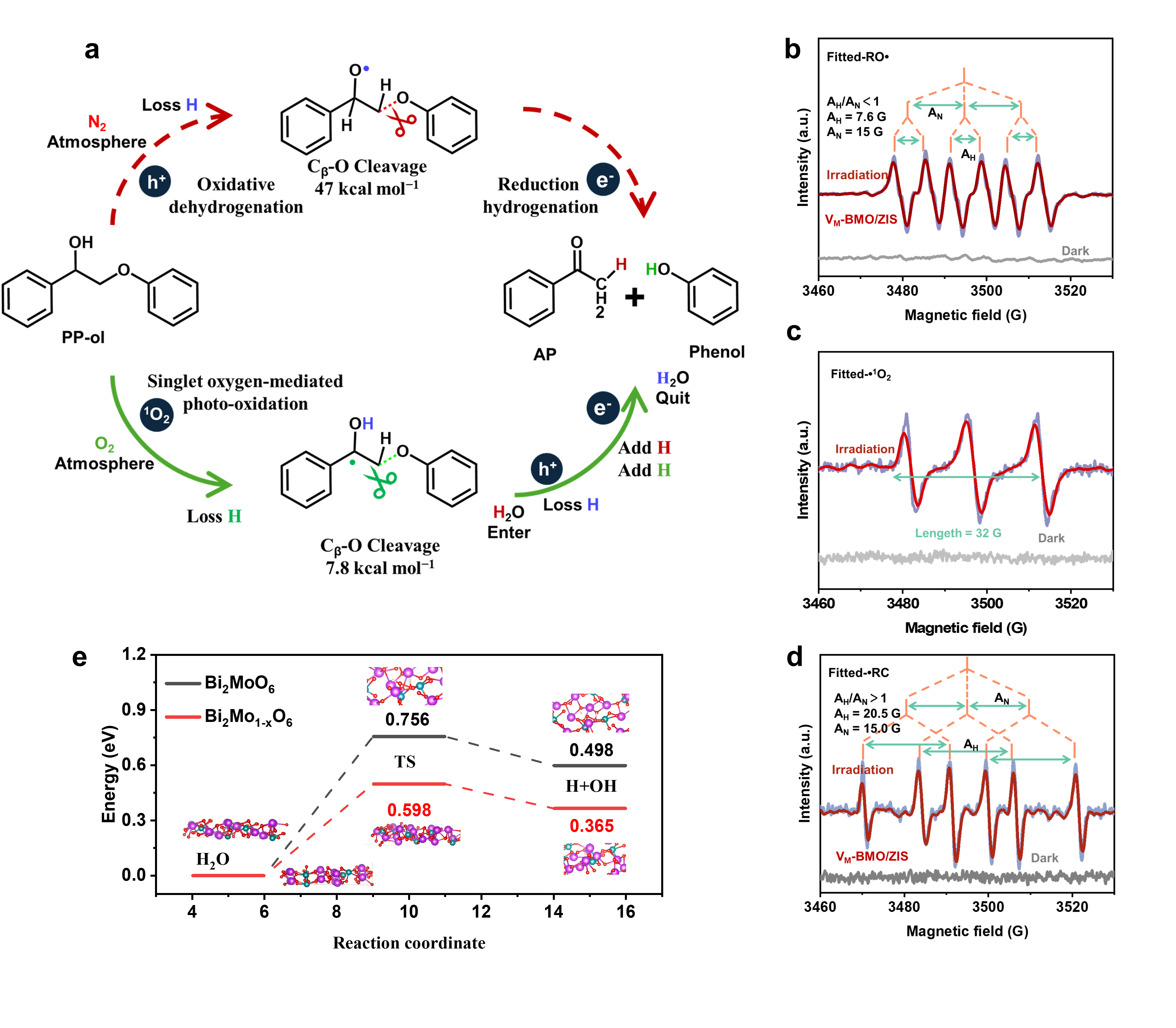
Fig. 6. (a) Proposed pathways for the photocatalytic depolymerization of PP-ol under different atmospheres. In-situ EPR spectra of RO• (b), 1O2 (c), and •Cα radicals (d) obtained with Bi2Mo1-xO6/ZIS under dark and light conditions. (e) Calculated free energy profiles for the water dissociation pathway on the Bi2MoO6 and Bi2Mo1-xO6 surfaces. The insets display the optimized atomic configurations of the initial state (IS), transition state (TS), and final state (FS).
|
| [1] | Xiaolong Ma, Zhiqiang Wu, Huiqin Yao, Bin Liu, Zhiliang Jin, Paolo Fornasiero. Charging dynamics engineering: Quantum dots-induced full-space electric field cooperative Ag2S QDs/CoWO₄ S-scheme heterojunction boosting photocatalytic hydrogen evolution [J]. Chinese Journal of Catalysis, 2026, 88(9): 233-246. |
| [2] | Gaoxiong Liu, Rundong Chen, Bingquan Xia, Xianlong Zhou, Laiquan Li, Shantang Liu. Thiadiazole-functionalized covalent triazine frameworks for constructing S-scheme heterojunctions enabling boosted H2O2 photosynthesis [J]. Chinese Journal of Catalysis, 2026, 87(8): 170-184. |
| [3] | Hao Wu, Xinyu Zeng, Wang Wang, Bei Cheng, Jingzhao Cheng, Jingsan Xu, Shaowen Cao. The organic-inorganic S-scheme heterojunction with enhanced charge separation simultaneously catalyze the production of hydrogen and imine [J]. Chinese Journal of Catalysis, 2026, 87(8): 185-196. |
| [4] | Shijie Li, Rui Li, Yanping Liu, Xin Yu, Deyun Ma, Jianhui Jiang, Xiaosong Zhou, Chunqiang Zhuang, Zaiwang Zhao, Wei Jiang. Augmented reactive oxygen species generation in Ag/AgBr/C3N5 via LSPR-enhanced S-scheme charge transfer for efficient photocatalytic antibiotic wastewater remediation [J]. Chinese Journal of Catalysis, 2026, 87(8): 126-139. |
| [5] | Yatai Zhou, Chengcheng Yuan, Wei Xia, Jun Wang, Xiaofeng Zhu, Yong Zhang, Bicheng Zhu, Jiaguo Yu. Synergistic optimization of interfacial electron transfer and surface hydrogen adsorption in a CdS/ZnO S-scheme heterojunction by site-specific doping: A DFT study [J]. Chinese Journal of Catalysis, 2026, 86(7): 327-337. |
| [6] | Ping Li, Liang Wei, Wei Xia, Chengcheng Yuan, Chenbin Ai, Meng Li. Ultrafast electron transfer in 2D/2D g-C3N4/WO3 S-scheme heterojunctions for enhanced H2O2 production [J]. Chinese Journal of Catalysis, 2026, 85(6): 333-345. |
| [7] | Jintao Dong, Rui Zhang, Zhishuai Wang, Shengqun Cao, Lina Li, Gaopeng Liu, Bin Wang, Yixuan Gao, Jiexiang Xia. Construction of S-scheme MnO2/BiOCl heterojunction boosting photocatalytic low-concentration peroxymonosulfate activation for contaminants removal [J]. Chinese Journal of Catalysis, 2026, 85(6): 310-321. |
| [8] | Ziyi Liao, Lan Jiang, Yang Yang, Lin Wang, Weiyou Yang, Huilin Hou. Alkali-cyano dual-tailored g-C3N4/BiOCl S-scheme heterojunctions for highly efficient visible-light-driven H2O2 photosynthesis in pure water [J]. Chinese Journal of Catalysis, 2026, 83(4): 143-161. |
| [9] | R. Kavitha, C. Manjunatha, S. Girish Kumar. ZnO-based S-scheme heterojunction: Design principles, preparation methods and photocatalytic activity [J]. Chinese Journal of Catalysis, 2026, 83(4): 54-95. |
| [10] | Keshan Tang, Wanyi Deng, Ningyuan Wang, Yang Xia, Xinhe Wu, Heng Yang. Triazine-based COF/TiO2 S-scheme heterojunction with oxygen vacancies for efficient photocatalytic CO2 reduction [J]. Chinese Journal of Catalysis, 2026, 83(4): 244-257. |
| [11] | Kaiqiang Xu, Wenjun Zhu, Mahmoud Sayed, Sheng Han. Design and preparation of 1D-based S-scheme photocatalysts [J]. Chinese Journal of Catalysis, 2026, 83(4): 24-53. |
| [12] | Wanggang Zhang, Haochen Xie, Hongliang Wang, Rufeng Tian, Lei Liu, Jian Wang, Yiming Liu. Atomic-level lattice matching in hexagonal WO3/TiO2 S-scheme heterojunctions for high-efficiency selective photoelectrocatalytic glycerol-to-dihydroxyacetone conversion [J]. Chinese Journal of Catalysis, 2026, 82(3): 161-173. |
| [13] | Chunyuan Chen, Zhongliao Wang, Ying Ma, Bo Weng, Shifu Chen, Sugang Meng. Synergistic effect of S-doping and nitrogen-vacancy engineering on 2D/3D S-scheme photocatalyst for efficient photosynthesis of H2O2 [J]. Chinese Journal of Catalysis, 2026, 82(3): 278-291. |
| [14] | Qinghua Liu, Peiqing Cai, Hengshuai Li, Xue-Yang Ji, Dafeng Zhang, Xipeng Pu. Visible-light-driven hydrogen evolution over CdS/CuWO4 S-Scheme heterojunctions: Dual synergistic enhancement via interfacial charge transfer and photothermal activation [J]. Chinese Journal of Catalysis, 2026, 81(2): 299-309. |
| [15] | Yongsheng Hu, Shiji Du, Jihui Lang, Huilian Liu, Xuefei Li, Qi Zhang, Ming Lu, Xin Li, Binrong Li, Maobin Wei, Lili Yang. Rational construction of MXene-derived TiO2/CoNiO2 dual-site S-scheme heterojunction for boosting C-C coupling toward efficient photocatalytic CO2-to-C2H4 conversion [J]. Chinese Journal of Catalysis, 2026, 81(2): 227-245. |
| Viewed | ||||||
|
Full text |
|
|||||
|
Abstract |
|
|||||


