
Chinese Journal of Catalysis ›› 2026, Vol. 89: 353-366.DOI: 10.1016/S1872-2067(26)65094-2
• Article • Previous Articles Next Articles
Yang Feia, Qingjuan Leia, Liming Fana, Tuoping Hua, Qi-Pin Qinb, Xiutang Zhanga,*( )
)
Received:2025-12-12
Accepted:2026-01-30
Online:2026-10-18
Published:2026-09-01
Contact:
*E-mail:xiutangzhang@163.com(X. Zhang).
Yang Fei, Qingjuan Lei, Liming Fan, Tuoping Hu, Qi-Pin Qin, Xiutang Zhang. Organic-site-dominated cooperative catalysis in defect-tolerant 2D lanthanide MOFs for direct CO2 valorization and DFT calculations[J]. Chinese Journal of Catalysis, 2026, 89: 353-366.
Add to citation manager EndNote|Ris|BibTeX
URL: https://www.cjcatal.com/EN/10.1016/S1872-2067(26)65094-2

Scheme 1. Conceptual illustration of the organic-site-dominated design strategy for NUC-151, highlighting the stepwise functional evolution of the ligand framework while preserving the organic backbone. The reorganization of amino and carboxyl groups gives rise to an organic-site-driven catalytic microenvironment.
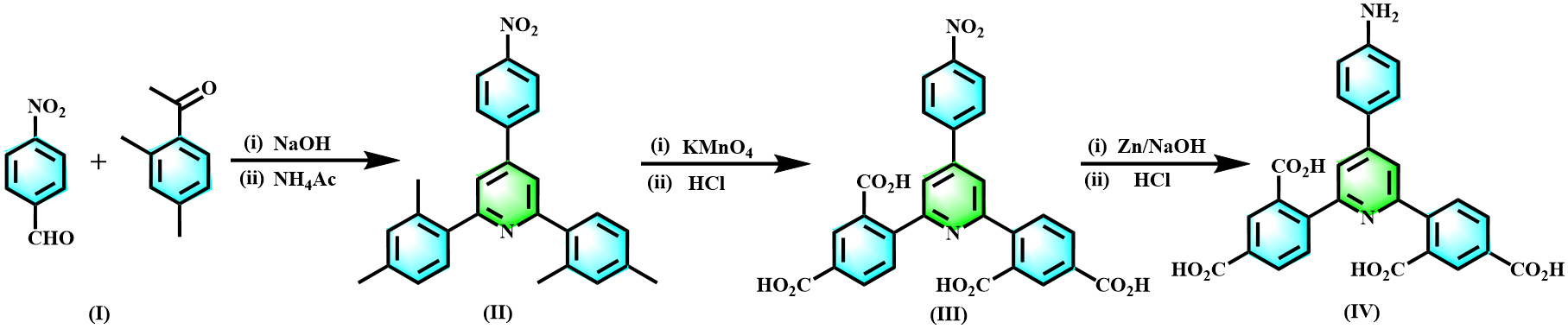
Scheme 2. Synthetic procedure of NH2-H4PPDC.
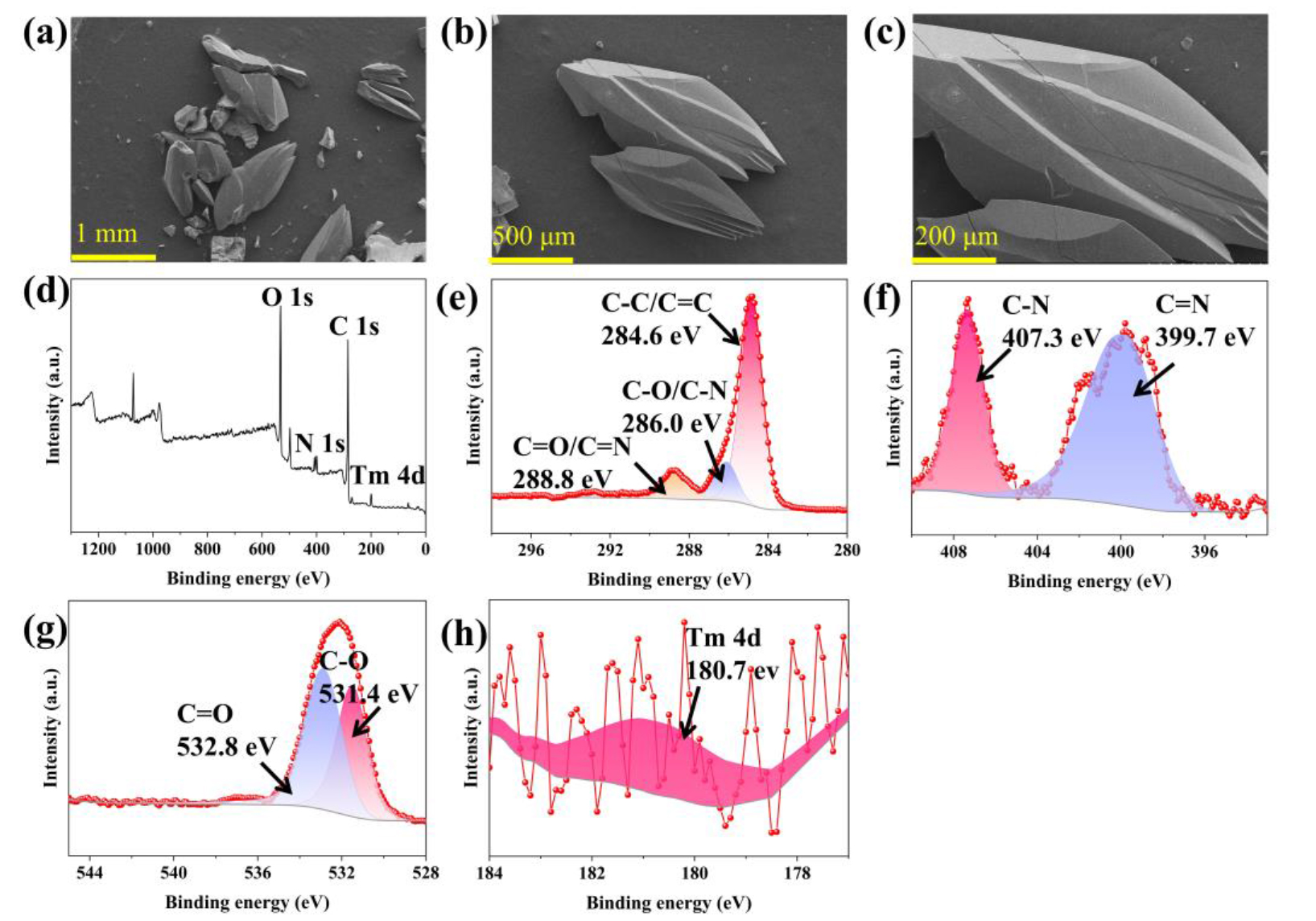
Fig. 1. (a-c) SEM images of NUC-151. (d) XPS survey spectra of NUC-151. XPS spectra of C (e), N (f), O (g), and Tm (h) in NUC-151.
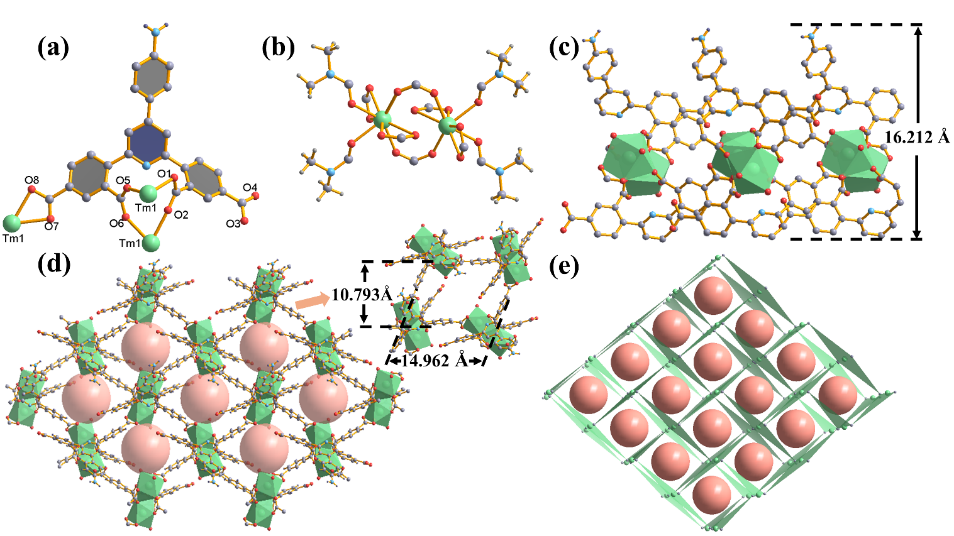
Fig. 2. The coordination mode of NH2-HPPDC3- ligand (a), two-dimensional sheet of NUC-151, (green polyhedra = TmO8 units, the nanochannels were highlighted with pink spheres, H atoms are omitted for clarity) (b?d) and topology of NUC-151 (e).
| Entry | NUC-151a (mol%) | n-Bu4NBr (mol%) | P (MPa) | T (°C) | Time (h) | Yield b (%) |
|---|---|---|---|---|---|---|
| 1 | 0.05 | 1.0 | 0.1 | 35 | 24 | 18 |
| 2 | — | 1.0 | 0.1 | 35 | 24 | 12 |
| 3 | 0.06 | 1.0 | 0.1 | 35 | 24 | 37 |
| 4 | 0.07 | 1.0 | 0.1 | 35 | 24 | 49 |
| 5 | 0.08 | 1.0 | 0.1 | 35 | 24 | 55 |
| 6 | 0.09 | 1.0 | 0.1 | 35 | 24 | 59 |
| 7 | 0.10 | 1.0 | 0.1 | 35 | 24 | 61 |
| 8 | 0.10 | 1.0 | 0.1 | 45 | 24 | 82 |
| 9 | 0.10 | 1.0 | 0.1 | 55 | 24 | 99 |
| 10 | 0.10 | 1.0 | 0.1 | 65 | 20 | 99 |
| 11 | 0.10 | 1.0 | 0.1 | 75 | 16 | 99 |
| 12 | 0.10 | 1.0 | 0.1 | 85 | 12 | 99 |
| 13 | 0.10 | 1.0 | 0.4 | 85 | 10 | 99 |
| 14 | 0.10 | 1.0 | 0.6 | 85 | 8 | 99 |
| 15 | 0.10 | 1.0 | 0.8 | 85 | 6 | 99 |
| 16 | 0.10 | 1.0 | 1.0 | 85 | 4 | 99 |
Table 1 Cycloaddition reaction of CO2 with 2-(chloromethyl) epoxyethane (CE) under various conditions a.
| Entry | NUC-151a (mol%) | n-Bu4NBr (mol%) | P (MPa) | T (°C) | Time (h) | Yield b (%) |
|---|---|---|---|---|---|---|
| 1 | 0.05 | 1.0 | 0.1 | 35 | 24 | 18 |
| 2 | — | 1.0 | 0.1 | 35 | 24 | 12 |
| 3 | 0.06 | 1.0 | 0.1 | 35 | 24 | 37 |
| 4 | 0.07 | 1.0 | 0.1 | 35 | 24 | 49 |
| 5 | 0.08 | 1.0 | 0.1 | 35 | 24 | 55 |
| 6 | 0.09 | 1.0 | 0.1 | 35 | 24 | 59 |
| 7 | 0.10 | 1.0 | 0.1 | 35 | 24 | 61 |
| 8 | 0.10 | 1.0 | 0.1 | 45 | 24 | 82 |
| 9 | 0.10 | 1.0 | 0.1 | 55 | 24 | 99 |
| 10 | 0.10 | 1.0 | 0.1 | 65 | 20 | 99 |
| 11 | 0.10 | 1.0 | 0.1 | 75 | 16 | 99 |
| 12 | 0.10 | 1.0 | 0.1 | 85 | 12 | 99 |
| 13 | 0.10 | 1.0 | 0.4 | 85 | 10 | 99 |
| 14 | 0.10 | 1.0 | 0.6 | 85 | 8 | 99 |
| 15 | 0.10 | 1.0 | 0.8 | 85 | 6 | 99 |
| 16 | 0.10 | 1.0 | 1.0 | 85 | 4 | 99 |
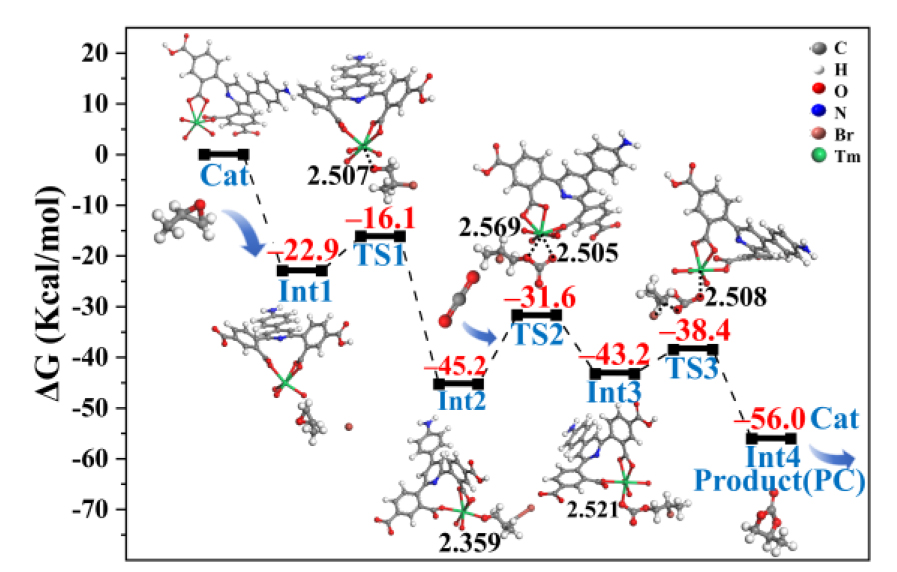
Fig. 3. The reaction pathway and energy profiles for PO and CO2 to PC over TmO6 catalytic site.
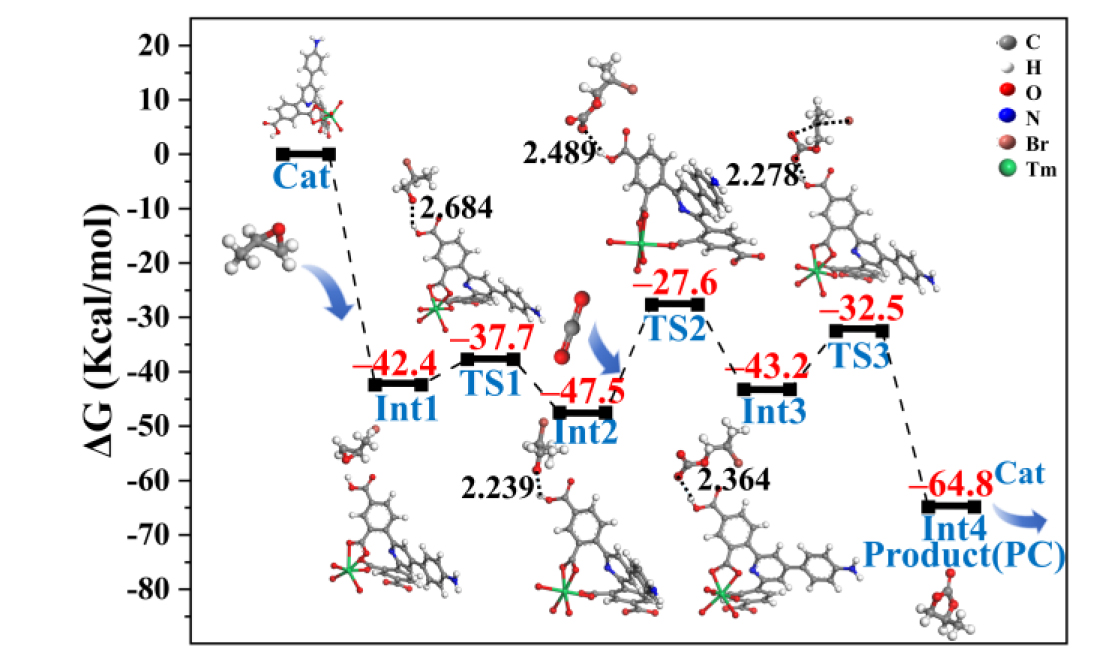
Fig. 4. The reaction pathway and energy profiles for PO and CO2 to PC over -COOH catalytic site.
| Catalytic unit | ring-opening | CO2 insertion | ring-closing |
|---|---|---|---|
| TmO6 | 6.7 | 13.6 | 4.7 |
| COOH | 4.7 | 19.8 | 10.7 |
| NH2 | 5.4 | 12.3 | 5.3 |
Table 2 Energy barriers (kcal/mol) in distinct steps during the cycloaddition process over different units.
| Catalytic unit | ring-opening | CO2 insertion | ring-closing |
|---|---|---|---|
| TmO6 | 6.7 | 13.6 | 4.7 |
| COOH | 4.7 | 19.8 | 10.7 |
| NH2 | 5.4 | 12.3 | 5.3 |
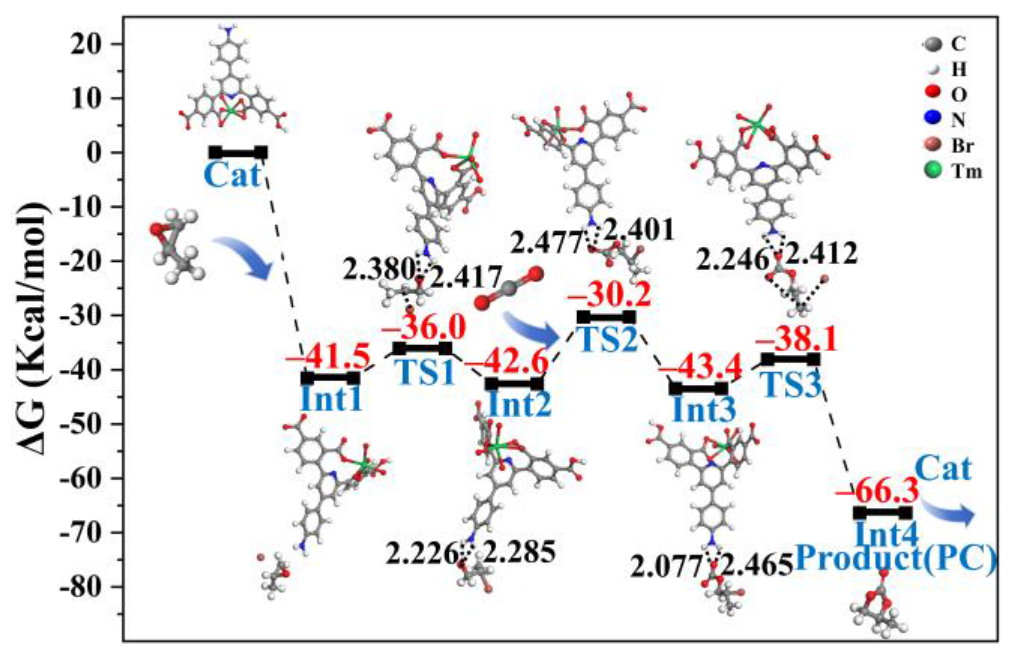
Fig. 5. The reaction pathway and energy profiles for PO and CO2 to PC over -NH2 catalytic site.
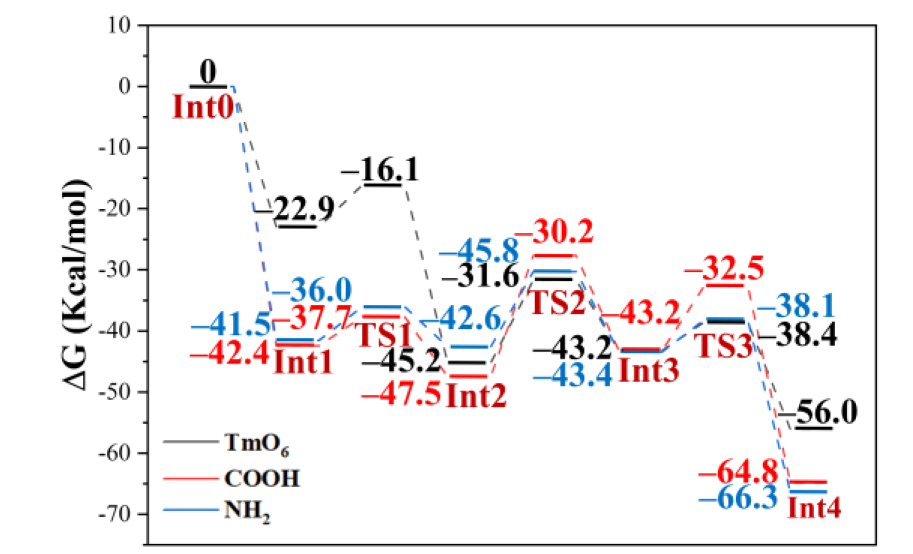
Fig. 6. Comparison of the reaction pathways and energy profiles for the conversion of PO and CO2 to PC over three active sites.
| Entry | Epoxide | Product | Yield b (%) | TON c | TOF d |
|---|---|---|---|---|---|
| 1 |  | 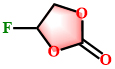 | 99 | 990 | 247 |
| 2 |  | 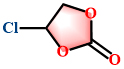 | 99 | 990 | 247 |
| 3 |  | 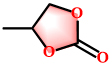 | 98 | 980 | 245 |
| 4 |  | 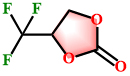 | 99 | 990 | 247 |
| 5 |  | 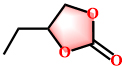 | 96 | 960 | 240 |
| 6 |  | 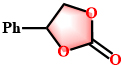 | 97 | 970 | 242 |
| 7 | 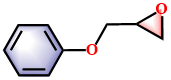 | 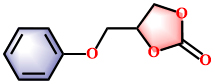 | 95 | 950 | 237 |
| 8 |  | 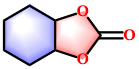 | 45 | 450 | 112 |
| 9 | 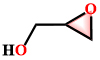 | 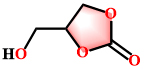 | 96 | 960 | 240 |
Table 3 The cycloaddition reactions of CO2 with various epoxides with NUC-151a as catalyst.a
| Entry | Epoxide | Product | Yield b (%) | TON c | TOF d |
|---|---|---|---|---|---|
| 1 | | | 99 | 990 | 247 |
| 2 | | | 99 | 990 | 247 |
| 3 | | | 98 | 980 | 245 |
| 4 | | | 99 | 990 | 247 |
| 5 | | | 96 | 960 | 240 |
| 6 | | | 97 | 970 | 242 |
| 7 | | | 95 | 950 | 237 |
| 8 | | | 45 | 450 | 112 |
| 9 | | | 96 | 960 | 240 |
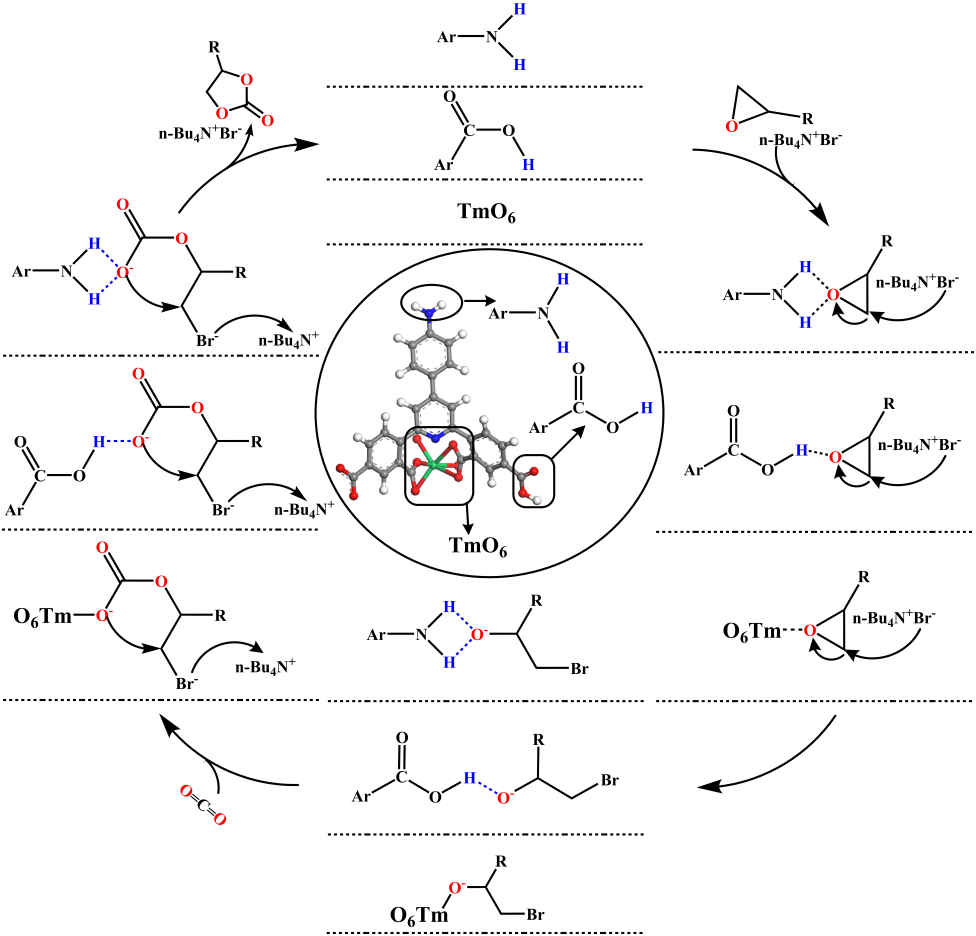
Fig. 7. The proposed reaction mechanism of the cycloaddition of CO2 with epoxides.
|
| No related articles found! |
| Viewed | ||||||
|
Full text |
|
|||||
|
Abstract |
|
|||||


