
Chinese Journal of Catalysis ›› 2026, Vol. 89: 337-352.DOI: 10.1016/S1872-2067(26)65118-2
• Article • Previous Articles Next Articles
Wei Chena, Massimo Bocusa, Unni Olsbyeb, Veronique Van Speybroecka,*( )
)
Received:2025-12-12
Accepted:2026-02-22
Online:2026-10-18
Published:2026-09-01
Contact:
*E-mail:Veronique.VanSpeybroeck@UGent.be(V. Van Speybroeck).
Wei Chen, Massimo Bocus, Unni Olsbye, Veronique Van Speybroeck. Dynamic evolution and stability of ketenes in MAPO-18 (M = Si or Mg): Molecular insights into the reaction mechanism for CO2-to-hydrocarbons[J]. Chinese Journal of Catalysis, 2026, 89: 337-352.
Add to citation manager EndNote|Ris|BibTeX
URL: https://www.cjcatal.com/EN/10.1016/S1872-2067(26)65118-2
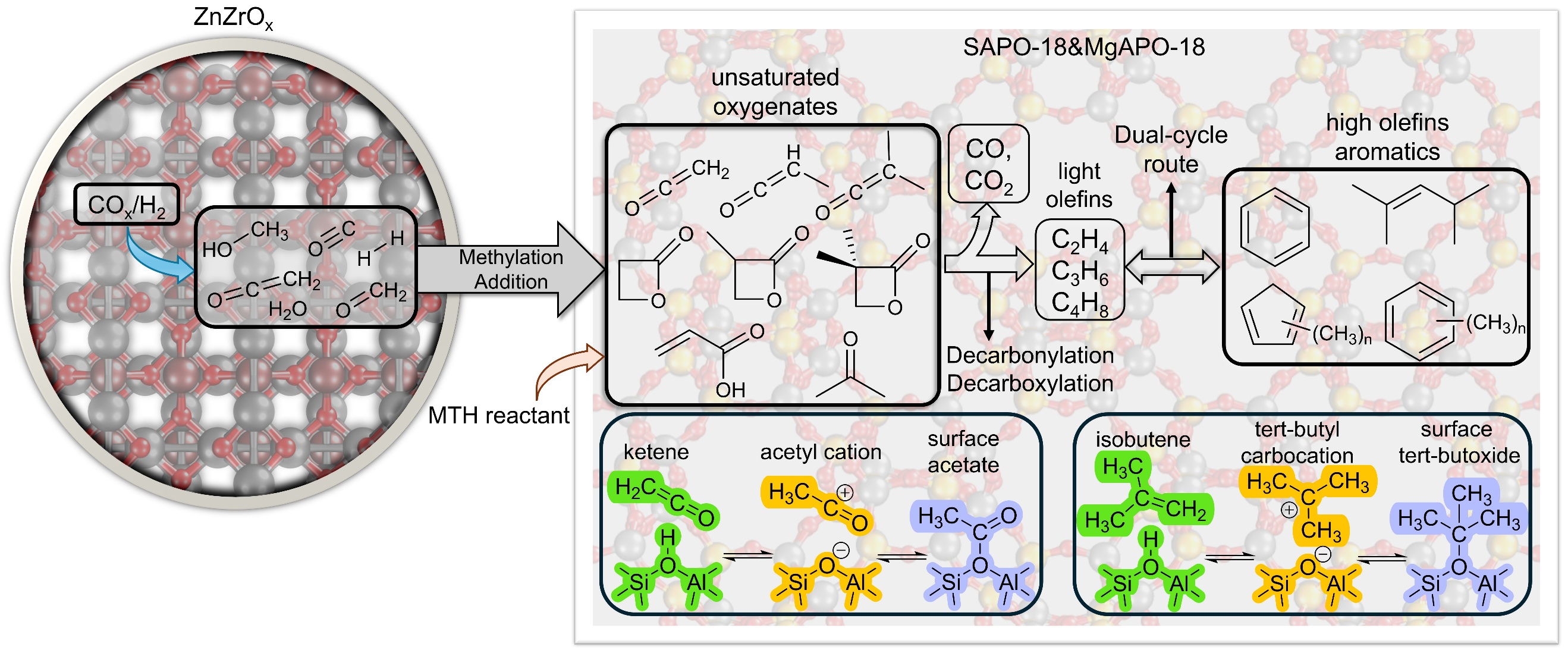
Fig. 1. An overview of the role of ketene in the reaction mechanism of COx-to-hydrocarbon (x = 1 or 2) over OX-ZEO catalyst and MTH over zeolite catalyst, and a comparison of the interconversion between ketene-acetyl cation-surface acetate and isobutene-tert-butyl carbocation-surface tert-butoxide in zeolites.
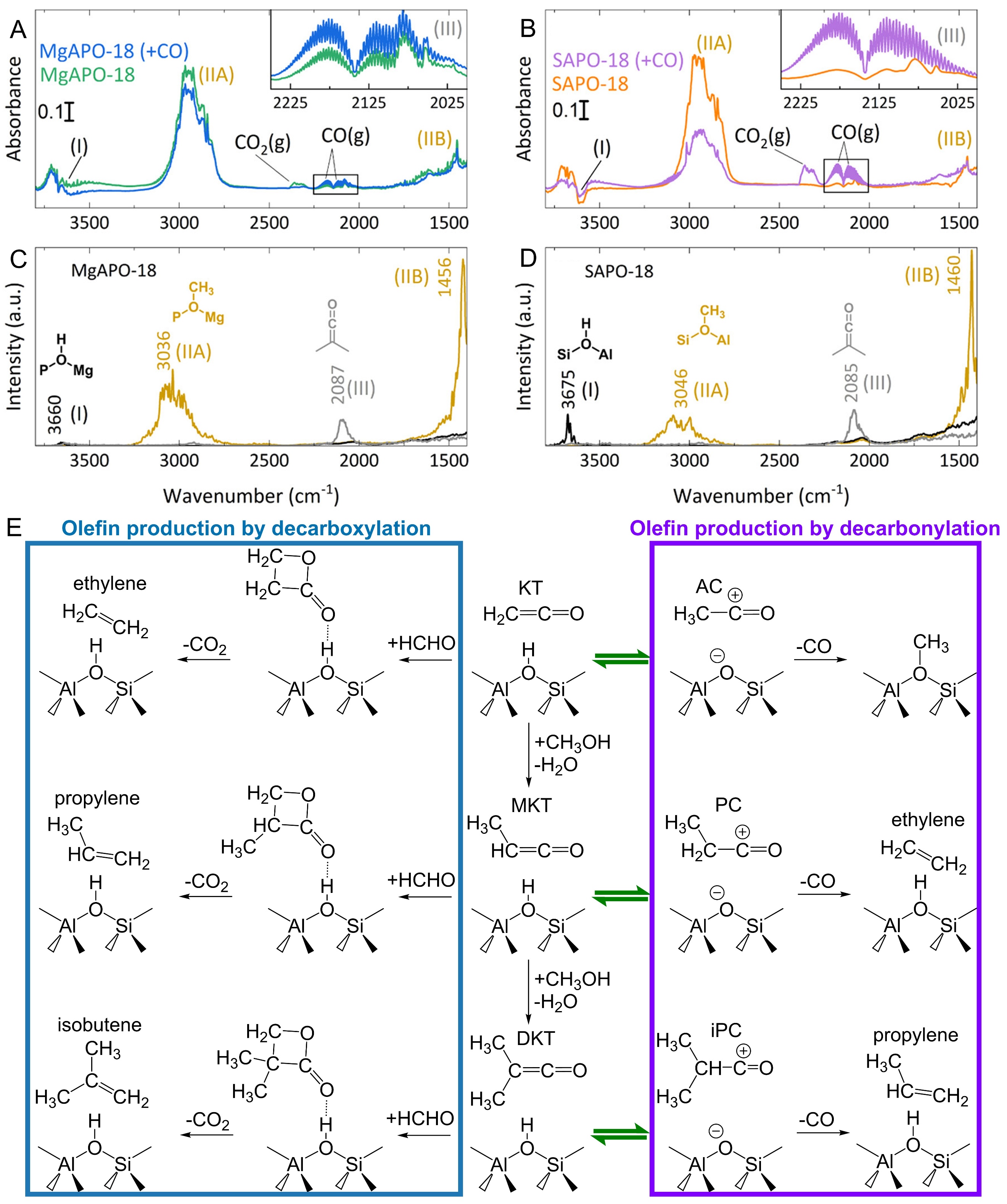
Fig. 2. Time-resolved in-situ IR spectra during the early stages of methanol conversion before the formation of hydrocarbons using MAPO-18 (M = Mg, Si): calcined and stored MgAPO-18 (A) and SAPO-18 (B) at MTH conditions and co-feeding CO at 673 K and 1 atm. Simulated power spectra of Brönsted acid site, surface methoxy species, and dimethyl ketene on MgAPO-18 (C) and SAPO-18 (D). Reproduced under the terms of the CC BY 4.0 license from reference [48]. Copyright 2024, American Chemical Society. (E) Reaction schemes of ketene-based decarbonylation and decarboxylation routes for olefin production. The green arrows indicate the protonation of ketene studied in this work.
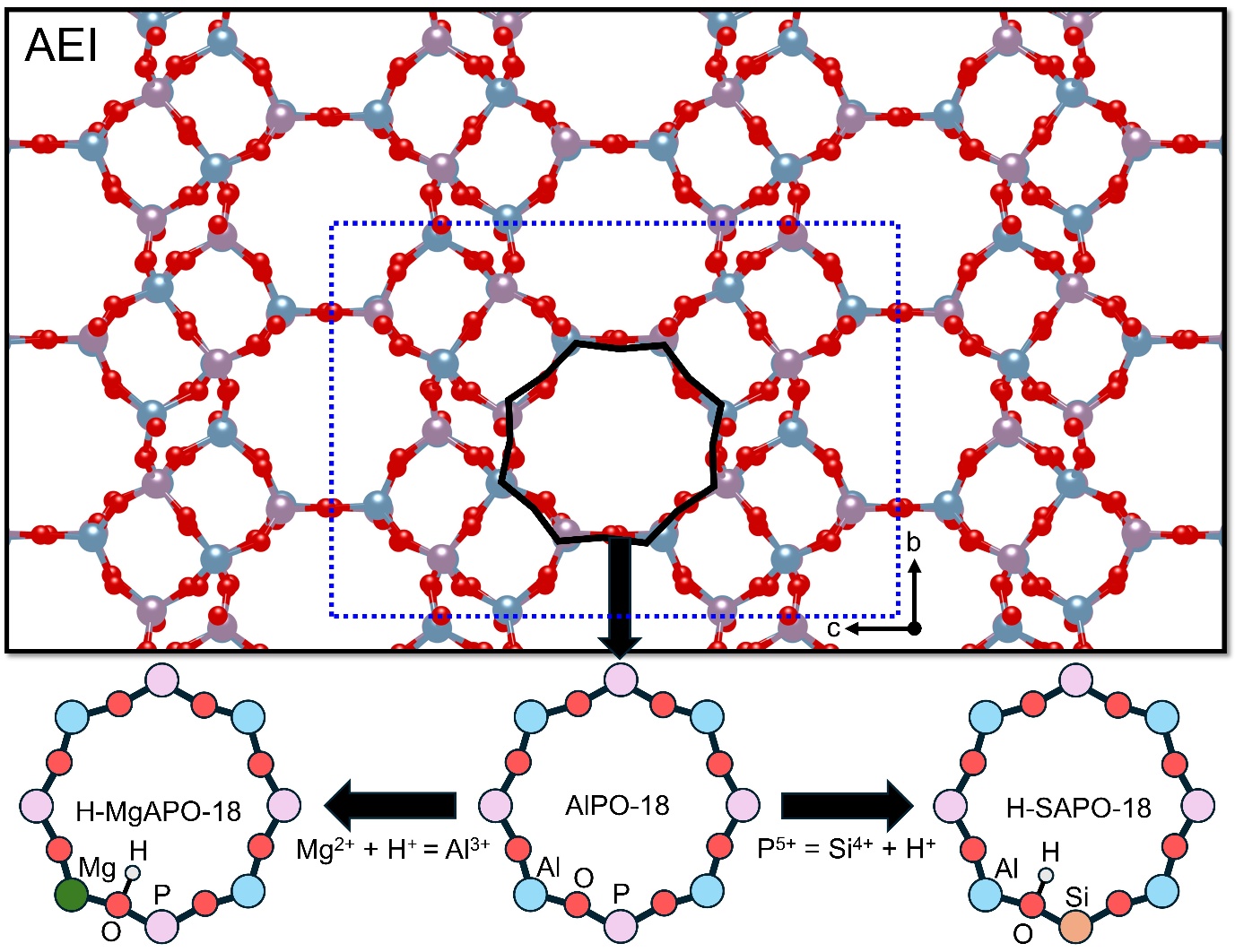
Fig. 3. Periodic models and strategies for introducing BAS into the 8R window of AlPO-18 for H-SAPO-18 and H-MgAPO-18. The blue square represents the unit cell of the AEI topology used in this study. Atom colors: oxygen, red; hydrogen, white; silicon, orange; aluminum, cyan; phosphorus, purple; and magnesium, green.
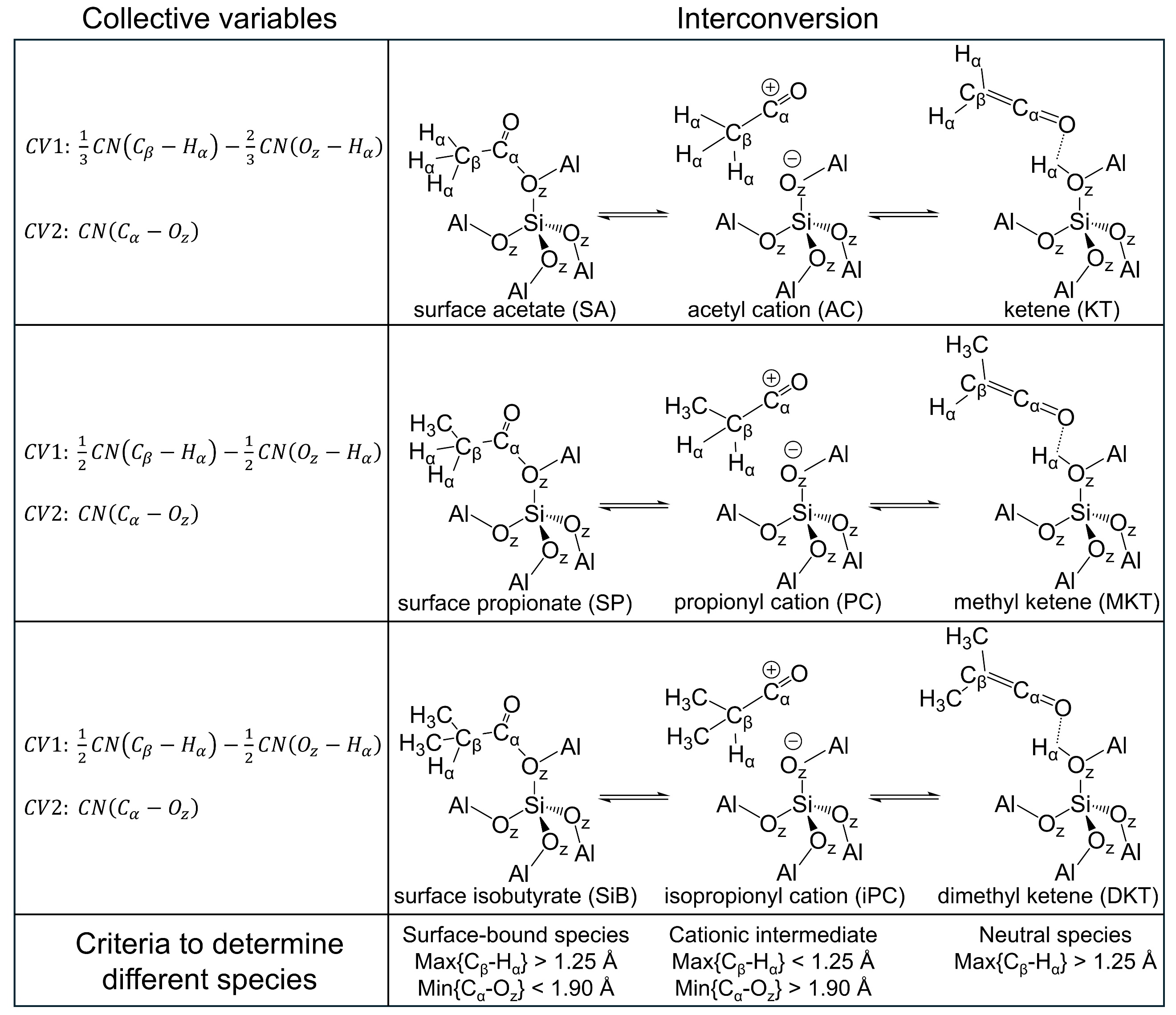
Fig. 4. Two collective variables (CV1 and CV2) were used to describe the interconversion of neutral species, cationic intermediates, and surface-bound species for ketene, methyl ketene, and dimethyl ketene in H-SAPO-18, and the criteria for determining these three species in the FPMD trajectories. The same settings were also used for H-MgAPO-18.
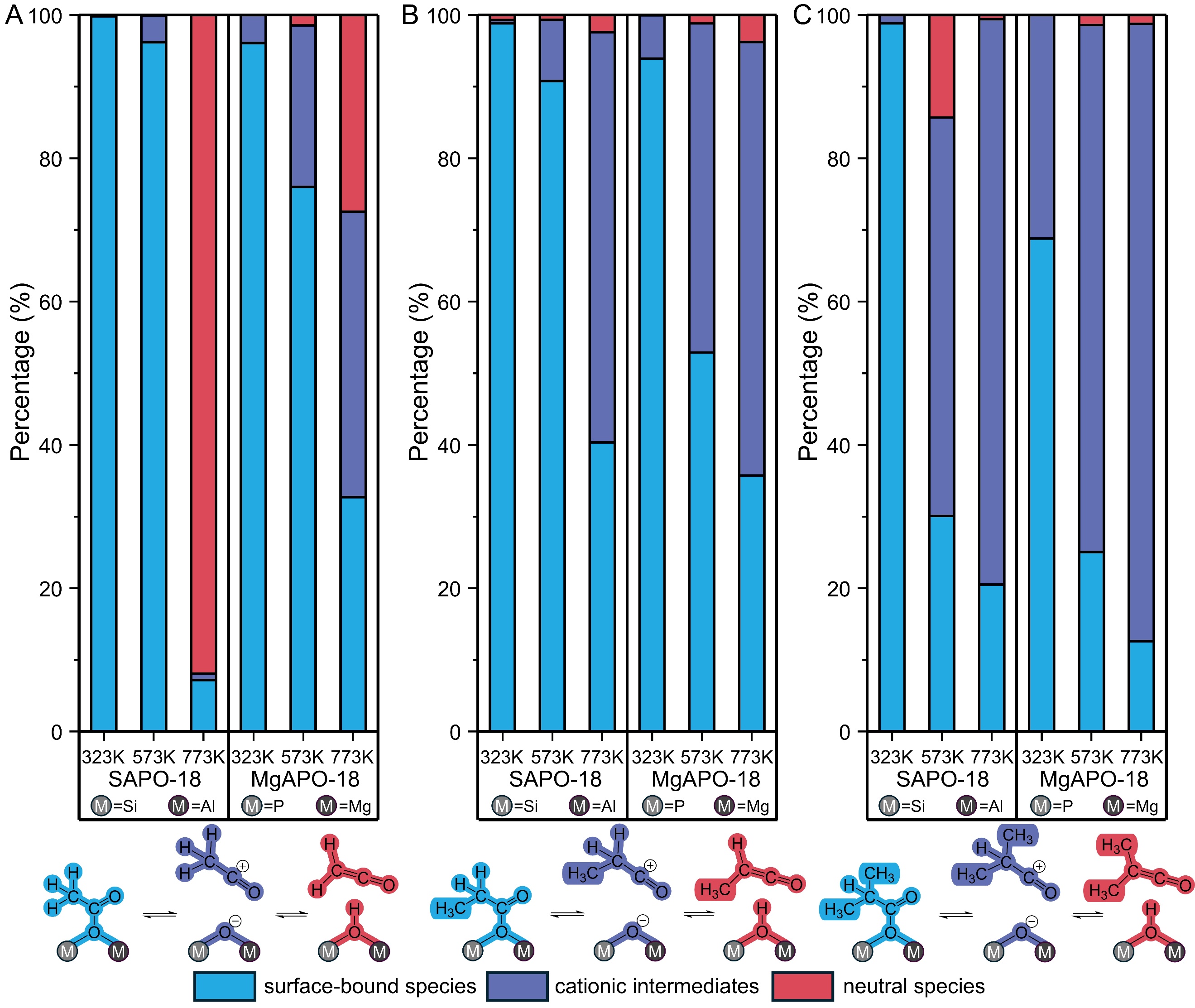
Fig. 5. The percentages of different species (surface-bound species, cationic intermediates, and neutral species) in SAPO-18 and MgAPO-18 at 323, 573, and 773 K during FPMD simulations with a timescale of 100 ps. The dynamic evolutions of surface acetate ⇆ acetyl cation ⇆ ketene (A), surface propionate ⇆ propionyl cation ⇆ methyl ketene (B), and surface isobutyrate ⇆ isopropionyl cation ⇆ dimethyl ketene (C). Surface-bound species were used as the initial species in the FPMD simulations.
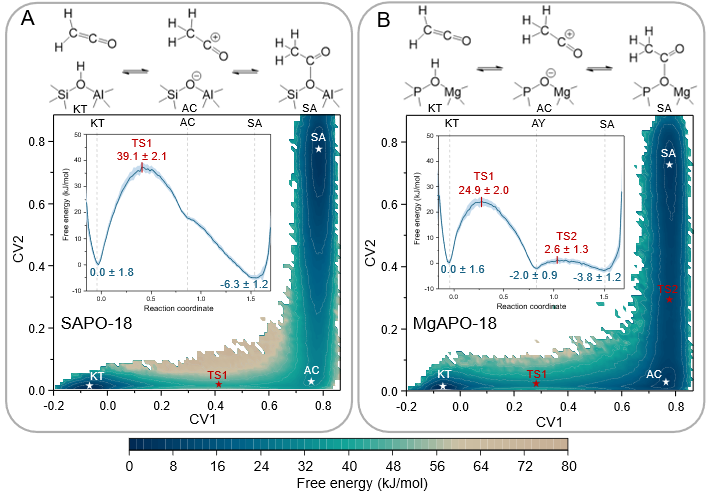
Fig. 6. 2D free energy surfaces of ketene (KT) protonation to acetyl cation (AC) and surface acetate (SA) in SAPO-18 (A) and MgAPO-18 (B) at 673 K, obtained by umbrella sampling simulations. The inset graphs show the 1D projection of the 2D free energy surface along with the reaction coordinate (CV1+CV2).
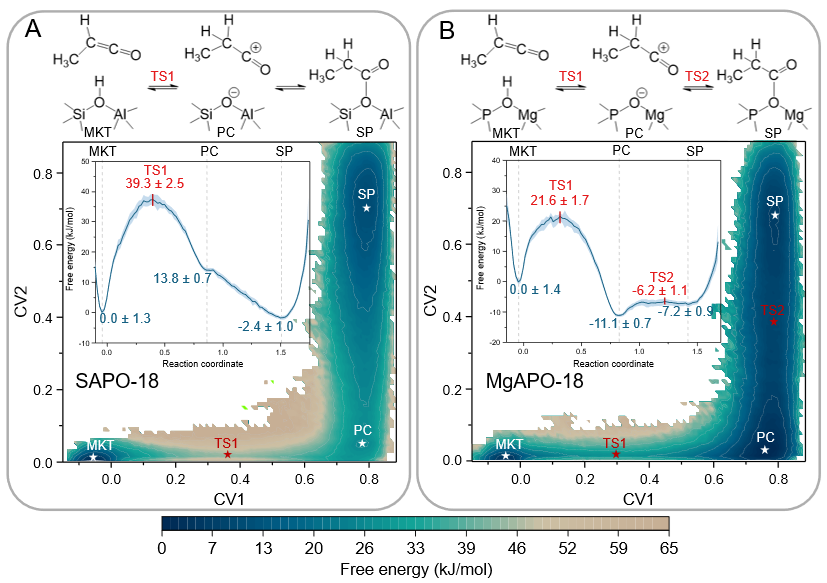
Fig. 7. 2D free energy surfaces of methyl ketene (MKT) protonation to propionyl cation (PC) and surface propionate (SP) in SAPO-18 (A) and MgAPO-18 (B) at 673 K. The inset graphs show the 1D projection of the 2D free energy surface along with the reaction coordinate (CV1+CV2).
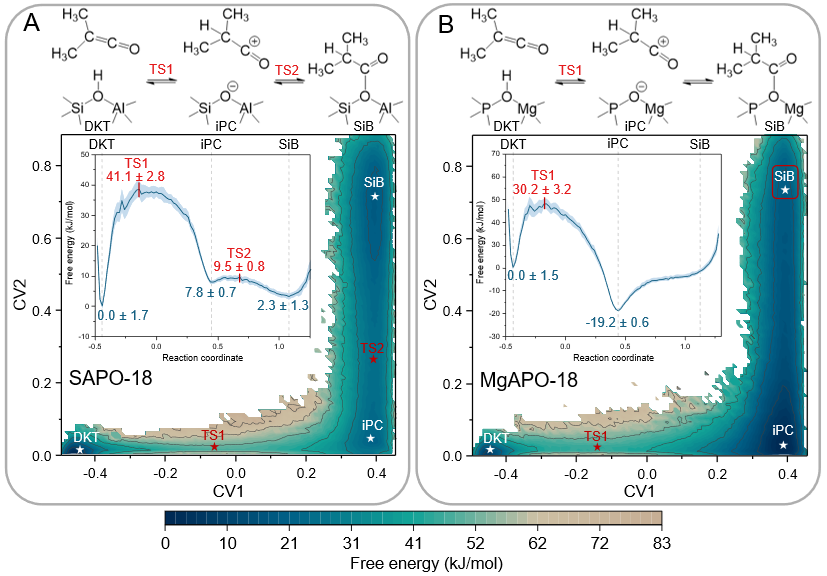
Fig. 8. 2D free energy surfaces of dimethyl ketene (DKT) protonation to isopropionyl cation (iPC) and surface isobutyrate (SiB) in SAPO-18 (A) and MgAPO-18 (B) at 673 K. The inset graphs show the 1D projection of the 2D free energy surface along with the reaction coordinate (CV1+CV2).
| SAPO-18 | MgAPO-18 | |
|---|---|---|
| Ketene | 24.6% | 22.7% |
| Acetyl cation | — | 32.5% |
| Surface acetate | 73.4% | 44.8% |
| Methyl ketene | 39.5% | 8.4% |
| Propionyl cation | — | 61.1% |
| Surface propionate | 60.5% | 30.5% |
| Dimethyl ketene | 52.2% | 3.1% |
| Isopropionyl cation | 13.0% | 96.9% |
| Surface isobutyrate | 34.8% | — |
Table 1 Thermodynamic stability analysis of all three species in steady states at 673 K based on FPMD-US simulations.
| SAPO-18 | MgAPO-18 | |
|---|---|---|
| Ketene | 24.6% | 22.7% |
| Acetyl cation | — | 32.5% |
| Surface acetate | 73.4% | 44.8% |
| Methyl ketene | 39.5% | 8.4% |
| Propionyl cation | — | 61.1% |
| Surface propionate | 60.5% | 30.5% |
| Dimethyl ketene | 52.2% | 3.1% |
| Isopropionyl cation | 13.0% | 96.9% |
| Surface isobutyrate | 34.8% | — |
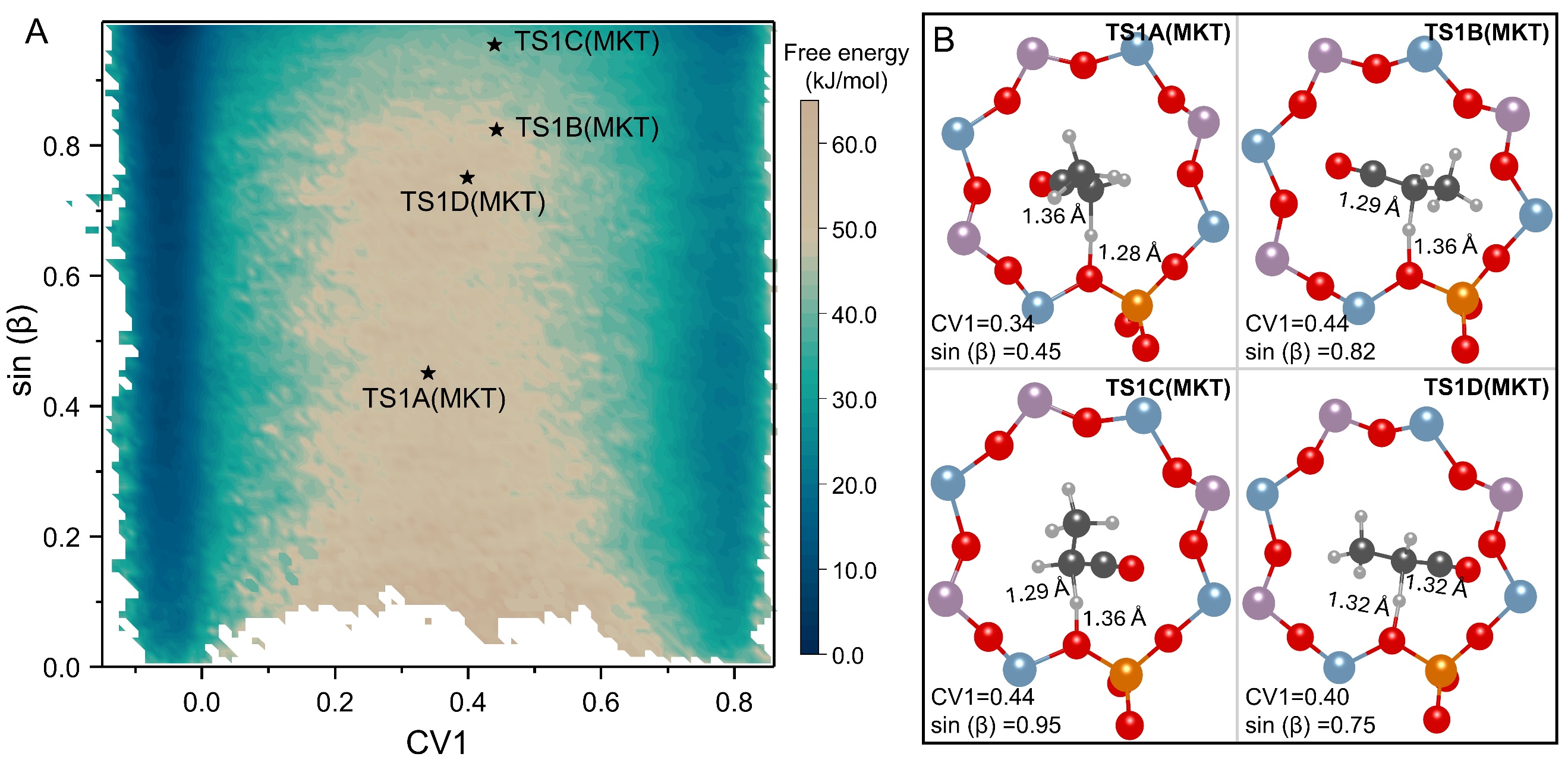
Fig. 9. (A) 2D deprojection of free energy surface for MKT protonation in SAPO-18 along with sin (β), β is the angle between $\overrightarrow{r_{c}}$ and $\overrightarrow{r_{M K T}}$ to describe the orientation of MKT protonation. More details about the definition of β are provided in Fig. S7. (B) Transition state structures for MKT protonation in SAPO-18 using the revPBE-D3/TZVP method. All other atoms were hidden for better visualization. Atom colors: carbon, black; oxygen, red; hydrogen, white; silicon, orange; aluminum, cyan; phosphorus, purple.
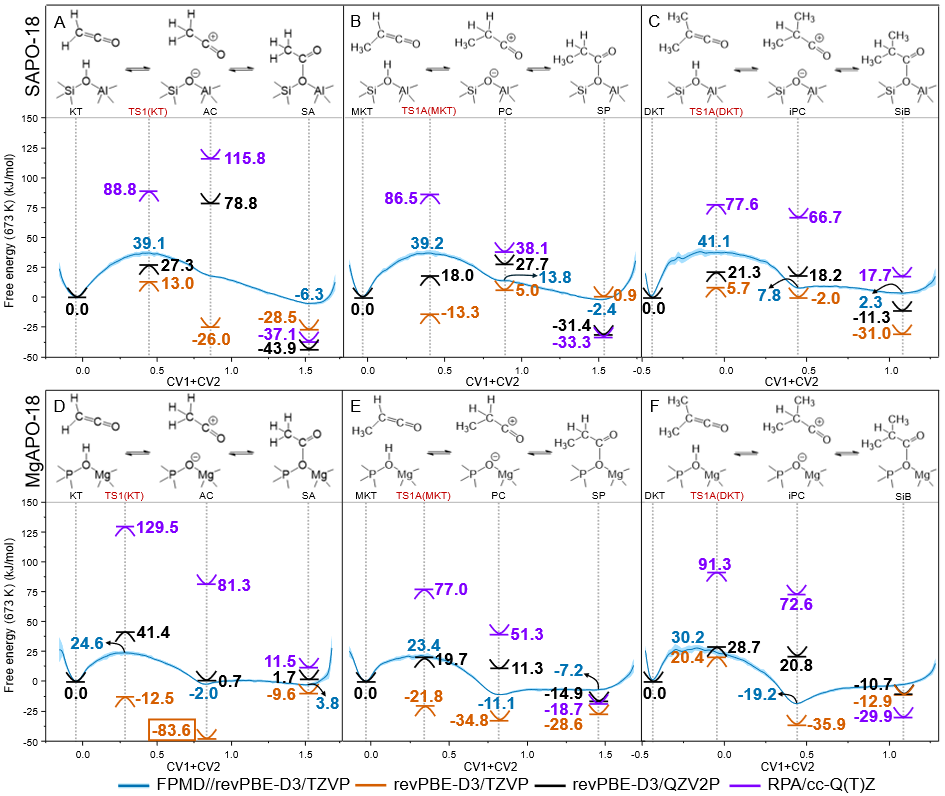
Fig. 10. Free energy surfaces of the protonation of ketene (A,D), methyl ketene (B,E), and dimethyl ketene (C,F) in SAPO-18 (A-C) and MgAPO-18 (D-F) obtained by static calculations and FPMD simulations at 673 K. Upward-opening parabola: local minima; downward-opening parabola: transition states.
|
| [1] | Jianwei Jiang, Minji Kang, Jeongcheol Shin, Kiyoung Park, Sungho Yoon. Cobalt nanoparticle catalyst with magnetic recoverability for high-performance epoxide carbonylation to β-lactones with high selectivity [J]. Chinese Journal of Catalysis, 2026, 86(7): 89-98. |
| [2] | Run Pan, Abubakar Yusuf, Chengjun Wang, Jianrong Li, Zhiyu Xiao, Shuai Liu, Yidong Zhong, Yong Ren, Zheng Wang, Hainam Do, John L. Zhou, George Zheng Chen, Jun He. Core-shell Pd@CeO2/γ‐Al2O3 catalysts: Boosting efficiency and durability in stoichiometric natural gas vehicle exhaust treatment [J]. Chinese Journal of Catalysis, 2026, 82(3): 348-362. |
| [3] | Feng Li, Ye Ma, Mingyu Wan, Yating Lv, Jiamin Yuan, Shichao Han, Houyu Ma, Liang Wang, Xiangju Meng, Anmin Zheng, Yanhang Ma, Feng-Shou Xiao. Pure silica Beta zeolite supported Ag-Mn catalyst for efficient ozone decomposition [J]. Chinese Journal of Catalysis, 2026, 82(3): 292-300. |
| [4] | Miao-Miao Shi, Yue-Xuan He, Ning Zhang, Di Bao, Da-Ming Zhao, Hai-Xia Zhong, Jun-Min Yan, Qing Jiang. Direct electrochemical liquid ammonia splitting for onsite hydrogen generation under room temperature [J]. Chinese Journal of Catalysis, 2026, 81(2): 310-318. |
| [5] | Ruiyuan Liu, Chengyang Yin, Chengming Zhong, Jia Hou, Xiaofei Song, Jian Liu, Zhen Zhao. Fundamental insight into copper-based zeolite catalysts for NH3-SCR: Two decades’ progress and future perspectives [J]. Chinese Journal of Catalysis, 2026, 89(10): 76-101. |
| [6] | Wenbo Shi, Kai Zhu, Xiaogang Fu, Chenhong Liu, Yang Yuan, Jialiang Pan, Qing Zhang, Zhengyu Ba. Dual-site confinement strategy tuning Fe-N-C electronic structure to enhance oxygen reduction performance in PEM fuel cells [J]. Chinese Journal of Catalysis, 2026, 80(1): 293-303. |
| [7] | Yandong Xu, Zihui Jing, Wenhao Su, Jiale Xu, Mingliang Wang. Synergistic coupling of H2O2 production and furoic acid synthesis over B-TiO2@COF S-scheme bifunctional photocatalyst [J]. Chinese Journal of Catalysis, 2026, 80(1): 135-145. |
| [8] | Zhouzhou Wang, Qiancheng Zhou, Li Luo, Yaran Shi, Haoran Li, Chunchun Wang, Kesheng Lin, Chengsi Wang, Libing Zhu, Linyun Han, Zhuo Xing, Ying Yu. Suppressing catalyst reconstruction in neutral electrolyte: stabilizing Co-O-Mo point-to-point connection of cobalt molybdate by tungsten doping for oxygen evolution reaction [J]. Chinese Journal of Catalysis, 2025, 76(9): 146-158. |
| [9] | Qisong Yi, Lu Lin, Huawei Geng, Shaohua Chen, Yuanchao Shao, Ping He, Zhifeng Liu, Haimei Xu, Tiehong Chen, Yuanshuai Liu, Valentin Valtchev. Benefits of H-ZSM-5 zeolite from fluoride-mediated acidic synthesis for liquid-phase conversion of cyclohexanol [J]. Chinese Journal of Catalysis, 2025, 74(7): 97-107. |
| [10] | Chenhao Li, Hao Wang, Weiwei Wang, Shuo Bai, Zhongbin Gong, Qinqin Sang, Yuqing Zhang, Feng Huo, Yanrong Liu. PtCu nano-dendrites with enhanced stability in proton exchange membrane fuel cells [J]. Chinese Journal of Catalysis, 2025, 73(6): 322-333. |
| [11] | Rushuo Li, Tao Ban, Danfeng Zhao, Fajie Hu, Jing Lin, Xiubing Huang, Zhiping Tao, Ge Wang. Defective UiO-66(Ce) supported Ni nanoparticles with optimized microenvironment and electronic state for efficient olefin hydrogenation reaction [J]. Chinese Journal of Catalysis, 2025, 72(5): 344-358. |
| [12] | Fanrong Chen, Jiaju Fu, Liang Ding, Xiaoying Lu, Zhe Jiang, Xiaoling Zhang, Jin-Song Hu. Promoting stability of sub-3 nm In2S3 nanoparticles via sulfur anchoring for CO2 electroreduction to formate [J]. Chinese Journal of Catalysis, 2025, 71(4): 138-145. |
| [13] | Dezheng Li, Huimin Liu, Xuewen Xiao, Manqi Zhao, Dehua He, Yiming Lei. Carbon diffusion mechanism as an effective stability enhancement strategy: The case study of Ni-based catalyst for photothermal catalytic dry reforming of methane [J]. Chinese Journal of Catalysis, 2025, 70(3): 399-409. |
| [14] | Baofa Liu, Weijie Pan, Zhiyang Huang, Yi Zhao, Zuyang Luo, Tayirjan Taylor Isimjan, Bao Wang, Xiulin Yang. Unlocking 5300-h ultrastable metal-free ORR catalysts for Zn-air batteries via F-N co-doped tailored carbon pore architectures and synergistic adsorption modulation [J]. Chinese Journal of Catalysis, 2025, 79(12): 100-111. |
| [15] | Xiaomeng Liu, Zehua Chen, Xinyue Liu, Tong Zhu, Jinyuan Sun, Chunli Li, Yinglu Cui, Bian Wu. Computational redesign of a thermostable MHET hydrolase and its role as an endo-PETase in promoting PET depolymerization [J]. Chinese Journal of Catalysis, 2025, 78(11): 182-191. |
| Viewed | ||||||
|
Full text |
|
|||||
|
Abstract |
|
|||||


