
Chinese Journal of Catalysis ›› 2027, Vol. 92: 182-191.DOI: 10.1016/S1872-2067(26)65270-9
• Articles • Previous Articles Next Articles
Piracha Sanwala,d, Jingjing Zhangb,*( ), Rashid Mehmooda, Linkun Sunb, Xu Huc, Wen Daia,*(), Gao Lib,*()
Received:2026-04-24
Accepted:2026-07-03
Online:2027-01-02
Published:2026-10-30
Contact:
*E-mail: daiwen@dicp.ac.cn (W. Dai),About author:First author contact: Piracha Sanwal: Writing-original draft, Visualization, Supervision, Formal analysis. Jingjing Zhang: Visualization, Validation, Software, Writing-original draft. Rashid Mehmood: Visualization, Software. Linkun Sun: Visualization, Validation. Xu Hu: Software, Funding acquisition, Writing-review &editing. Wen Dai: Visualization, Validation, Funding acquisition, Writing-review &editing. Gao Li: Writing-review &editing, Supervision, Project administration, Conceptualization.
Supported by:Piracha Sanwal, Jingjing Zhang, Rashid Mehmood, Linkun Sun, Xu Hu, Wen Dai, Gao Li. Dopant-enabled RuO2(110)-dominant architecture for boosting sustainable acidic oxygen evolution[J]. Chinese Journal of Catalysis, 2027, 92: 182-191.
Add to citation manager EndNote|Ris|BibTeX
URL: https://www.cjcatal.com/EN/10.1016/S1872-2067(26)65270-9
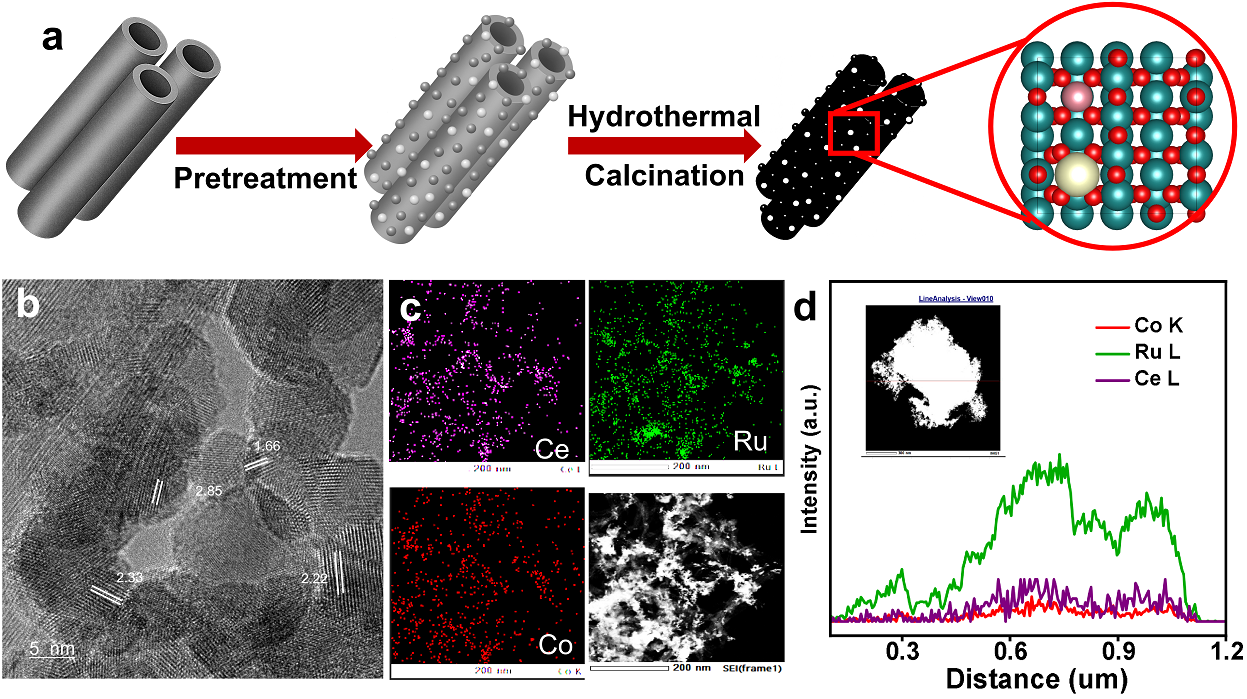
Fig. 1. Schematic synthesis (a), high-resolution STEM image (b) with elemental mappings (c), and elemental line-scan profile (d) of CeCo-RuO2.
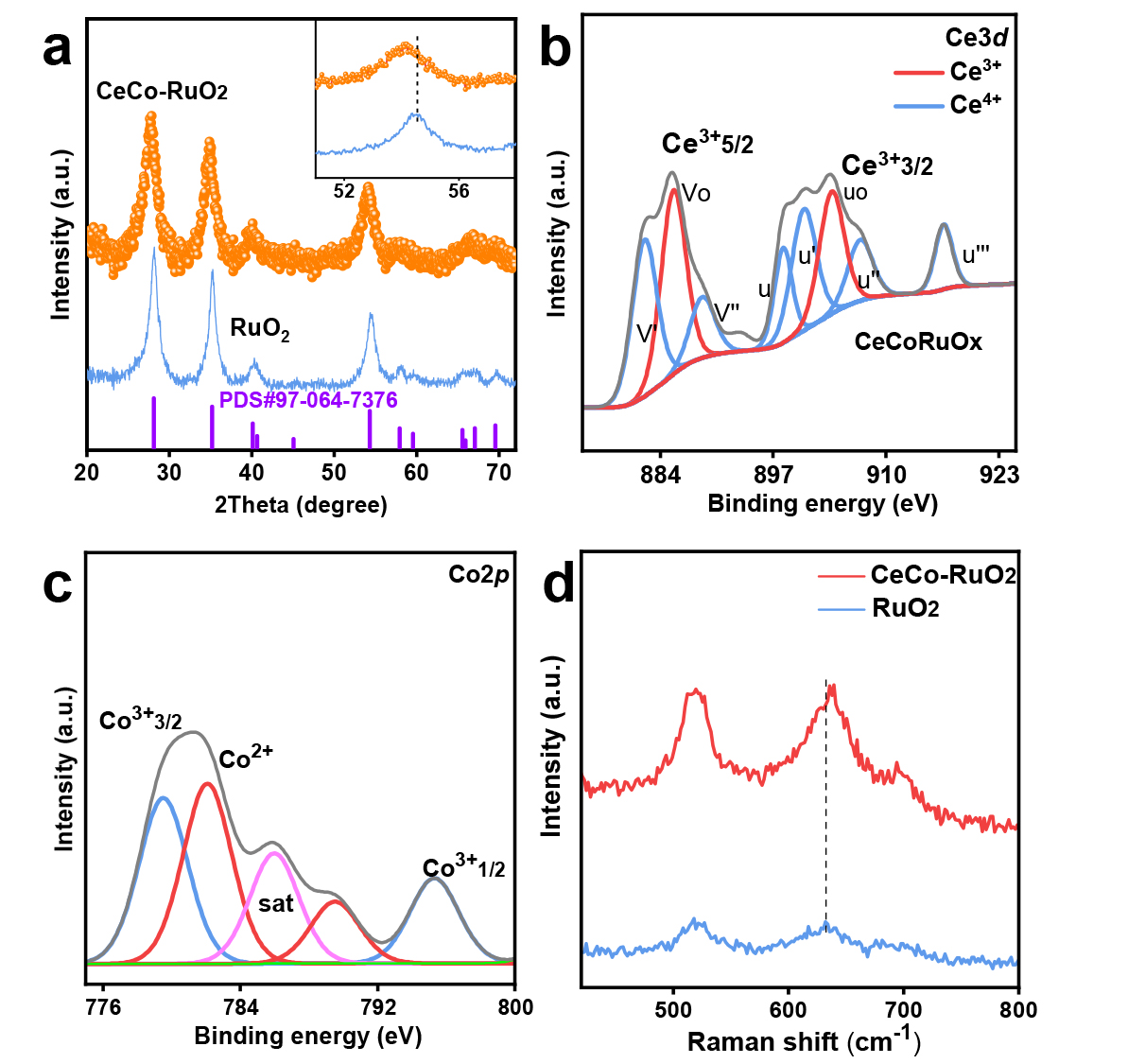
Fig. 2. The physical characterization of pristine CeCo-RuO2 and RuO2: powder XRD patterns (a), XPS spectra (Ce 3d (b) and Co 2p (c)), and Raman spectra (d).
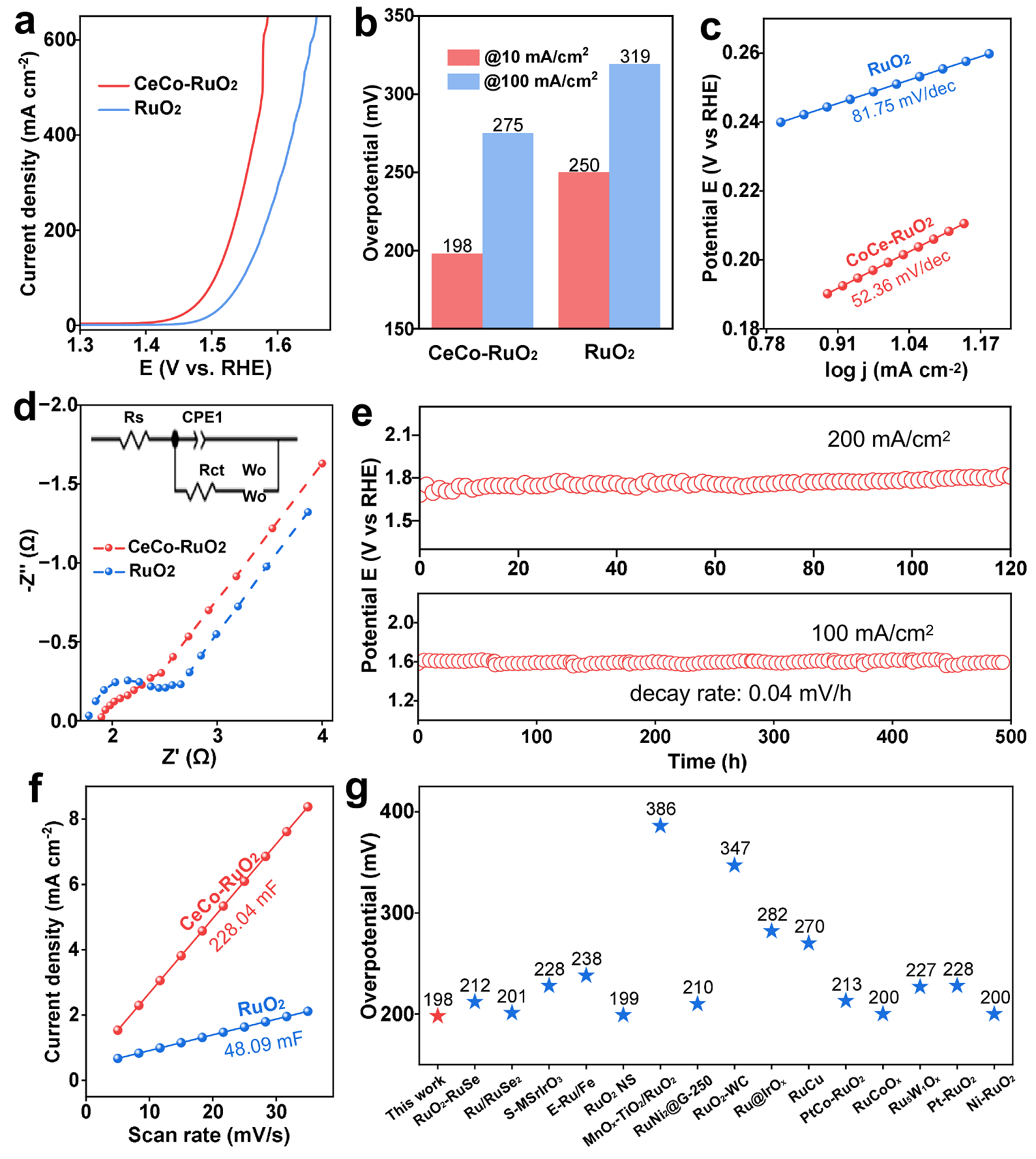
Fig. 3. LSV curves (a) and overpotential statistics (b) at 10 and 100 mA cm-2 of RuO2 and CeCo-RuO2. Tafel (c) and Nyquist plots (d). (e) Durability of CeCo-RuO2 at 100 and 200 mA cm-2. (f) Cdl plots. (g) Benchmark comparison of CeCo-RuO2 with recently reported acidic OER catalysts.
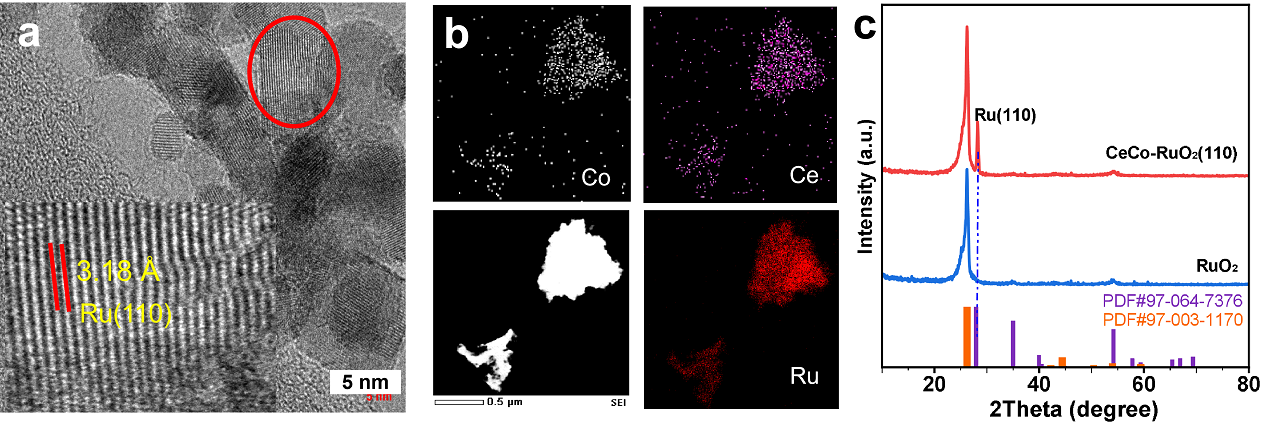
Fig. 4. HR-STEM image (a) with EDS mapping (b) and XRD patterns (c) of utilized CeCo-RuO2 after OER test.
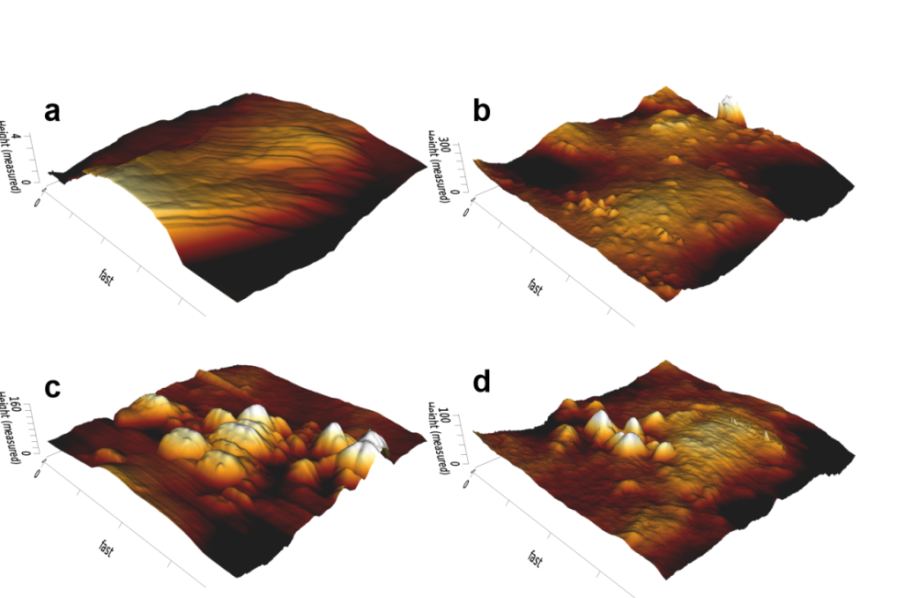
Fig. 5. AFM images of pristine utilized CeCo-RuO2 (a) and after OER (b‒d) at different regions
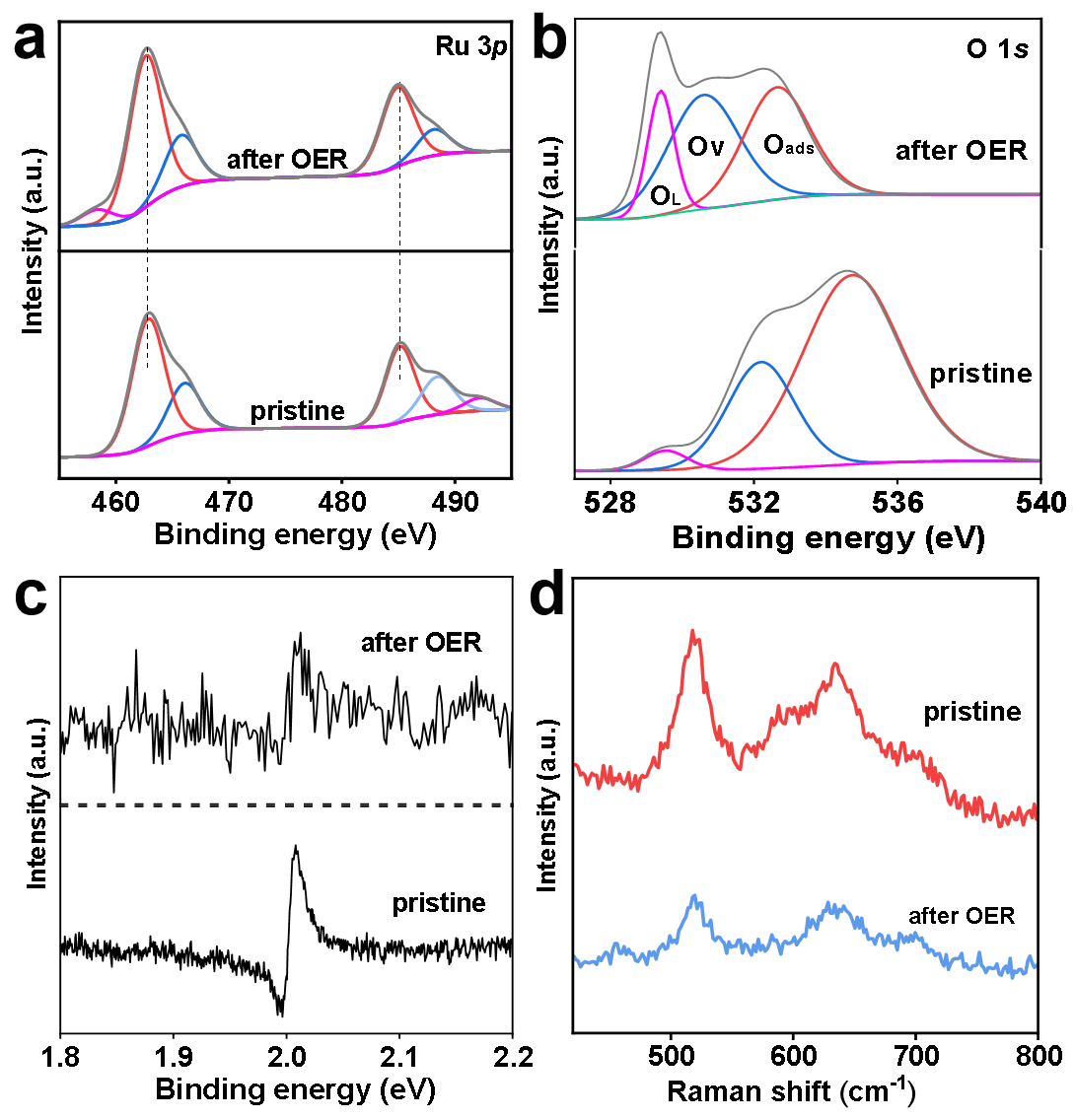
Fig. 6. The spectroscopic comparison of pristine and utilized CeCo-RuO2: Ru 3p (a) and O 1s (b) XPS, Raman (c), and EPR (d) spectra.
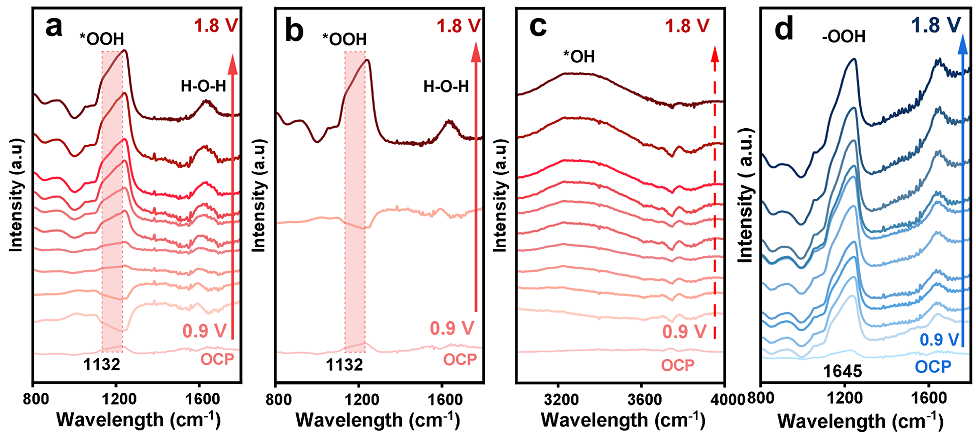
Fig. 7. In-situ FTIR spectra of CeCo-RuO2 (a) and RuO2 (d) recorded from 0.9 to 1.8 V vs. RHE in the 800-1800 cm-1 region. (b) Comparison of FTIR spectra at selected potentials. (c) In-situ FTIR spectra of CeCo-RuO2 in the O-H stretching region (3000-4000 cm-1).
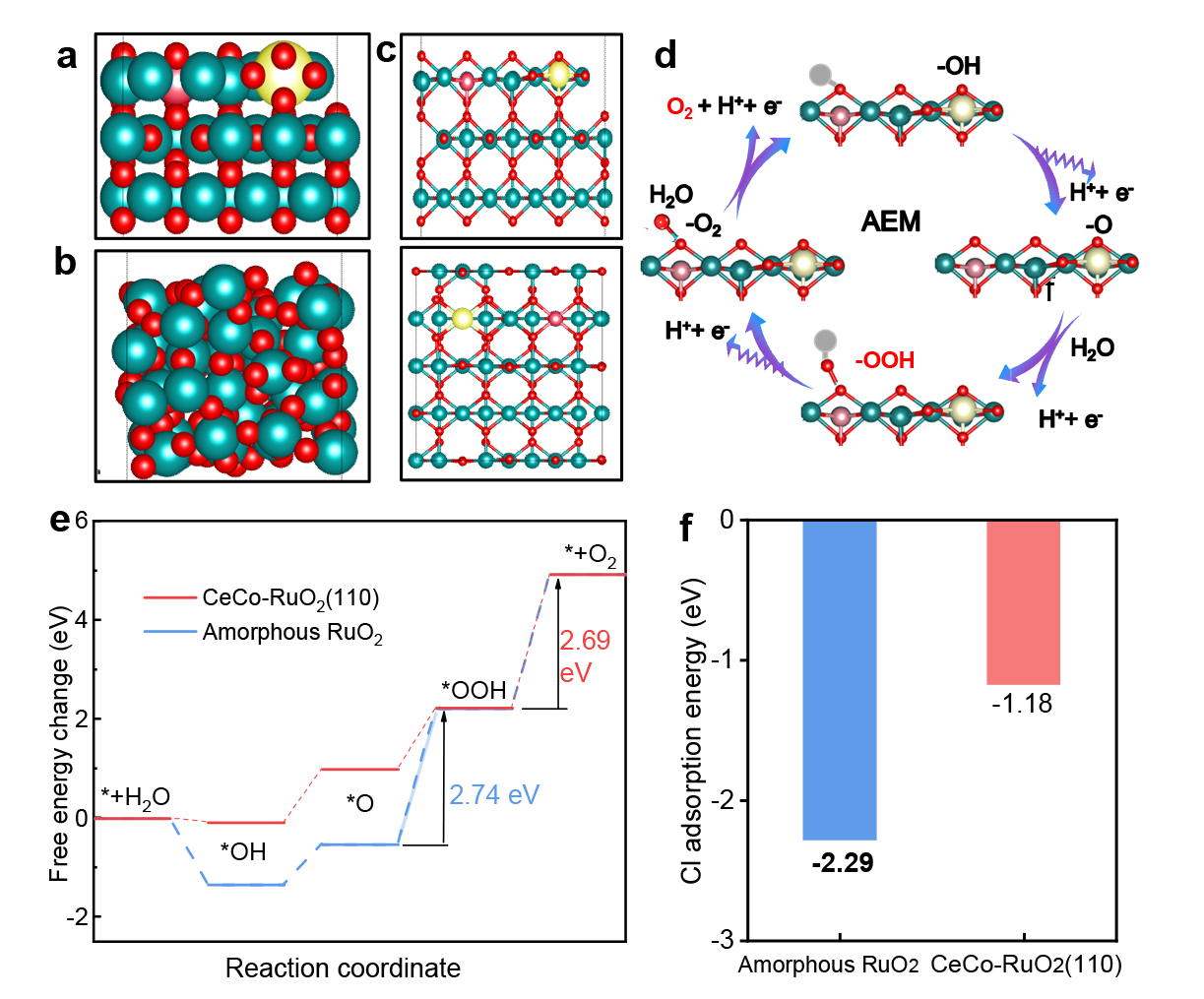
Fig. 8. (a,b) Structural models of Ce-RuO2(110) and amorphous RuO2. (c) Representative slab model of CeCo-RuO2. (d) Schematic illustration of the AEM pathway. Calculated OER free-energy diagrams (e) and chloride adsorption energies (f) for CeCo-RuO2(110) and amorphous RuO2.
|
| [1] | Yanyan Chen, Sen Wang, Shanhui Zhu, He Wang, Mei Dong, Zhangfeng Qin, Jianguo Wang, Weibin Fan. Mechanistic switch in methane combustion on PdOₓ catalysts mediated by oxygen vacancies [J]. Chinese Journal of Catalysis, 2027, 92(1): 387-396. |
| [2] | Qi Tang, Bomiao Wang, Chongtai Wang, DaoXiong Wu, Ziming Cheng, Huimin Han, Leiyun Han, Huaxia Chen, Yingjie Hua. The regulation of interface structure improves the performance of the MoxOy/Co3O4 electrocatalytic oxygen evolution reaction in acidic media [J]. Chinese Journal of Catalysis, 2026, 88(9): 295-306. |
| [3] | Miao Wang, Tianyu Shen, Heng Zhou, Shuaikang Yang, Fengkun Hao, Chaohui Wang, Mohan Kumar, Zuoxiu Tie, Shuangming Chen, Zhanxi Fan, Zhong Jin. Direct electrosynthesis of ammonia from nitrate reduction using atomically precise carbonyl-rich metal clusters in neutral media [J]. Chinese Journal of Catalysis, 2026, 88(9): 259-268. |
| [4] | Jiaxiang Qin, Songpei Zhang, Xingju Li, Xintai Chen, Jia Zhao, Xiaoling Mou, Xiangen Song, Li Yan, Ronghe Lin, Yunjie Ding. Decoding structure-selectivity interplay in Pd-Ag nanocatalysts for butadiene semi-hydrogenation [J]. Chinese Journal of Catalysis, 2026, 87(8): 342-352. |
| [5] | Zhaochun He, Chunli Liu, Yonghua Liu, Tao Wang. Boosting homogeneous ammonia synthesis by balancing N≡N activation and N-H formation [J]. Chinese Journal of Catalysis, 2026, 87(8): 316-326. |
| [6] | Yatai Zhou, Chengcheng Yuan, Wei Xia, Jun Wang, Xiaofeng Zhu, Yong Zhang, Bicheng Zhu, Jiaguo Yu. Synergistic optimization of interfacial electron transfer and surface hydrogen adsorption in a CdS/ZnO S-scheme heterojunction by site-specific doping: A DFT study [J]. Chinese Journal of Catalysis, 2026, 86(7): 327-337. |
| [7] | Qiurong Wang, Fozia Sultana, Renkun Li, Yan Fang, Selvi Mushina, Mingwu Tan, Tongtong Li, Renhong Li. Chromium-driven lattice oxygen activation in high-entropy oxide for efficient oxygen evolution reaction [J]. Chinese Journal of Catalysis, 2026, 86(7): 277-289. |
| [8] | Liqing Wu, Wenxia Huang, Bingbing Zhao, Ping Cai, Wei Luo. Surface anions-mediated dynamic interfacial free water enriched microenvironment on RuO2 for efficient acidic oxygen evolution [J]. Chinese Journal of Catalysis, 2026, 85(6): 237-246. |
| [9] | Lanlan Chen, Li Sheng, Yanan Zhou, Qiquan Luo, Zhenyu Li, Wenhua Zhang, Jinlong Yang. Unraveling the superiority of Ni1-MoS2 single-atom catalyst in CO2 hydrogenation to methanol: A DFT combined microkinetic study [J]. Chinese Journal of Catalysis, 2026, 85(6): 143-152. |
| [10] | Yihan Ye, Yilun Ding, Tao Peng, Cheng Liu, Xinzhe Li, Yongzhi Zhao, Jianping Xiao, Feng Jiao, Xiulian Pan. Role of accumulated carbonaceous species on dynamic confinement in zeolite catalysis [J]. Chinese Journal of Catalysis, 2026, 84(5): 74-79. |
| [11] | Runlin Ma, Xiandi Ma, Hejing Wang, Xu Zhang, Yongzheng Fang, Menggai Jiao, Zhen Zhou. Bifunctional electrocatalysis of hydrazine oxidation and hydrogen evolution reactions on 2D CoX (X = P, S, As, Se): Insights from DFT calculations [J]. Chinese Journal of Catalysis, 2026, 82(3): 115-124. |
| [12] | Yu Tang, Yang Chen, Kerun Chen, Edmund Qi, Xiaoyang Liu, Haiyan Lu, Yu Gao. Cu-Mo synergistic doping of metal-organic framework double-shelled hollow nanospheres: Surface reconstruction activates adsorbate evolution and lattice oxygen mechanisms [J]. Chinese Journal of Catalysis, 2026, 81(2): 159-171. |
| [13] | Kexin Ma, Mifeng Xue, Yuhan Wang, Maohong Fan, Lixia Ling, Riguang Zhang. Unraveling the surface structural evolution and single-atom doping effect in CO2-assisted ethane dehydrogenation over TiO2-based catalysts [J]. Chinese Journal of Catalysis, 2026, 91(12): 147-162. |
| [14] | Xiao-Li Liang, Zhao-Yu Wang, Shi-Lin Yan, Ting-Ting Yin, Wei Zhang, Hao Zhang, Xiaohong Liu, Liu-Bin Zhao. Machine learning-accelerated electrocatalytic microkinetic model for global reaction network simulation of CO2 reduction reaction [J]. Chinese Journal of Catalysis, 2026, 91(12): 163-175. |
| [15] | Mengrong Li, Bram D. Bruininks, Ivo A. W. Filot, Emiel J. M. Hensen. Balancing lattice oxygen activation and surface reoxidation in lanthanide-Zn co-doped Pd/CeO2 single-atom catalysts for CO oxidation [J]. Chinese Journal of Catalysis, 2026, 91(12): 396-411. |
| Viewed | ||||||
|
Full text |
|
|||||
|
Abstract |
|
|||||


