
催化学报 ›› 2026, Vol. 89: 76-101.DOI: 10.1016/S1872-2067(26)65136-4
刘瑞源a, 殷成阳b, 钟城明a,*( ), 侯嘉a, 宋潇飞a, 刘坚a, 赵震a,b,*()
收稿日期:2025-12-28
接受日期:2026-02-14
出版日期:2026-10-18
发布日期:2026-09-01
通讯作者:
*电子信箱: zhongchengming2022@126.com (钟城明),基金资助:
Ruiyuan Liua, Chengyang Yinb, Chengming Zhonga,*(), Jia Houa, Xiaofei Songa, Jian Liua, Zhen Zhaoa,b,*()
Received:2025-12-28
Accepted:2026-02-14
Online:2026-10-18
Published:2026-09-01
Contact:
*E-mail:zhongchengming2022@126.com(C. Zhong),zhenzhao@cup.edu.cn/zhaozhen1586@163.com(Z. Zhao).
About author:Chengming Zhong (College of Science & State Key Laboratory of Heavy Oil Processing, China University of Petroleum-Beijing) He received his M.S. degree from China University of Petroleum-Beijing in 2020. Since 2020, he has been pursuing his Ph.D. degree at China University of Petroleum-Beijing. His research interests are focused on catalyst design and catalysis nature study for environmental catalysis, especially for vehicle exhaust emission control and industrial flue gas emission control from non-electric industries. He has published 2 peer-reviewed papers and been granted 1 authorized invention patent.Supported by:摘要:
氨选择性催化还原(NH3-SCR)技术凭借其高效、成熟的工艺优势, 依然是当前脱除NOx的主流后处理方案. 在众多催化剂体系中, 铜交换分子筛(Cu基分子筛)因其优异的宽温窗口及环境友好特性, 被公认为该领域的代表性催化剂. 然而, 实际工况中复杂的水热老化、硫中毒等问题严重制约了催化剂的长周期稳定运行. 深入理解其构效关系与失活机制对于推动下一代高性能催化剂的理性设计具有重要理论价值与实践意义. 基于此, 本文系统梳理了Cu基分子筛的研究进展, 旨在建立从基础认知到实际应用的完整知识体系.
本文遵循“结构-性能-机理-优化”的逻辑主线, 首先评述了MFI, CHA, AEI, LTA等典型分子筛拓扑结构的催化特性, 从微观角度揭示了孔道结构、酸性位分布对NOx转化效率的调控规律. 在反应机理层面, 本文整合了双ZCuOH活性位点上连续双NO活化的完整反应路径, 进一步完善了经典的L-NH3(NH3结合于溶剂化Cu2+离子)还原半环活化模型, 为理解Cu基分子筛的本征催化活性提供了更为精确的理论框架. 针对水热稳定性这一关键瓶颈, 本文深入总结了Cu-SSZ-13分子筛水热老化的基本原理与最新研究见解, 并着重论证了Cu-SSZ-39作为新一代优选候选材料的结构优势. 在抗中毒性能方面, 本文细致剖析了Cu-CHA催化剂的SO2中毒微观机制, 提出通过原子尺度精准调控Cu物种的分布状态, 可实现抗硫性能与水热稳定性的协同提升. 此外, 本文还系统评估了构建保护/牺牲位点、共结晶策略及核壳结构设计等补充改性手段的积极作用. 面对未来扩散限制带来的传质挑战, 本文特别关注了二维PST-9分子筛与OFF/ERI共生分子筛等新型材料体系的开发潜力, 为突破传统三维分子筛的孔道限制提供了新思路.
展望未来, Cu基分子筛催化剂将持续朝着更高活性、更强耐久性、更低成本的方向演进. 随着合成化学、表征技术与计算模拟的深度融合, 数据驱动的催化剂高通量筛选与智能设计将逐步落地. 本文建立的结构-性能关联规律与失活机制解析方法, 将为领域创新发展提供坚实支撑, 最终推动NH3-SCR技术在严苛排放法规下实现工程化应用与产业化升级.
刘瑞源, 殷成阳, 钟城明, 侯嘉, 宋潇飞, 刘坚, 赵震. 铜基分子筛NH3-SCR催化剂的基本见解:二十年的进展和未来展望[J]. 催化学报, 2026, 89: 76-101.
Ruiyuan Liu, Chengyang Yin, Chengming Zhong, Jia Hou, Xiaofei Song, Jian Liu, Zhen Zhao. Fundamental insight into copper-based zeolite catalysts for NH3-SCR: Two decades’ progress and future perspectives[J]. Chinese Journal of Catalysis, 2026, 89: 76-101.
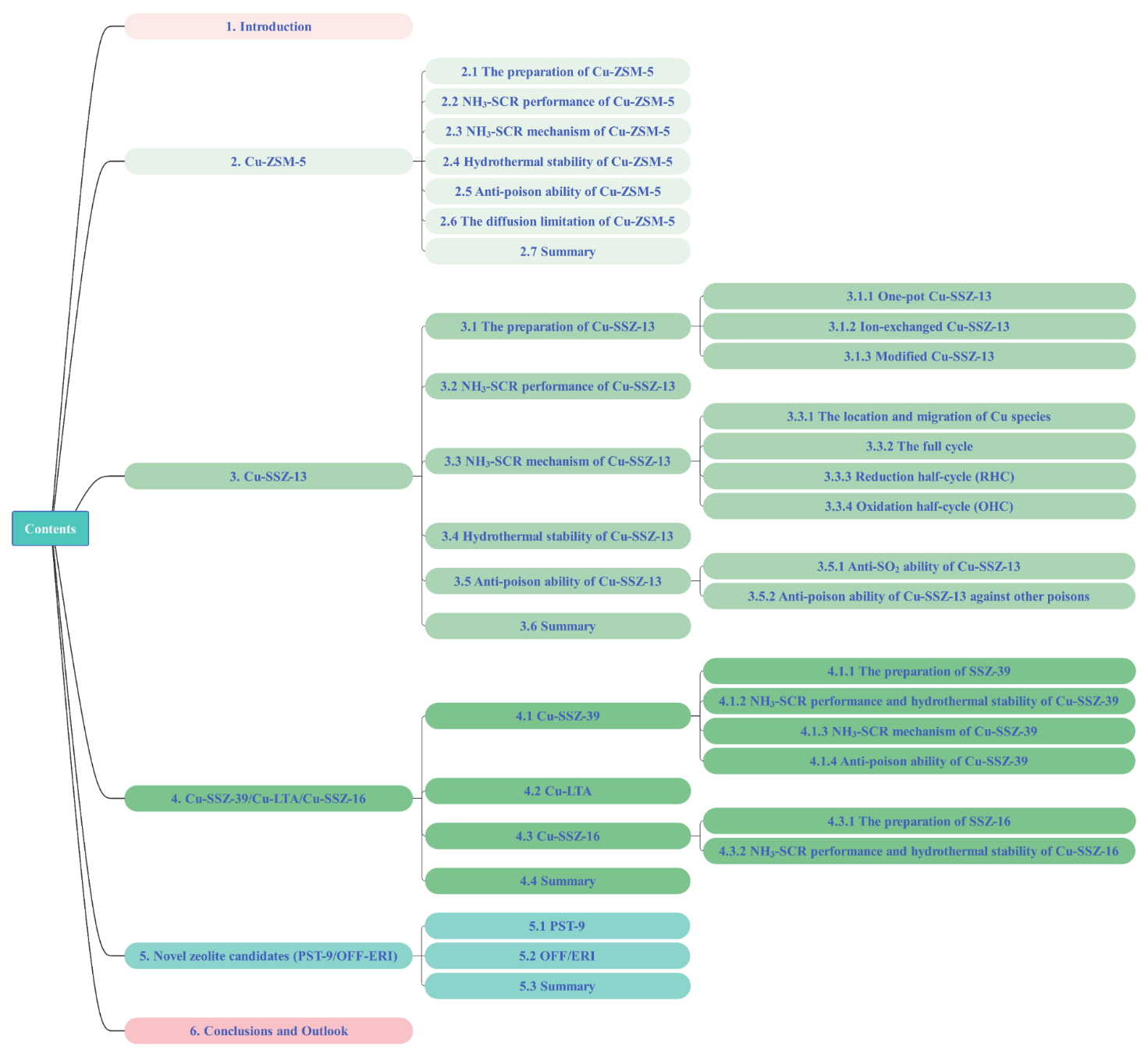
Fig. 1. The contents of this paper.
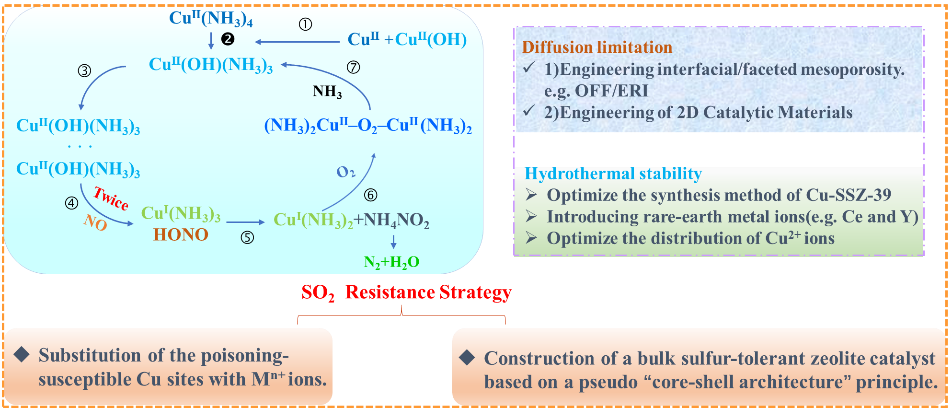
Fig. 2. Low temperature NH3-SCR reaction mechanisms and strategies for diffusion limitation, hydrothermal stability, and SO2 resistance of Cu based zeolite.
| Catalyst | Active range | Preparation method | Conditions | Ref. |
|---|---|---|---|---|
| 3.5Cu/0.6NaZSM-5 | 220-400 °C (T80) | Ion exchange method | 200 ppm NO, 200 ppm NH3, 10% O2, 6% H2O, GHSV = 125000 h-1 | [ |
| Cu-ZSM-5-ZrO2 | 210-400 °C (T80) | Ion exchange method | 500ppm NO, 500 ppm NH3, 10% O2, 1.5% H2O, GHSV = 28000 h-1 | [ |
| CuCe/ZSM-5 | 250-400 °C (T90) | Impregnation method | 1000 ppm NO, 1100 ppm NH3, 5% O2,10% H2O, GHSV = 30000 h-1 | [ |
| Ce1-Cu4/ZSM-5 | 185-470 °C (T90) | Impregnation method | 500 ppm NO, 500 ppm NH3, 5% O2, GHSV = 55000 h-1 | [ |
| Cu-Zr/ZSM-5 | 167-452 °C (T95) | Ion exchange method | 1000 ppm NO, 1000 ppm NH3, 10% O2, GHSV = 100000 h-1 | [ |
| CuCe0.75Zr0.25/ZSM-5 | 175-468 °C (T95) | Ion exchange method | 1000 ppm NO, 1000 ppm NH3, 10% O2, GHSV = 15000 h-1 | [ |
| NSL-Cu-ZSM-5 | 250-550 °C (T100) | Ion exchange method | 1000 ppm NO, 1000 ppm NH3, 8% O2, 5% H2O, GHSV = 50000 h-1 | [ |
Table 1 The range of activity prepared by different methods (ZSM-5).
| Catalyst | Active range | Preparation method | Conditions | Ref. |
|---|---|---|---|---|
| 3.5Cu/0.6NaZSM-5 | 220-400 °C (T80) | Ion exchange method | 200 ppm NO, 200 ppm NH3, 10% O2, 6% H2O, GHSV = 125000 h-1 | [ |
| Cu-ZSM-5-ZrO2 | 210-400 °C (T80) | Ion exchange method | 500ppm NO, 500 ppm NH3, 10% O2, 1.5% H2O, GHSV = 28000 h-1 | [ |
| CuCe/ZSM-5 | 250-400 °C (T90) | Impregnation method | 1000 ppm NO, 1100 ppm NH3, 5% O2,10% H2O, GHSV = 30000 h-1 | [ |
| Ce1-Cu4/ZSM-5 | 185-470 °C (T90) | Impregnation method | 500 ppm NO, 500 ppm NH3, 5% O2, GHSV = 55000 h-1 | [ |
| Cu-Zr/ZSM-5 | 167-452 °C (T95) | Ion exchange method | 1000 ppm NO, 1000 ppm NH3, 10% O2, GHSV = 100000 h-1 | [ |
| CuCe0.75Zr0.25/ZSM-5 | 175-468 °C (T95) | Ion exchange method | 1000 ppm NO, 1000 ppm NH3, 10% O2, GHSV = 15000 h-1 | [ |
| NSL-Cu-ZSM-5 | 250-550 °C (T100) | Ion exchange method | 1000 ppm NO, 1000 ppm NH3, 8% O2, 5% H2O, GHSV = 50000 h-1 | [ |
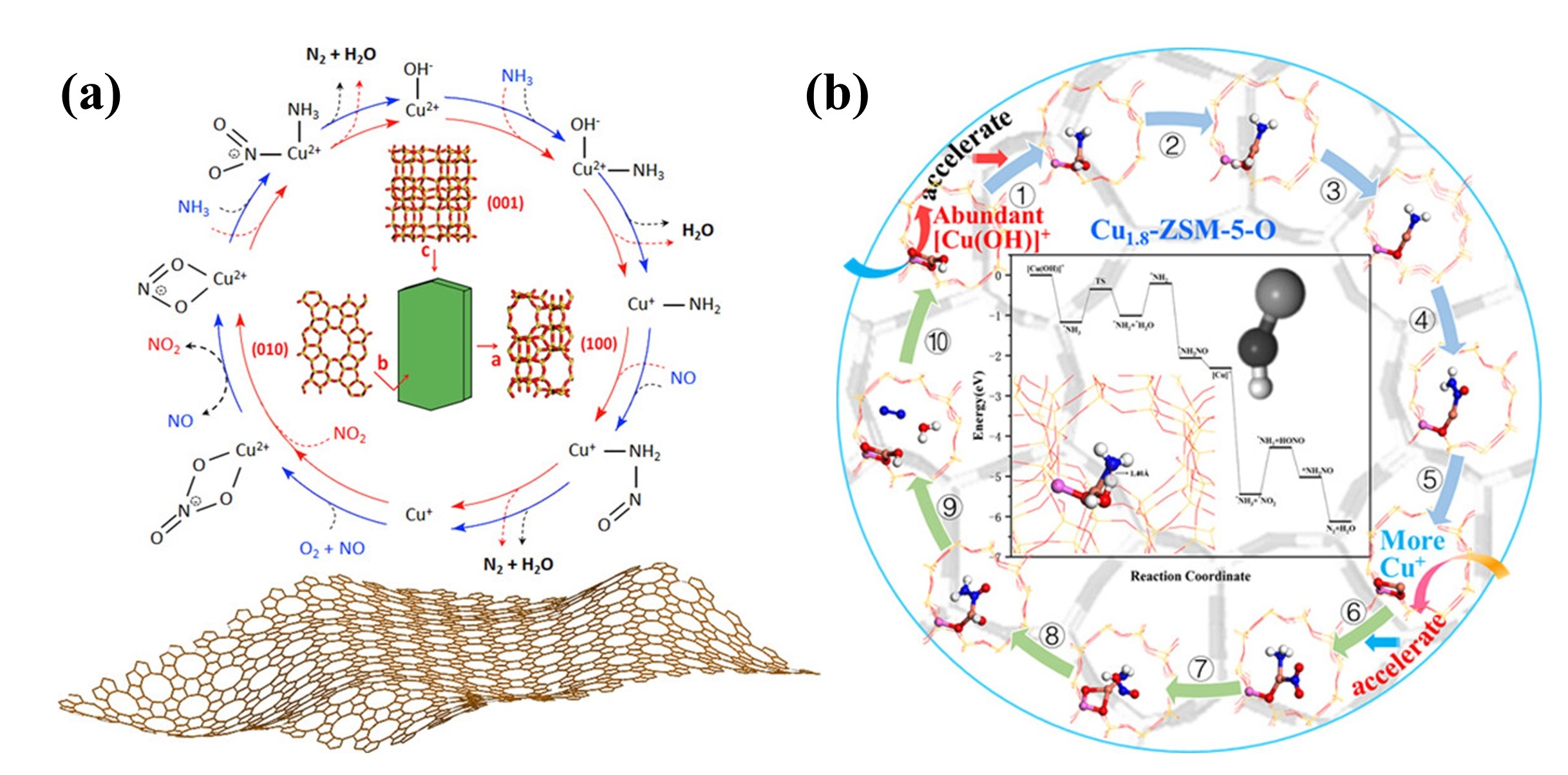
Fig. 3. Reaction mechanism of the NH3-SCR reaction over ZCuOH species. (a) Reprinted with permission from Ref. [72]. Copyright 2021, American Chemical Society. (b) Reprinted with permission from Ref. [29]. Copyright 2023, American Chemical Society.
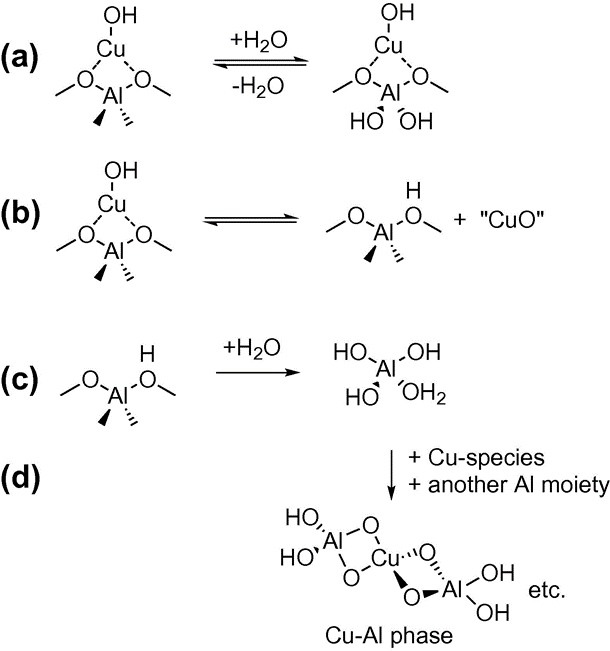
Fig. 4. Proposed hydrothermal deactivation mechanism in Cu-ZSM-5. Reprinted with permission from Ref. [75]. Copyright 2013, Elsevier B.V.
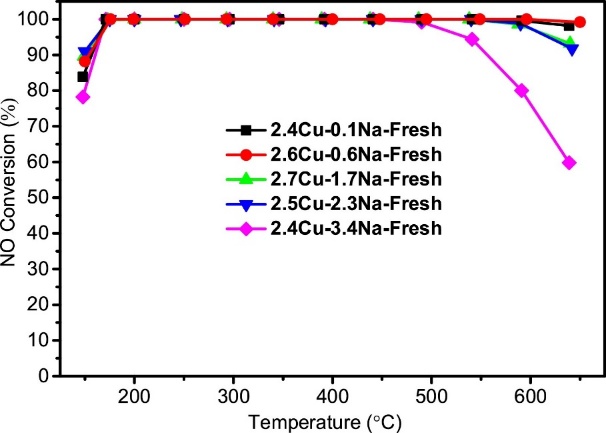
Fig. 5. The activity range of Cu-SSZ-13. Reprinted with permission from Ref. [104]. Copyright 2017, Elsevier B.V.
| Catalyst | Active range | Preparation method | Conditions | Ref. |
|---|---|---|---|---|
| Cu-SSZ-13 | 170-450 °C (T90) | one-pot method | 1000 ppm NO, 1000 ppm NH3, and 10% O2, | [ |
| Cu-SSZ-13 | 245-460 °C (T90) | one-pot method | 500 ppm NO, 530 ppm NH3, 7% O2, 5% H2O, GHSV = 450000 h-1 | [ |
| Cu-SSZ-13 | 250-550 °C (T90) | one-pot method | 500 ppm NO, 500 ppm NH3, 5% O2, GHSV = 800000 h-1 | [ |
| Cu&Zn-SSZ-13 | 200-600 °C (T90) | one-pot method | 600 ppm NO, 600 ppm NH3, 6% O2, 5 % H2O, GHSV ≈ 400000 h-1 | [ |
| Cu, M/SSZ-13 | 250-500 °C (T95) | ion exchange method | 350 ppm NO, 350 ppm NH3, 14% O2, 2.5% H2O, GHSV = 100000 h-1 | [ |
| Cu-Na-SSZ-13 | 150-650 °C (T85) | ion exchange method | 500 ppm NO, 500 ppm NH3, 10% O2, 5% H2O, GHSV = 80000 h-1 | [ |
Table 2 The range of activity prepared by different methods (SSZ-13).
| Catalyst | Active range | Preparation method | Conditions | Ref. |
|---|---|---|---|---|
| Cu-SSZ-13 | 170-450 °C (T90) | one-pot method | 1000 ppm NO, 1000 ppm NH3, and 10% O2, | [ |
| Cu-SSZ-13 | 245-460 °C (T90) | one-pot method | 500 ppm NO, 530 ppm NH3, 7% O2, 5% H2O, GHSV = 450000 h-1 | [ |
| Cu-SSZ-13 | 250-550 °C (T90) | one-pot method | 500 ppm NO, 500 ppm NH3, 5% O2, GHSV = 800000 h-1 | [ |
| Cu&Zn-SSZ-13 | 200-600 °C (T90) | one-pot method | 600 ppm NO, 600 ppm NH3, 6% O2, 5 % H2O, GHSV ≈ 400000 h-1 | [ |
| Cu, M/SSZ-13 | 250-500 °C (T95) | ion exchange method | 350 ppm NO, 350 ppm NH3, 14% O2, 2.5% H2O, GHSV = 100000 h-1 | [ |
| Cu-Na-SSZ-13 | 150-650 °C (T85) | ion exchange method | 500 ppm NO, 500 ppm NH3, 10% O2, 5% H2O, GHSV = 80000 h-1 | [ |
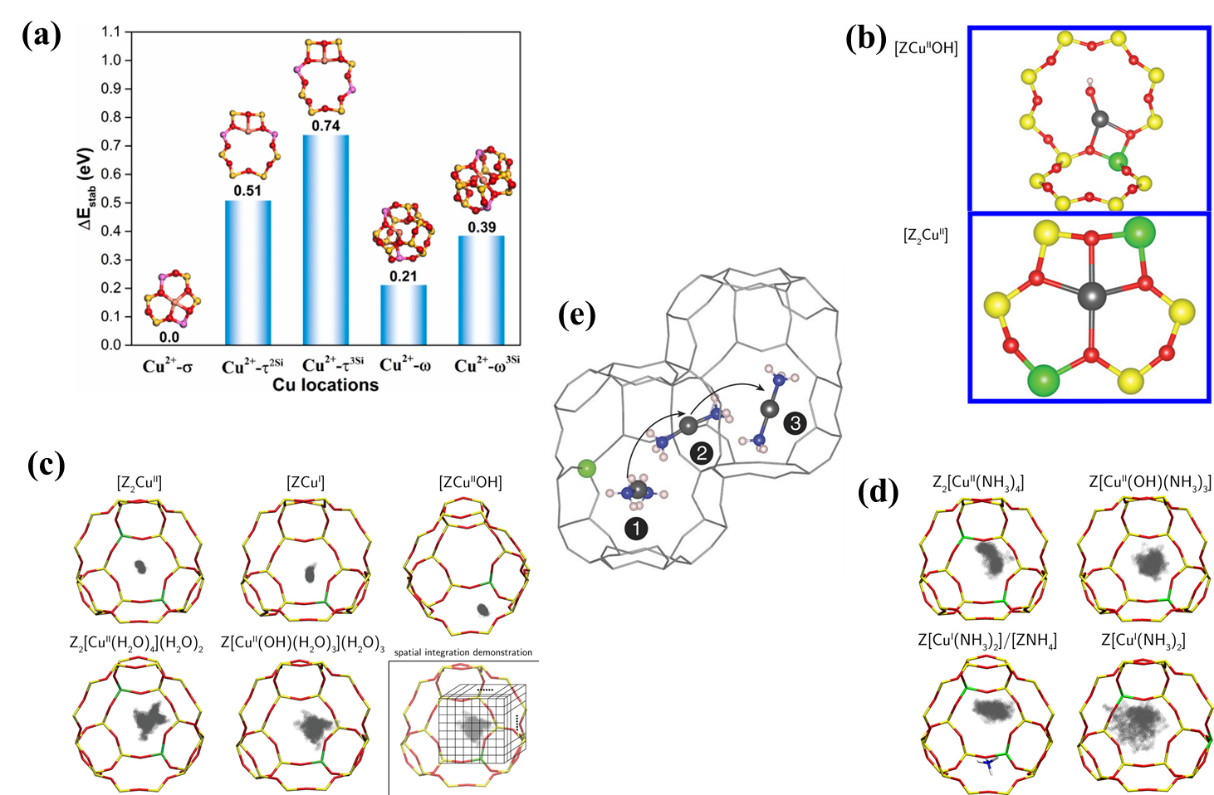
Fig. 6. The location of Cu and its migration in different atmospheres. (a) Relative binding energy of Cu2+-2Z under different possible Al arrangements. Reprinted with permission from Ref. [133]. Copyright 2021, Elsevier B.V. (b) HSE06-optimized structures of Cu sites. Reprinted with permission from Ref. [130]. Copyright 2016, American Chemical Society. (c) Cu positions (gray balls) visited during 90 ps of NVT AIMD at 298 K. Reprinted with permission from Ref. [130]. Copyright 2016, American Chemical Society. (d) Cu positions (gray balls) sampled inside the zeolite cage during 90 ps of equilibrated NVT AIMD at 473 K for the most stable NH3-solvated CuI and CuII species. Reprinted with permission from Ref. [130]. Copyright 2016, American Chemical Society. (e) Reactant state (1) [CuI(NH3)2 in the same cage as Al], transition state (2) [CuI(NH3)2 diffusion through 8-MR], and product state (3) [CuI(NH3)2 in the neighboring cage without Al]. Reprinted with permission from Ref. [135]. Copyright 2017, The American Association for the Advancement of Science.
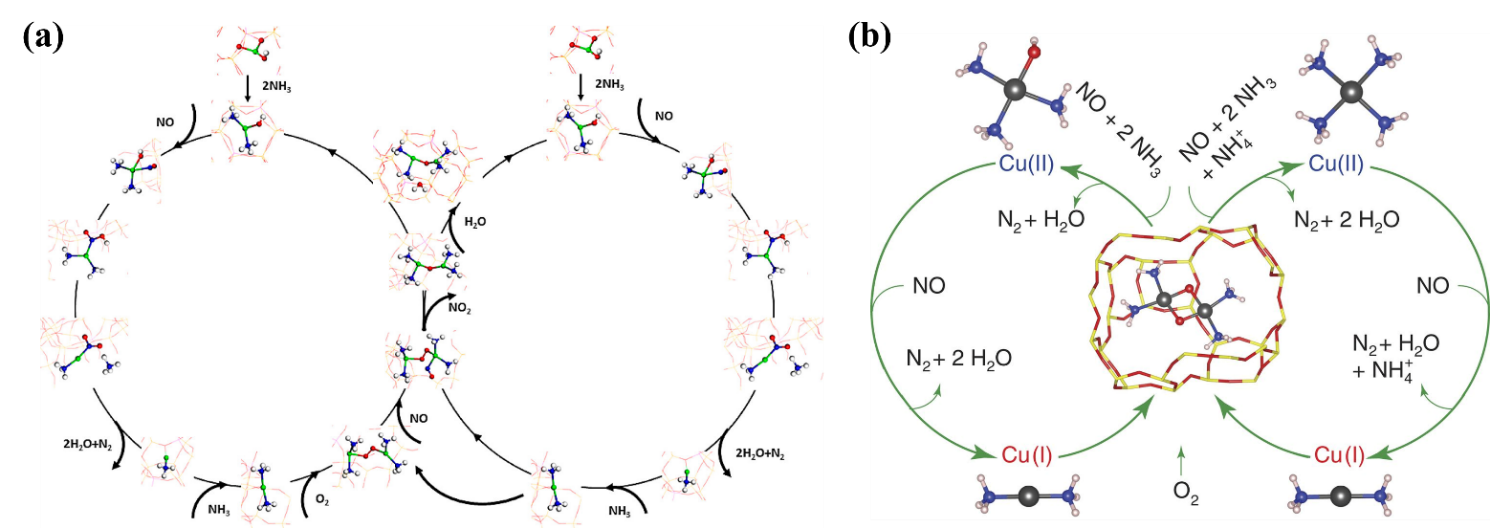
Fig. 7. Proposed low-temperature SCR catalytic cycle. (a) Reprinted with permission from Ref. [142]. Copyright 2017, American Chemical Society. (b) Reprinted with permission from Ref. [135]. Copyright 2017, The American Association for the Advancement of Science.
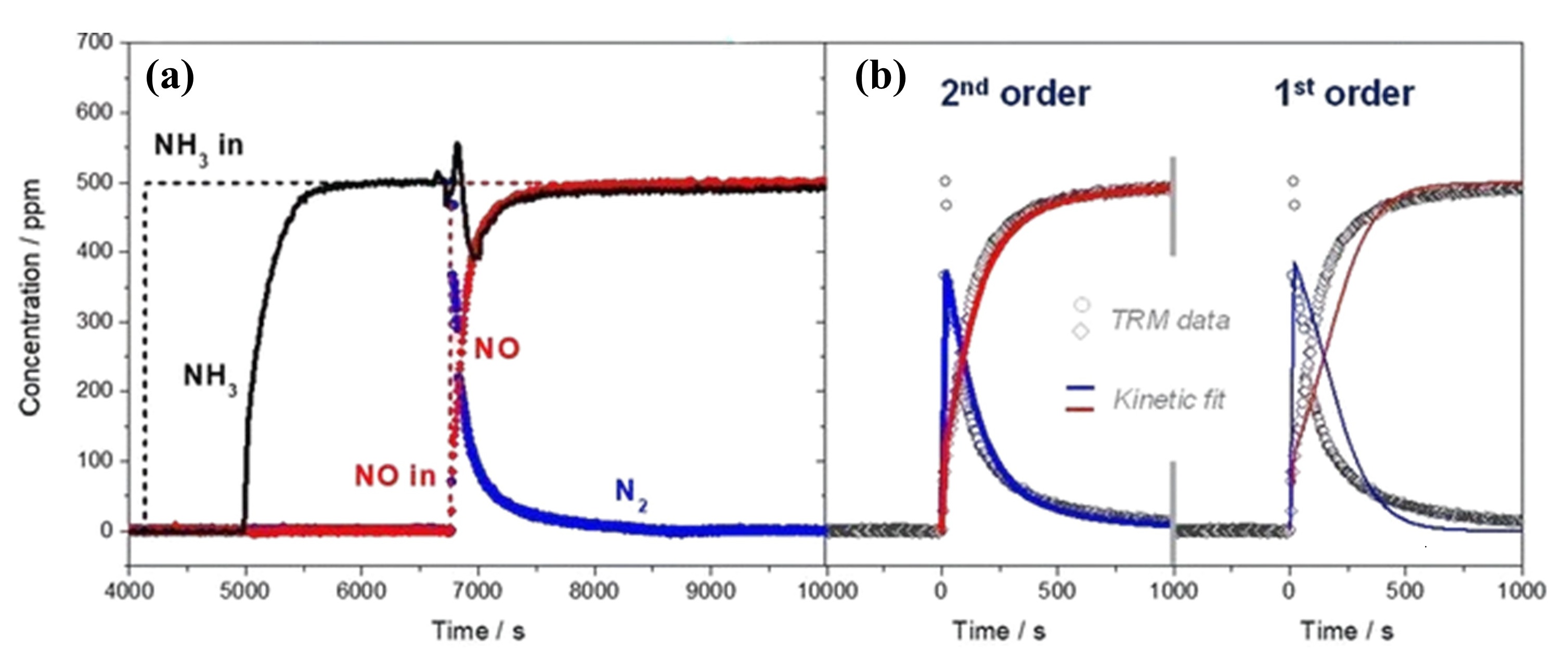
Fig. 8. TRM experiments over pre-oxidized Cu-CHA (a) and transient kinetic fits of the NO and N2 traces (b). Reprinted with permission from Ref. [151]. Copyright 2021, Wiley-VCH.
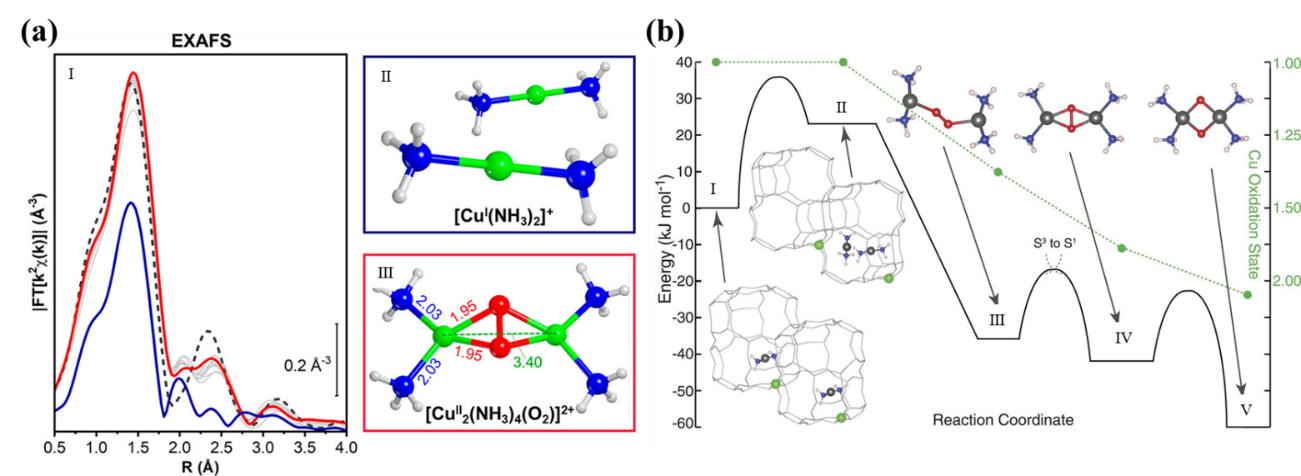
Fig. 9. (a) (I) Phase-uncorrected k2-weighted FT-EXAFS curves during exposure of the Cu-CHA catalyst to NO/NH3/He (dark blue thick line), followed by 10% O2 in He (gray thin lines; red thick line: final spectrum; dark gray dashed line: pretreatment in O2 by heating in O2 up to 400 °C and subsequently cooling in O2 down to 200 °C prior to XAS data collection, step 1. (II) Illustration of [Cu(NH3)2]+ and (III) μ-η2, η2-peroxo diamino dicopper (side-on) complexes. Atom color code: Cu, green; H, white; O, red; N, blue. Reprinted with permission from Ref. [155]. Copyright 2020, American Chemical Society. (b) Simulation of O2 adsorption and oxidation of two CuI(NH3)2 equivalents. Reprinted with permission from Ref. [135]. Copyright 2017, The American Association for the Advancement of Science.
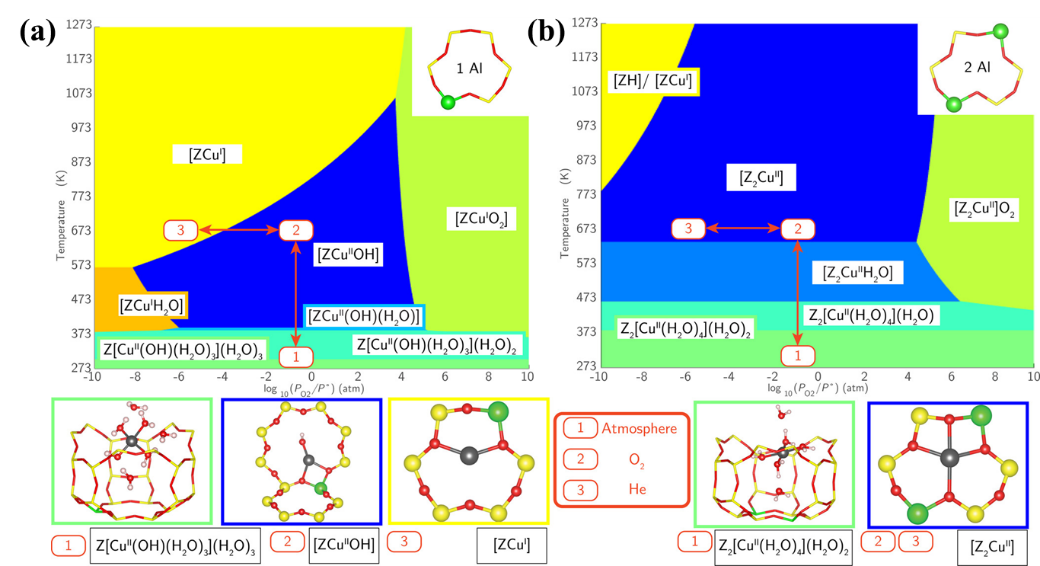
Fig. 10. Ex-situ Cu speciation phase diagrams based on HSE06-Tsvdw calculations on 1Al (a) and 2Al (b) Cu exchange sites. Regions indicate site composition that minimizes free energy at 2% H2O and given T and PO2. Reprinted with permission from Ref. [130]. Copyright 2016, American Chemical Society.

Fig. 11. (a) Schematic illustration of dynamic 15NH3 exchange between NH4+ and [Cu(NH3)2]+ species in Cu-CHA. Framework Si and Al atoms are depicted in blue and red, respectively, while Cu cations are shown in gold, with orange arrows indicating possible exchange pathways within the Cu-CHA pores. (b) Solid-state 2D exchange 15N NMR spectrum of fresh Cu-CHA recorded at 53 °C following 15NH3 exposure at 120 °C and subsequent reduction in 15NO at 300 °C; 1D projections are displayed along the horizontal and vertical axes. (c) Evolution of on-diagonal (red and blue) and off-diagonal (orange) peak intensities as a function of mixing time in 2D 15N exchange NMR spectra acquired at 53 °C, 11.7 T, and 12.5 kHz MAS for fresh Cu-CHA. (d) Eyring plots of temperature-dependent exchange rate coefficients derived from global fitting of data such as those in panel (c), measured at 41, 53, and 66 °C for fresh (black), 4-h-aged (red), and 16-h-aged (blue) Cu-CHA catalysts; error bars represent uncertainties estimated via Monte Carlo error propagation. Reprinted with permission from Ref. [171]. Copyright 2025, American Chemical Society.
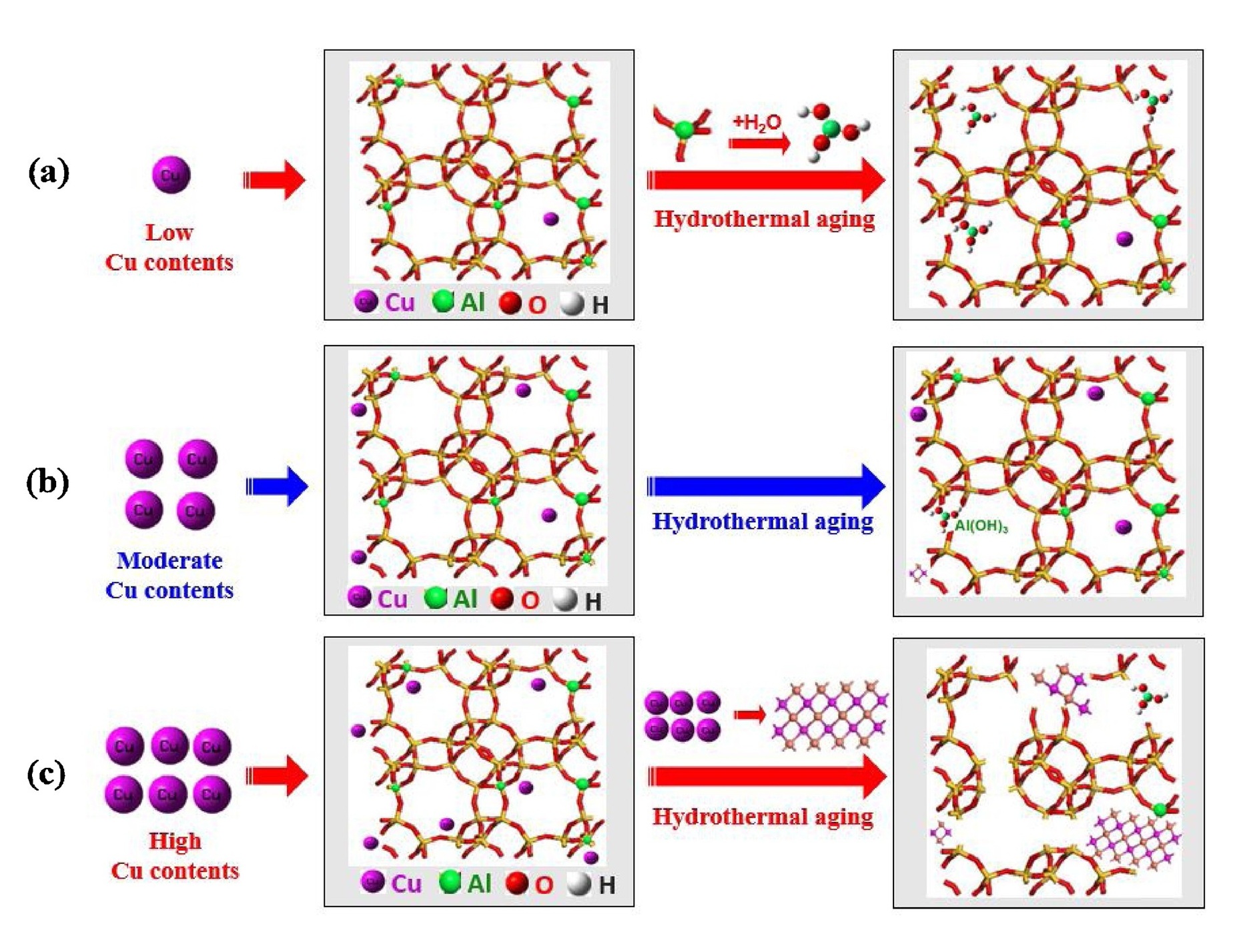
Fig. 12. The deactivation mechanism of hydrothermal aging of Cu-SSZ-13 with different Cu contents. Reprinted with permission from Ref. [178]. Copyright 2020, Elsevier B.V.
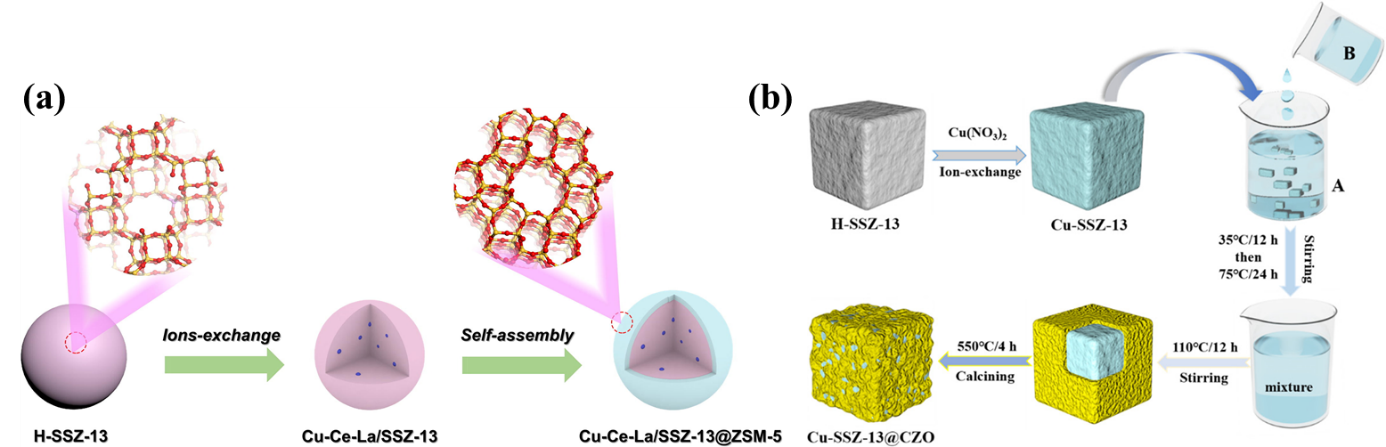
Fig. 13. Schematic diagram of the preparation of a core-shell catalyst. (a) Cu-Ce-La/SSZ-13@ZSM-5 core-shell catalyst. Reprinted with permission from Ref. [195]. Copyright 2020, Elsevier B.V. (b) Cu-SSZ-13@CZO core-shell catalyst. Reprinted with permission from Ref. [196]. Copyright 2022, American Chemical Society.
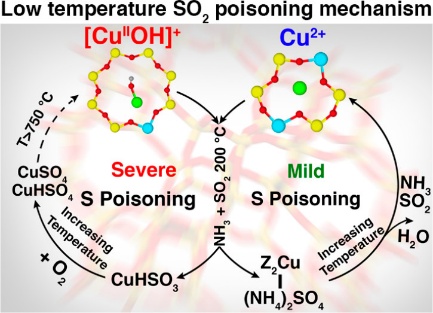
Fig. 14. Low temperature SO2 poisoning mechanism. Reprinted with permission from Ref. [197] Copyright 2018, American Chemical Society.
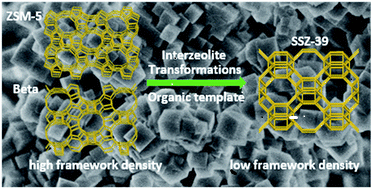
Fig. 15. Transformation synthesis of aluminosilicate SSZ-39 zeolite from ZSM-5 and Beta zeolite. Reprinted with permission from Ref. [239]. Copyright 2019, Royal Society of Chemistry.
| Catalyst | Active range | Conditions | Ref. |
|---|---|---|---|
| Cu-SSZ-39 | 250-550 °C (T80) | 800 °C, 12 h | [ |
| MnCu-SSZ-39 | 250-550 °C (T90) | 850 °C, 12 h | [ |
| Cu-SSZ-39 | 225-450 °C (T90) | 900 °C, 5 h | [ |
| Cu/Y-SSZ-39 | 200-550 °C (T70) | 900 °C, 10 h | [ |
| Cu-SSZ-39 | 225-500 °C (T85) | 850 °C, 16 h | [ |
| Cu-Y-SSZ-39 | 200-550 °C (T80) | 940 °C, 3 h | [ |
Table 3 The activity range after hydrothermal aging (SSZ-39).
| Catalyst | Active range | Conditions | Ref. |
|---|---|---|---|
| Cu-SSZ-39 | 250-550 °C (T80) | 800 °C, 12 h | [ |
| MnCu-SSZ-39 | 250-550 °C (T90) | 850 °C, 12 h | [ |
| Cu-SSZ-39 | 225-450 °C (T90) | 900 °C, 5 h | [ |
| Cu/Y-SSZ-39 | 200-550 °C (T70) | 900 °C, 10 h | [ |
| Cu-SSZ-39 | 225-500 °C (T85) | 850 °C, 16 h | [ |
| Cu-Y-SSZ-39 | 200-550 °C (T80) | 940 °C, 3 h | [ |

Fig. 16. NH3-SCR performance of fresh (a) and HTA (b) catalysts after 850 °C for 16 h. Reprinted with permission from Ref. [244]. Copyright 2024, Elsevier B.V.
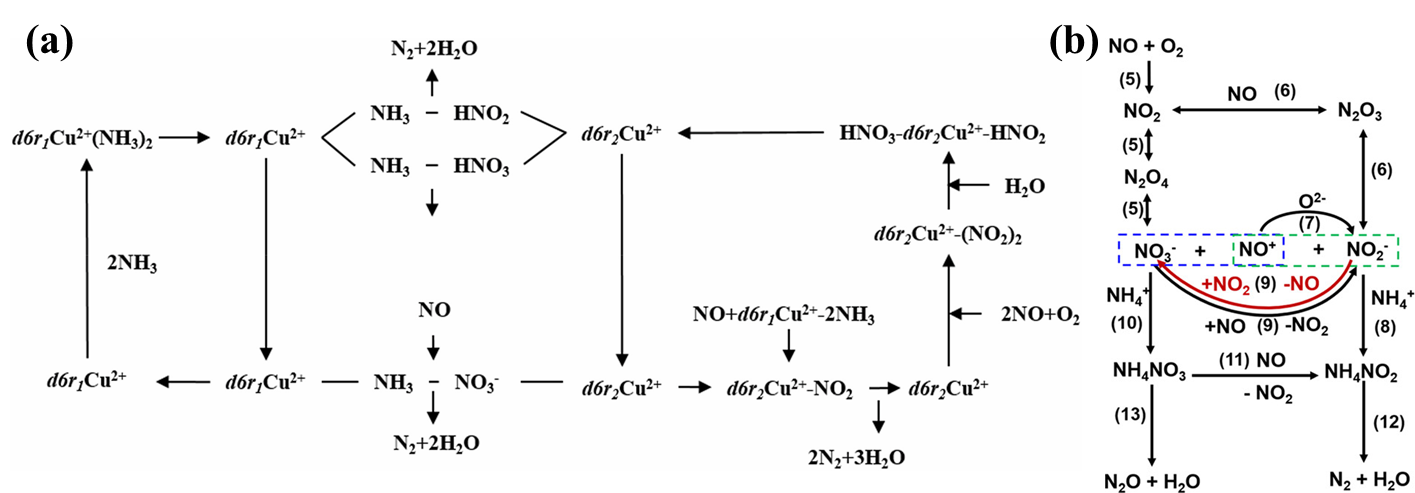
Fig. 17. The supposed reaction mechanism of NH3-SCR on Cu/SSZ-39. (a) Reprinted with permission from Ref. [248]. Copyright 2021, Elsevier B.V. (b) Reprinted with permission from Ref. [249]. Copyright 2021, American Chemical Society.
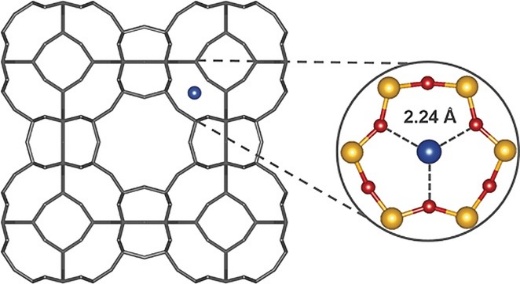
Fig. 18. Structure of the fresh, dehydrated Cu-LTA-16-0.48 catalyst. A Cu2+ cation located at the center of a single 6-ring is shown at the right. Reprinted with permission from Ref. [33]. Copyright 2017, Wiley-VCH.
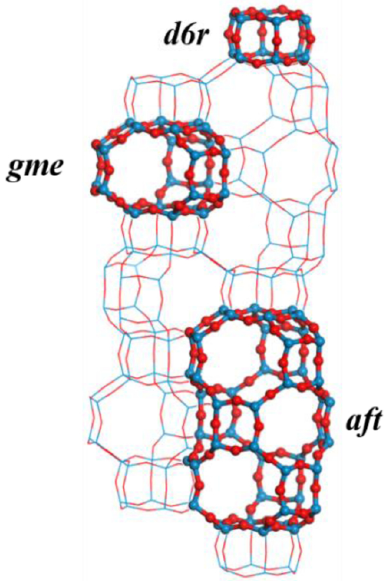
Fig. 19. Structure of the AFX framework and its building units. Reprinted with permission from Ref. [262]. Copyright 2023 Elsevier B.V.
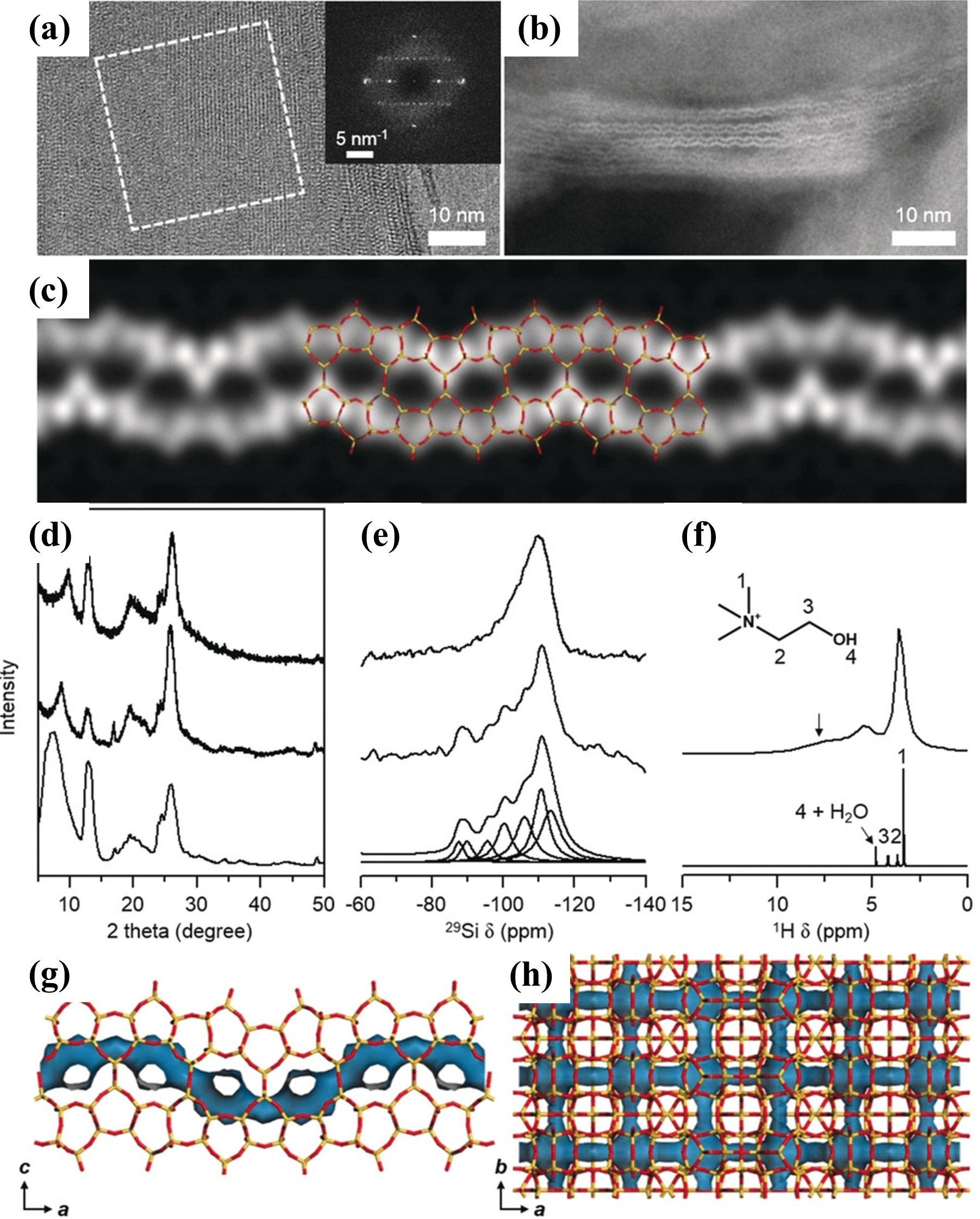
Fig. 20. (a) HRTEM image of as-made ChRbLi-PST-9. (b) ADF-STEM image of ChRbLi-PST-9 obtained along the b-axis after sectioning the nanosheet by ultramicrotome. (c) Projected potential map constructed based on the ADF-STEM image in plane group pmg showing the structure of PST-9 viewed along the b-axis. (d) Simulated powder XRD pattern. (e) Simulated 29Si MAS NMR spectra of as-made ChRbLi-PST-9. (f) 1H NMR spectra of organic SDA, choline. (g,h) Structures of PST-9 along the b-axis and c-axis. Reprinted with permission from Ref. [269]. Copyright 2019, Wiley-VCH.
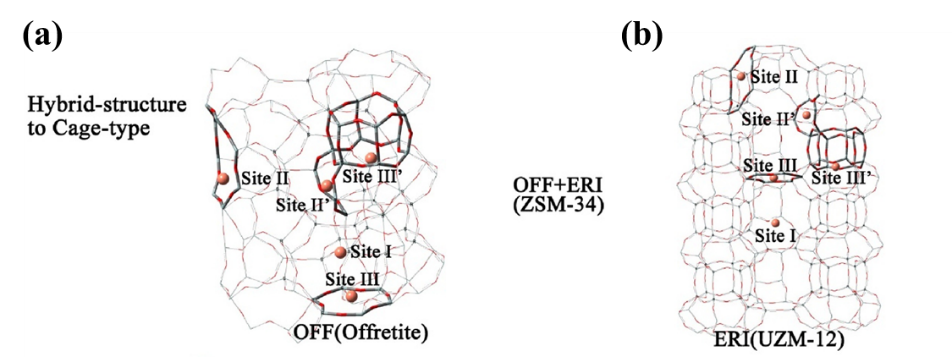
Fig. 21. Schematic of OFF (a) and ERI (b) zeolite frameworks. Reprinted with permission from Ref. [272]. Copyright 2018 Elsevier B.V.

Fig. 22. (a-d) SCR reaction rates at different temperatures of Cu-T, Cu-ERI, and Cu-OFF before and after hydrothermal aging treatment, and in-situ DRIFTS spectra of NO + O2 saturation adsorption. (e) NH4NO3 decomposition pathway assisted with/without BAS. Reprinted with permission from Ref. [276]. Copyright 2024 American Chemical Society.
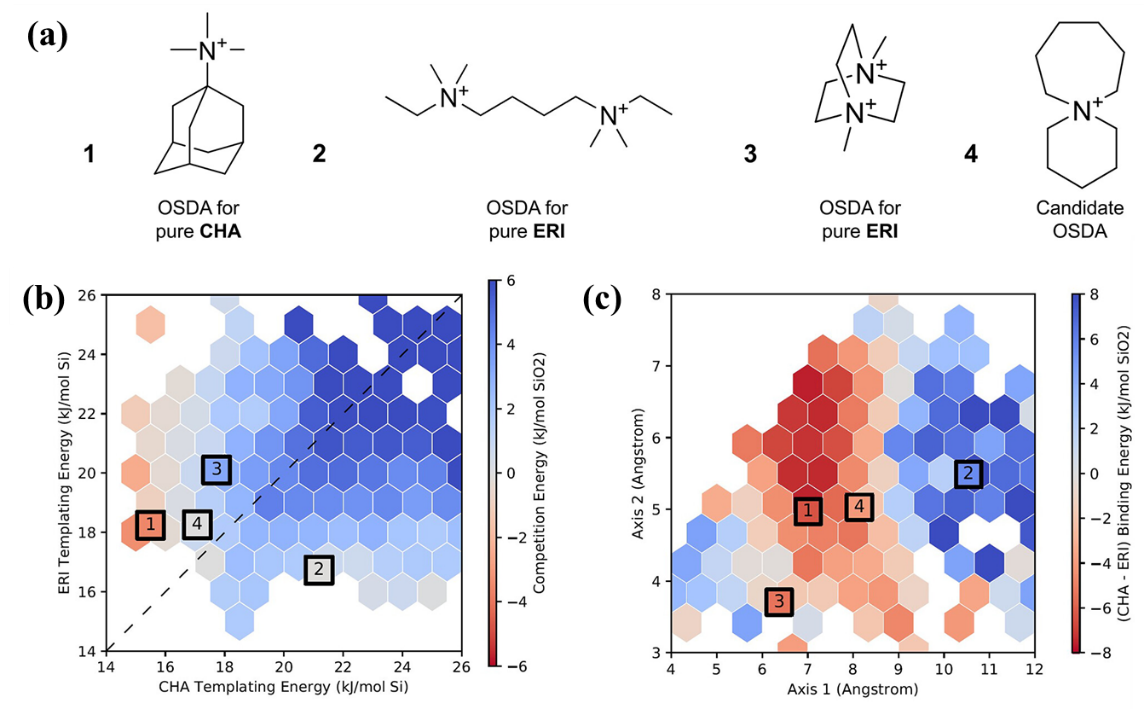
Fig. 23. (a) OSDA reported to crystallize CHA and ERI with the candidate OSDA presented. (b) Comparison between the templating energies of the OSDAs with the CHA and ERI frameworks. (c) Relationship between the shape of the OSDAs and their binding energies toward CHA or ERI. Reprinted with permission from Ref. [277]. Copyright 2024, American Chemical Society.
| Catalyst | Topological structure | Cu location | Active range (fresh) | Active range (aged) | Primary applications |
|---|---|---|---|---|---|
| Cu-ZSM-5 | MFI | 10-MR, 6-MR | 200-450 °C | poor | low-temperature stationary sources |
| Cu-SSZ-13 | CHA | 6-MR, 8MR | 180-550 °C | 225-450 °C (T90, 800 °C, 16 h) | diesel vehicle exhaust |
| Cu-SSZ-39 | AEI | 6-MR, 8MR | 225-550 °C | 225-500 °C (T85, 850 °C, 16 h) | next-generation diesel vehicles |
| Cu-LTA | LTA | 6-MR | 250-580 °C | 225-500 °C (T90, 900 °C, 24 h) | high-temperature stationary sources |
| Cu-SSZ-16 | AFX | gme, aft | 175-600 °C | 225-450 °C (T85, 800 °C, 16 h) | gas turbine |
| Cu-PST-9 | PST-9 | 8-MR | 220-500 °C | 225-500 °C (T80) | multifunctional catalysis |
| Cu-OFF/ERI | OFF/ERI | interface 6-MR | 175-550 °C | 225-500 °C (T90, 750 °C, 16 h) | alternative Cu-SSZ-13 |
Table 4 Comparison of Cu-zeolite catalysts with different topological structures.
| Catalyst | Topological structure | Cu location | Active range (fresh) | Active range (aged) | Primary applications |
|---|---|---|---|---|---|
| Cu-ZSM-5 | MFI | 10-MR, 6-MR | 200-450 °C | poor | low-temperature stationary sources |
| Cu-SSZ-13 | CHA | 6-MR, 8MR | 180-550 °C | 225-450 °C (T90, 800 °C, 16 h) | diesel vehicle exhaust |
| Cu-SSZ-39 | AEI | 6-MR, 8MR | 225-550 °C | 225-500 °C (T85, 850 °C, 16 h) | next-generation diesel vehicles |
| Cu-LTA | LTA | 6-MR | 250-580 °C | 225-500 °C (T90, 900 °C, 24 h) | high-temperature stationary sources |
| Cu-SSZ-16 | AFX | gme, aft | 175-600 °C | 225-450 °C (T85, 800 °C, 16 h) | gas turbine |
| Cu-PST-9 | PST-9 | 8-MR | 220-500 °C | 225-500 °C (T80) | multifunctional catalysis |
| Cu-OFF/ERI | OFF/ERI | interface 6-MR | 175-550 °C | 225-500 °C (T90, 750 °C, 16 h) | alternative Cu-SSZ-13 |
|
| [1] | 王森, 李诗颖, 耿蕊, 周博, 王鹏飞, 秦张峰, 董梅, 王建国, 樊卫斌. 引发二氧化碳选择性加氢制甲烷的最小镍物种: 限域在MFI结构中的镍二聚体以及锰氧化物的增强作用[J]. 催化学报, 2026, 87(8): 113-125. |
| [2] | 丁扬, 陆义桢, 余天荣, 张明睿, 赵睿, 杨睿杰, 李其鑫, 吴仕群, 张金龙. 光驱动费托合成中双路径策略实现高选择性烃类产物制备[J]. 催化学报, 2026, 87(8): 22-46. |
| [3] | Shahla Karimi, Mehran Rezaei, 邓积光, 戴洪兴, Ali Rastegarpanah. 甲烷分解用贵金属基催化剂的最新进展: 性能、机理与优化[J]. 催化学报, 2026, 86(7): 9-48. |
| [4] | 刘家英, 方煜. 揭示二维共价有机框架光催化的结构-活性关系: 从分子工程到高性能优化[J]. 催化学报, 2026, 85(6): 47-87. |
| [5] | 吴静尧, 吕昱静, 赵强, 王朔, 汪颖, 温娜, 丁正新, 张子重, 龙金林. 共价有机框架的电子-质子双重奏: 高效催化氧气直接还原生成过氧化氢[J]. 催化学报, 2026, 84(5): 288-300. |
| [6] | 刘芷瑶, 刘唐康, 秦川, 刘国亮, 郑安民. 氧化锆介导界面催化在CO2加氢反应中的研究进展[J]. 催化学报, 2026, 84(5): 1-24. |
| [7] | 顾宇, 张淑嘉, 徐铭潞, 闫昊, 周铭昊, 王磊, 施慧. 甲烷的脱氢芳构化及其与丙烷共芳构化: 反应机理、催化剂设计、积碳和过程强化[J]. 催化学报, 2026, 84(5): 25-60. |
| [8] | 范海峰, 许狄, 曾婷, 侯国强, 李洋洋, 黄思懿, 徐艳飞, 王政, 高新华, 顾向奎, 定明月. 富电子Y2O3‒x-Ni界面促进高效低温CO2甲烷化反应[J]. 催化学报, 2026, 84(5): 200-213. |
| [9] | 潘润, Abubakar Yusuf, 王成俊, 李建荣, 肖旨育, 刘帅, 钟易东, 任勇, 王筝, 杜海南, 周俊良, 陈政, 何俊. 核壳结构Pd@CeO2/γ-Al2O3催化剂: 提升化学计量比天然气车辆废气处理的效率与耐久性[J]. 催化学报, 2026, 82(3): 348-362. |
| [10] | 党凡, 艾春丽, 马驰, 姜泽宇, 刘基丞, 田明姣, 张铭倬, 何炽. 金属氧化物催化剂用于挥发性有机物高效氧化的研究进展: 合成策略与催化机理[J]. 催化学报, 2026, 81(2): 97-123. |
| [11] | 姚悦洋, 张楠, 焦睿谦, 刘盼盼, 冯祥波, 马丹丹, 李俊, 陈玉, 石建稳. 稀土改性锰基低温NH3-SCR催化剂的理性设计:机理、策略与展望[J]. 催化学报, 2026, 89(10): 40-75. |
| [12] | 艾亚婷, 熊贤强, 朱华跃, 王齐, 翁波, 杨民权. 基于S型Mn0.5Cd0.5S/In2S3异质结光催化剂的新兴污染物消除系统评估: 降解路径、毒性评价及机理分析[J]. 催化学报, 2025, 75(8): 147-163. |
| [13] | 衣启松, 林露, 耿华伟, 陈少华, 邵元超, 何平, 刘志峰, 许海梅, 陈铁红, 刘远帅, Valentin Valtchev. 氟离子介导酸性体系合成H-ZSM-5分子筛及其液相环己醇催化转化性能研究[J]. 催化学报, 2025, 74(7): 97-107. |
| [14] | 张启扬, Vita A. Kondratenko, 丁湘浓, Jana Weiss, Stephan Bartling, Elizaveta Fedorova, 赵丹, Dmitry E. Doronkin, 王东旭, Christoph Kubis, Evgenii V. Kondratenko. Silicalite-1中CoOx物种在反应诱导下的重构机制以调控丙烷非氧化脱氢选择性[J]. 催化学报, 2025, 74(7): 108-119. |
| [15] | 吴剑峰, 梁丽烨, 车政, 苗宇婷, 丑凌军. 双金属氧化物催化CO2加氢制备甲醇: 最新进展和挑战[J]. 催化学报, 2025, 73(6): 62-78. |
| 阅读次数 | ||||||
|
全文 |
|
|||||
|
摘要 |
|
|||||


