
Chinese Journal of Catalysis ›› 2026, Vol. 91: 93-102.DOI: 10.1016/S1872-2067(26)65211-4
• Communication • Previous Articles Next Articles
Yuan-Xu Jianga,1, Zhi-Xin Yanb,1, Long-Fu Wangb, Yi-Chi Chena, Wen-Hao Xua, Shu-Rong Zhangb, Jun-Ping Yuea, Min Pana, Yong-Yuan Guib, Lei Songc,*( ), Li-Li Liaod,*(), Jian-Heng Yea, Da-Gang Yua,e,*()
Received:2026-02-22
Accepted:2026-05-09
Online:2026-12-18
Published:2026-10-13
Contact:
*E-mail: lsong@scu.edu.cn (L. Song),About author:1Contributed equally to this work.
Supported by:Yuan-Xu Jiang, Zhi-Xin Yan, Long-Fu Wang, Yi-Chi Chen, Wen-Hao Xu, Shu-Rong Zhang, Jun-Ping Yue, Min Pan, Yong-Yuan Gui, Lei Song, Li-Li Liao, Jian-Heng Ye, Da-Gang Yu. Visible-light photocatalytic 1,1-difunctionalizing carboxylation of isocyanides with CO2[J]. Chinese Journal of Catalysis, 2026, 91: 93-102.
Add to citation manager EndNote|Ris|BibTeX
URL: https://www.cjcatal.com/EN/10.1016/S1872-2067(26)65211-4
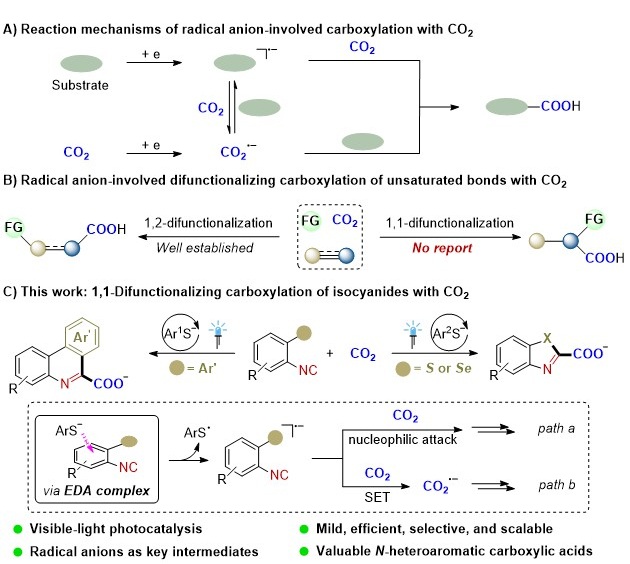
Fig. 1. Schematic illustration of radical anion-involved carboxylation with CO2.
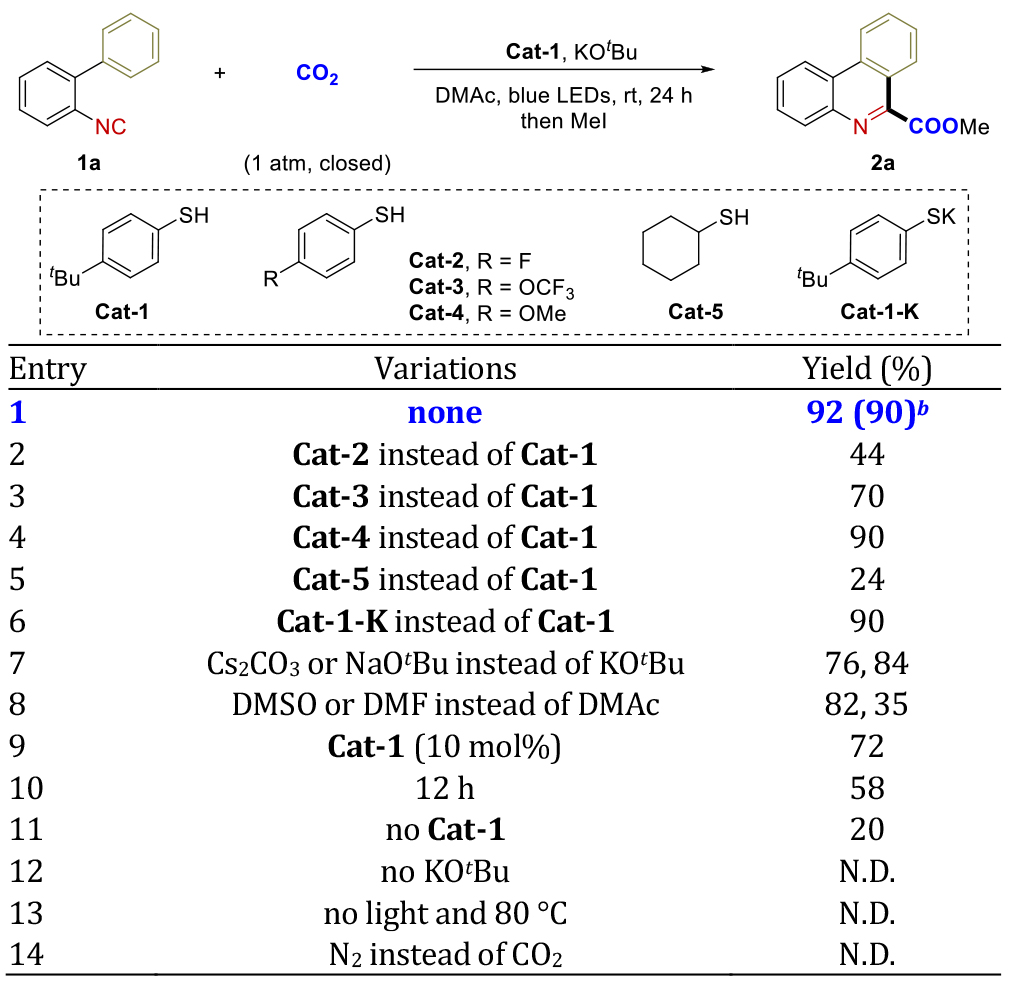 |
Table 1 Optimization of the reaction conditions a.
| |
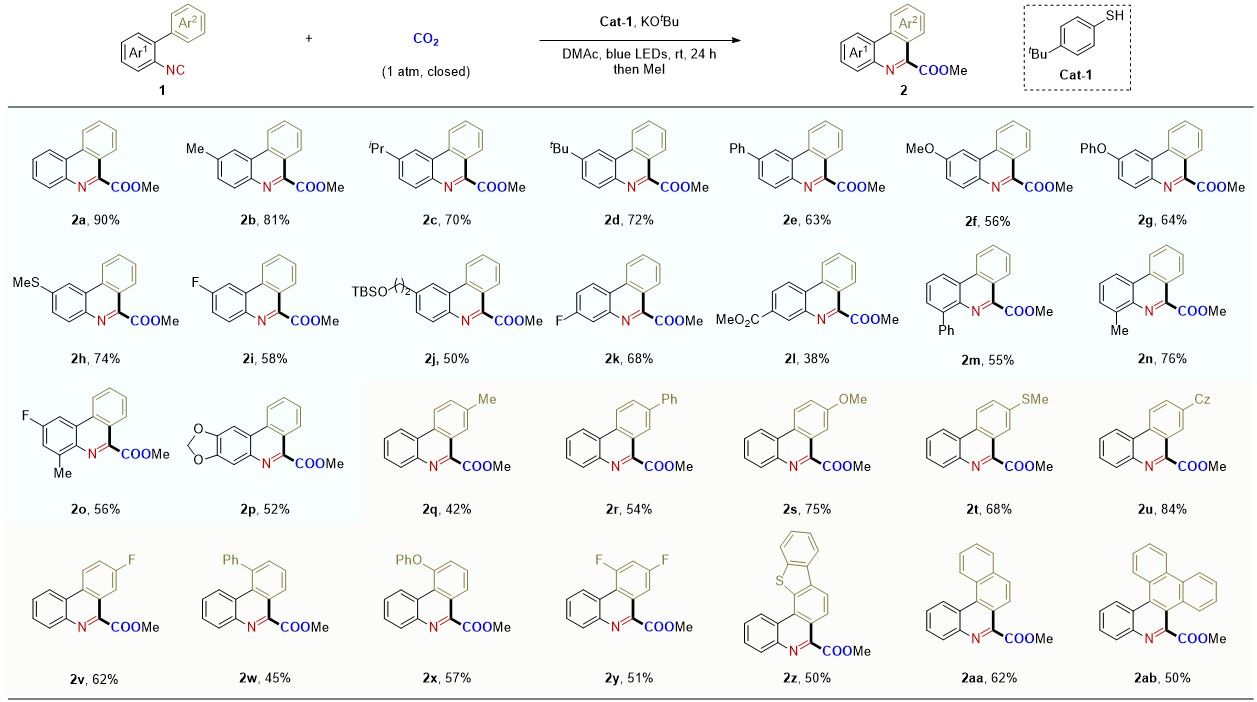 |
Table 2 Substrate scope of biphenyl isocyanides a.
| |
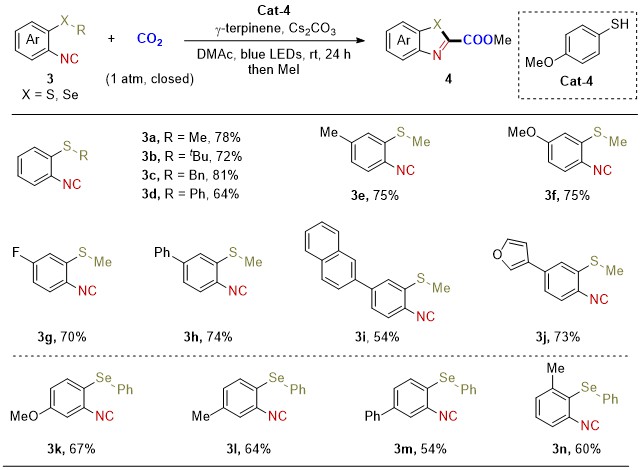 |
Table 3 Substrate scope of 2-isocyanoaryl thioethers and selenides a.
| |
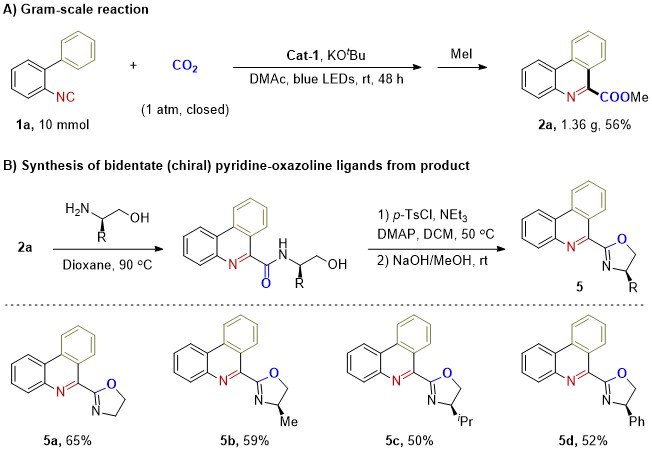
Scheme 1. Schematic illustration for synthetic transformations including gram-scale synthesis and late-stage derivatization.
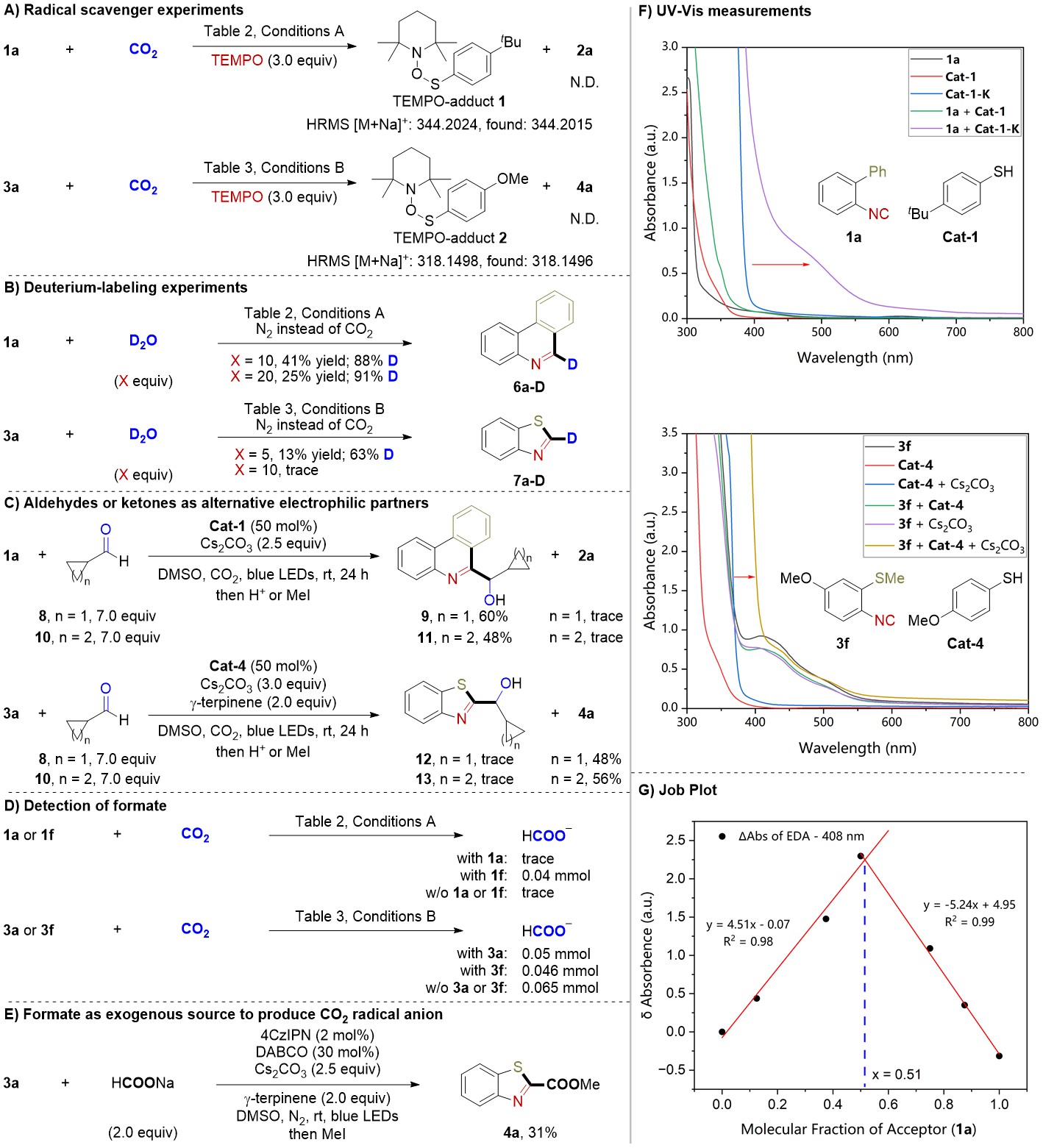
Scheme 2. Mechanistic investigations of the photocatalytic carboxylation reaction.
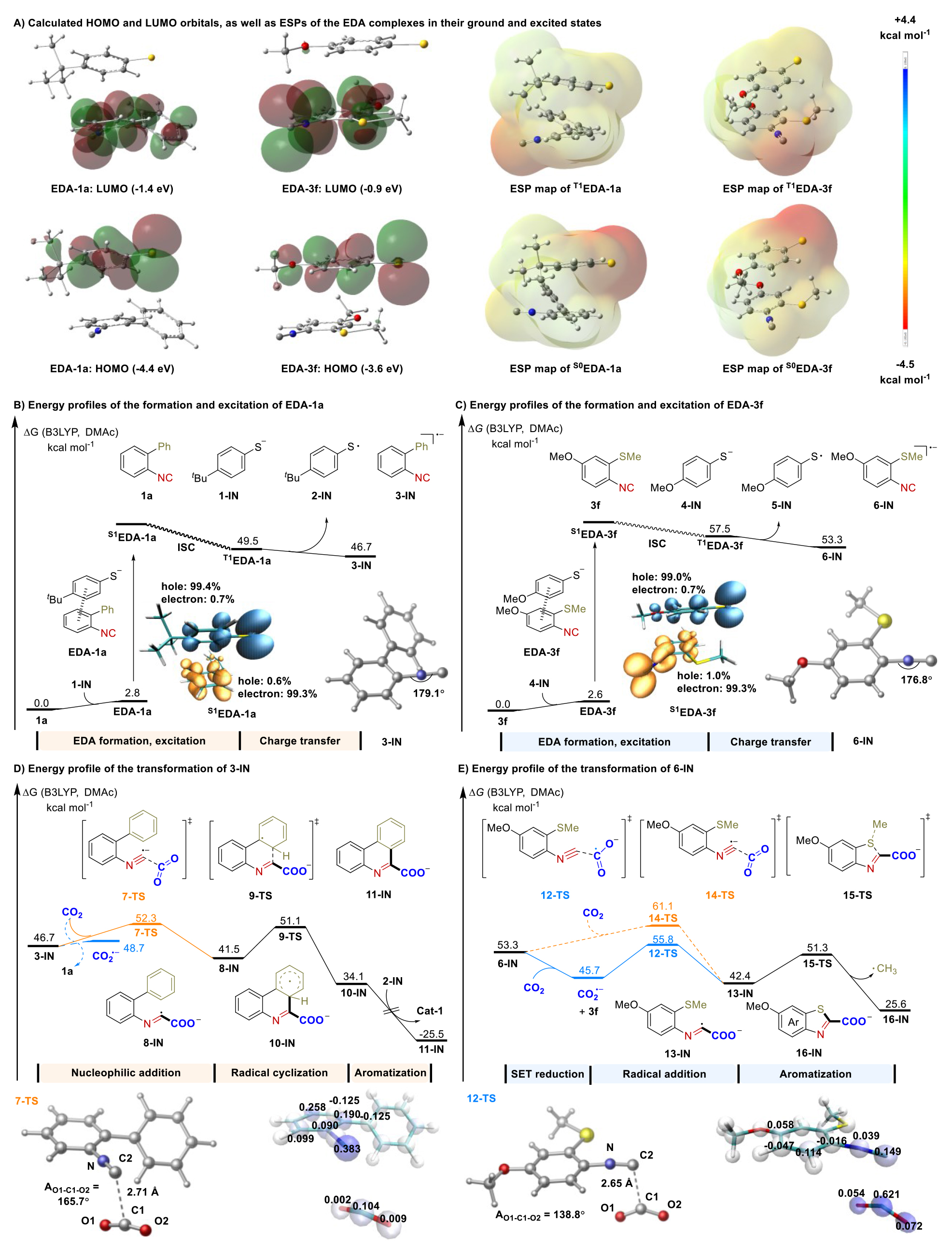
Scheme 3. Computational studies. All energies are in kcal mol-1 and represent the relative free energies calculated at the B3LYP/6-311+G(d,p)/SMD(DMAc)//B3LYP/6-31+G(d)/SMD(DMAc) level of theory. The bond lengths are reported in angstroms (Å).
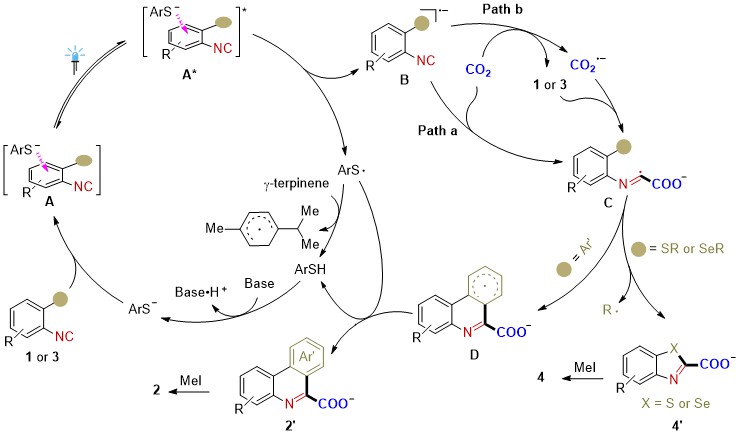
Scheme 4. Proposed plausible reaction mechanism for the 1,1-difunctionalizing carboxylation of isocyanides with CO2.
|
| [1] | Shufang Liu, Fengyu Chen, Siyuan Li, Yu-Xin Ye, Gangfeng Ouyang. Recent advances in oxygen-centered organic radicals: Characterization, synthesis, and applications [J]. Chinese Journal of Catalysis, 2026, 88(9): 183-206. |
| [2] | Tao Wei, Zhanpeng Liang, Boxin Zhang, Yunhao Xu, Zhaoxue Sun, Minghao Duo, Minghui Chen, Sheng Zhang, Bao Zhang. Efficient electrocatalytic CO2 reduction by crystalline polymetallophthalocyanine covalent organic frameworks unprecedentedly constructed involving 4-dimethylaminopyridine (DMAP)-type nucleophilic catalyst [J]. Chinese Journal of Catalysis, 2026, 83(4): 319-329. |
| [3] | Haoyu Zhang, Lujie Jin, Tanghong Zheng, Xinran Qiu, Yang Liu, Dongyun Chen, Qingfeng Xu, Youyong Li, Jianmei Lu. Carbene dual-function bridging of Ag-Cu sites enables *CO pooling for *COCHO coupling with > 80% C2+ selectivity in CO2 electroreduction [J]. Chinese Journal of Catalysis, 2026, 82(3): 105-114. |
| [4] | Deng Min, Sebastian Cisneros, Abdallah I. M. Rabee, Thanh Huyen Vuong, Jiadong Xiao, Yaoyuan Zhang, Rongsheng Cai, Feng Shi, Jabor Rabeah. Low CeO2 content with superior performance: In-situ spectroscopic insights into multicomponent CuFeCe/γ-Al2O3 catalysts for mild-temperature reverse water-gas shift [J]. Chinese Journal of Catalysis, 2026, 91(12): 176-191. |
| [5] | Jiaqi Xiang, Limiao Chen, Shanyong Chen, You-Nian Liu. Alkali cation effects in electrochemical carbon dioxide reduction [J]. Chinese Journal of Catalysis, 2026, 80(1): 38-58. |
| [6] | Liyuan Xiao, Zhenlu Wang, Jingqi Guan. Advances in multinuclear metal-organic frameworks for electrocatalysis [J]. Chinese Journal of Catalysis, 2026, 80(1): 59-91. |
| [7] | Shanshan Zhu, Xinrui Mao, Zhenwei Zhang, Liuliu Yang, Jiahao Li, Zhongping Li, Yucheng Jin, Huijuan Yue, Xiaoming Liu, . 2D tris(triazolo)triazine-based covalent organic frameworks for efficient photoinduced molecular oxygen activation [J]. Chinese Journal of Catalysis, 2025, 76(9): 120-132. |
| [8] | Shi-Ning Li, Juntao Yao, Shuxin Pang, Jing-Peng Zhang, Shiying Li, Zhicheng Liu, Lu Han, Weibin Fan, Kake Zhu, Yi-An Zhu. Co particles separated by immiscible Ag on yttria-stabilized zirconia as durable methane dry reforming catalyst under pressurized conditions [J]. Chinese Journal of Catalysis, 2025, 74(7): 82-96. |
| [9] | Xueqing Zhang, Wusha Jiye, Yuhua Zhang, Jinlin Li, Li Wang. Advances in iron-based Fischer-Tropsch synthesis with high carbon efficiency [J]. Chinese Journal of Catalysis, 2025, 74(7): 4-21. |
| [10] | Yanwei Cao, Yunhao Qu, Bin Su, Gongwei Wang, Yang Huang, Zhenmin Luo, Lin Zhuang, Lin He. CO2-H2O co-electrolysis to CO/O2 for safe oxidative double carbonylation of ethylene/acetylene [J]. Chinese Journal of Catalysis, 2025, 74(7): 202-210. |
| [11] | Zhaoyang Chen, Qingtian Zhong, Qiqige Wulan, Yuan Ji, Chunxiao Liu, Xu Li, Tingting Zheng, Qiu Jiang, Chuan Xia. Commercialization of electrochemical CO2 reduction: HCOOH pathway versus CO pathway [J]. Chinese Journal of Catalysis, 2025, 69(2): 52-57. |
| [12] | Hao Dai, Tao Song, Xian Yue, Shuting Wei, Fuzhi Li, Yanchao Xu, Siyan Shu, Ziang Cui, Cheng Wang, Jun Gu, Lele Duan. Cu single-atom electrocatalyst on nitrogen-containing graphdiyne for CO2 electroreduction to CH4 [J]. Chinese Journal of Catalysis, 2024, 64(9): 123-132. |
| [13] | Chenyang Shen, Menghui Liu, Song He, Haibo Zhao, Chang-jun Liu. Advances in the studies of the supported ruthenium catalysts for CO2 methanation [J]. Chinese Journal of Catalysis, 2024, 63(8): 1-15. |
| [14] | Jing Yan, Jiaqi Ni, Hongli Sun, Chenliang Su, Bin Liu. Progress in tracking electrochemical CO2 reduction intermediates over single-atom catalysts using operando ATR-SEIRAS [J]. Chinese Journal of Catalysis, 2024, 62(7): 32-52. |
| [15] | Yi Xie, Zhanyou Xu, Qian Lu, Ying Wang. Construction of efficient and stable low-temperature reverse-bias bipolar membrane electrolyser for CO2 reduction [J]. Chinese Journal of Catalysis, 2024, 59(4): 82-96. |
| Viewed | ||||||
|
Full text |
|
|||||
|
Abstract |
|
|||||


