
Chinese Journal of Catalysis ›› 2026, Vol. 91: 351-364.DOI: 10.1016/S1872-2067(26)65220-5
• Articles • Previous Articles Next Articles
Maochen Qiana,b, Wen Liua,*( ), Xinbao Zhanga, Xiangxue Zhua, Xiujie Lia,*()
Received:2026-03-20
Accepted:2026-05-25
Online:2026-12-18
Published:2026-10-13
Supported by:Maochen Qian, Wen Liu, Xinbao Zhang, Xiangxue Zhu, Xiujie Li. Highly stable encapsulated Ni catalyst for phenol hydrogenation: Synthesis and mechanistic insight[J]. Chinese Journal of Catalysis, 2026, 91: 351-364.
Add to citation manager EndNote|Ris|BibTeX
URL: https://www.cjcatal.com/EN/10.1016/S1872-2067(26)65220-5
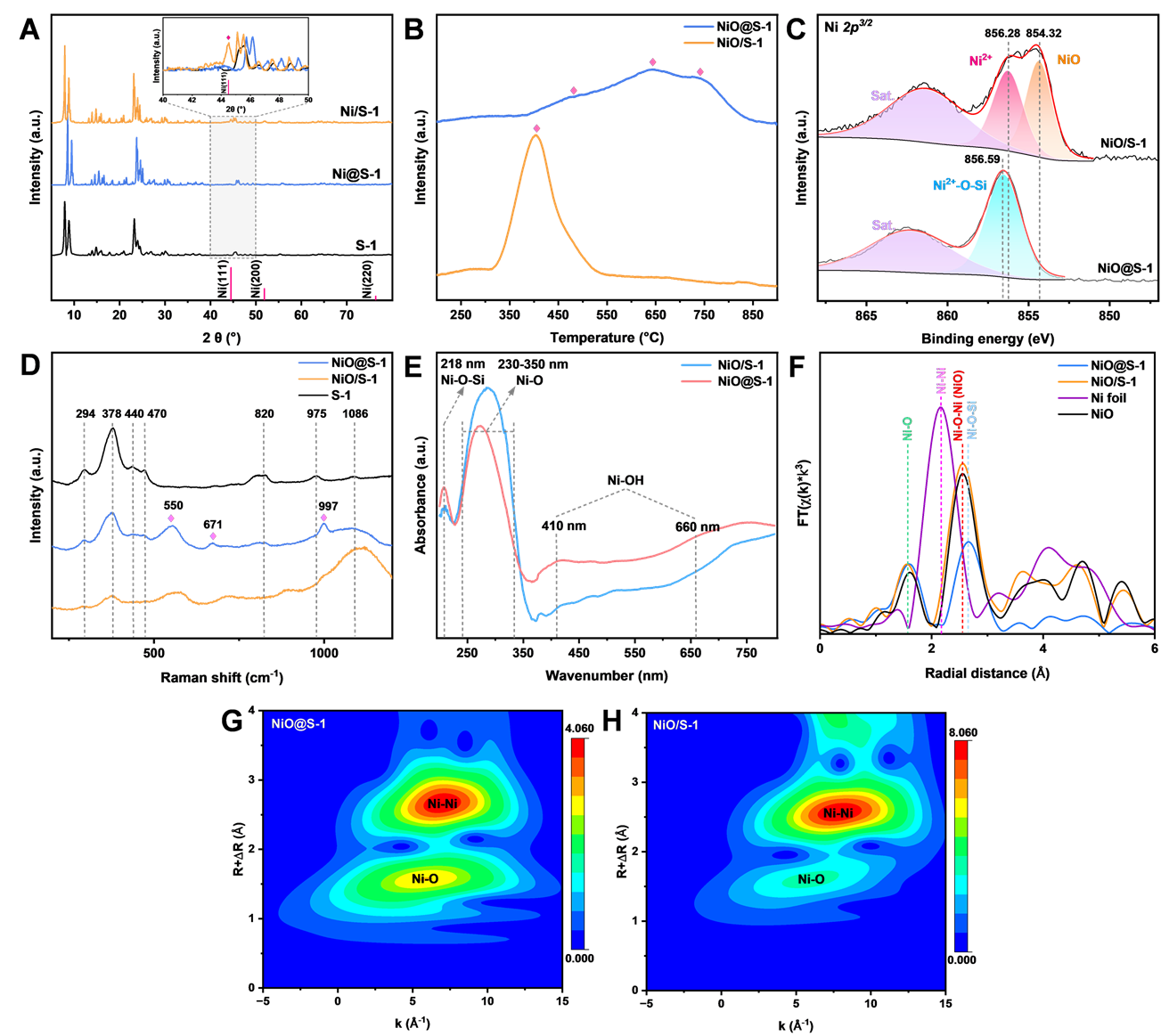
Fig. 1. General properties of different samples. (A) XRD patterns. (B) H2-TPR profiles. (C) Ni 2p3/2 XPS spectra. (D) UV-Raman spectra. (E) UV-vis spectra. Fourier transform of K3-weighted EXAFS spectra at R space (F) and Wavelet transforms (G,H) from experimental data.
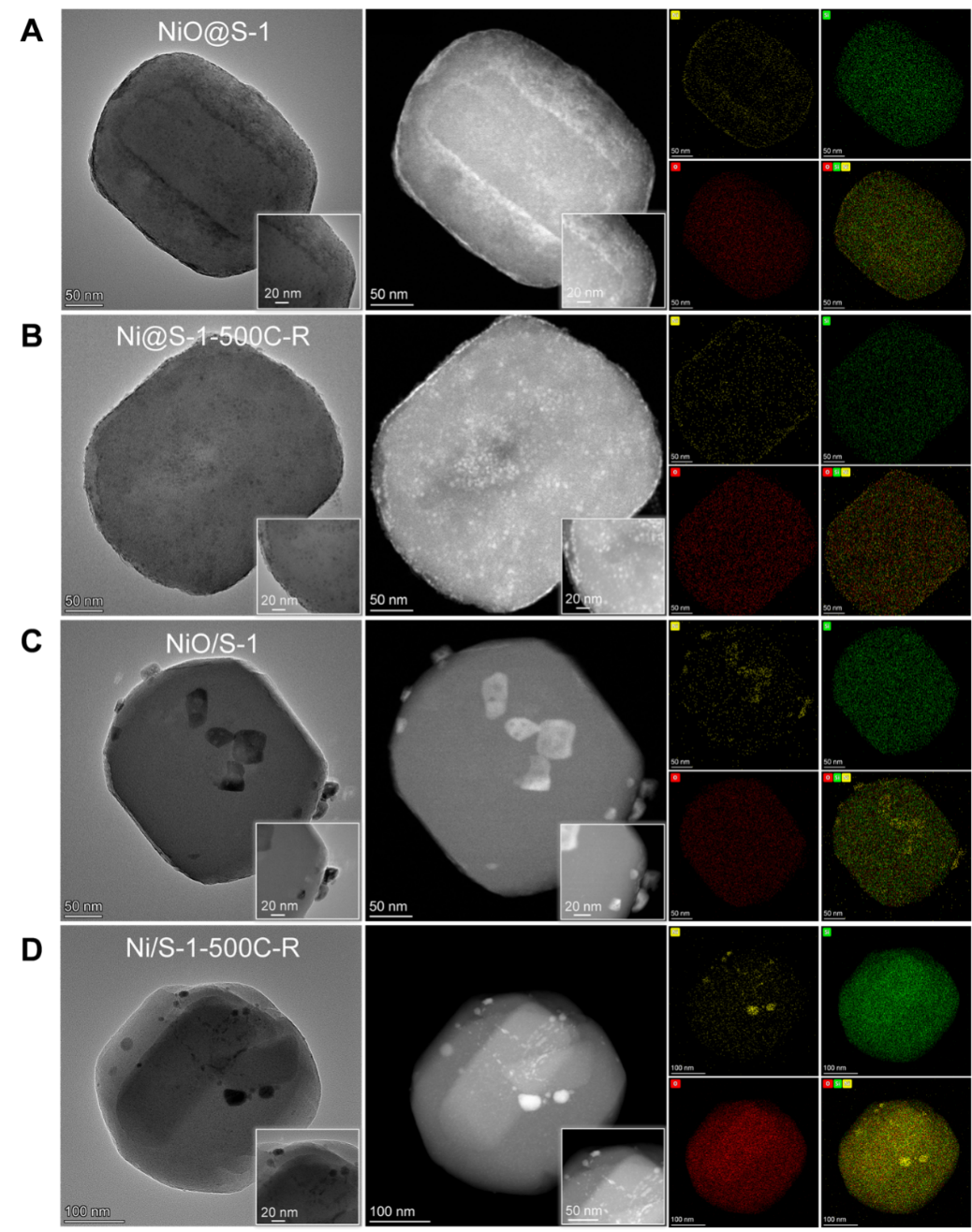
Fig. 2. HAADF-STEM images and TEM-EDS mappings of NiO@S-1 (A), Ni@S-1-500C-R (B), NiO/S-1 (C), and Ni/S-1-500C-R (D).
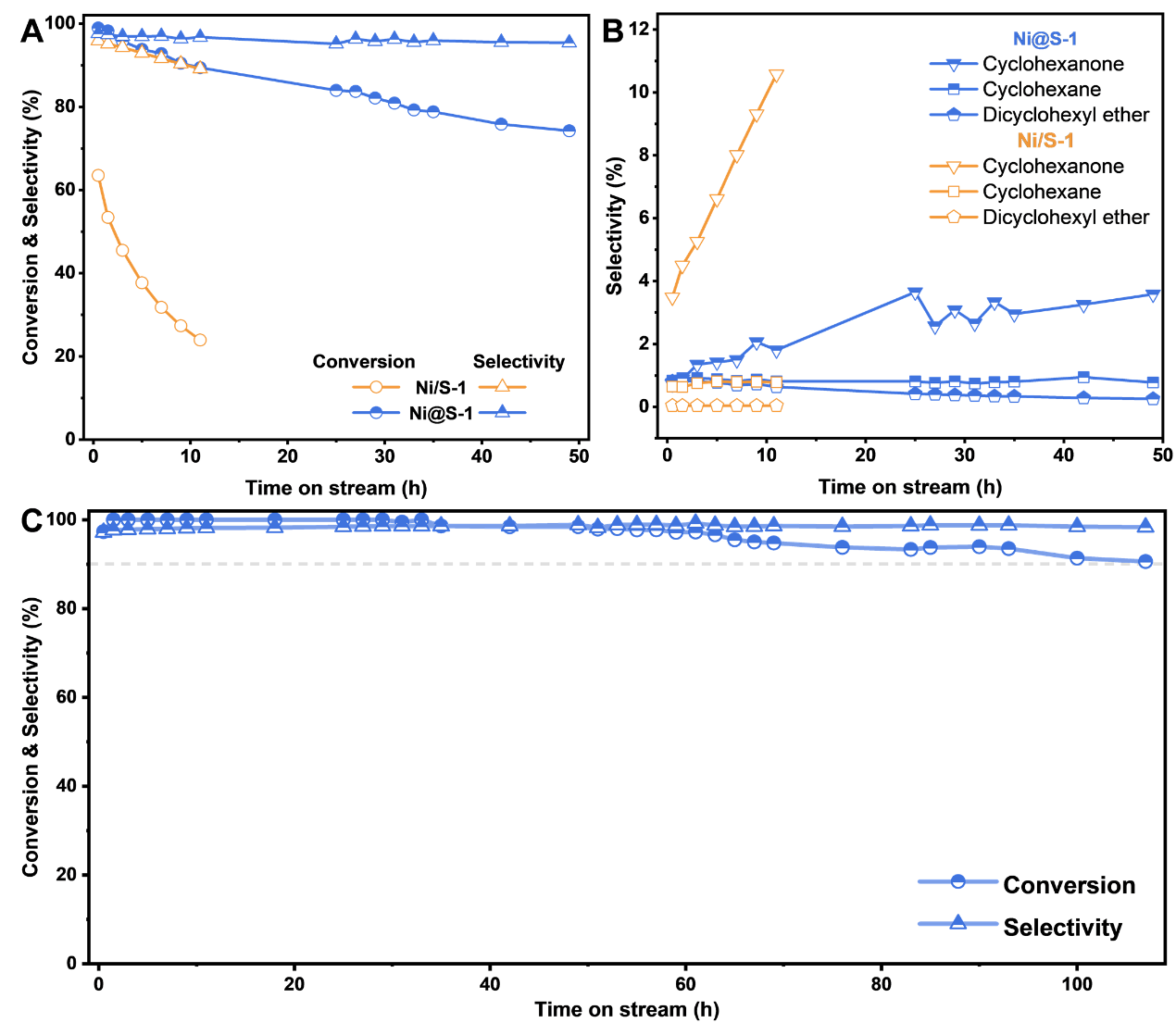
Fig. 3. Catalytic performance of Ni@S-1 and Ni/S-1 in phenol hydrogenation: Phenol conversion and selectivity for cyclohexanol (A) and distribution of by-products (B) and long-term durability tests (C) of Ni@S-1. Reaction conditions: 155 °C, 2.0 MPa, WHSV: 3.0 h-1 or 1.0 h-1.
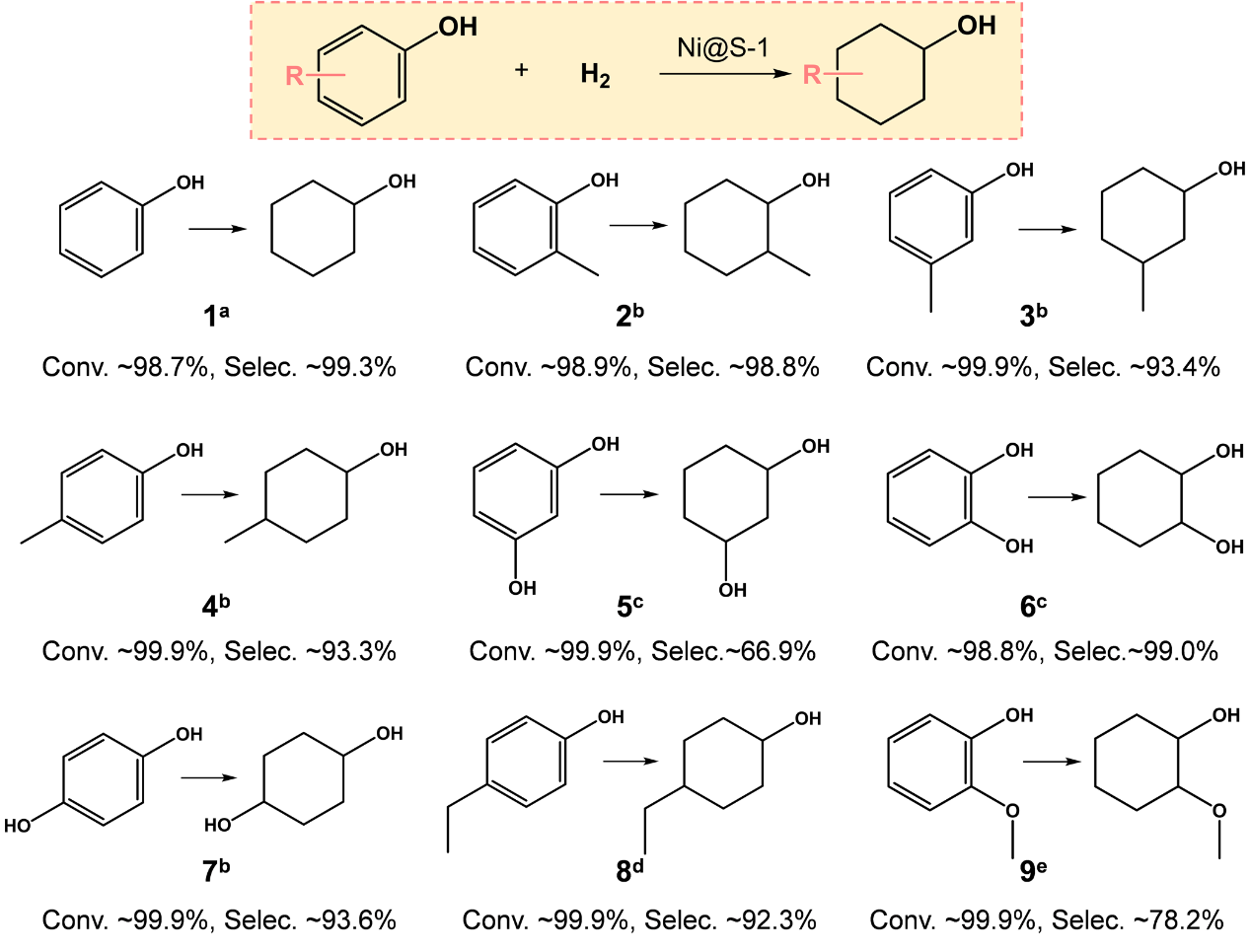
Fig. 4. Catalytic hydrogenation performance of Ni@S-1 for phenol and its derived compounds. a Reaction conditions: substrate (0.25 g), catalyst (0.05 g), isopropanol (5 mL), 150 °C, 1 MPa H2, 3 h. b Reaction conditions: substrate (0.15 g), catalyst (0.05 g), isopropanol (5 mL), 180 °C, 2 MPa H2, 5 h. c Reaction conditions: substrate (0.15 g), catalyst (0.05 g), isopropanol (5 mL), 150 °C, 2 MPa H2, 4 h. d Reaction conditions: substrate (0.15 g), catalyst (0.05 g), isopropanol (5 mL), 180 °C, 2 MPa H2, 7 h. e Reaction conditions: substrate (0.15 g), catalyst (0.05 g), isopropanol (5 mL), 220 °C, 1 MPa H2, 8 h.
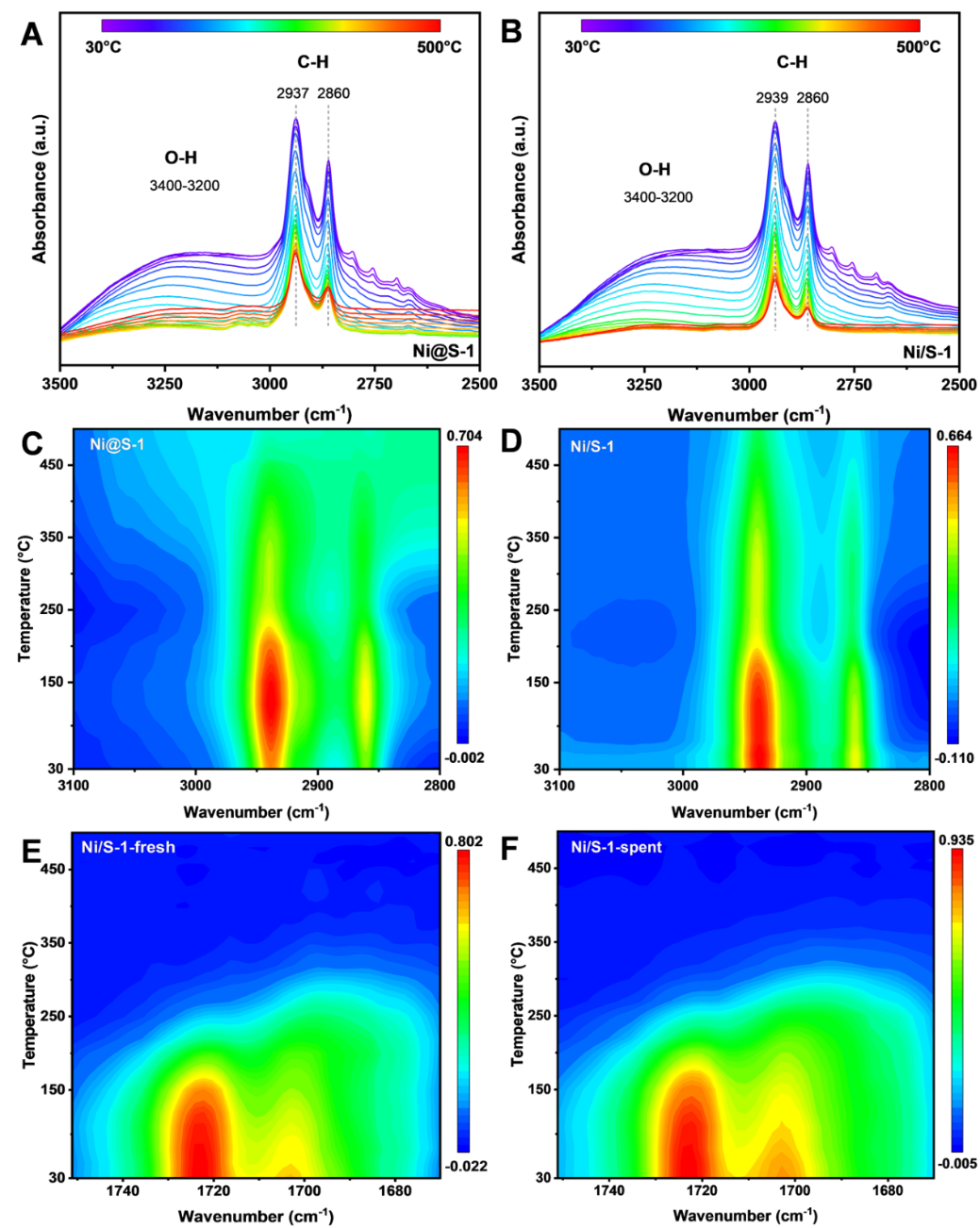
Fig. 5. In-situ DRIFTS of cyclohexanol desorption during programmed temperature desorption experiments (A,B) and corresponding contour plots (C, D) within the characteristic cyclohexanol vibrational bands for Ni@S-1 and Ni/S-1. (E,F) Evolution of the cyclohexanone absorption region for Ni/S-1 before and after reaction.
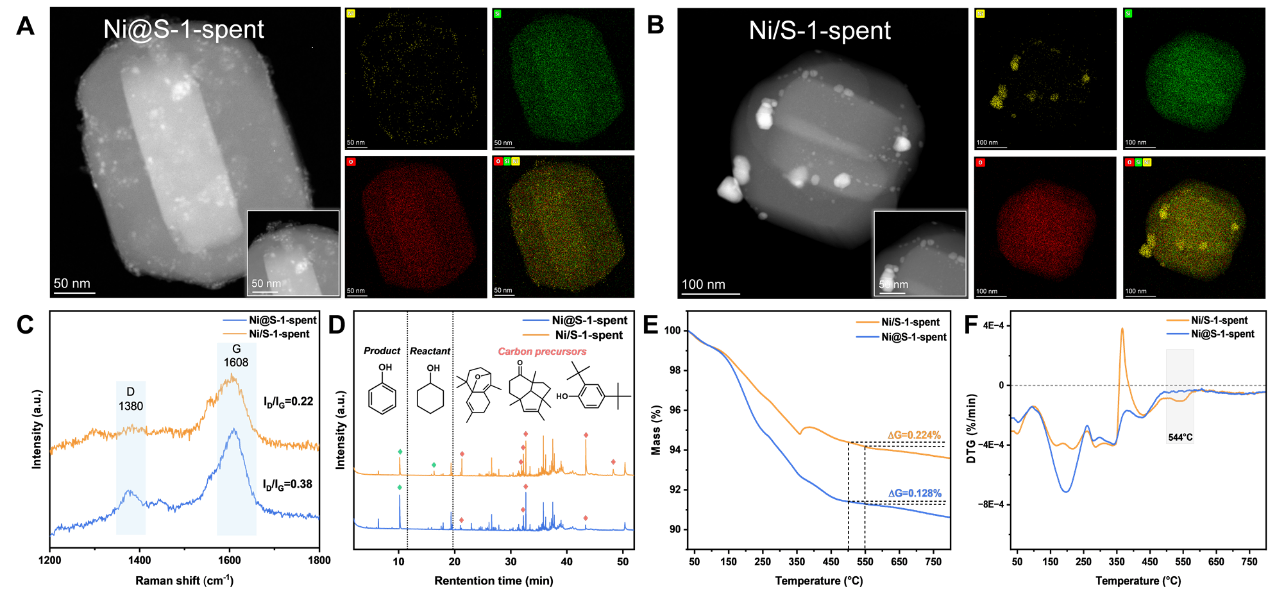
Fig. 6. (A,B) HAADF-STEM observation of the spent Ni@S-1 and Ni/S-1 catalysts and their corresponding element maps. (C) UV-Raman spectra comparing the carbon deposits on the spent catalysts. (D) GC-MS spectrum of catalyst leachate after reaction. (E,F) TG and DTG curves of the spent catalysts.
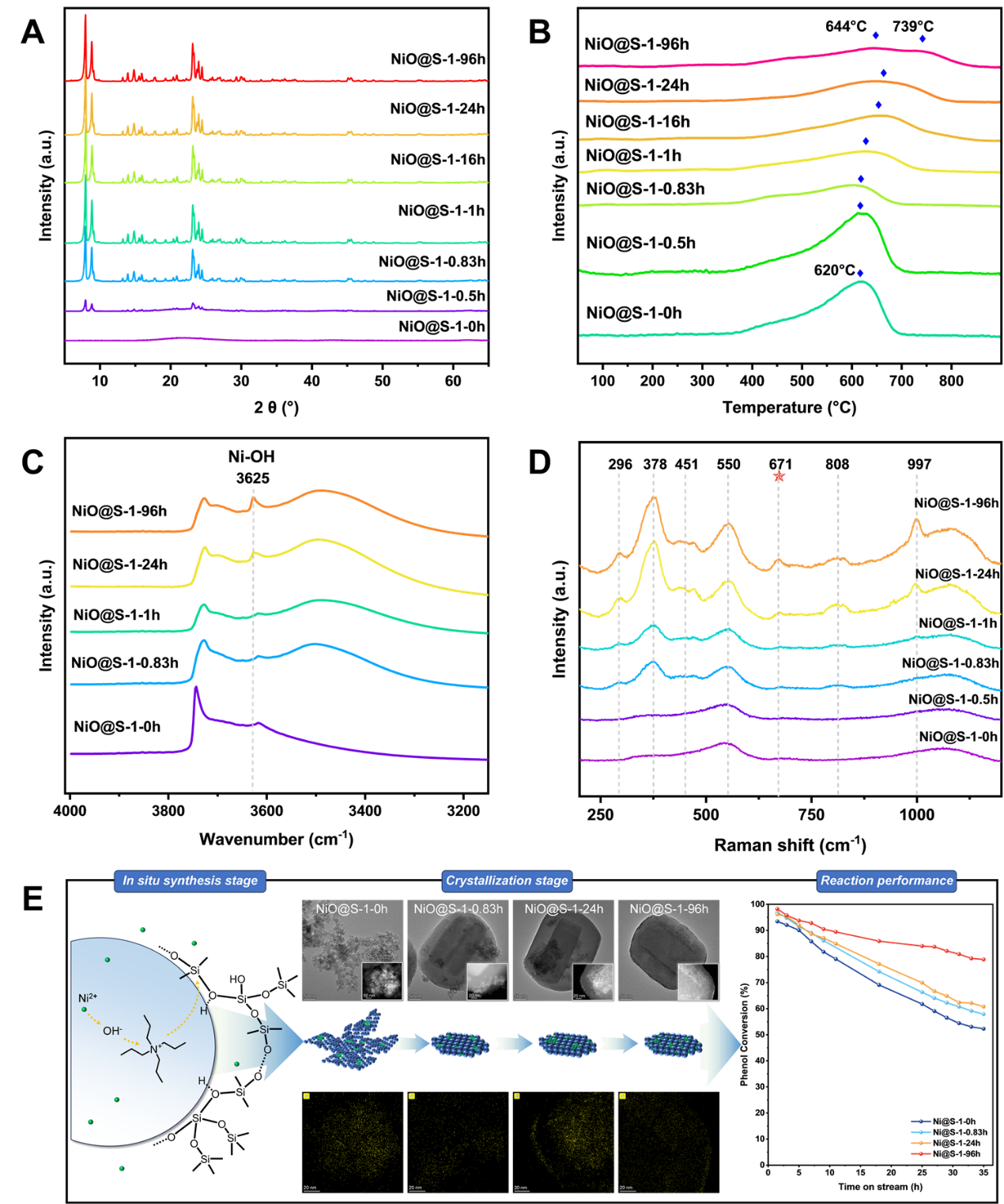
Fig. 7. XRD patterns (A), H2-TPR profiles (B), IR spectra in the hydroxyl vibration region (C), and UV-Raman spectra (D) of NiO@S-1 after different crystallization time. (E) Possible nickel dispersion mechanism during in-situ zeolite synthesis, HAADF-STEM images and the corresponding element mapping and catalytic performance of Ni@S-1 after different crystallization time.
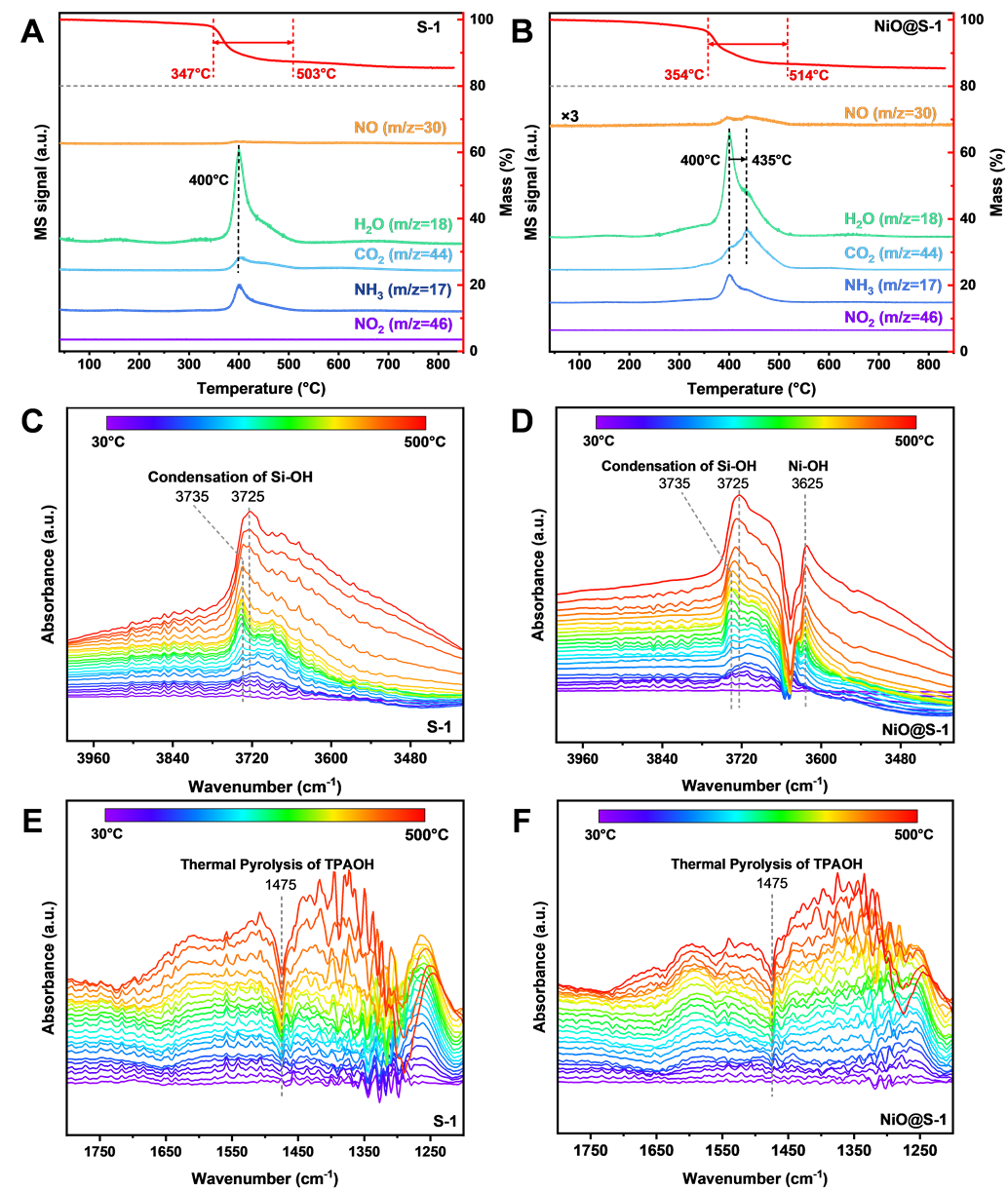
Fig. 8. TG-MS profiles (A,B) and in-situ DRIFT spectra in hydroxyl region (C,D) and C-H vibration region (E,F) of the as-synthesized S-1 and NiO@S-1.
|
| [1] | Zihao Gao, Kai Huang, Qingling Xu, Xin Wang, Zhicheng Liu, Bin Shao, Jun Hu. Engineering catalytic microenvironments for enhancing ethylene production in CO2 capture and in-situ oxidative dehydrogenation of ethane [J]. Chinese Journal of Catalysis, 2026, 88(9): 322-334. |
| [2] | Yang Wang, Cun-Feng Fan, Yang Liu, Xiao-Qin Zheng, Xuan-Yi Liu, Kai Zhang, Jiahui Kou, Hengming Huang, Lin-Bing Sun. Iron single-atom catalysts created in constrained space with in-situ-formed carbon layers for efficient Fenton reaction [J]. Chinese Journal of Catalysis, 2026, 88(9): 432-441. |
| [3] | Han Xiang, Lu Lin, Yu Li, Qisong Yi, Chaoran Jiang, Rui Chen, Yuanshuai Liu, Na Sai, Jinlu He, Fenghua Bai, Wenhao Luo. Silicalite-1 encapsulated Cu nanoclusters with La modification for enhanced performance in hydrogenation of furfural to furfuryl alcohol [J]. Chinese Journal of Catalysis, 2026, 88(9): 382-392. |
| [4] | Jiaxiang Qin, Songpei Zhang, Xingju Li, Xintai Chen, Jia Zhao, Xiaoling Mou, Xiangen Song, Li Yan, Ronghe Lin, Yunjie Ding. Decoding structure-selectivity interplay in Pd-Ag nanocatalysts for butadiene semi-hydrogenation [J]. Chinese Journal of Catalysis, 2026, 87(8): 342-352. |
| [5] | Jiyeon Lee, Muhammad Irshad, Wonjoong Yoon, Jaehoon Kim. High-pressure switch: Redirecting CO2 hydrogenation from hydrocarbons to carboxylic acids and alcohols [J]. Chinese Journal of Catalysis, 2026, 87(8): 70-86. |
| [6] | Sen Wang, Shiying Li, Rui Geng, Bo Zhou, Pengfei Wang, Zhangfeng Qin, Mei Dong, Jianguo Wang, Unni Olsbye, Weibin Fan. The smallest Ni species triggering selective hydrogenation of CO2 to methane: Ni dimer embedded in MFI and enhancement of MnOx [J]. Chinese Journal of Catalysis, 2026, 87(8): 113-125. |
| [7] | Wenxin He, Yuanhong Lu, Chenxi Guan, Xiaohui Hou, Rui Huang, Dehui Deng. Boehmite lattice hydroxyl-mediated selective hydrogenation of cinnamaldehyde via water as hydrogen source [J]. Chinese Journal of Catalysis, 2026, 87(8): 386-395. |
| [8] | Xiaojie Liu, Zhifu Yu, Qi Li, Yang Wang, Xinze Bi, Kaixuan Huo, Dingyao Li, Zhiang Yuan, Yifan Yan, Shibin Li, Yiwu Lu, Qiang Liu, Wenhang Wang, Mingbo Wu. Fe-based catalyst for thermo-catalytic CO2 hydrogenation into ethanol: The essential role of water management and Fe-based carbide/oxide ratio [J]. Chinese Journal of Catalysis, 2026, 86(7): 112-124. |
| [9] | Polina Lavrik, Jurjen Cazemier, Mohamed N. Hedhili, Sudheesh K. Veeranmaril, Abdallah Nassereddine, Antonio Aguilar-Tapia, Marina Chernova, Jean-Louis Hazemann, Alla Dikhtiarenko, Javier Ruiz-Martínez. Relationship between palladium nuclearity and catalytic activity and selectivity in acetylene semi-hydrogenation [J]. Chinese Journal of Catalysis, 2026, 85(6): 384-393. |
| [10] | Lanlan Chen, Li Sheng, Yanan Zhou, Qiquan Luo, Zhenyu Li, Wenhua Zhang, Jinlong Yang. Unraveling the superiority of Ni1-MoS2 single-atom catalyst in CO2 hydrogenation to methanol: A DFT combined microkinetic study [J]. Chinese Journal of Catalysis, 2026, 85(6): 143-152. |
| [11] | Ksenia A. Kokina, Anton S. Konopatsky, Ekaterina S. Chikanova, Danil V. Barilyuk, Tatyana O. Teplakova, Denis V. Leybo, Ekaterina V. Sukhanova, Zakhar I. Popov, Alexey Y. Antonov, Olga A. Boeva, Sergey A. Efimov, Dmitry V. Shtansky. Does high-entropy oxide (CrMnFeCoNi)3O4 catalyst require support to improve performance in CO2 hydrogenation? [J]. Chinese Journal of Catalysis, 2026, 85(6): 168-181. |
| [12] | Syeda Sidra Bibi, Sheraz Ahmed, Heuntae Jo, Jaehoon Kim. Turning methanation into chain growth: Na-induced mechanistic bifurcation on Co-ZrOx catalyst [J]. Chinese Journal of Catalysis, 2026, 85(6): 394-411. |
| [13] | Fleur A. E. Bruekers, Tess I. van Benthem, Rajamohanan Sobhana Anju, N. Raveendran Shiju. Phase to performance: The advancing role of molybdenum carbides in reverse water-gas shift reaction [J]. Chinese Journal of Catalysis, 2026, 85(6): 1-12. |
| [14] | Yihan Ye, Yilun Ding, Tao Peng, Cheng Liu, Xinzhe Li, Yongzhi Zhao, Jianping Xiao, Feng Jiao, Xiulian Pan. Role of accumulated carbonaceous species on dynamic confinement in zeolite catalysis [J]. Chinese Journal of Catalysis, 2026, 84(5): 74-79. |
| [15] | Zhiyao Liu, Tangkang Liu, Chuan Qin, Guoliang Liu, Anmin Zheng. Zirconia-mediated interfacial catalysis for CO2 hydrogenation [J]. Chinese Journal of Catalysis, 2026, 84(5): 1-24. |
| Viewed | ||||||
|
Full text |
|
|||||
|
Abstract |
|
|||||


