
Chinese Journal of Catalysis ›› 2026, Vol. 89: 258-268.DOI: 10.1016/S1872-2067(26)65049-8
• Article • Previous Articles Next Articles
Ruiqi Zhanga,1, Xintong Yaoa,1, Junchang Liua, Zhi Chenb, Dafeng Zhanga, Xipeng Pua,*( )
)
Received:2025-10-21
Accepted:2025-12-04
Online:2026-10-18
Published:2026-09-01
Contact:
*E-mail:xipengpu@hotmail.com(X. Pu).
About author:1 Contributed equally to this work.
Supported by:Ruiqi Zhang, Xintong Yao, Junchang Liu, Zhi Chen, Dafeng Zhang, Xipeng Pu. Interfacial Cu‒S bond and localized surface plasmon resonance modulated Cu3P@Cu/Mn0.3Cd0.7S S-scheme heterojunction for efficient photocatalytic hydrogen evolution[J]. Chinese Journal of Catalysis, 2026, 89: 258-268.
Add to citation manager EndNote|Ris|BibTeX
URL: https://www.cjcatal.com/EN/10.1016/S1872-2067(26)65049-8
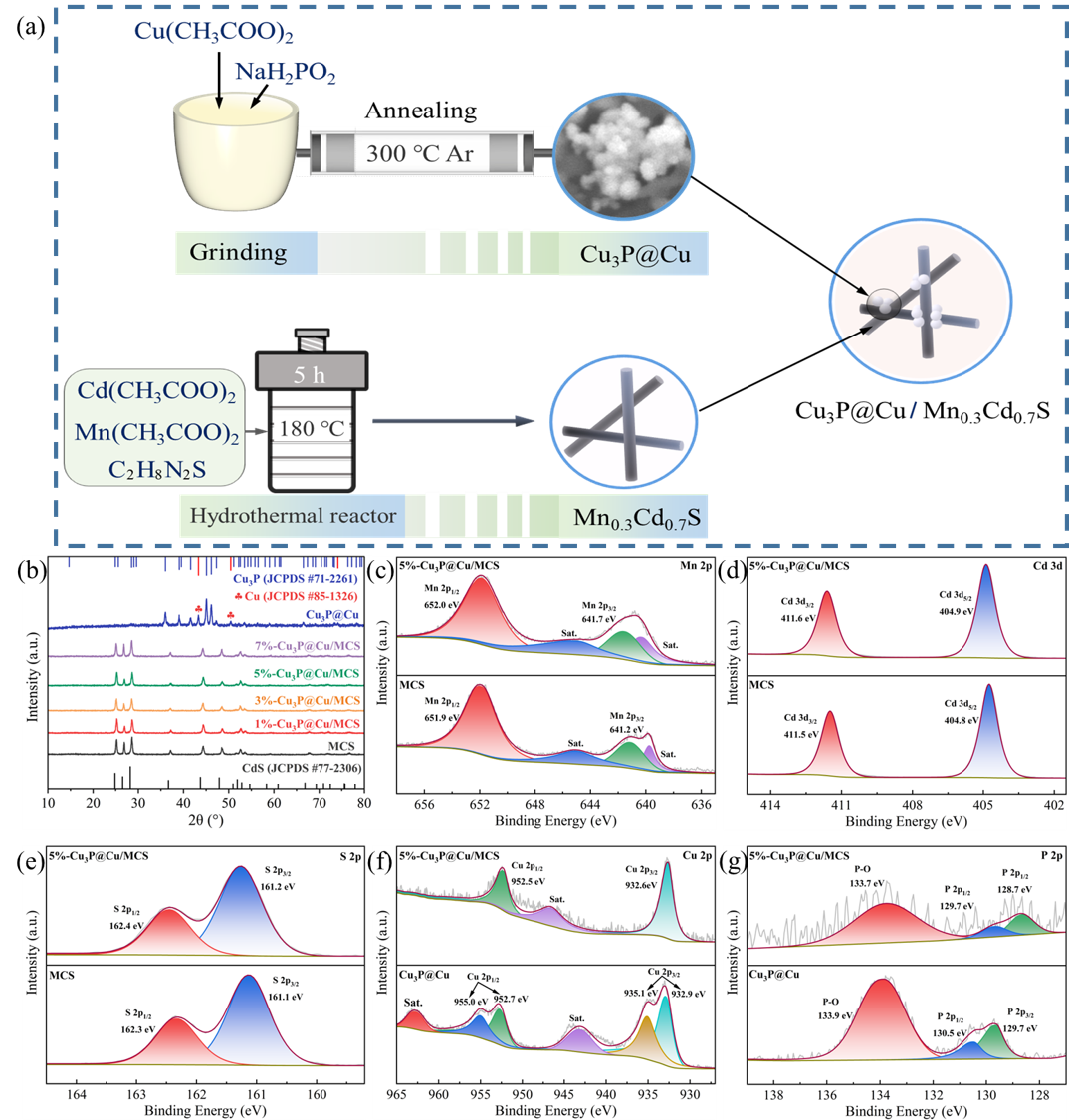
Fig. 1. (a) Schematic illustration for the synthesis of Cu3P@Cu/MCS. (b) XRD patterns of MCS, Cu3P@Cu, and X-Cu3P@Cu/MCS. High-resolution XPS spectra of Mn (c), Cd (d), S (e), Cu (f), and P (g) elements in MCS, Cu3P@Cu, and Cu3P@Cu/MCS.
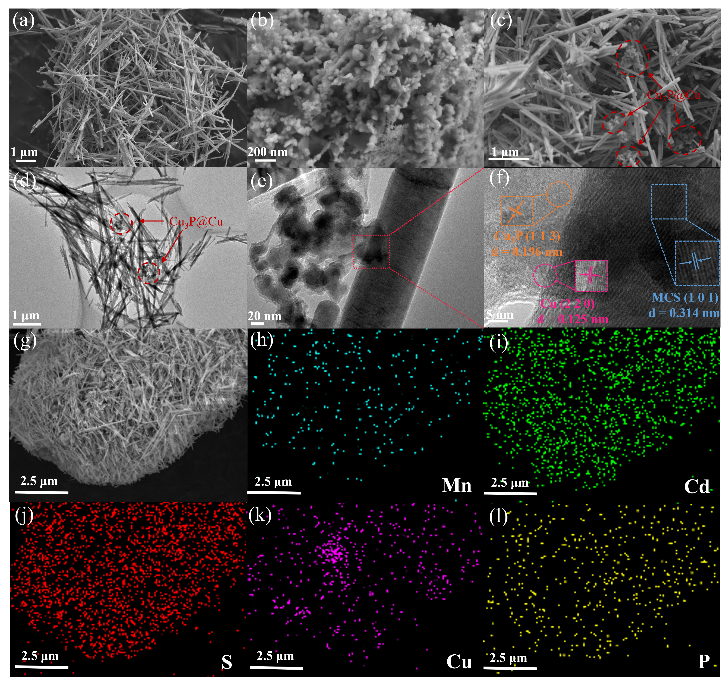
Fig. 2. SEM images of MCS (a), Cu3P@Cu (b), and Cu3P@Cu/MCS (c). TEM (d,e) and high-resolution TEM (f) images of Cu3P@Cu/MCS. (g-l) Elemental mapping images of Cu3P@Cu/MCS.
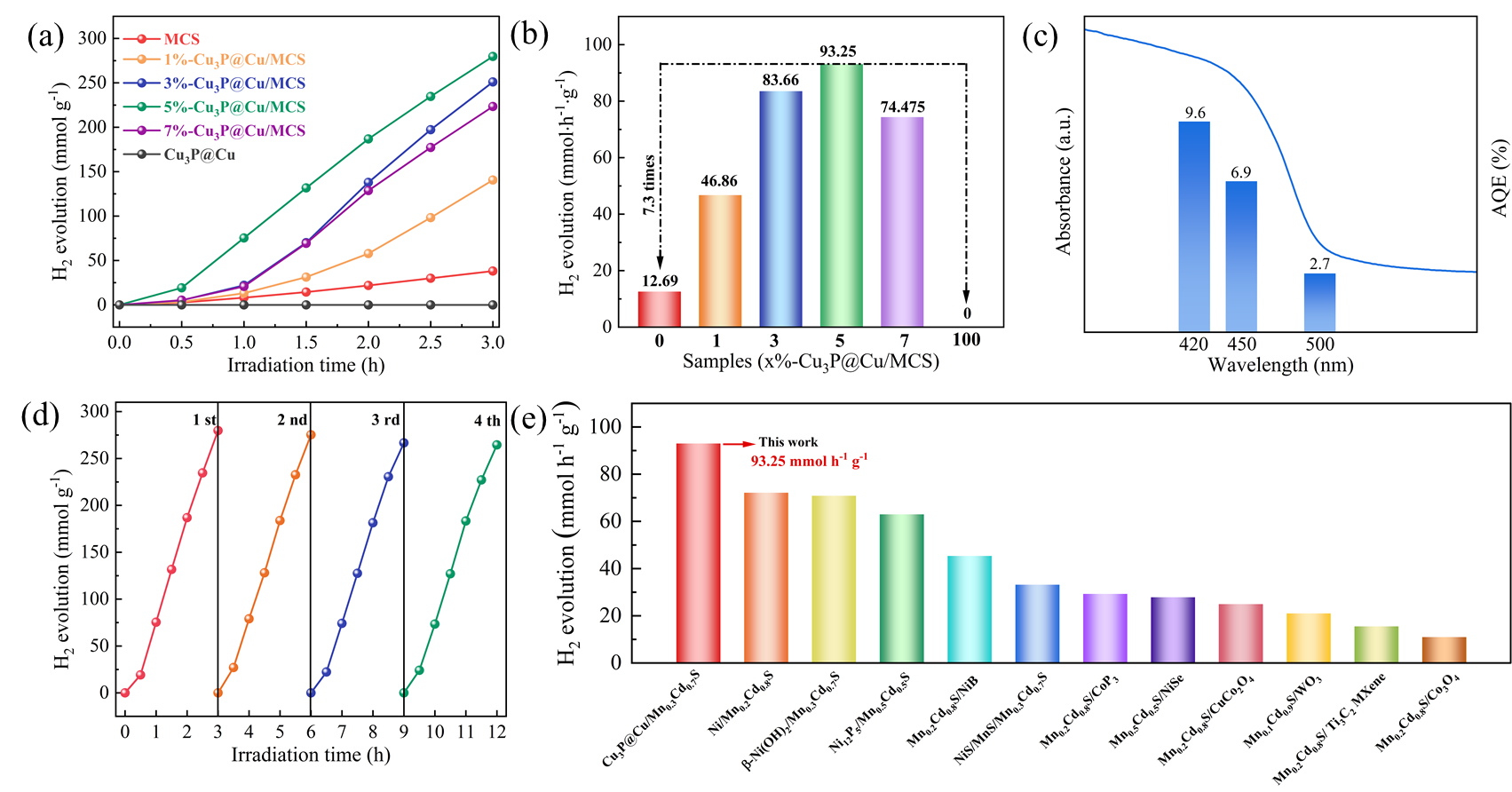
Fig. 3. Photocatalytic H2 evolution activity of the samples: time-yield curves (a) and H2 production rate (b). (c) UV-vis absorption spectrum of the optimized 5%-Cu3P@Cu/MCS together with its wavelength-dependent AQE. (d) H2 evolution stability test results of 5%-Cu3P@Cu/MCS. (e) Comparison of H2 production activity of the MnxCd1?xS-based composites in Table S2.
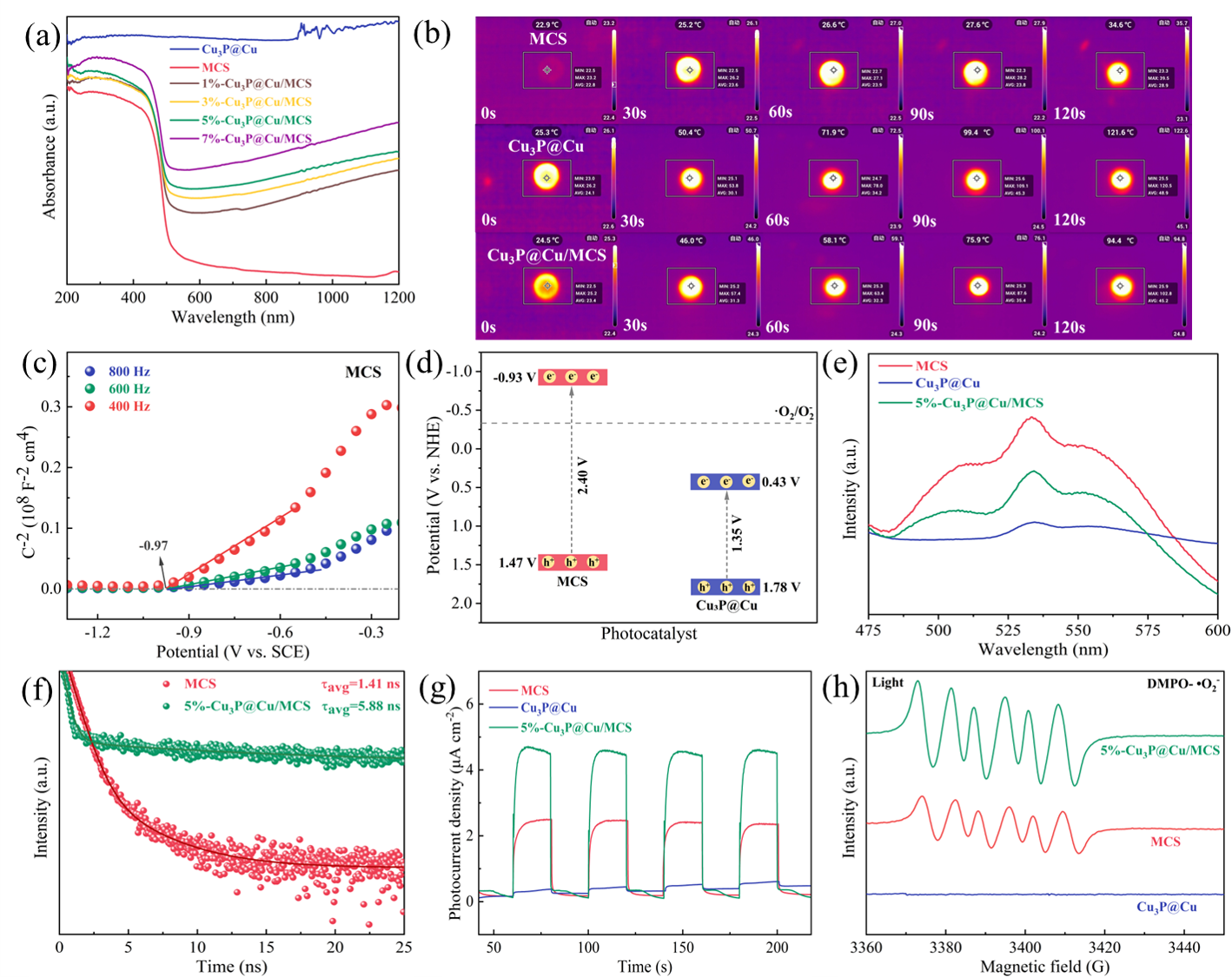
Fig. 4. UV-Vis DRS (a) and infrared images (b) of as-prepared materials under irradiation. (c) Mott-Schottky plots of MCS. (d) Schematic energy-level diagram. PL spectra (e), TRPL spectra (f), and I-t (g) curves of different samples. (h) EPR spectra of DMPO-?O2- under irradiation.
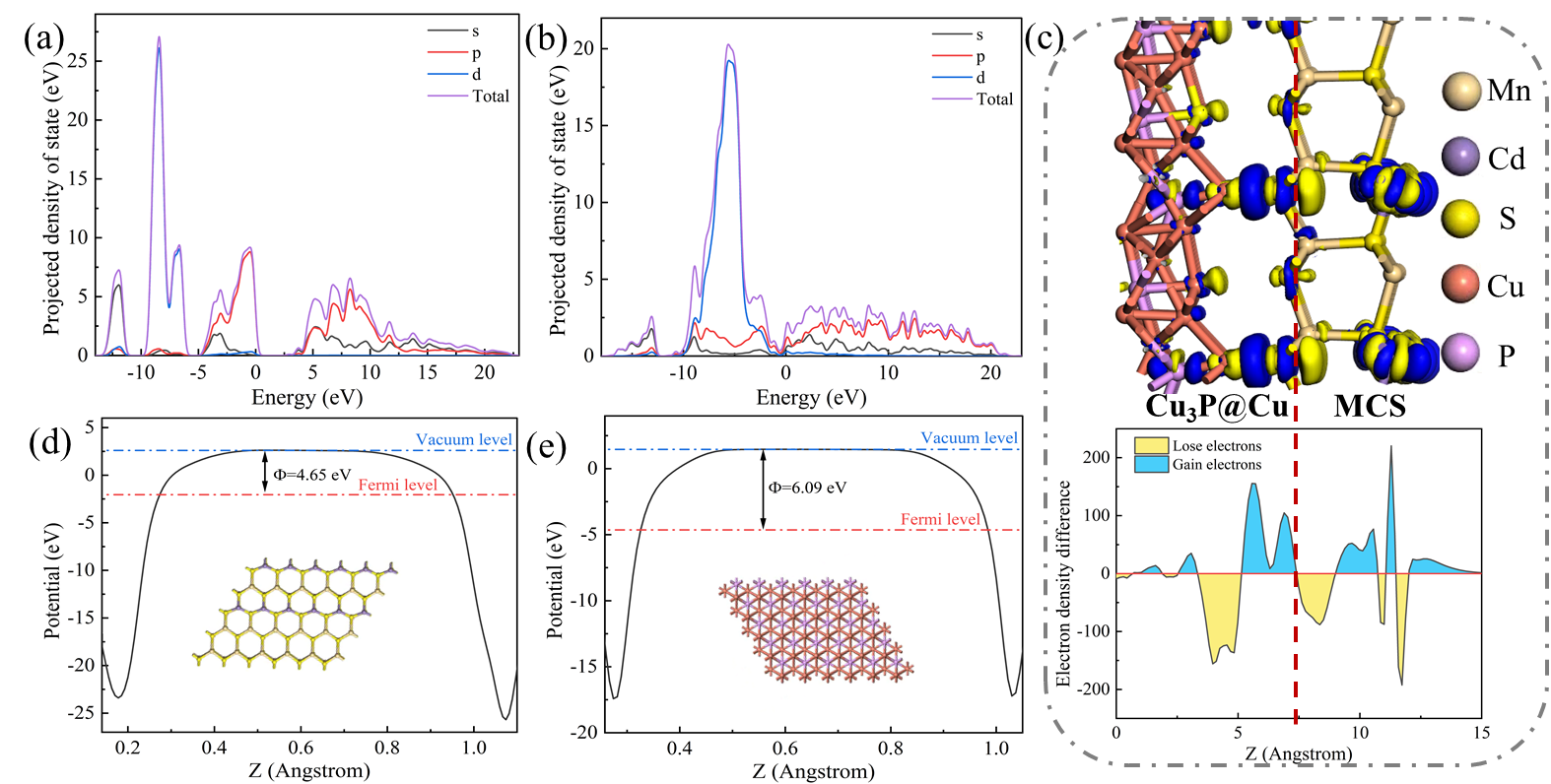
Fig. 5. PDOS of MCS (a) and Cu3P@Cu (b). (c) EDD maps of Cu3P@Cu/MCS. Wf of MCS (d) and Cu3P@Cu (e).
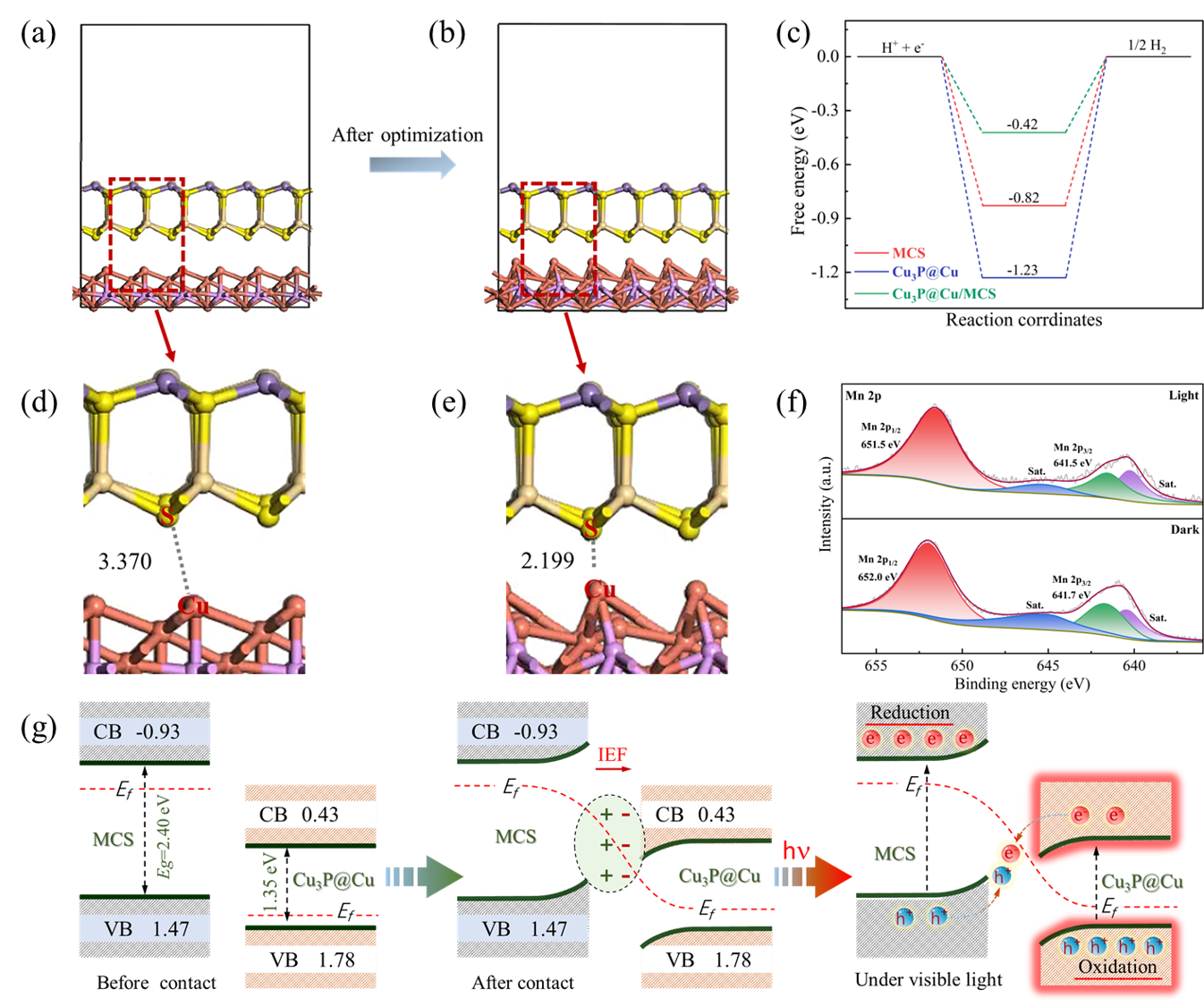
Fig. 6. Structure of CZS/ZWO S-scheme heterojunction before (a) and after (b) optimization. (c) ΔGH* of 5%-Cu3P@Cu/MCS systems. (d,e) Local enlarged views of CZS/ZWO S-scheme heterojunction. (f) High-resolution in-situ XPS spectra of Mn 2p under illumination and dark conditions. (g) Detailed charge transfer pathways in S-Scheme heterojunction.
|
| [1] | Xiaolong Ma, Zhiqiang Wu, Huiqin Yao, Bin Liu, Zhiliang Jin, Paolo Fornasiero. Charging dynamics engineering: Quantum dots-induced full-space electric field cooperative Ag2S QDs/CoWO₄ S-scheme heterojunction boosting photocatalytic hydrogen evolution [J]. Chinese Journal of Catalysis, 2026, 88(9): 233-246. |
| [2] | Gaoxiong Liu, Rundong Chen, Bingquan Xia, Xianlong Zhou, Laiquan Li, Shantang Liu. Thiadiazole-functionalized covalent triazine frameworks for constructing S-scheme heterojunctions enabling boosted H2O2 photosynthesis [J]. Chinese Journal of Catalysis, 2026, 87(8): 170-184. |
| [3] | Hao Wu, Xinyu Zeng, Wang Wang, Bei Cheng, Jingzhao Cheng, Jingsan Xu, Shaowen Cao. The organic-inorganic S-scheme heterojunction with enhanced charge separation simultaneously catalyze the production of hydrogen and imine [J]. Chinese Journal of Catalysis, 2026, 87(8): 185-196. |
| [4] | Shijie Li, Rui Li, Yanping Liu, Xin Yu, Deyun Ma, Jianhui Jiang, Xiaosong Zhou, Chunqiang Zhuang, Zaiwang Zhao, Wei Jiang. Augmented reactive oxygen species generation in Ag/AgBr/C3N5 via LSPR-enhanced S-scheme charge transfer for efficient photocatalytic antibiotic wastewater remediation [J]. Chinese Journal of Catalysis, 2026, 87(8): 126-139. |
| [5] | Mingyu Ma, Zongyang Liu, Kuo Yuan, Zheyuan Liu, Jiaxin Wang, Qingqing Lin, Di-Chang Zhong, Tong-Bu Lu. Self-photosensitizing metal complexes for photocatalytic hydrogen evolution [J]. Chinese Journal of Catalysis, 2026, 86(7): 375-383. |
| [6] | Hanxi Li, Zhendong Luo, Qiang Xue, Yunfei Zhi, Jun Du, Xukai Zhou. Engineering channel microenvironment and charge dynamics in covalent organic frameworks through linkage-specific povarov cyclization for enhanced photocatalytic hydrogen evolution [J]. Chinese Journal of Catalysis, 2026, 86(7): 363-374. |
| [7] | Yatai Zhou, Chengcheng Yuan, Wei Xia, Jun Wang, Xiaofeng Zhu, Yong Zhang, Bicheng Zhu, Jiaguo Yu. Synergistic optimization of interfacial electron transfer and surface hydrogen adsorption in a CdS/ZnO S-scheme heterojunction by site-specific doping: A DFT study [J]. Chinese Journal of Catalysis, 2026, 86(7): 327-337. |
| [8] | Ping Li, Liang Wei, Wei Xia, Chengcheng Yuan, Chenbin Ai, Meng Li. Ultrafast electron transfer in 2D/2D g-C3N4/WO3 S-scheme heterojunctions for enhanced H2O2 production [J]. Chinese Journal of Catalysis, 2026, 85(6): 333-345. |
| [9] | Jintao Dong, Rui Zhang, Zhishuai Wang, Shengqun Cao, Lina Li, Gaopeng Liu, Bin Wang, Yixuan Gao, Jiexiang Xia. Construction of S-scheme MnO2/BiOCl heterojunction boosting photocatalytic low-concentration peroxymonosulfate activation for contaminants removal [J]. Chinese Journal of Catalysis, 2026, 85(6): 310-321. |
| [10] | Jinhe Li, Xiaxi Yao, Xiaohui Yu, Xiaosong Zhou, Wei Ren, Lele Wang, Weikang Wang, Qinqin Liu. Simultaneous value-added utilization of photogenerated electrons and holes via plasmon-exciton-phonon synergy in Mo2N QDs/ZnIn2S4 heterojunction [J]. Chinese Journal of Catalysis, 2026, 83(4): 219-230. |
| [11] | R. Kavitha, C. Manjunatha, S. Girish Kumar. ZnO-based S-scheme heterojunction: Design principles, preparation methods and photocatalytic activity [J]. Chinese Journal of Catalysis, 2026, 83(4): 54-95. |
| [12] | Keshan Tang, Wanyi Deng, Ningyuan Wang, Yang Xia, Xinhe Wu, Heng Yang. Triazine-based COF/TiO2 S-scheme heterojunction with oxygen vacancies for efficient photocatalytic CO2 reduction [J]. Chinese Journal of Catalysis, 2026, 83(4): 244-257. |
| [13] | Kaiqiang Xu, Wenjun Zhu, Mahmoud Sayed, Sheng Han. Design and preparation of 1D-based S-scheme photocatalysts [J]. Chinese Journal of Catalysis, 2026, 83(4): 24-53. |
| [14] | Ziyi Liao, Lan Jiang, Yang Yang, Lin Wang, Weiyou Yang, Huilin Hou. Alkali-cyano dual-tailored g-C3N4/BiOCl S-scheme heterojunctions for highly efficient visible-light-driven H2O2 photosynthesis in pure water [J]. Chinese Journal of Catalysis, 2026, 83(4): 143-161. |
| [15] | Hongwen Zhang, Yinghui Cai, Bingyue Li, Wei Shan, Hua Tang. Isolated Cu atoms and CuO nanoclusters synergistically boost hydrogen evolution over TiO2 [J]. Chinese Journal of Catalysis, 2026, 83(4): 162-171. |
| Viewed | ||||||
|
Full text |
|
|||||
|
Abstract |
|
|||||


