
Chinese Journal of Catalysis ›› 2027, Vol. 92: 262-273.DOI: 10.1016/S1872-2067(26)65236-9
• Articles • Previous Articles Next Articles
Shiwen Du, Quanmei Li, Na Lu, Wei Lu, Jindou Huang, Zhenyi Zhang*( )
Received:2026-05-02
Accepted:2026-05-29
Online:2027-01-02
Published:2026-10-30
Contact:
*E-mail: zhangzy@dlnu.edu.cn (Z. Zhang).Supported by:Shiwen Du, Quanmei Li, Na Lu, Wei Lu, Jindou Huang, Zhenyi Zhang. Tailoring the d-band center of CoSe2 cocatalyst via Ni-doping-induced p-d hybridization perturbation for enhanced photocatalytic H2 production[J]. Chinese Journal of Catalysis, 2027, 92: 262-273.
Add to citation manager EndNote|Ris|BibTeX
URL: https://www.cjcatal.com/EN/10.1016/S1872-2067(26)65236-9
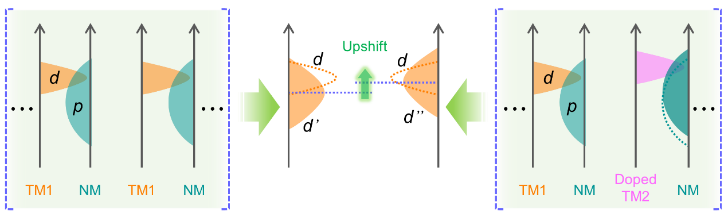
Scheme 1. Schematic diagram of the heteroatom doping to optimize the d-band center of active site in cocatalyst by regulating d-p orbital hybridization.
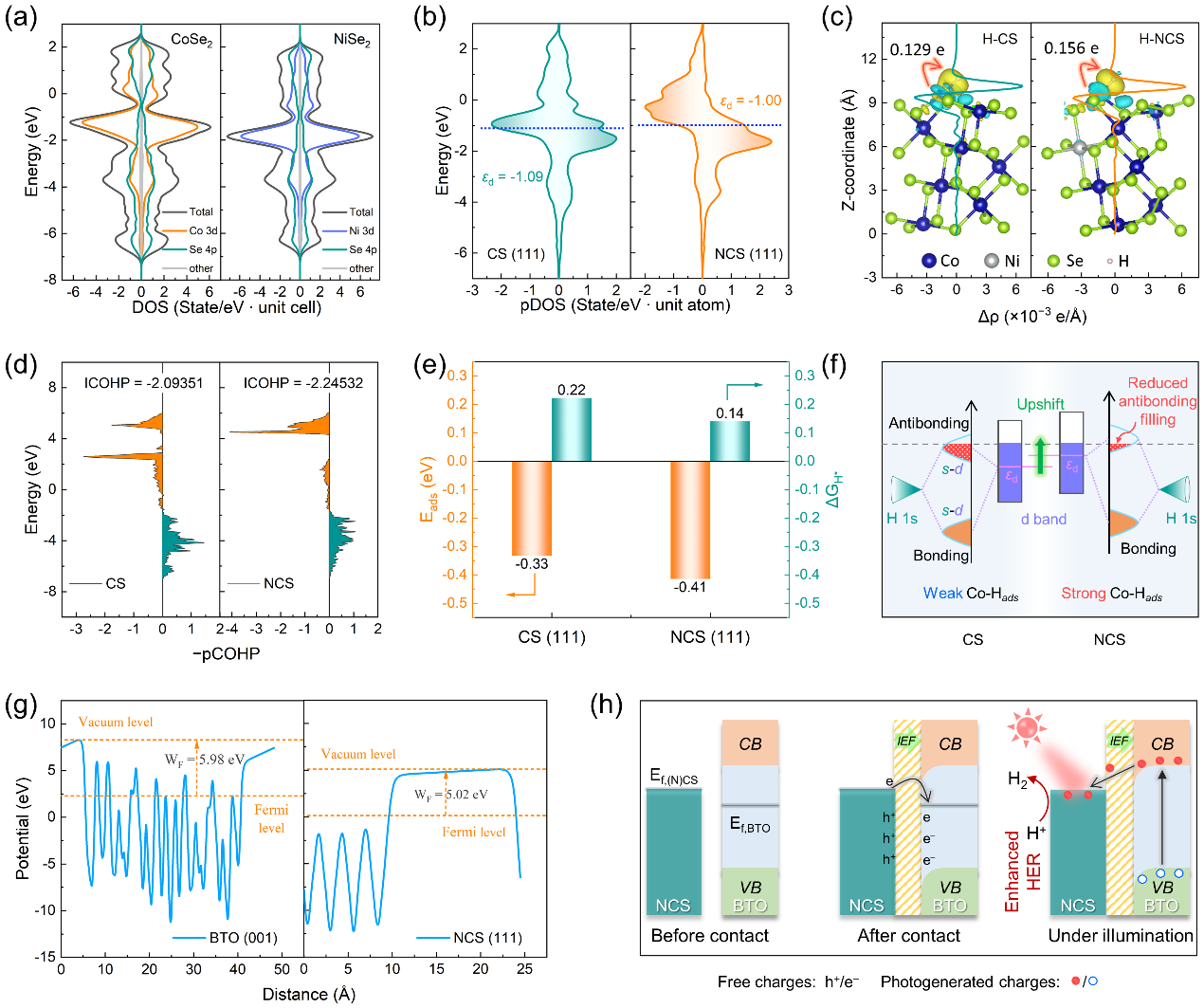
Fig. 1. (a) DOS of bulk CoSe2 and NiSe2. (b) Partial DOS of Co atom in pure CS (111) and NCS (111) slabs. (c) Charge density difference (the yellow color and green color represented the charge accumulation and depletion, respectively) and planar-averaged charge density difference of H absorbed on pure CS and NCS (111) surface and the corresponding Bader charges of H atom. The calculated pCOHP data (d) and chemisorption energy and free energy (e) of H atom absorbed on different catalysts. (f) The schematic illustrating the d-band of Co site in CS and NCS and their optimized antibonding orbital occupancy of Co-Hads. (g) Work functions of different sample slabs. (h) Schematic diagram of photogenerated electron transfer in NCS/BTO heterojunction.
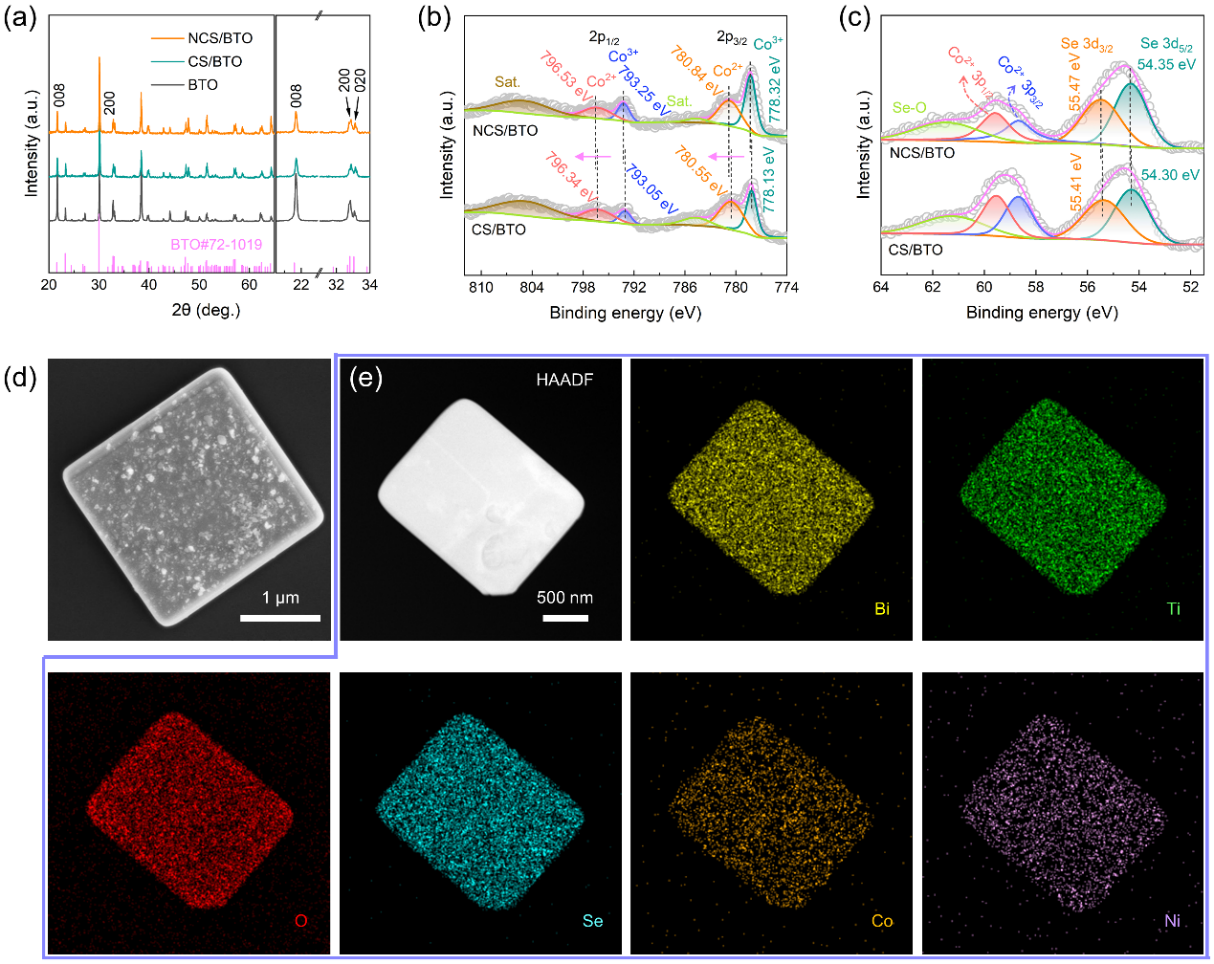
Fig. 2. XRD patterns (a), high-resolution XPS spectra of Co 2p (b) and Ni 2p (c) of different samples. SEM image (d) and HAADF STEM and corresponding EDS elemental mapping images (e) of NCS/BTO sample.
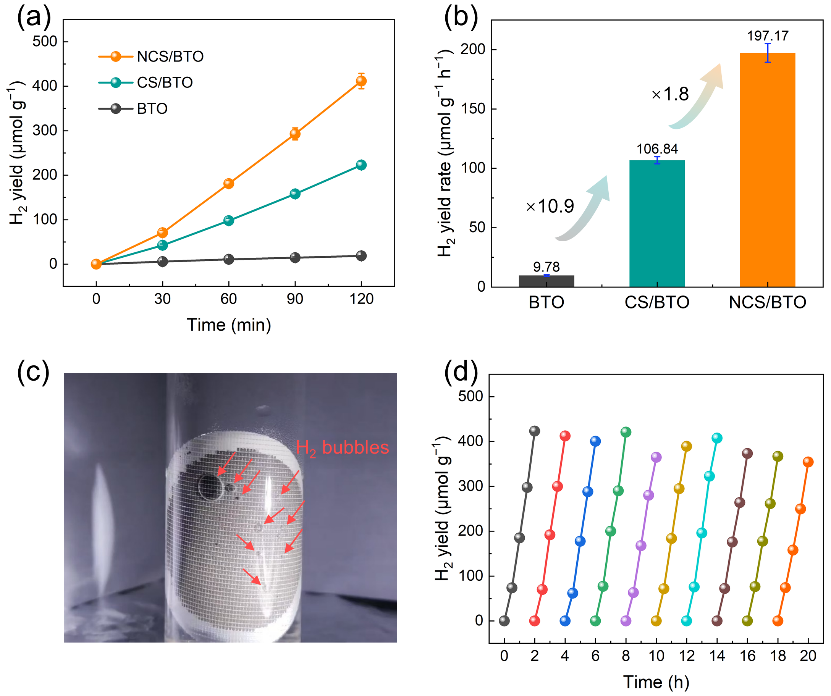
Fig. 3. Photocatalytic H2 evolution amount (a) and H2 evolution rate over different samples (b). Photographs for the viewable H2 bubbles (c) and cycling stability of the photocatalytic H2 evolution activity (d) of the optimized NCS/BTO.
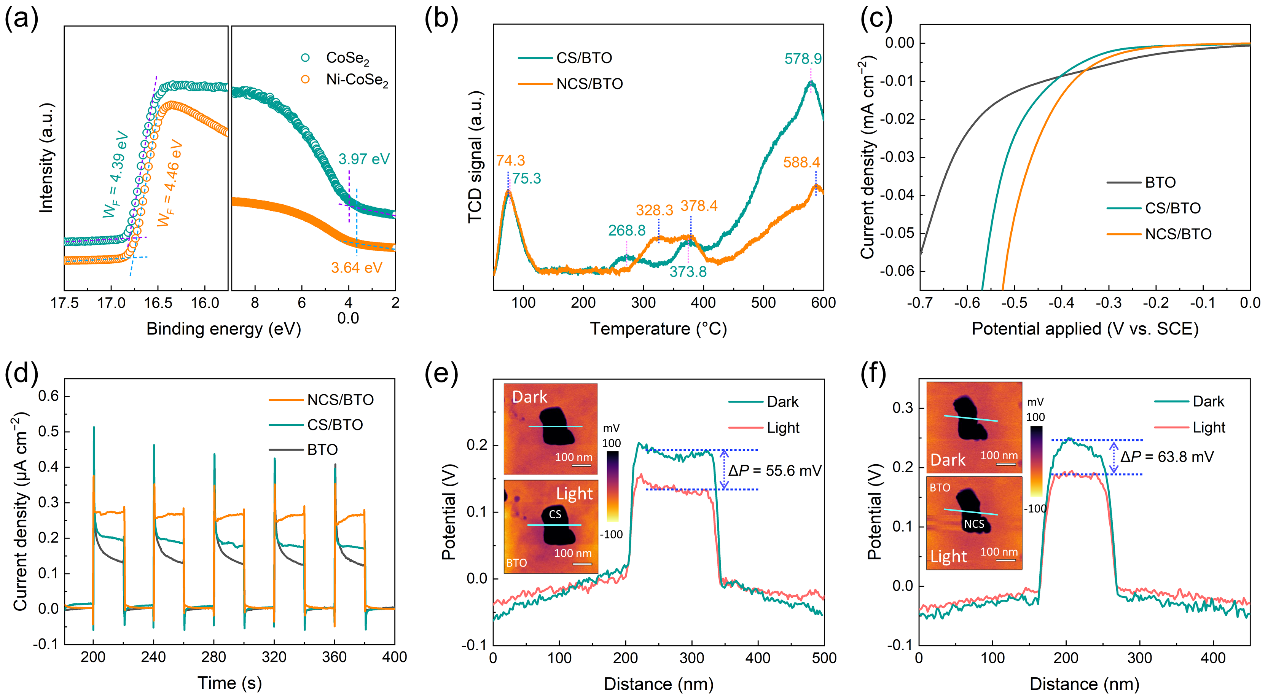
Fig. 4. (a) UPS spectra of pure CoSe2 and Ni-doped CoSe2 samples. H2-TPD spectra (b), LSV polarization (c) and transient photocurrent-time (I-t) curves (d) of the obtained samples. KPFM surface potential profiles of CS/BTO (e) and NCS/BTO samples (f).
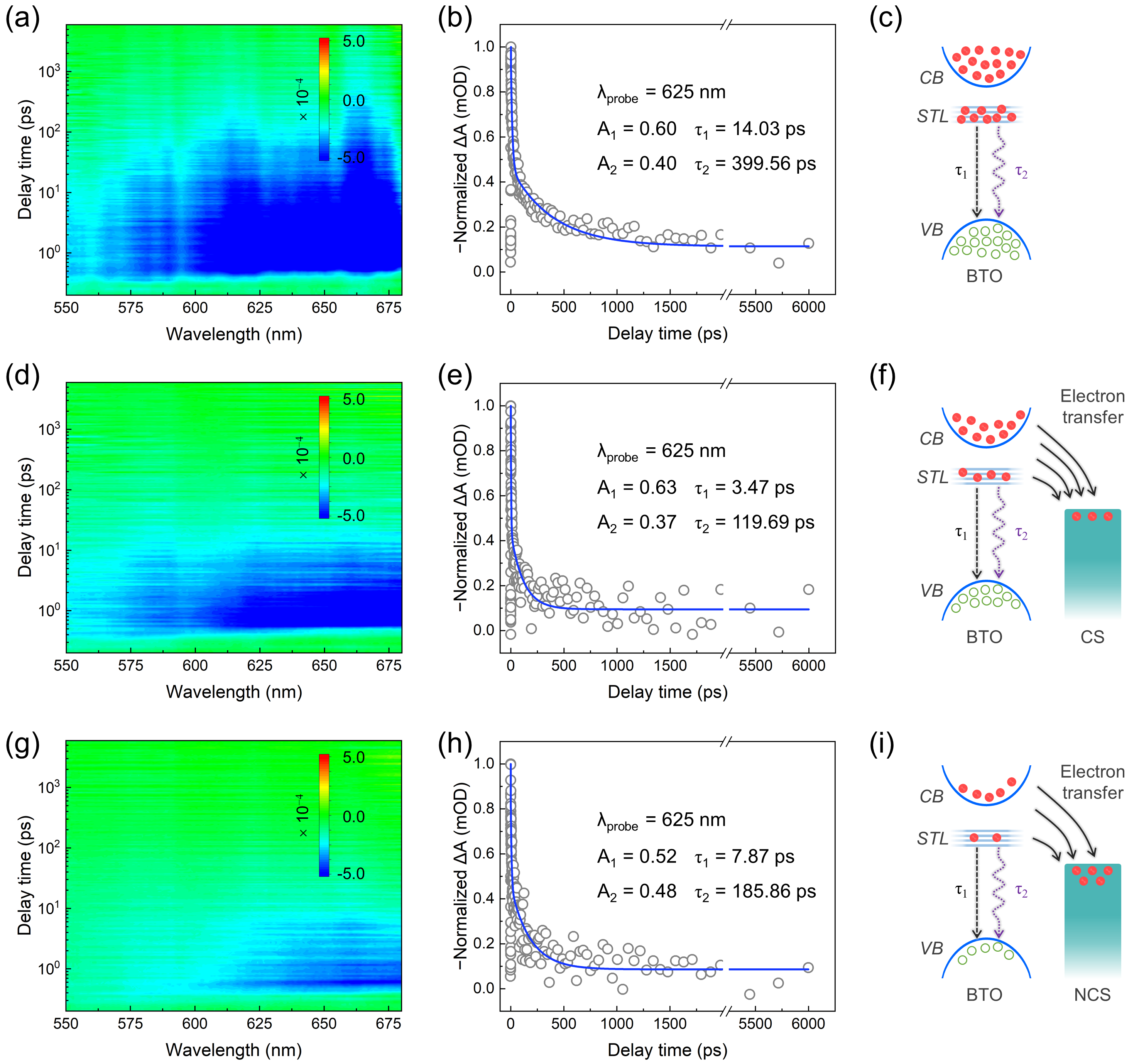
Fig. 5. Pseudocolor TA spectra (pump wavelength: 343 nm) (a,d,g), TA kinetic curves (monitored at 625 nm) (b,e,h) and corresponding schematic illustration (c,f,i) of photogenerated-electron relaxation paths of BTO (a,b,c), CS/BTO (d,e,f) and NCS/BTO (g,h,i).
|
| [1] | Wei Zhong, Yiyao Gan, Jingtao Wang, Peiyi Yang, Aiyun Meng, Yaorong Su. Achieving near-equilibrium Had adsorption/desorption by introducing asymmetric S-Re-Se modules in a-ReSxSe2-x cocatalysts for enhanced photocatalytic H2 evolution [J]. Chinese Journal of Catalysis, 2026, 85(6): 322-332. |
| [2] | Baolong Zhang, Bin Sun, Xingpeng Liu, Wenyu Liu, Shaonan Gu, Guowei Zhou. Defect-engineered S-scheme charge transfer in TiO2/Zn0.5Cd0.5S heterojunction for high-efficiency photocatalytic hydrogen evolution [J]. Chinese Journal of Catalysis, 2026, 84(5): 117-129. |
| [3] | Haoyu Long, Xinhe Wu, Dmitry Selishchev, Jahan B. Ghasemi, Jiaguo Yu, Huogen Yu. CdS-based S-scheme heterojunctions for photocatalytic hydrogen evolution [J]. Chinese Journal of Catalysis, 2026, 91(12): 50-67. |
| [4] | Guangjian Liao, Wenbo Lv, Zhichao Wang, Zhuqi Chen, Guochuan Yin. Modulating the oxidative reactivity of the metal active oxygen moieties by Lewis acid for catalysis [J]. Chinese Journal of Catalysis, 2026, 89(10): 102-126. |
| [5] | Gang Wang, Imran Muhammad, Hui-Min Yan, Jun Li, Yang-Gang Wang. Regulating the local environment of Ni single-atom catalysts with heteroatoms for efficient CO2 electroreduction [J]. Chinese Journal of Catalysis, 2025, 74(7): 120-129. |
| [6] | Wenjing Gao, Yuchan Liu, Chenyao Chen, Ziqi Lian, Rongkai Ye, Chaorong Qi, Jianqiang Hu. Constructing dual-cocatalyst-directed quantifiable electron and hole transfer for enhanced photocatalytic performance [J]. Chinese Journal of Catalysis, 2025, 74(7): 319-328. |
| [7] | Liyuan Xiao, Xue Bai, Jingyi Han, Zhenlu Wang, Jingqi Guan. Tuning d-band electronic structure of Ni-Fe oxyhydroxides via doping engineering boosts seawater oxidation performance [J]. Chinese Journal of Catalysis, 2025, 71(4): 340-352. |
| [8] | Yong-Hui Wu, Yu-Qing Yan, Yi-Xiang Deng, Wei-Ya Huang, Kai Yang, Kang-Qiang Lu. Rational construction of S-scheme CdS quantum dots/In2O3 hollow nanotubes heterojunction for enhanced photocatalytic H2 evolution [J]. Chinese Journal of Catalysis, 2025, 70(3): 333-340. |
| [9] | Shuang Li, Haili Lin, Xuemei Jia, Xin Jin, Qianlong Wang, Xinyue Li, Shifu Chen, Jing Cao. Bimetallic NixFe2-xP cocatalyst with tunable electronic structure for enhanced photocatalytic benzyl alcohol oxidation coupled with H2 evolution over red phosphorus [J]. Chinese Journal of Catalysis, 2025, 70(3): 363-377. |
| [10] | Shuhao Wei, Guojun Lan, Yiyang Qiu, Di Lin, Wei Kong, Ying Li. Advances in metal-free carbon catalysts for acetylene hydrochlorination: From heteroatom doping to intrinsic defects over the past decade [J]. Chinese Journal of Catalysis, 2025, 70(3): 8-43. |
| [11] | Baofa Liu, Weijie Pan, Zhiyang Huang, Yi Zhao, Zuyang Luo, Tayirjan Taylor Isimjan, Bao Wang, Xiulin Yang. Unlocking 5300-h ultrastable metal-free ORR catalysts for Zn-air batteries via F-N co-doped tailored carbon pore architectures and synergistic adsorption modulation [J]. Chinese Journal of Catalysis, 2025, 79(12): 100-111. |
| [12] | Yunzhu Zang, Jiali Ren, Shanna An, Jian Tian. Facile synthesis of medium-entropy metal sulfides as high-efficiency cocatalysts toward photocatalytic hydrogen production [J]. Chinese Journal of Catalysis, 2025, 78(11): 242-251. |
| [13] | Lingxuan Hu, Yan Zhang, Qian Lin, Fengying Cao, Weihao Mo, Shuxian Zhong, Hongjun Lin, Liyan Xie, Leihong Zhao, Song Bai. Unraveling the Ni-Co synergy in bifunctional hydroxide cocatalysts for better cooperation of CO2 reduction and H2O oxidation in 2D S-scheme photosynthetic systems [J]. Chinese Journal of Catalysis, 2025, 68(1): 311-325. |
| [14] | Jiazang Chen. Semiconductor-cocatalyst interfacial electron transfer in actual photocatalytic reaction [J]. Chinese Journal of Catalysis, 2025, 68(1): 213-222. |
| [15] | Hui Fu, Jin Tian, Qianqian Zhang, Zhaoke Zheng, Hefeng Cheng, Yuanyuan Liu, Baibiao Huang, Peng Wang. Single-atom modified graphene cocatalyst for enhanced photocatalytic CO2 reduction on halide perovskite [J]. Chinese Journal of Catalysis, 2024, 64(9): 143-151. |
| Viewed | ||||||
|
Full text |
|
|||||
|
Abstract |
|
|||||


