
Chinese Journal of Catalysis ›› 2026, Vol. 90: 309-332.DOI: 10.1016/S1872-2067(26)65215-1
• Articles • Previous Articles
Jun Wua,*( ), Jiahao Baia, Gang Pana, Tailong Shia, Yongjie Xib,*(), Fuwei Lic,d,*(), Yong Lia,*()
Received:2026-02-24
Accepted:2026-04-28
Online:2026-11-18
Published:2026-11-19
About author:First author contact: Jun Wu: writing-original draft, writing-review and editing, methodology, conceptualization, resources, funding acquisition, investigation, supervision, visualization, project administration. Jiahao Bai: writing-original draft, data curation, methodology, investigation, validation, formal analysis. Gang Pan: writing-original draft, data curation, methodology, investigation, validation, formal analysis. Tailong Shi: validation, formal analysis. Yongjie Xi: methodology, software, investigation, visualization. Fuwei Li: writing-review and editing, methodology, visualization. Yong Li: writing-review and editing, project administration, supervision.
Supported by:Jun Wu, Jiahao Bai, Gang Pan, Tailong Shi, Yongjie Xi, Fuwei Li, Yong Li. Mechanism insights into the synergistic catalysis of bimetallic RuCo alloys for the highly selective reductive amination of biomass-derived furfural[J]. Chinese Journal of Catalysis, 2026, 90: 309-332.
Add to citation manager EndNote|Ris|BibTeX
URL: https://www.cjcatal.com/EN/10.1016/S1872-2067(26)65215-1
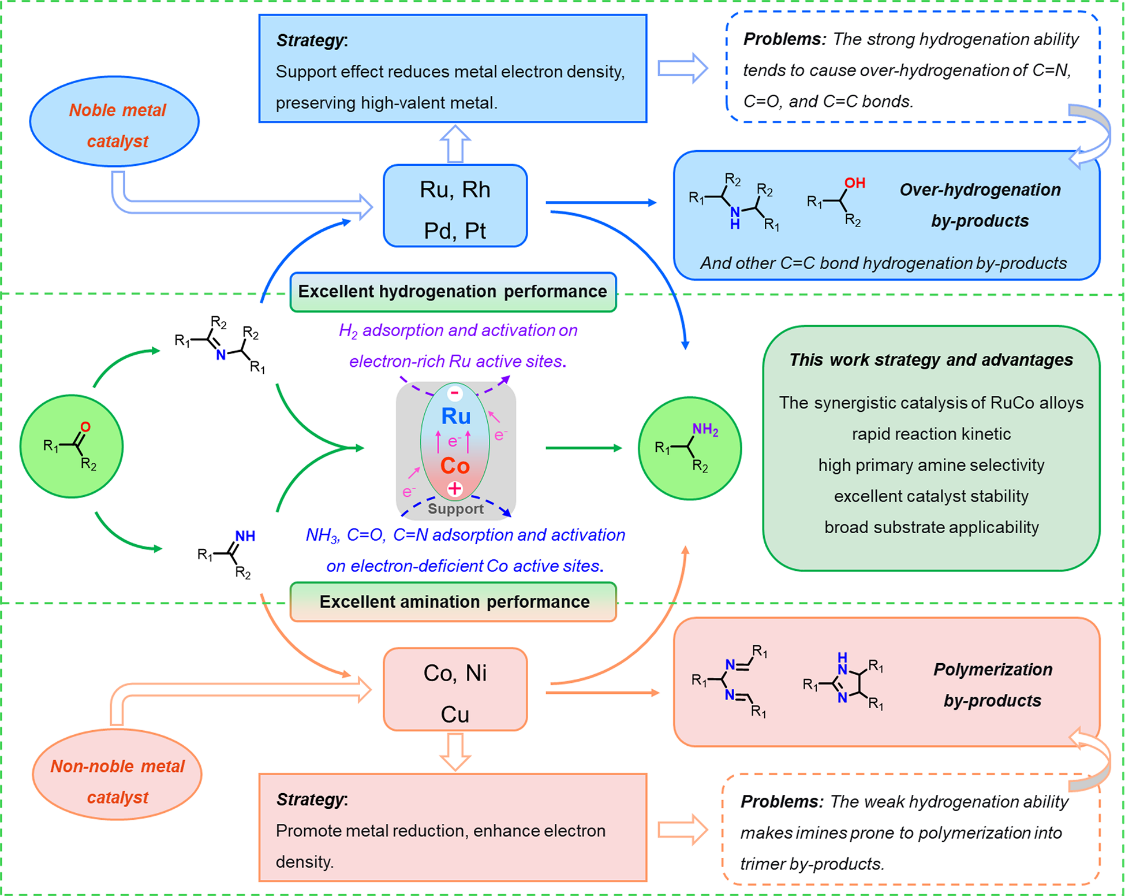
Scheme 1. Limitations and corresponding strategies for reported noble and non-noble metal catalysts for furfural reductive amination, along with the synergistic catalysis strategy of bimetallic RuCo catalysts of this work.
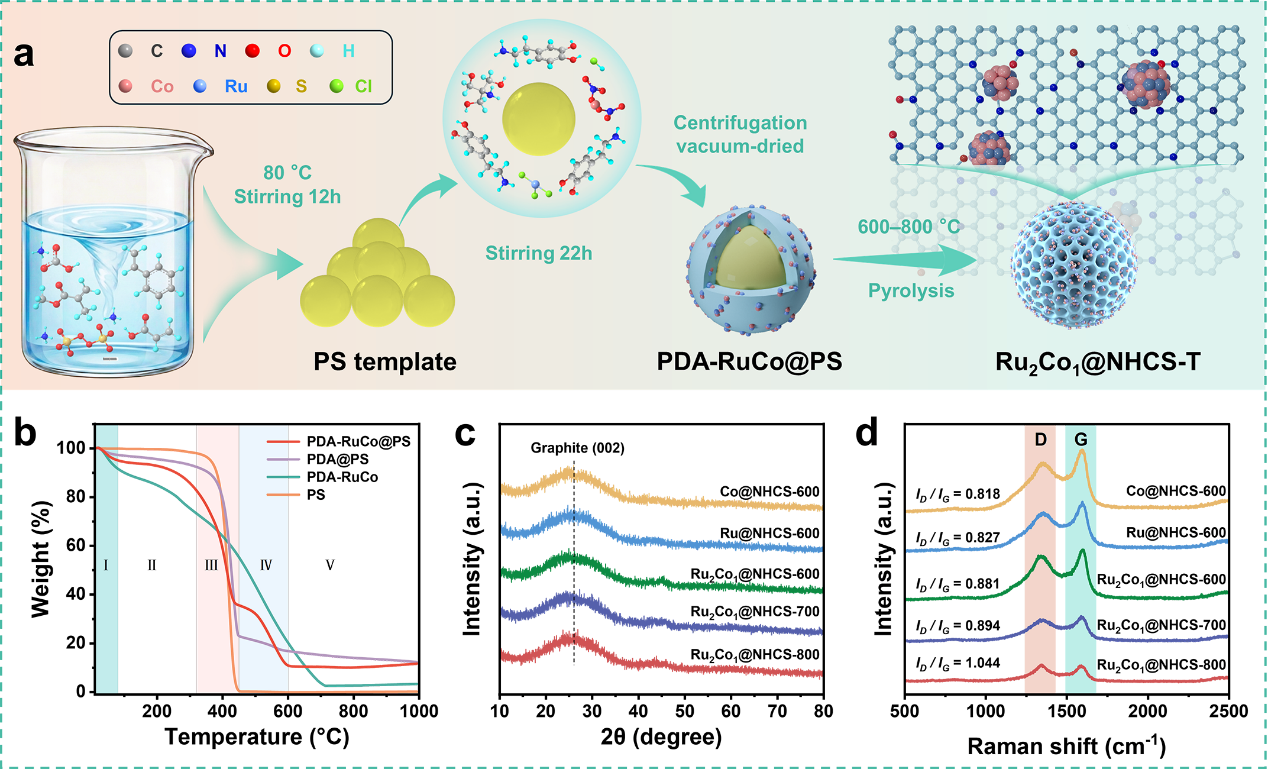
Fig. 1. (a) Schematic illustration for the synthesis pathways of Ru2Co1@NHCS-T catalysts. (b) TGA curves of various catalyst precursors. XRD patterns (c) and Raman spectra (d) of various catalysts.
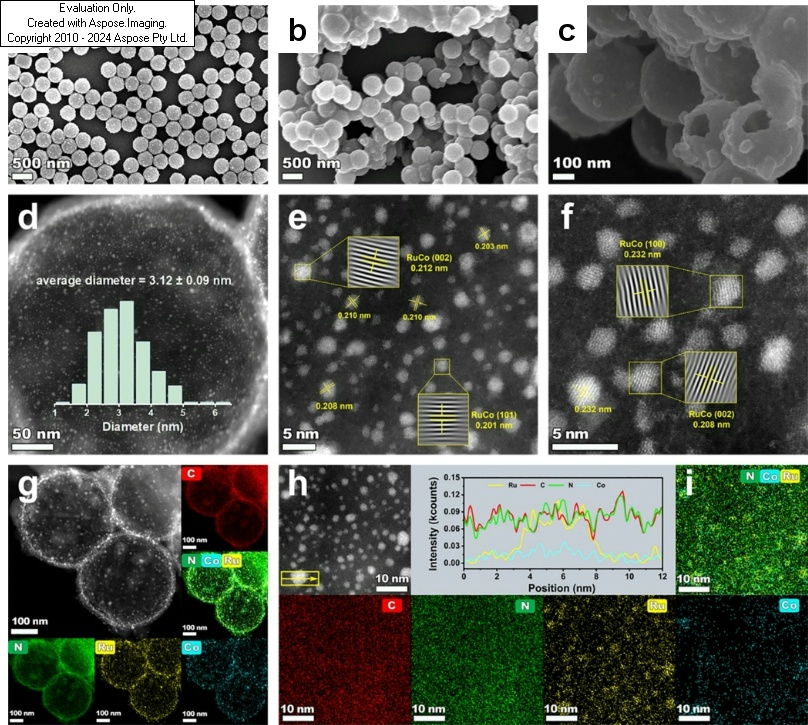
Fig. 2. Morphology and microstructure characterizations: SEM images of PS nanospheres (a), the PDA-RuCo@PS precursor (b) and Ru2Co1@NHCS-600 (c). (d-f) AC-HAADF-STEM images and the particle size distribution histograms of Ru2Co1@NHCS-600. AC-HAADF-STEM images of Ru2Co1@NHCS-600 and the corresponding elemental mappings of C, N, Ru, Co: elemental mappings at 100 nm scale (g), line scan across a RuCo alloy nanoparticle (h), and elemental mappings at 10 nm scale (i).
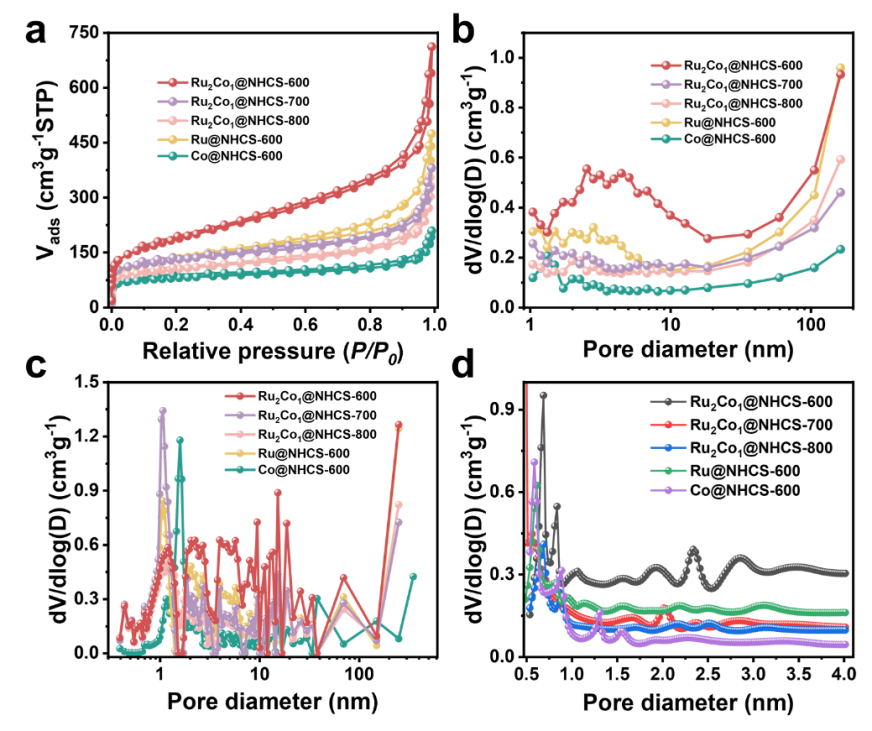
Fig. 3. N2 adsorption-desorption isotherms (a), the pore size distributions determined by the BJH method (b) and NLDFT/GCMC method (c) based on the adsorption isotherms of various catalysts. (d) H2-TPR profiles of the PDA-Co@PS, PDA-Ru@PS and PDA-Ru2Co1@PS precursors.
| Entry | Catalyst | Conversion (%) | Selectivity (%) | ||||
|---|---|---|---|---|---|---|---|
| FUA | FDA | FUI | FAL | Others | |||
| 1 | Blank | 62.6 | — | — | 28.8 | — | 71.2 |
| 2 | NHCS-600 | 74 | — | — | 23.2 | — | 76.8 |
| 3 | Ru2Co1@NHCS-600 | 100 | 98.1 | — | — | 1.9 | — |
| 4 | Ru@NHCS-600 | 100 | 53.2 | 40 | — | 1.6 | 5.2 |
| 5 | Co@NHCS-600 | 84 | — | 4.4 | 28.5 | — | 67.1 |
| 6 | Ru@NHCS-600 + Co@NHCS-600 | 100 | 69.1 | 28.5 | — | 2.4 | — |
| 7 | Ru1Co2@NHCS-600 | 95 | 2.6 | 72.8 | 24.6 | — | — |
| 8 | Ru1Co1@NHCS-600 | 100 | 83 | 14.6 | — | 2.4 | — |
| 9 | Ru2Cu1@NHCS-600 | 90 | 1.8 | 74.2 | 4.6 | 1.2 | 18.2 |
| 10 | Ru2Ni1@NHCS-600 | 100 | 83.5 | 6.6 | — | 1.5 | 8.4 |
| 11 | Ru2Co1@NHCS-700 | 100 | 76.4 | 21.4 | — | 2.2 | — |
| 12 | Ru2Co1@NHCS-800 | 96.4 | 4.8 | 86 | 7.5 | 0.8 | 0.9 |
| 13 | Ru2Co1@NC-600 | 87 | — | 84.6 | — | 11.5 | 3.9 |
| 14 | Ru2Co1@HCS-600 | 100 | 31.8 | 64.4 | — | 2.3 | 1.5 |
Table 1 Reductive amination of furfural with different catalysts.
| Entry | Catalyst | Conversion (%) | Selectivity (%) | ||||
|---|---|---|---|---|---|---|---|
| FUA | FDA | FUI | FAL | Others | |||
| 1 | Blank | 62.6 | — | — | 28.8 | — | 71.2 |
| 2 | NHCS-600 | 74 | — | — | 23.2 | — | 76.8 |
| 3 | Ru2Co1@NHCS-600 | 100 | 98.1 | — | — | 1.9 | — |
| 4 | Ru@NHCS-600 | 100 | 53.2 | 40 | — | 1.6 | 5.2 |
| 5 | Co@NHCS-600 | 84 | — | 4.4 | 28.5 | — | 67.1 |
| 6 | Ru@NHCS-600 + Co@NHCS-600 | 100 | 69.1 | 28.5 | — | 2.4 | — |
| 7 | Ru1Co2@NHCS-600 | 95 | 2.6 | 72.8 | 24.6 | — | — |
| 8 | Ru1Co1@NHCS-600 | 100 | 83 | 14.6 | — | 2.4 | — |
| 9 | Ru2Cu1@NHCS-600 | 90 | 1.8 | 74.2 | 4.6 | 1.2 | 18.2 |
| 10 | Ru2Ni1@NHCS-600 | 100 | 83.5 | 6.6 | — | 1.5 | 8.4 |
| 11 | Ru2Co1@NHCS-700 | 100 | 76.4 | 21.4 | — | 2.2 | — |
| 12 | Ru2Co1@NHCS-800 | 96.4 | 4.8 | 86 | 7.5 | 0.8 | 0.9 |
| 13 | Ru2Co1@NC-600 | 87 | — | 84.6 | — | 11.5 | 3.9 |
| 14 | Ru2Co1@HCS-600 | 100 | 31.8 | 64.4 | — | 2.3 | 1.5 |
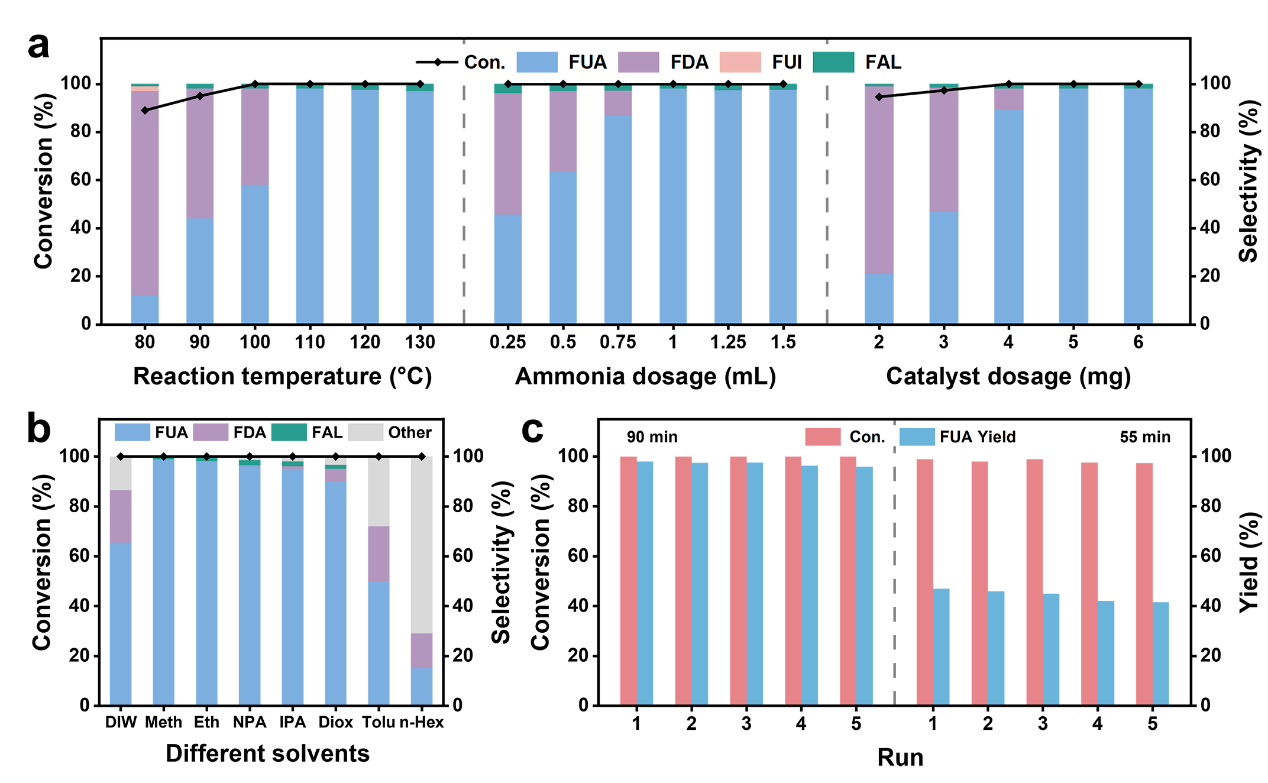
Fig. 4. Effects of reaction temperature, ammonia dosage, and catalyst dosage (a), and the different solvents (DIW: deionized water, Meth: methanol, Eth: ethanol, IPA: isopropanol, NPA: n-propanol, Diox: dioxane, Tolu: toluene, n-Hex: n-hexane) (b) on the reductive amination of furfural. (c) The stability tests of Ru2Co1@NHCS-600 catalyst at different reaction times, reaction conditions: furfural (0.5 mmol), catalyst (5 mg), ethanol (5.5 mL), NH3·H2O (1 mL, 25%-28%), H2 (0.1 MPa), 110 °C.
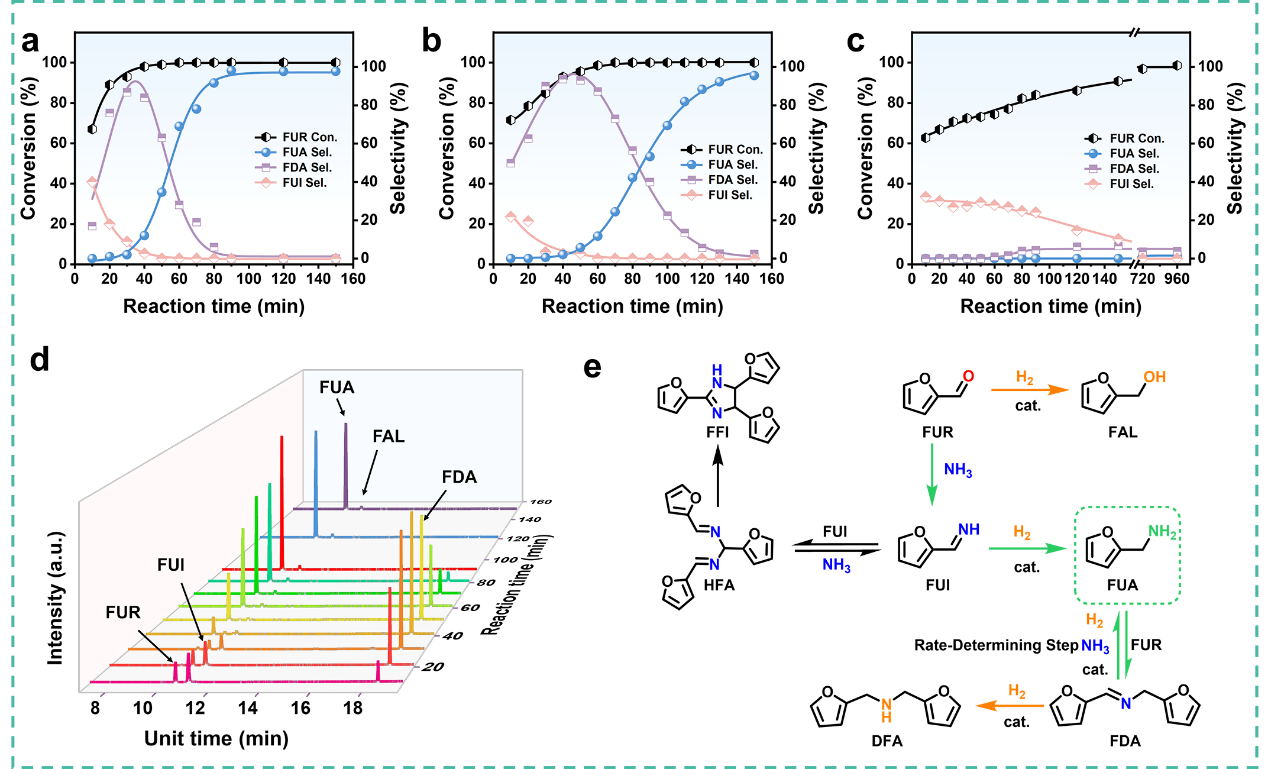
Fig. 5. Time courses for the reductive amination of furfural over Ru2Co1@NHCS-600 (a), Ru@NHCS-600 (b), and Co@NHCS-600 (c) catalysts. (d) GC profiles of the furfural reductive amination process at different reaction times over Ru2Co1@NHCS-600 catalyst. (e) The reaction networks for furfural reductive amination to furfurylamine and the possible byproducts. Reaction conditions: furfural (0.5 mmol), H2 (0.1 MPa), ethanol (5.5 mL), NH3·H2O (1 mL, 25%-28%), Ru2Co1@NHCS-600 (5 mg), 110 °C.
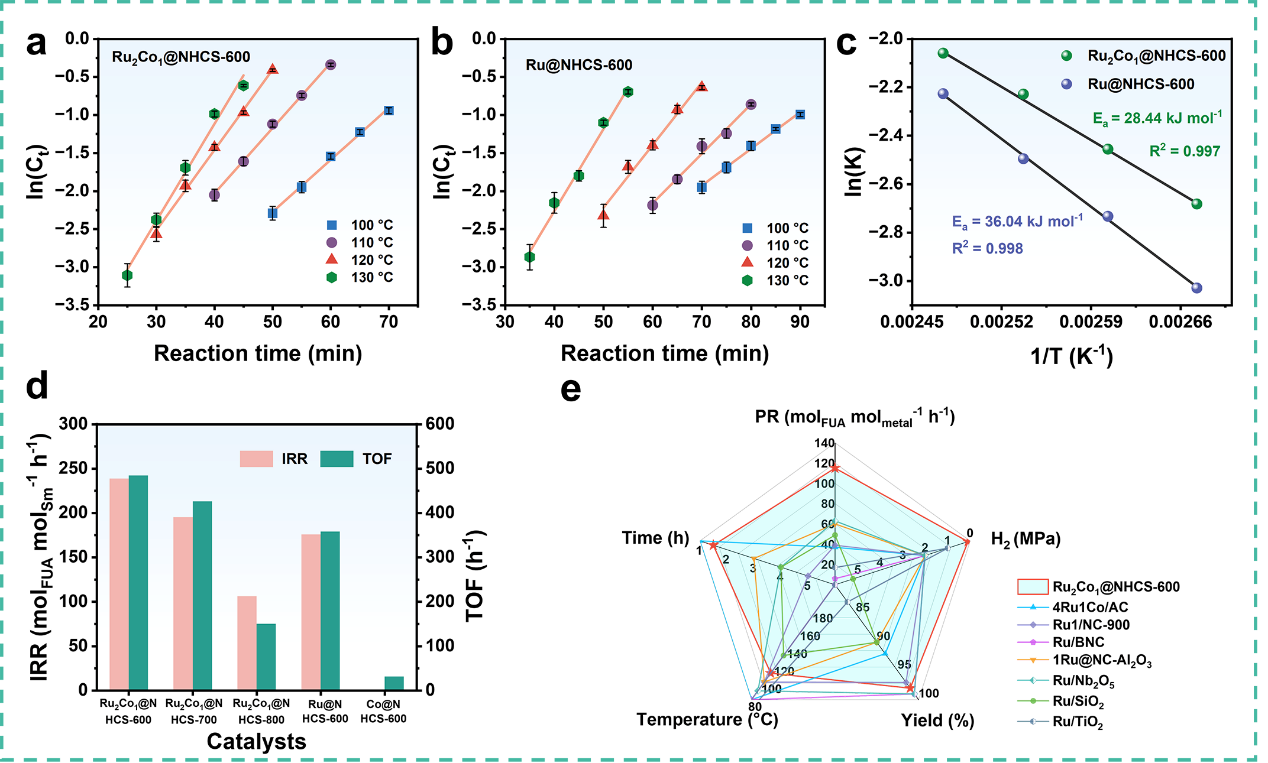
Fig. 6. The plots of the natural logarithm of furfurylamine concentration with respect to reaction time under 100-130 °C over Ru2Co1@NHCS-600 (a) and Ru@NHCS-600 (b) catalysts. (c) The corresponding Arrhenius plots for the reaction rate constants. Note: The results for each reaction were obtained from three repeated experiments. (d) The IRR and TOF over various catalysts. (e) Comparisons of conditions and performances with the previously reported catalysts [8,9,13,23,42,49,51]. Reaction conditions: furfural (0.5 mmol), H2 (0.1 MPa), ethanol (5.5 mL), NH3·H2O (1 mL, 25%-28%), catalyst (5 mg).
| Entry | Substrate | Tem. (°C) | Time (h) | H2 (MPa) | Con. (%) | Product | Yield (%) |
|---|---|---|---|---|---|---|---|
| 1 | | 110 | 1.5 | 0.1 | 100 | | 98.3 |
| 2 | | 110 | 1.5 | 0.1 | 100 | | 96.2 |
| 3 | | 110 | 4 | 0.1 | 100 | | 96.9 |
| 4 | | 90 | 2 | 0.1 | 96.6 | | 91.8 |
| 5 | | 90 | 2 | 0.1 | 100 | | 87.2 |
| 6 | | 110 | 4 | 0.3 | 100 | | 95.1 |
| 7 | | 110 | 4 | 0.5 | 100 | | 94.8 |
| 8 | | 110 | 6 | 0.5 | 100 | | 85.7 |
| 9 | | 110 | 6 | 0.3 | 100 | | 90.7 |
| 10 | | 110 | 5 | 0.1 | 98.9 | | 91.4 |
| 11 | | 130 | 8 | 1 | 94.4 | | 92.1 |
| 12 | | 130 | 12 | 0.5 | 98.5 | | 90.2 |
| 13b | | 130 | 18 | 0.5 | 93.9 | | 81.7 |
Table 2 Reductive amination of various aldehydes and ketones catalyzed by the Ru2Co1@NHCS-600 catalyst.
| Entry | Substrate | Tem. (°C) | Time (h) | H2 (MPa) | Con. (%) | Product | Yield (%) |
|---|---|---|---|---|---|---|---|
| 1 | | 110 | 1.5 | 0.1 | 100 | | 98.3 |
| 2 | | 110 | 1.5 | 0.1 | 100 | | 96.2 |
| 3 | | 110 | 4 | 0.1 | 100 | | 96.9 |
| 4 | | 90 | 2 | 0.1 | 96.6 | | 91.8 |
| 5 | | 90 | 2 | 0.1 | 100 | | 87.2 |
| 6 | | 110 | 4 | 0.3 | 100 | | 95.1 |
| 7 | | 110 | 4 | 0.5 | 100 | | 94.8 |
| 8 | | 110 | 6 | 0.5 | 100 | | 85.7 |
| 9 | | 110 | 6 | 0.3 | 100 | | 90.7 |
| 10 | | 110 | 5 | 0.1 | 98.9 | | 91.4 |
| 11 | | 130 | 8 | 1 | 94.4 | | 92.1 |
| 12 | | 130 | 12 | 0.5 | 98.5 | | 90.2 |
| 13b | | 130 | 18 | 0.5 | 93.9 | | 81.7 |
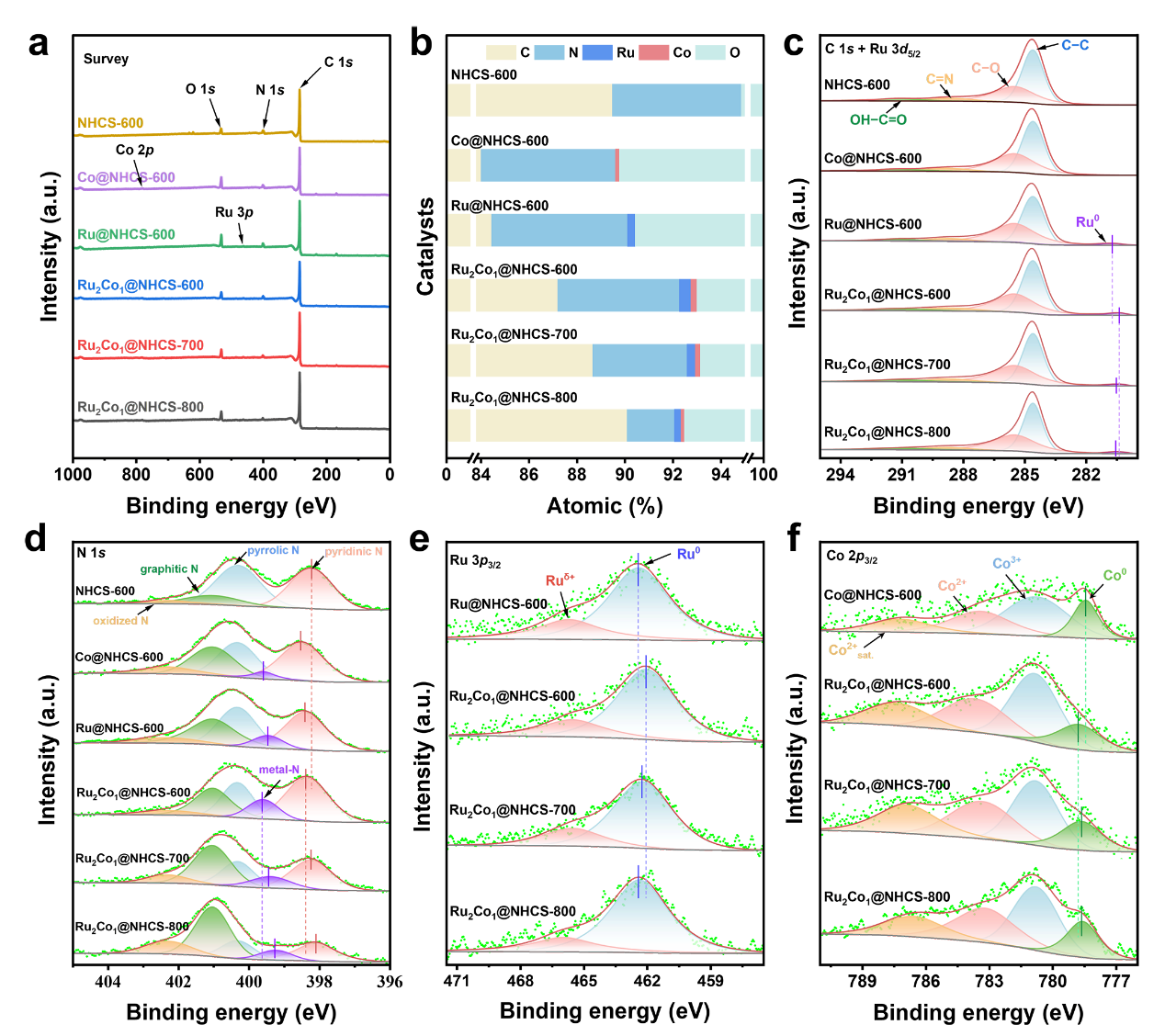
Fig. 7. The XPS spectra of survey scan (a), relative contents of C, N, O, Ru and Co elements (b), and the high-resolution C 1s and Ru 3d (c), N 1s (d), Ru 3p (e), and Co 2p (f) for various monometallic and bimetallic catalysts.
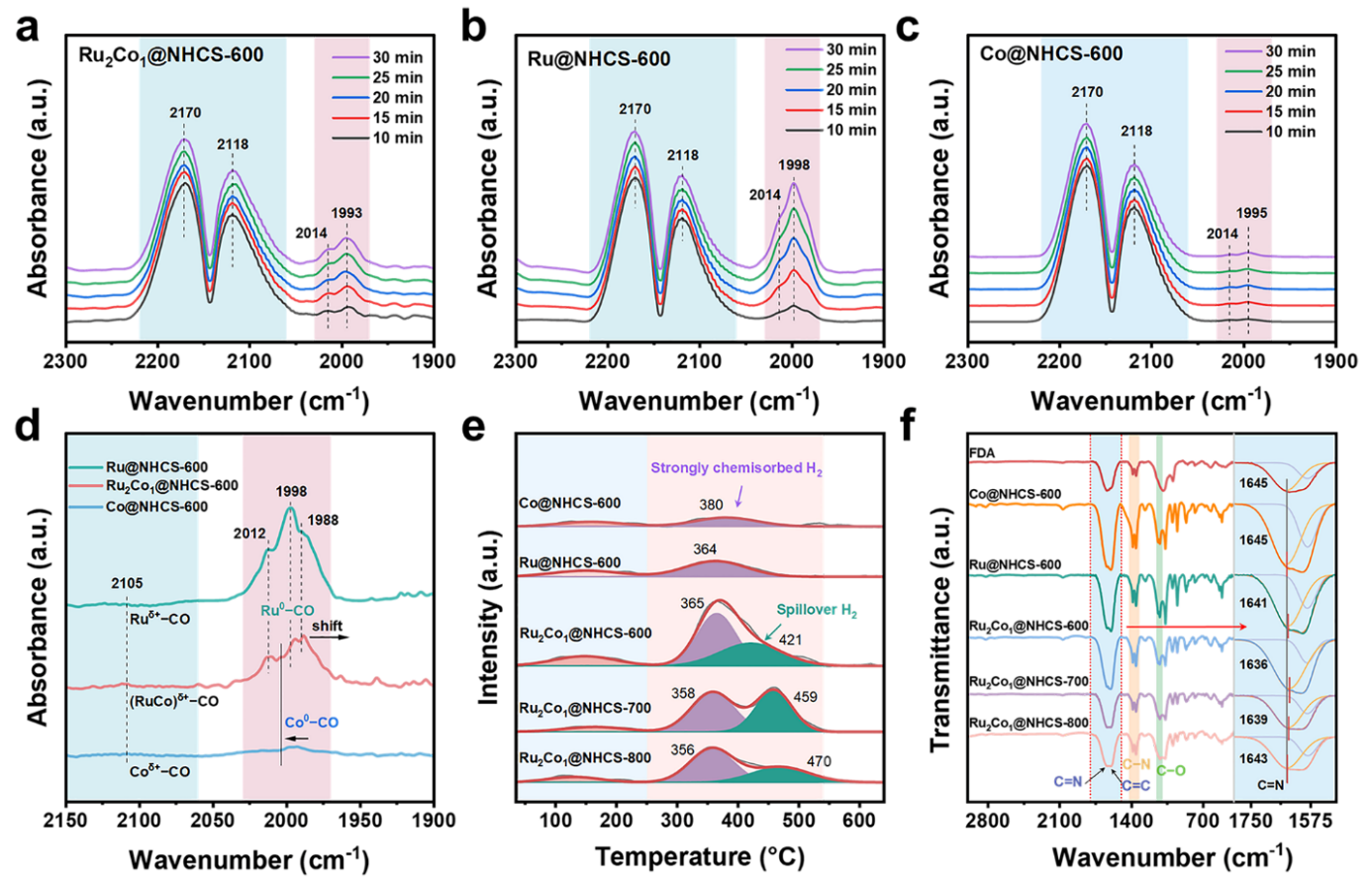
Fig. 8. In-situ CO-DRIFTS spectra of the Ru2Co1@NHCS-600 (a), Ru@NHCS-600 (b), Co@NHCS-600 (c), and the corresponding DRIFTS spectra (d) after outgassed CO by Ar. (e) H2-TPD profiles of various monometallic and bimetallic catalysts. (f) FTIR spectra of various catalysts after adsorption of Schiff base.
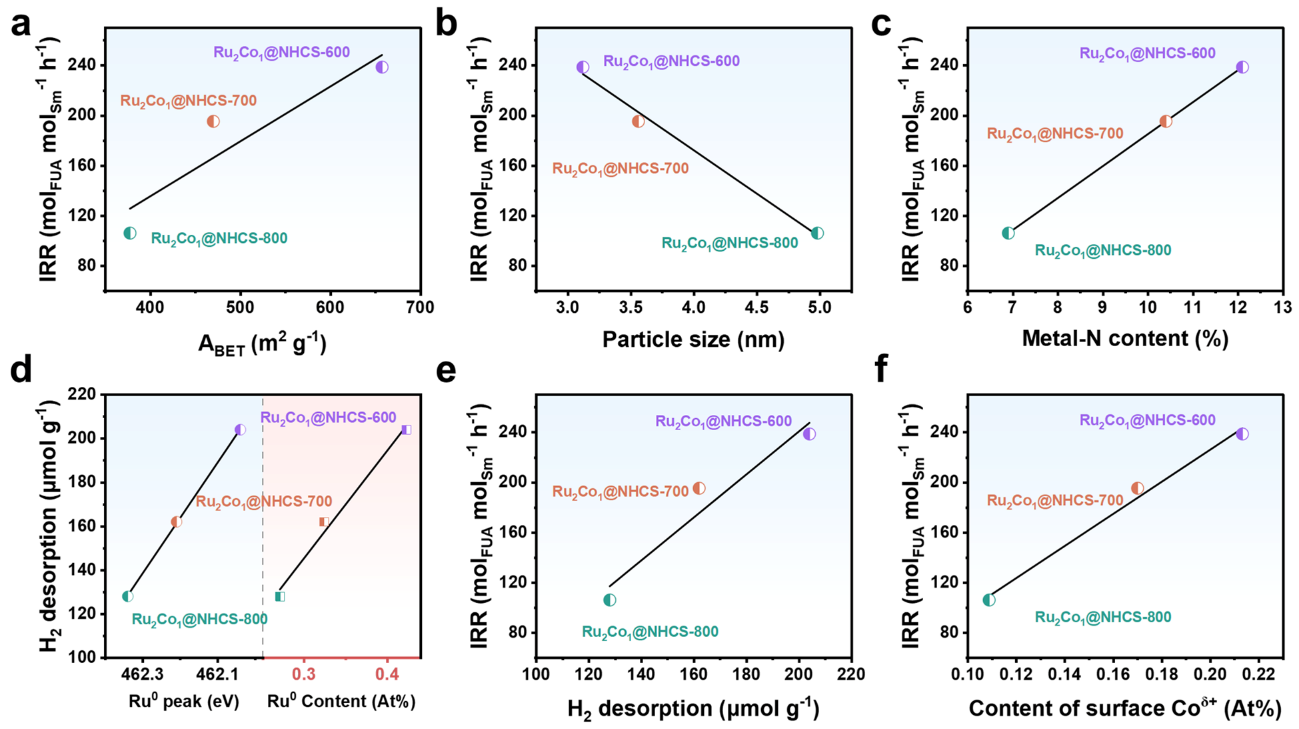
Fig. 9. Structure-performance relationship of the various Ru2Co1@NHCS catalysts: The correlations between the IRR and the specific surface area (BET) (a), and the average particle size (b) of RuCo alloys determined by TEM images, and the content of surface metal-N species determined by XPS (c). The correlations between H2 desorption and the binding energy of Ru0 3p3/2 peak and the content of surface Ru0 species (d), and the correlations between IRR and H2 desorption (e), and the content of surface Coδ+ species (f).
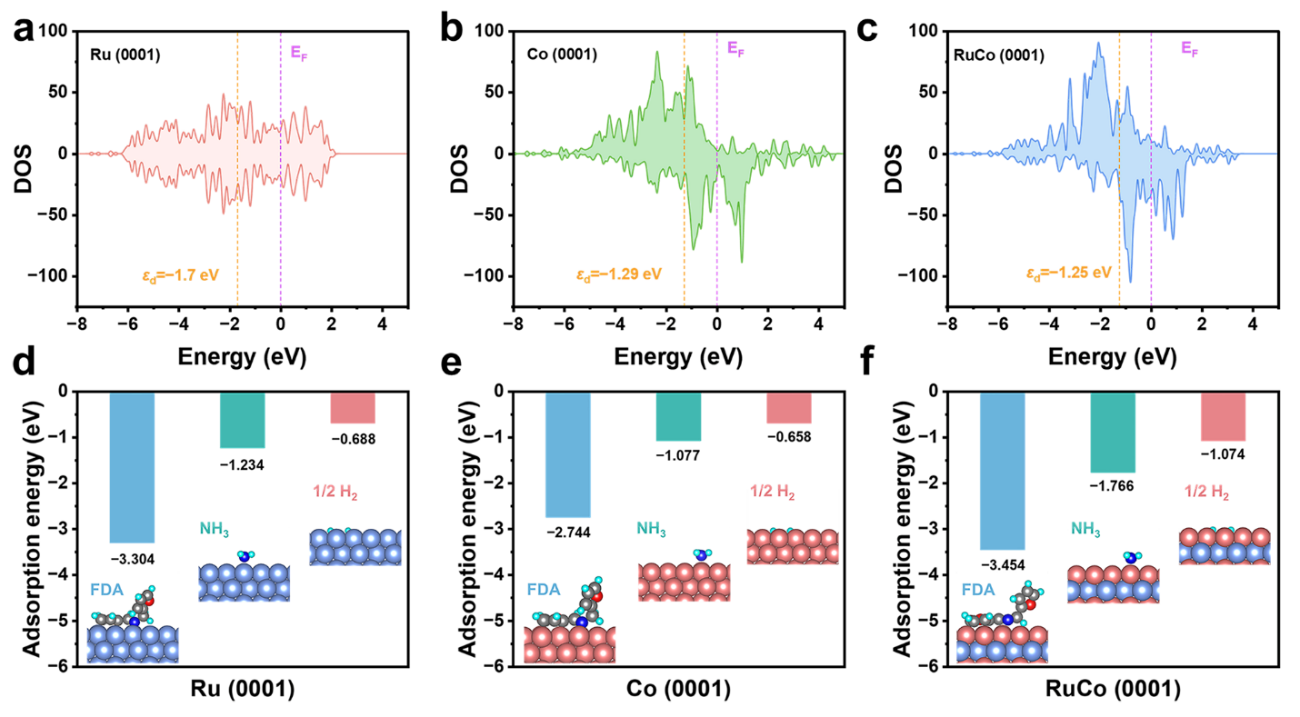
Fig. 10. Spin-resolved DOS for the Ru(0001) (a), Co(0001) (b), and RuCo(0001) (c) models. The positive and negative values represent the upper and lower spin states, respectively, the energy scale is referenced to the Fermi level (EF = 0). Adsorption energies and stable adsorption configurations for the Schiff base, NH3 and H2 on Ru(0001) (d), Co(0001) (e) and RuCo(0001) (f) surfaces. Color code: C, gray; N, dark blue; H, cyan; O, red; Co, pale red; Ru, pale blue.
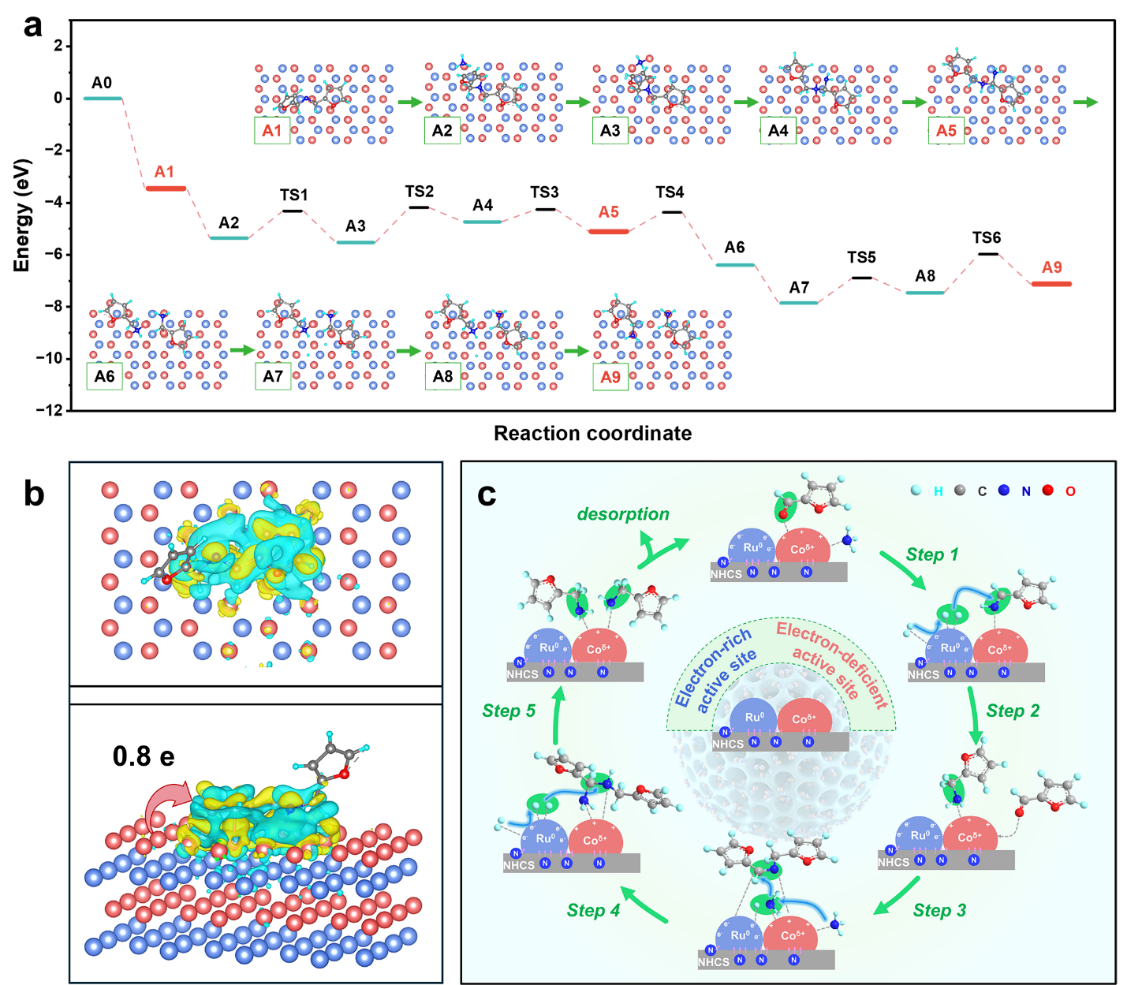
Fig. 11. (a) Schematic molecular models of the Schiff base ammonolysis reaction mechanism on RuCo(0001). A0: side view of metal sites on the RuCo(0001) surface; A1: adsorption of the Schiff base; A2, adsorption of NH3; TS1, NH3 dissociation into NH2* and H*; A3, co-adsorbed NH2* and H*; TS2, configurational rearrangements of adsorbed NH2* and Schiff base leading to nucleophilic attack of NH2* on the C=N bond; A4, NH2* bonds to the C atom of C=N group; TS3, approach of H* to the N atom of C=N bond; A5, bonding of H* to the N atom; TS4, further weakening of the formed C-N bond in the Schiff base intermediate; A6, stable adsorption of the Schiff‑base‑derived amination intermediate; A7, adsorption of two H* resulting from dissociation of H2 molecules; TS5, approach of an H* to the C atom of C=N bond; A8, bonding of H* to the C atom; TS6, approach of the second H* to the N atom; A9, bonding of the second H* to the N atom, yielding two molecules of furfurylamine. Color code: C, gray; N, dark blue; H, cyan; O, red; Co, pale red; Ru, pale blue. (*) denotes active species. (b) Isosurface plots of the charge-density difference for a Schiff base adsorbed on RuCo(0001): top view (upper) and side view (lower), the amount of electron transfer is given by Bader charge analysis. (c) Schematic illustration of the synergistic catalysis mechanism for the reductive amination of furfural to furfurylamine over the bimetallic RuCo catalyst.
|
| [1] | Han Xiang, Lu Lin, Yu Li, Qisong Yi, Chaoran Jiang, Rui Chen, Yuanshuai Liu, Na Sai, Jinlu He, Fenghua Bai, Wenhao Luo. Silicalite-1 encapsulated Cu nanoclusters with La modification for enhanced performance in hydrogenation of furfural to furfuryl alcohol [J]. Chinese Journal of Catalysis, 2026, 88(9): 382-392. |
| [2] | Jiaxiang Qin, Songpei Zhang, Xingju Li, Xintai Chen, Jia Zhao, Xiaoling Mou, Xiangen Song, Li Yan, Ronghe Lin, Yunjie Ding. Decoding structure-selectivity interplay in Pd-Ag nanocatalysts for butadiene semi-hydrogenation [J]. Chinese Journal of Catalysis, 2026, 87(8): 342-352. |
| [3] | Chenyu Bu, Zhuoran Lu, Zhongcheng Xia, Yun Fan, Cairong Wang, Yutong Huang, Shuangyin Wang, Yuqin Zou. Interfacial two-site synergy for biomass electro-oxidation in a near-neutral electrolyte [J]. Chinese Journal of Catalysis, 2026, 86(7): 160-170. |
| [4] | Haodong Xie, Yumeng Fo, Hongwei Zhang, Hua Xu, Xiao Zhang, Yingshuo Guo, Runze Li, Ruolin Zhang, Guilin Liu, Xicheng Jia, Jiazhou Li, Yuming Zhang, Meizan Jing, Weiyu Song, Wenhao Luo, Zhijie Wu. PtIn nanoalloy supported on Sn-MFI for efficient selective oxidation of glycerol to lactic acid [J]. Chinese Journal of Catalysis, 2026, 86(7): 99-111. |
| [5] | Mingyu Ma, Zongyang Liu, Kuo Yuan, Zheyuan Liu, Jiaxin Wang, Qingqing Lin, Di-Chang Zhong, Tong-Bu Lu. Self-photosensitizing metal complexes for photocatalytic hydrogen evolution [J]. Chinese Journal of Catalysis, 2026, 86(7): 375-383. |
| [6] | Xu Yu, Han Tian, Ziyi Yu, Fantao Kong, Min Wang, Ruxiang Shen, Xiangzhi Cui, Jianlin Shi. WO2.72-modulated Ru cluster boosting dual-site adsorption for efficient and CO-resistant anion exchange membrane fuel cells [J]. Chinese Journal of Catalysis, 2026, 86(7): 302-314. |
| [7] | Xin Liu, Yezhou Yang, Jingru Yang, Maodi Wang, Qihua Yang. Promotion effect of Fe in the selective hydrogenation of furfural with bimetallic NiFe catalysts [J]. Chinese Journal of Catalysis, 2026, 83(4): 411-418. |
| [8] | Bei Han, Chen Jin, Cuihong Luo, Yuntao Liu, Zhichao Dai, Yunqiang Sun, Zibao Gan, Chong-Chen Wang, Xiuwen Zheng, Zunfu Hu. FeNi nanoparticles cooperate with single-atom sites to drive non-radical fenton-like catalysis: Dominant singlet oxygen and electron transfer pathways for efficient wastewater purification [J]. Chinese Journal of Catalysis, 2026, 82(3): 187-200. |
| [9] | Peng Huang, Zhijun Xie, Yong Guo, Jun Wang, Ji-Jun Zou, Qiang Deng. Ruthenium-tungsten alloy nanoparticles accelerate the cascade hydrogenation-ring opening of furfurals to linear ketones [J]. Chinese Journal of Catalysis, 2026, 82(3): 337-347. |
| [10] | Yan-Cui Wen, Fei Zeng, Yu-Yu Tan, Rong-Nan Yi, Jun Jiang, Zhi-Lin Wu, Jun-Mei Peng, Yu-Cai Tang, Wei-Min He. Decarbonylative arylation/alkylation of heteroarenes with aldehydes via triplet synergistic catalysis [J]. Chinese Journal of Catalysis, 2026, 89(10): 422-429. |
| [11] | Jian-Peng Wang, Guang-Hui Lu, Qian Wu, Jian-Rong Dai, Ning Li. Toward scalable production of biobased N-substituted furfurylamines by engineered imine reductases [J]. Chinese Journal of Catalysis, 2025, 76(9): 210-220. |
| [12] | Zhou Zhitong, Guan Weixiang, Pan Xiaoli, Zhang Shengxin, Su Yang, Wang Aiqin, Zhang Tao. Ru-Co single-atom alloy catalysts for efficient amination of alcohols: A synergistic effect [J]. Chinese Journal of Catalysis, 2025, 75(8): 49-58. |
| [13] | Lin Xu, Li Danyang, Huang Shiqing, Sun Panpan, Huang Yan, Wang Shitao, Zheng Lirong, Cao Dapeng. Se-doping strategy regulating mass transfer and electronic structure of Fe-N-C electrocatalysts for proton exchange membrane fuel cells [J]. Chinese Journal of Catalysis, 2025, 75(8): 73-83. |
| [14] | Wanying Liang, Guangyue Xu, Yao Fu. Accurate restricted transition-state shape selective hydrogenation of furfural over zeolite confined Cu catalyst [J]. Chinese Journal of Catalysis, 2025, 74(7): 71-81. |
| [15] | Fenli Liu, Man Yang, Jianglin Duan, Zhiyu Yin, Mingyang Shi, Fuqing Chen, Huifeng Xiong, Xin Liu, Wengang Liu, Qixing Xia, Shaodong Sun, Dan Feng, Haifeng Qi, Yong Qin, Yujing Ren. Peripheral NV-induced electron transfer to Fe1 single atoms for highly efficient O2 activation [J]. Chinese Journal of Catalysis, 2025, 72(5): 187-198. |
| Viewed | ||||||
|
Full text |
|
|||||
|
Abstract |
|
|||||


