
Chinese Journal of Catalysis ›› 2027, Vol. 92: 274-284.DOI: 10.1016/S1872-2067(26)65278-3
• Articles • Previous Articles Next Articles
Zheng Menga, Chenbin Aia, Jianjun Zhanga, Bowen Hea, Liuyang Zhanga,*( ), Zhen Wub,*(), Serguei Filatovc, Dmitry Selishchevd,*(), Jahan B. Ghasemie,*(), Jiaguo Yua,*()
Received:2026-05-09
Accepted:2026-06-25
Online:2027-01-02
Published:2026-10-30
Contact:
*E-mail: zhangliuyang@cug.edu.cn (L. Zhang),Supported by:Zheng Meng, Chenbin Ai, Jianjun Zhang, Bowen He, Liuyang Zhang, Zhen Wu, Serguei Filatov, Dmitry Selishchev, Jahan B. Ghasemi, Jiaguo Yu. Regulating carrier dynamics in CdS via controlled sulfur vacancy engineering: Insights from femtosecond transient absorption spectroscopy[J]. Chinese Journal of Catalysis, 2027, 92: 274-284.
Add to citation manager EndNote|Ris|BibTeX
URL: https://www.cjcatal.com/EN/10.1016/S1872-2067(26)65278-3
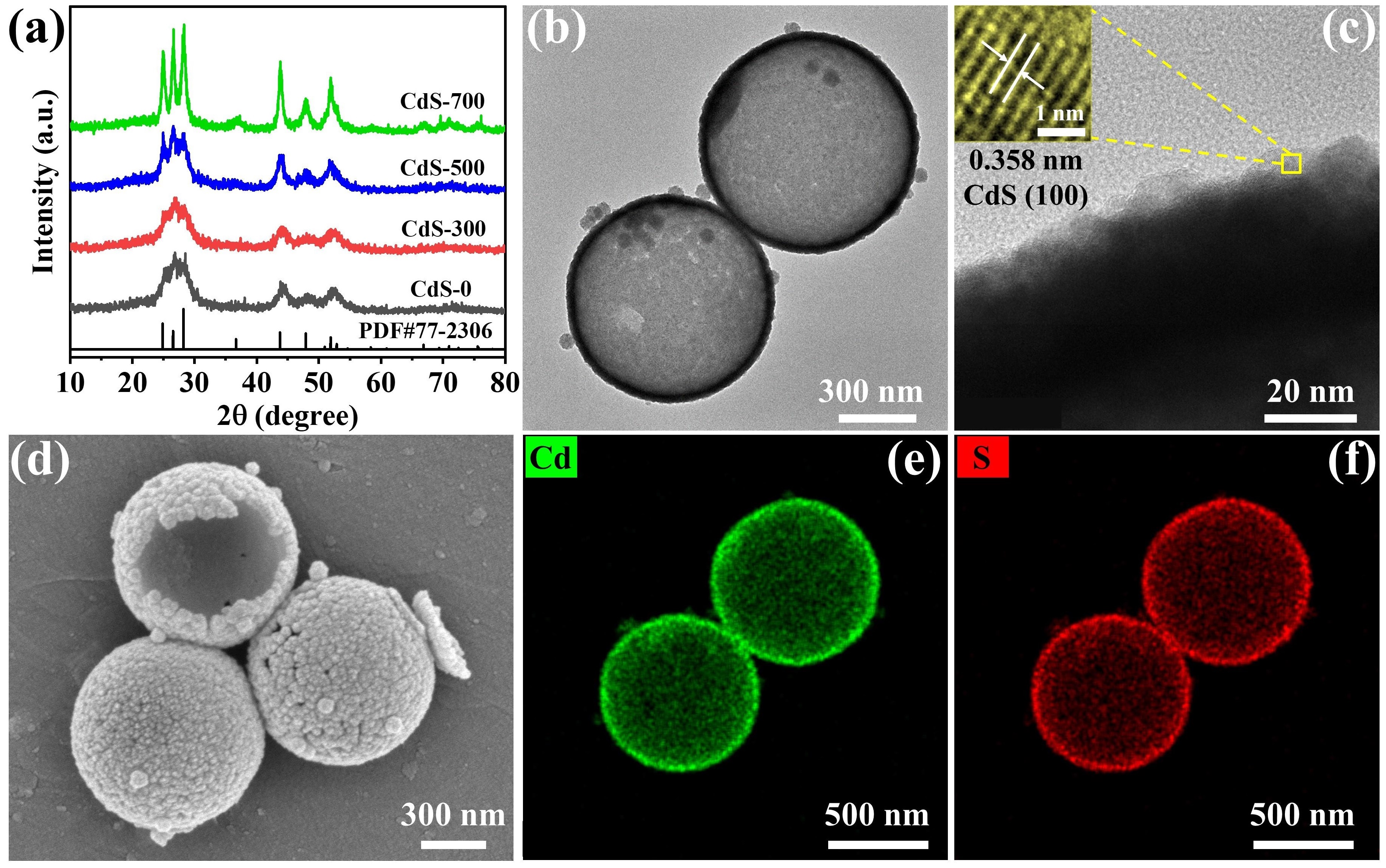
Fig. 1. (a) XRD patterns of CdS-0, CdS-300, CdS-500, and CdS-700. TEM image (b) and HRTEM image (c) of CdS-300. (d) FESEM image of CdS-300. EDS elemental mapping of Cd (e) and S (f) in CdS-300.
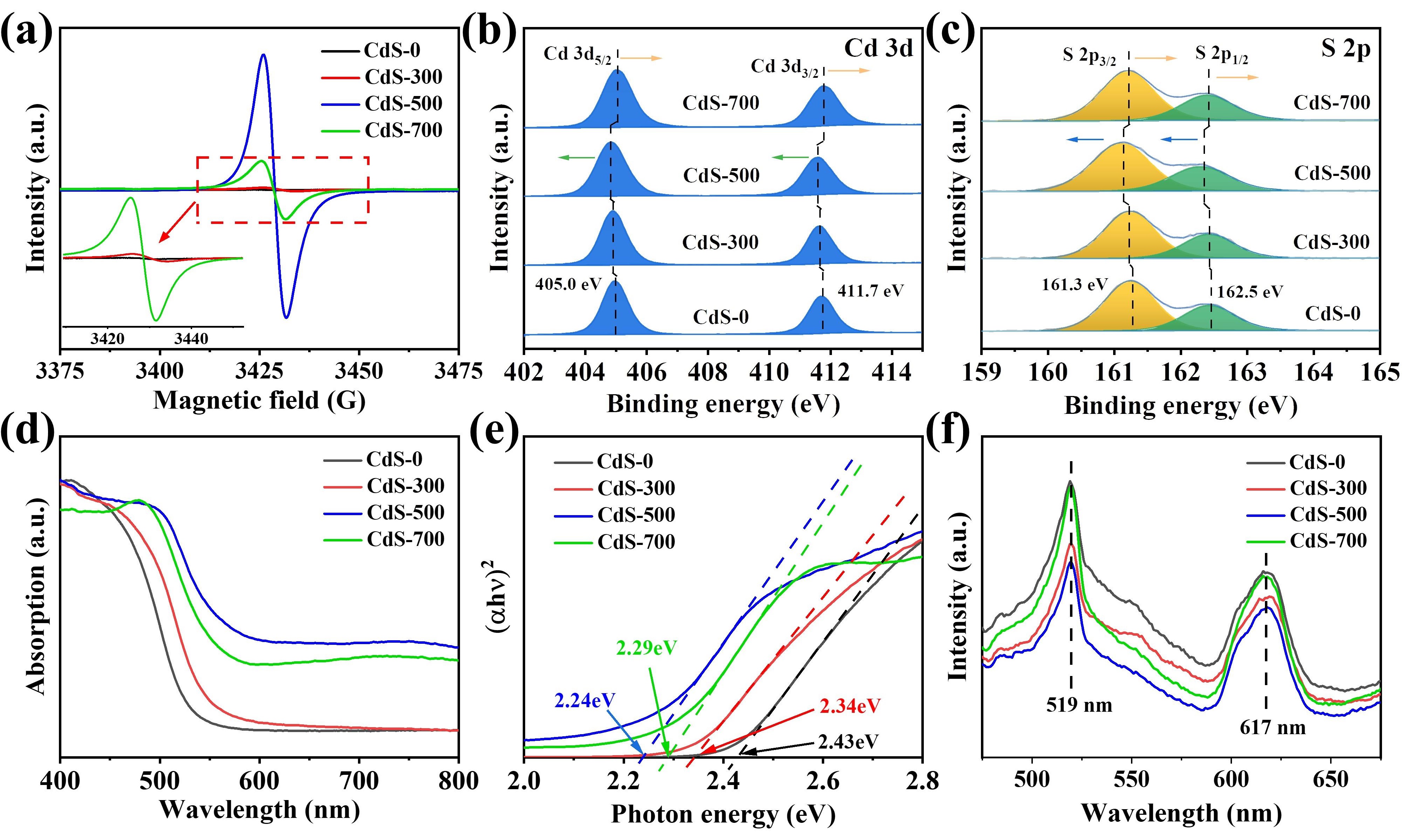
Fig. 2. EPR spectra (a), high-resolution Cd 3d XPS spectra (b), high-resolution S 2p XPS spectra (c), UV-vis diffuse reflectance spectra (d), Kubelka-Munk function transformed band gap plots (e), and PL spectra (f) of CdS-0, CdS-300, CdS-500, and CdS-700.
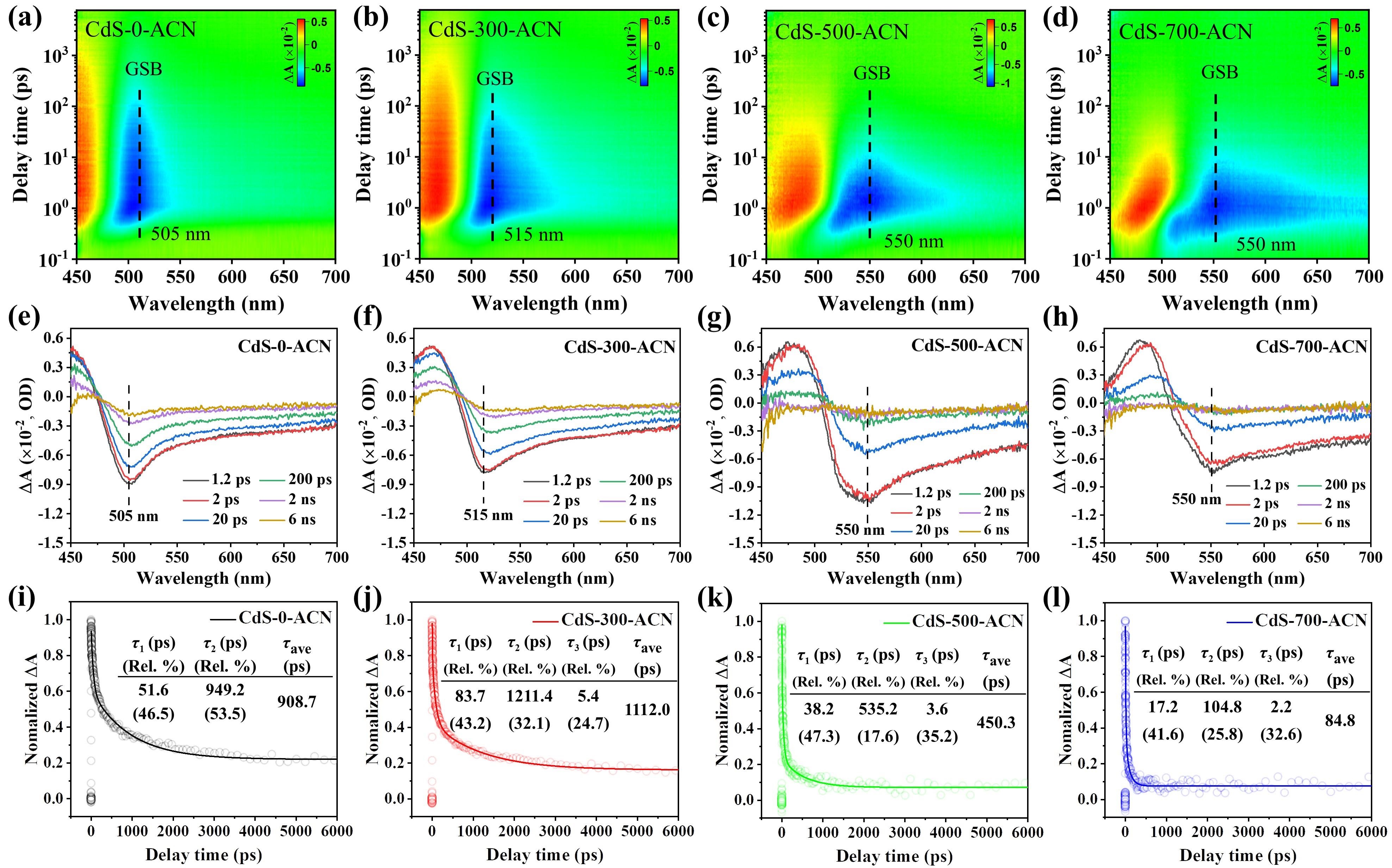
Fig. 3. fs-TA pseudo-color plots of CdS-0 (a), CdS-300 (b), CdS-500 (c), and CdS-700 (d) in acetonitrile. Corresponding spectral profiles of CdS-0 (e), CdS-300 (f), CdS-500 (g), and CdS-700 (h). Normalized GSB decay kinetic fitting curves of CdS-0 (i), CdS-300 (j), CdS-500 (k), and CdS-700 (l).
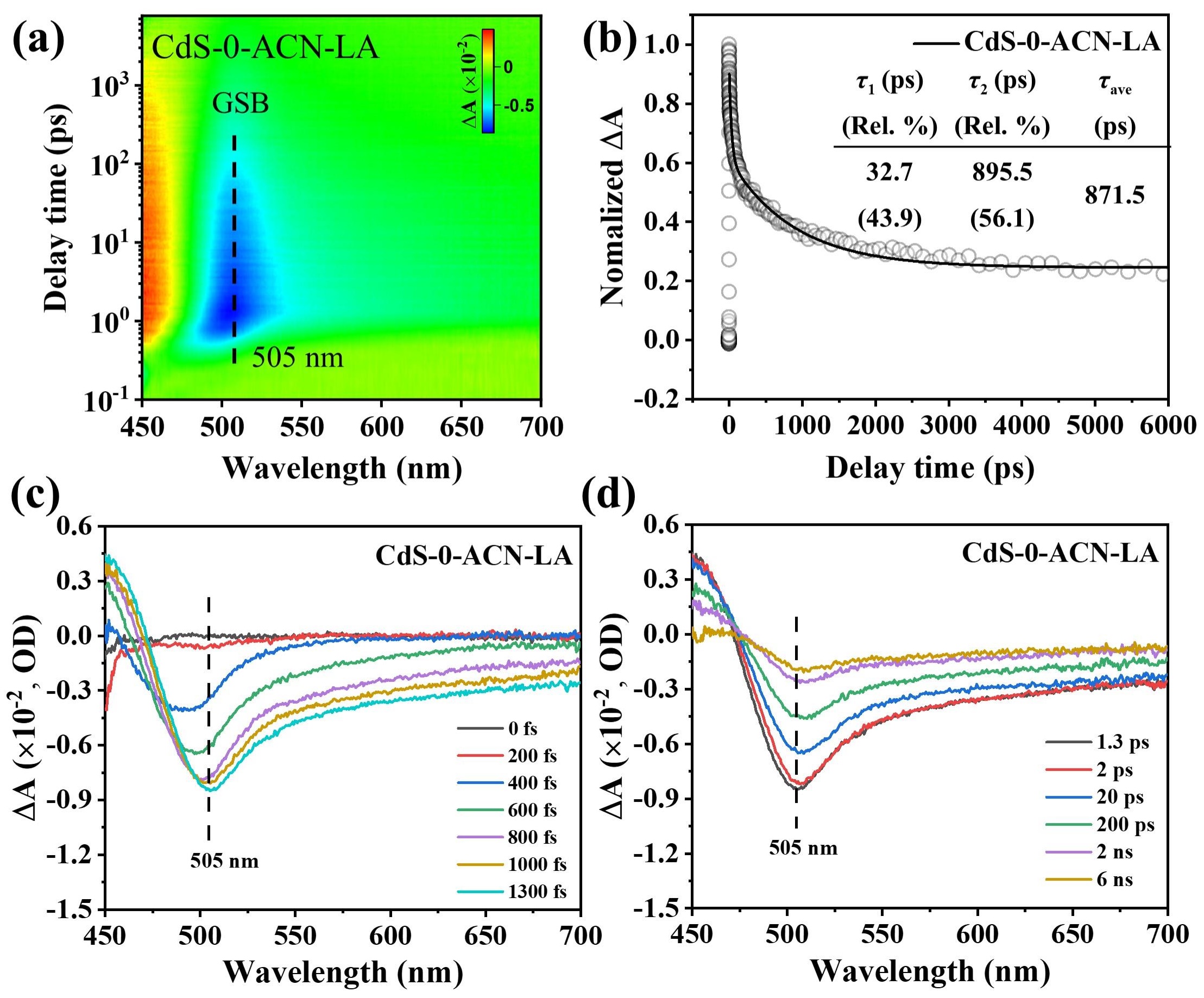
Fig. 4. (a) Pseudocolor fs-TA plots of CdS-0 with LA in acetonitrile (denoted as CdS-0-ACN-LA). (b) Normalized kinetic decay curve of CdS-0-ACN-LA. Excitation (c) and decay spectra (d) of CdS-0-ACN-LA.
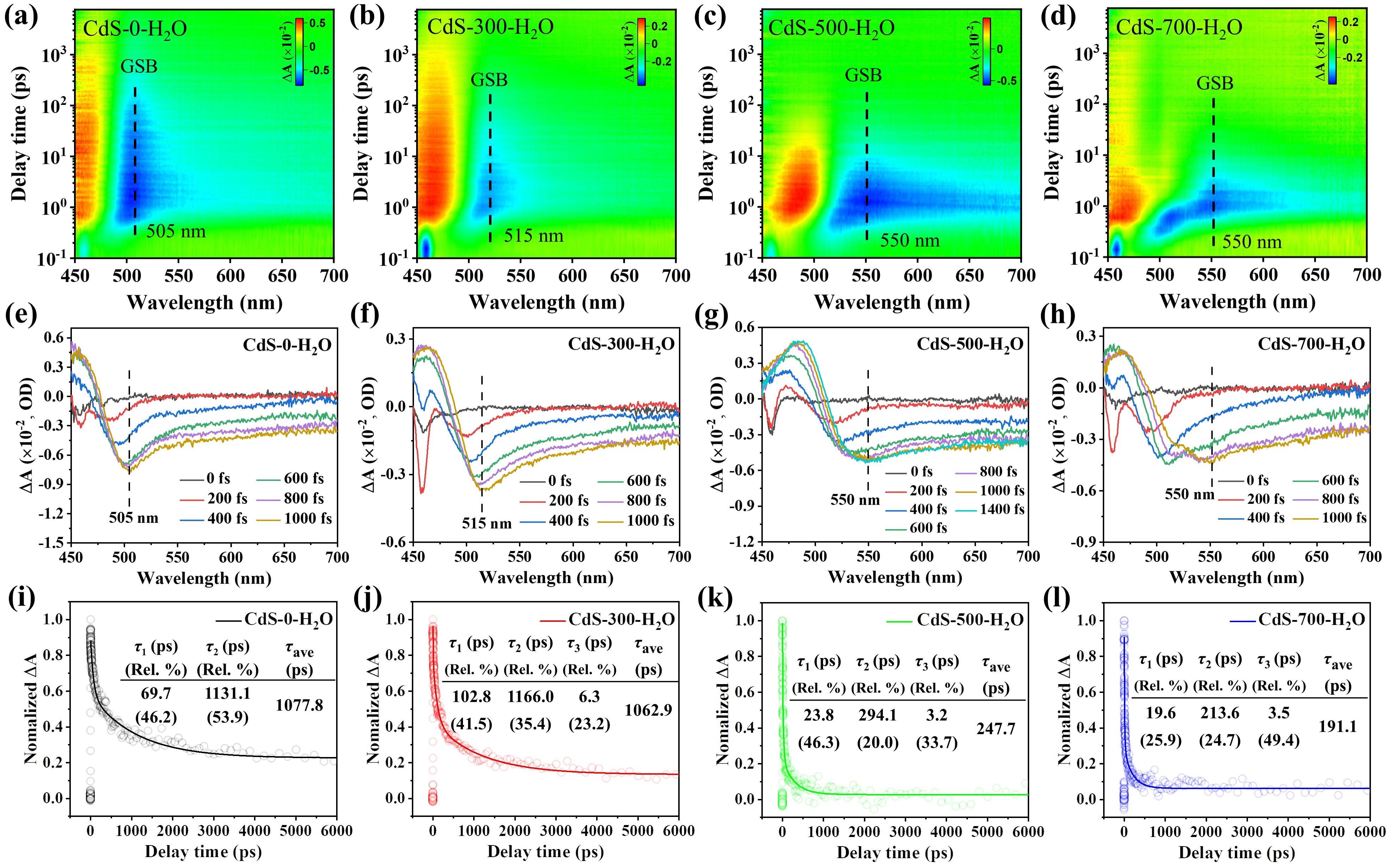
Fig. 5. fs-TA pseudo-color plots of CdS-0 (a), CdS-300 (b), CdS-500 (c), and CdS-700 (d) in water. Corresponding spectral profiles of CdS-0 (e), CdS-300 (f), CdS-500 (g), and CdS-700 (h) in water. Normalized GSB decay kinetic fitting curves of CdS-0 (i), CdS-300 (j), CdS-500 (k), and CdS-700 (l) in water.
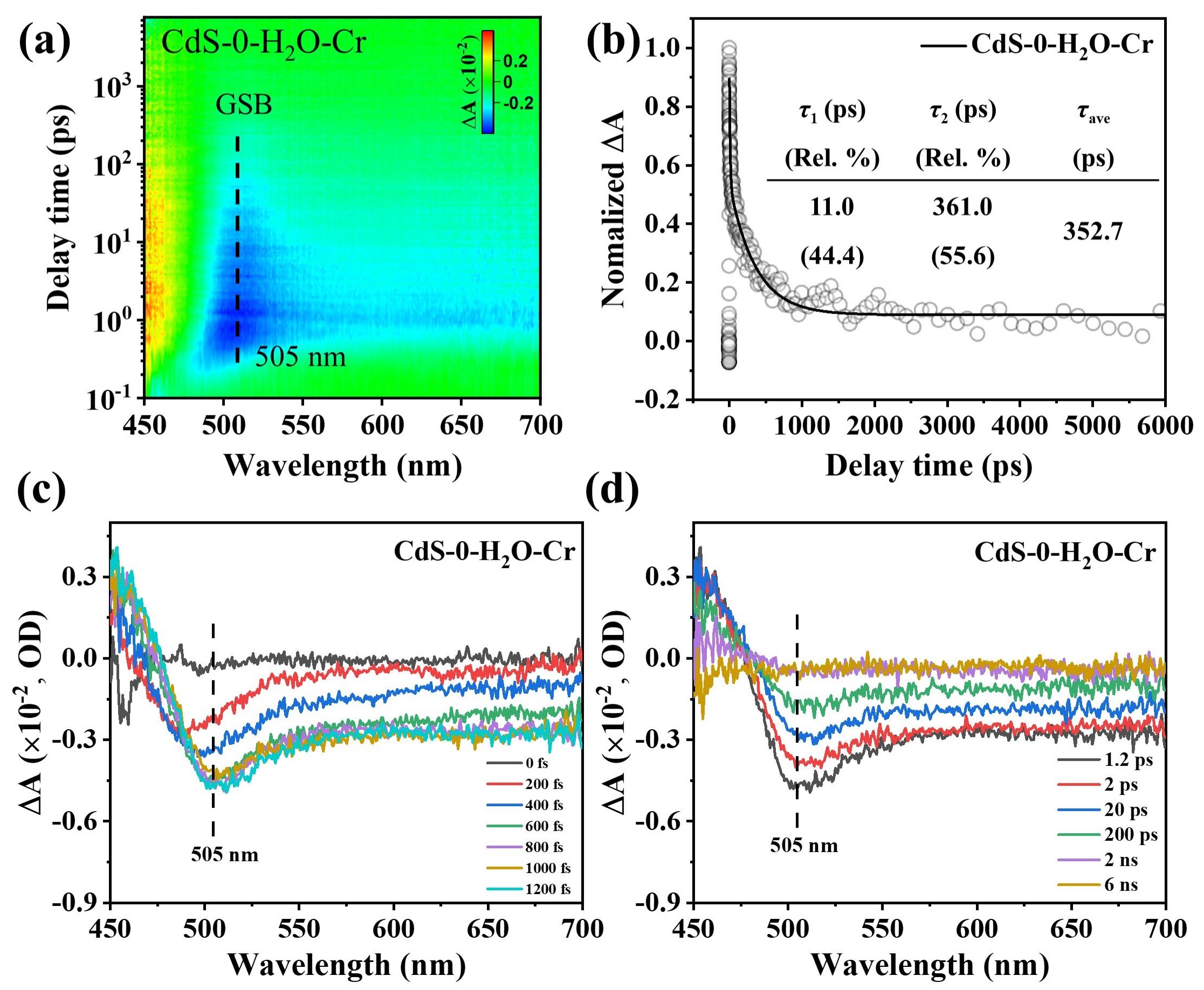
Fig. 6. (a) Pseudocolor fs-TA plots of CdS-0 with K2Cr2O7 in water (denoted as CdS-0-H2O-Cr). (b) Normalized kinetic decay curve of CdS-0-H2O-Cr. Excitation (c) and decay (d) spectra of CdS-0-H2O-Cr.
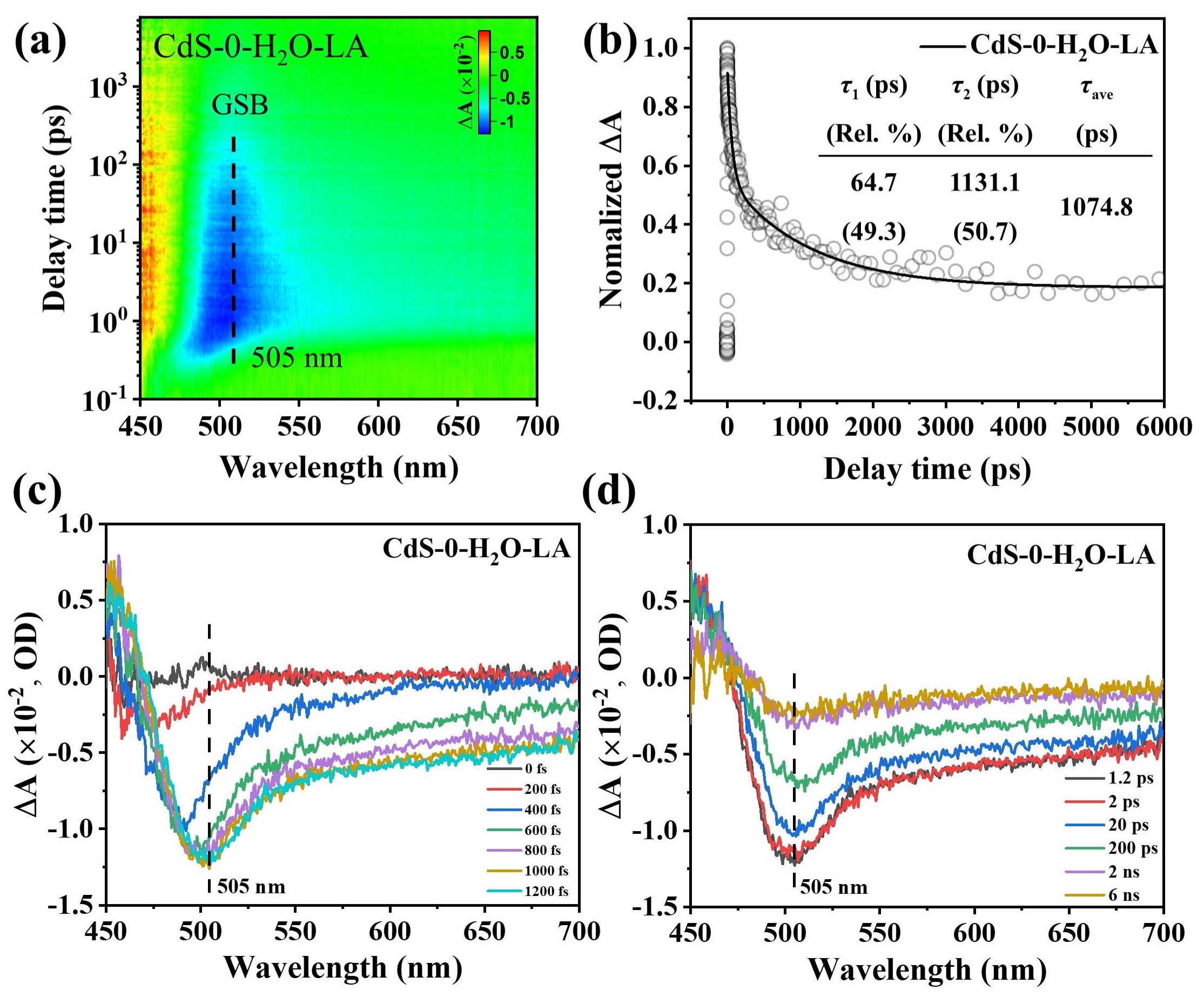
Fig. 7. (a) Pseudocolor fs-TA plots of CdS-0 with lactic acid in water (denoted as CdS-0-H2O-LA). (b) Normalized kinetic decay curve of CdS-0-H2O-LA. Excitation (c) and decay (d) spectra of CdS-0-H2O-LA.
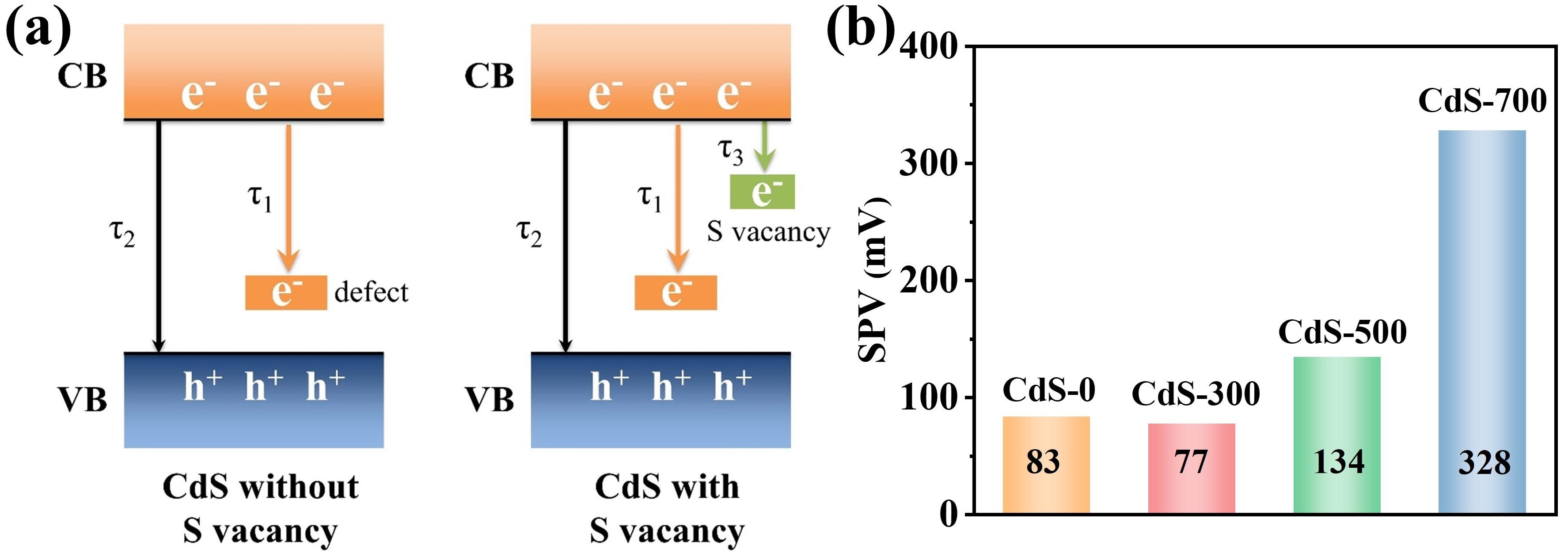
Fig. 8. (a) Schematic illustration of electron transfer and recombination pathways in CdS. (b) SPV values of CdS samples calcined at different temperatures.
|
| [1] | Aiyun Meng, Wei Zhong, Miaoli Gu, Xiaoyuan Wu, Weilai Yu, Yaorong Su. Recent advances on CdS-based H2-production photocatalyst [J]. Chinese Journal of Catalysis, 2026, 86(7): 49-76. |
| [2] | Jian Zhang, Yamei Gan, Pan Zhu, Zihan Zhao, Xiulai Chen. Light-driven conversion of one-carbon compounds to achieve energy-efficient production of chemicals [J]. Chinese Journal of Catalysis, 2026, 83(4): 198-208. |
| [3] | Qinghua Liu, Peiqing Cai, Hengshuai Li, Xue-Yang Ji, Dafeng Zhang, Xipeng Pu. Visible-light-driven hydrogen evolution over CdS/CuWO4 S-Scheme heterojunctions: Dual synergistic enhancement via interfacial charge transfer and photothermal activation [J]. Chinese Journal of Catalysis, 2026, 81(2): 299-309. |
| [4] | Haoyu Long, Xinhe Wu, Dmitry Selishchev, Jahan B. Ghasemi, Jiaguo Yu, Huogen Yu. CdS-based S-scheme heterojunctions for photocatalytic hydrogen evolution [J]. Chinese Journal of Catalysis, 2026, 91(12): 50-67. |
| [5] | Haoran Chen, Junwei Fu, Graham Dawson, Jinfeng Zhang, Qingpo Peng, Kai Dai. 2D Ag modified g-C3N4/1D CdS-diethylenetriamine S-scheme heterojunction with enhanced photocatalytic H2O2 production [J]. Chinese Journal of Catalysis, 2026, 90(11): 231-242. |
| [6] | Xiao Zhang, Yuxin Wang, Shuhan Sun, Xianqiang Xiong, Qin Li, Kangle Lv. Charge-photothermal-catalysis synergy in ZnCdS/Co2SnO4 for enhanced photocatalytic hydrogen evolution and benzyl alcohol oxidation [J]. Chinese Journal of Catalysis, 2026, 90(11): 184-196. |
| [7] | Fang Li, Chen Guan, Zhihan Yu, Quanjun Xiang. Revealing the mechanism of asymmetric charge carrier extraction [J]. Chinese Journal of Catalysis, 2026, 90(11): 298-308. |
| [8] | Kelechi Uwakwe, Huan Liu, Qiming Bing, Liang Yu, Dehui Deng. Theoretical prediction of WS2-confined metal atoms for highly efficient acetylene hydrogenation to ethylene [J]. Chinese Journal of Catalysis, 2025, 76(9): 221-229. |
| [9] | Yong-Hui Wu, Yu-Qing Yan, Yi-Xiang Deng, Wei-Ya Huang, Kai Yang, Kang-Qiang Lu. Rational construction of S-scheme CdS quantum dots/In2O3 hollow nanotubes heterojunction for enhanced photocatalytic H2 evolution [J]. Chinese Journal of Catalysis, 2025, 70(3): 333-340. |
| [10] | Hongfen Li, Yihe Zhang, Jianming Li, Qing Liu, Xiaojun Zhang, Youpeng Zhang, Hongwei Huang. Boosting H2O2 evolution of CdS via constructing a ternary photocatalyst with earth-abundant halloysite nanotubes and NiS co-catalyst [J]. Chinese Journal of Catalysis, 2025, 69(2): 111-122. |
| [11] | Mengzhen Ren, Tianfu Liu, Yuanyuan Dong, Zheng Li, Jiaxin Yang, Zhenheng Diao, Hongjin Lv, Guo-Yu Yang. Near-unity photocatalytic dehydrocoupling of thiophenols into disulfides and hydrogen using coupled CdS Nanorods and Ni-containing polyoxometalate [J]. Chinese Journal of Catalysis, 2024, 61(6): 312-321. |
| [12] | Han Li, Shanren Tao, Sijie Wan, Guogen Qiu, Qing Long, Jiaguo Yu, Shaowen Cao. S-scheme heterojunction of ZnCdS nanospheres and dibenzothiophene modified graphite carbon nitride for enhanced H2 production [J]. Chinese Journal of Catalysis, 2023, 46(3): 167-176. |
| [13] | Feng Li, Xiaolong Tang, Zhuofeng Hu, Xiangming Li, Fang Li, Yu Xie, Yanbin Jiang, Changlin Yu. Boosting the hydrogen peroxide production over In2S3 crystals under visible light illumination by gallium ions doping and sulfur vacancies modulation [J]. Chinese Journal of Catalysis, 2023, 55(12): 253-264. |
| [14] | Chao Wu, Kangle Lv, Xin Li, Qin Li. Dual cocatalysts for photocatalytic hydrogen evolution: Categories, synthesis, and design considerations [J]. Chinese Journal of Catalysis, 2023, 54(11): 137-160. |
| [15] | Meiyu Zhang, Chaochao Qin, Wanjun Sun, Congzhao Dong, Jun Zhong, Kaifeng Wu, Yong Ding. Energy funneling and charge separation in CdS modified with dual cocatalysts for enhanced H2 generation [J]. Chinese Journal of Catalysis, 2022, 43(7): 1818-1829. |
| Viewed | ||||||
|
Full text |
|
|||||
|
Abstract |
|
|||||


