
Chinese Journal of Catalysis ›› 2027, Vol. 92: 285-299.DOI: 10.1016/S1872-2067(26)65246-1
• Articles • Previous Articles Next Articles
Lifang Yanga,1, Yuge Zhangb,1, Yong Liuc,*( ), Zhijun Yanga, Guanghui Lia, Jianwei Zhoua, Sugang Mengb,*(), Raf Dewilc,d
Received:2026-05-31
Accepted:2026-07-27
Online:2027-01-02
Published:2026-10-30
Contact:
*E-mail: liuyong0781@outlook.com (Y. Liu),About author:First author contact:1 Contributed equally to this work.
Supported by:Lifang Yang, Yuge Zhang, Yong Liu, Zhijun Yang, Guanghui Li, Jianwei Zhou, Sugang Meng, Raf Dewil. Zn vacancy-anchored Ag clusters on single-unit-cell ZnIn2S4 nanosheets for efficient dual-function photocatalysis[J]. Chinese Journal of Catalysis, 2027, 92: 285-299.
Add to citation manager EndNote|Ris|BibTeX
URL: https://www.cjcatal.com/EN/10.1016/S1872-2067(26)65246-1

Fig. 1. (a) Structural models of ZIS, ZIS-VZn, Ag/ZIS and Ag/ZIS-VZn, and structural models of intermediates in the CO2 reduction process with Ag/ZIS and Ag/ZIS-VZn (Note that the gray, brown and yellow spheres stand for Zn, In, S atoms, respectively). (b) Free energy profiles of CO2 reduction into CO over ZIS, ZIS-VZn, Ag/ZIS and Ag/ZIS-VZn. (c) Band diagram illustrating charge transfer after ohmic contact between Ag and ZIS.

Fig. 2. (a) Flow diagram of Ag/ZIS-VZn preparation. TEM (b), HAADF-STEM patterns (c,d) of Ag/ZIS-VZn and intensity profile (e) corresponding to the light blue line in (d). AFM image (f) and the corresponding height profiles (g) of Ag/ZIS-VZn. HAADF-STEM EDX mapping images (h) and the EDX spectrum (i) of Ag/ZIS-VZn.
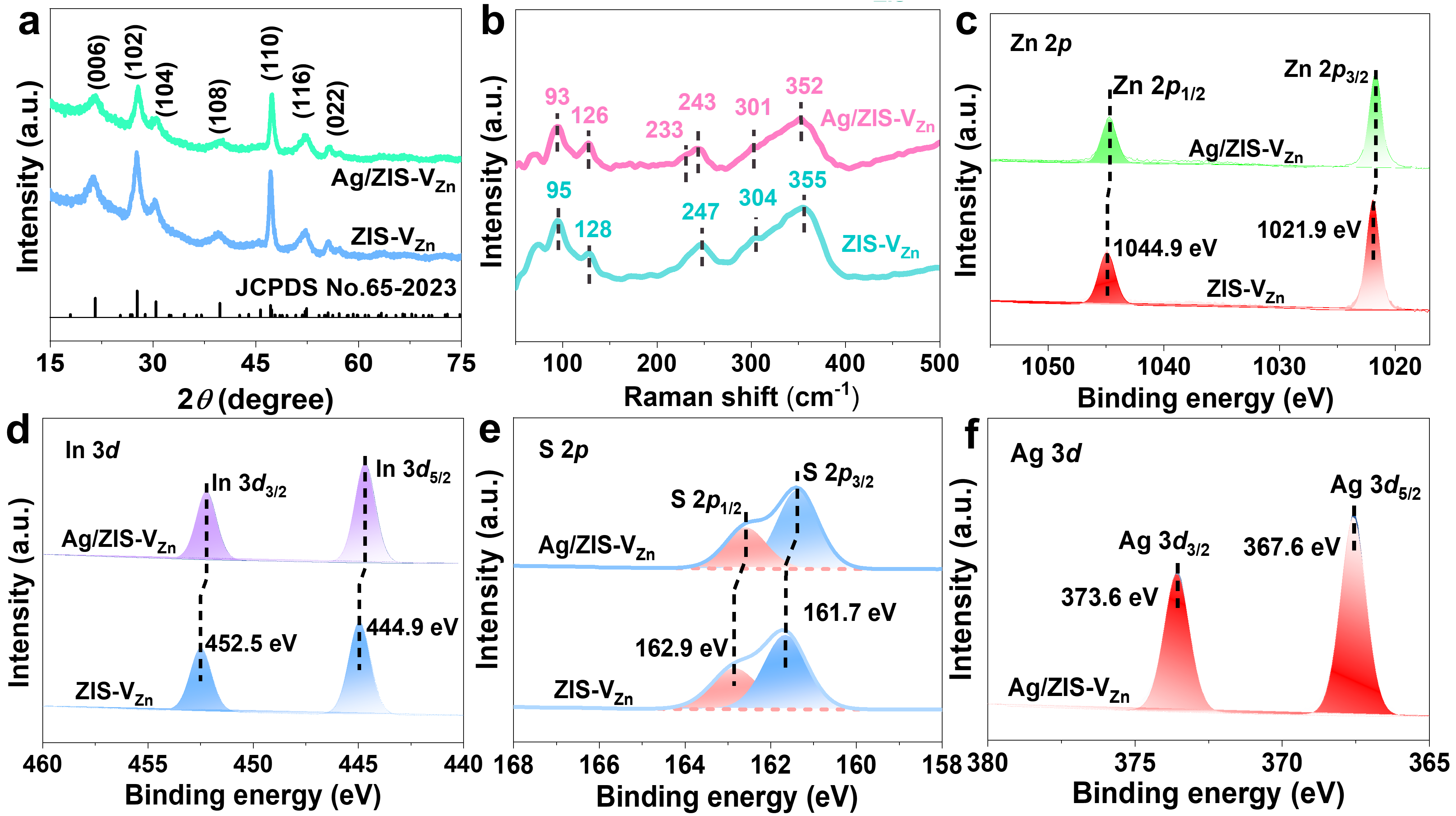
Fig. 3. XRD patterns (a) and Raman spectra (b) of ZIS and the optimum 1%Ag/ZIS-VZn catalyst. High-resolution XPS spectra of Zn 2p (c), In 3d (d), S 2p (e), and Ag 3d (f) of corresponding catalyst.
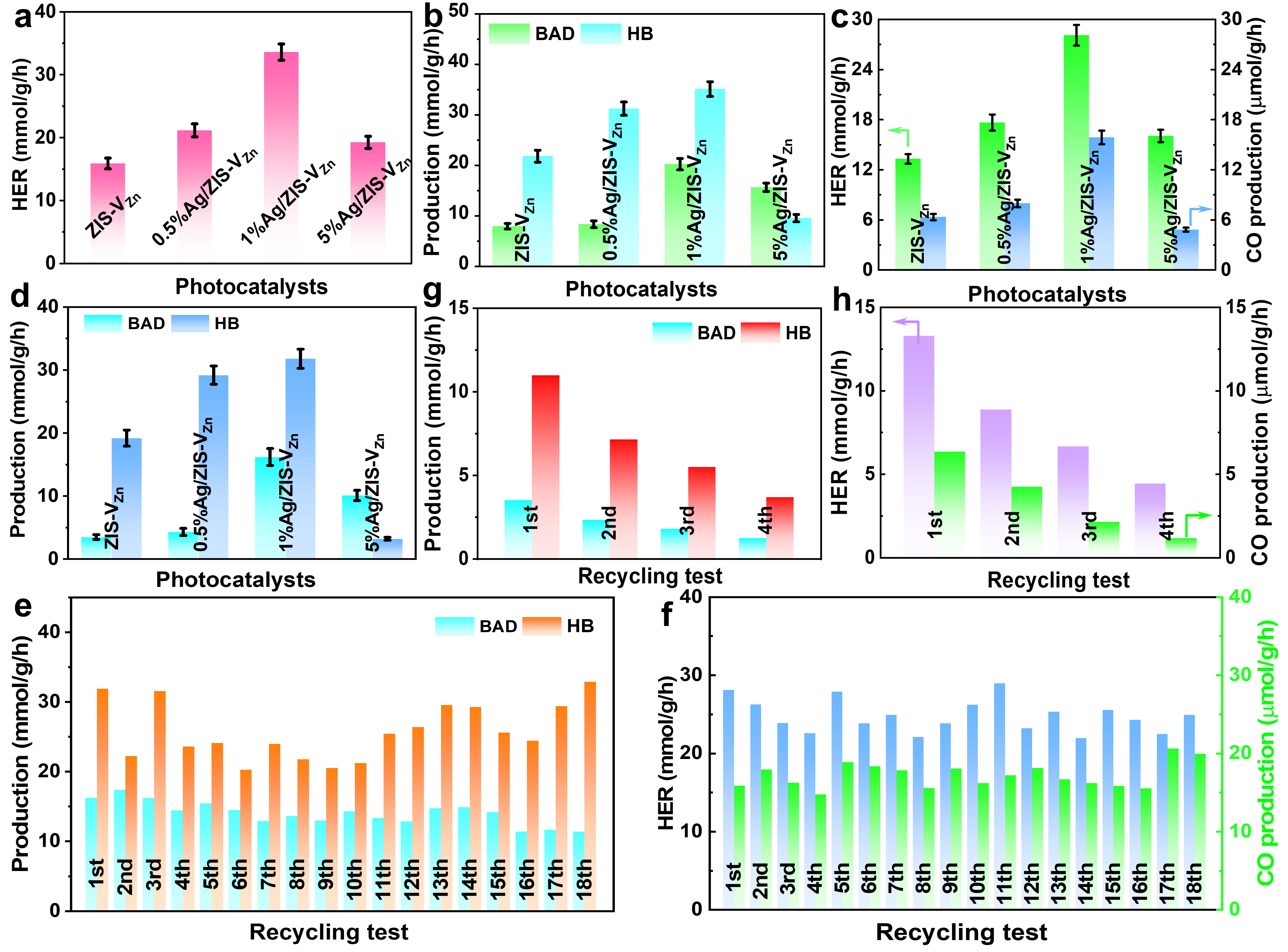
Fig. 4. (a,b) Dual-function photocatalysis for HER integrated with selective oxidation of phenylcarbinol over ZIS-VZn and Ag/ZIS-VZn with different Ag loadings. Synchronized photocatalysis for CO2 reduction coupled with phenylcarbinol oxidation: gas products (c) and liquid products (d) over ZIS-VZn and Ag/ZIS-VZn with different Ag loadings. Cycling tests of ZIS-VZn (g,h) and the optimum 1%Ag/ZIS-VZn (e,f) for photocatalytic CO2 reduction coupled with phenylcarbinol oxidation.
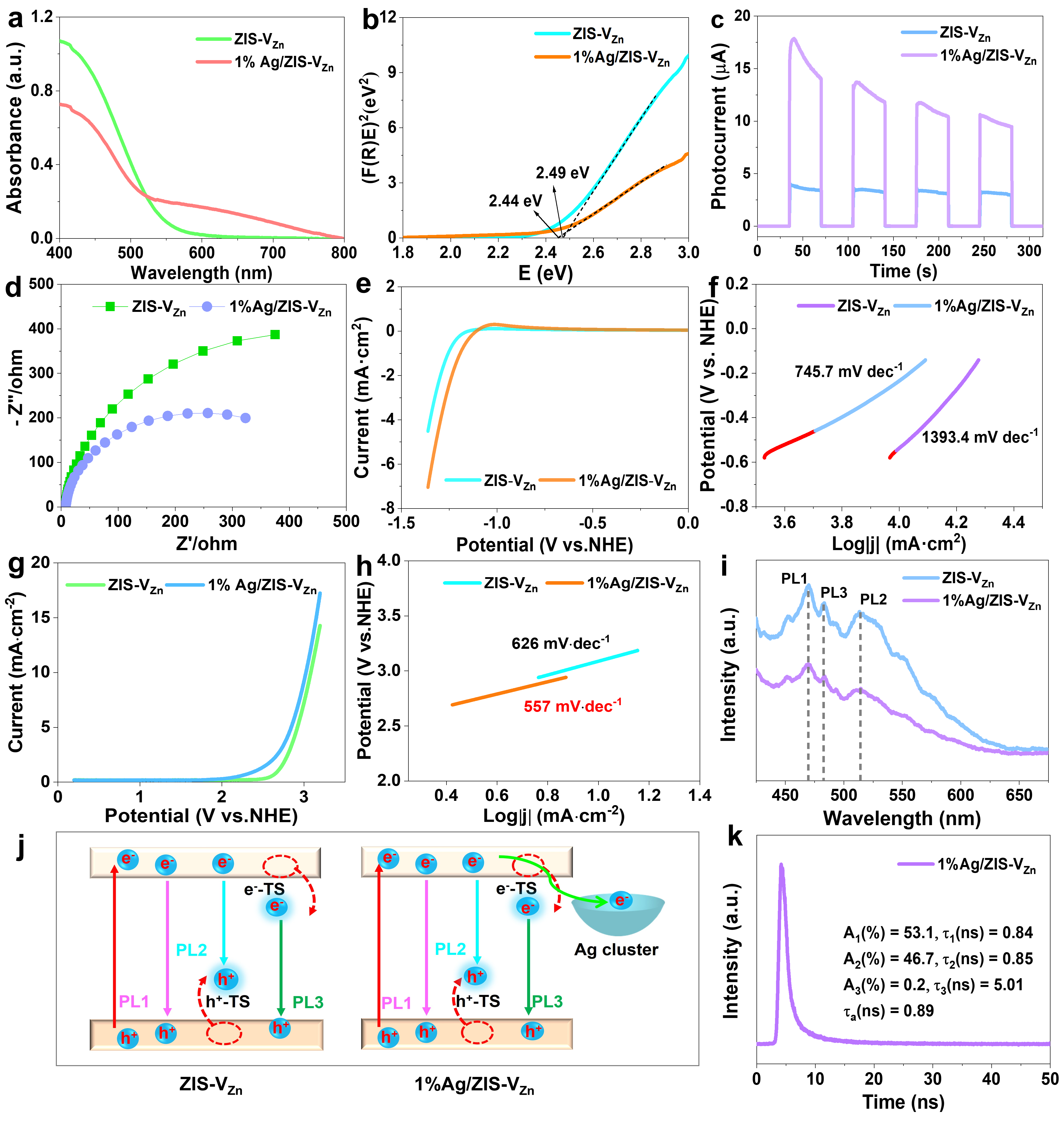
Fig. 5. Optical absorption profiles obtained via UV-vis DRS (a) and Tauc-plot-derived bandgap energetics (b) for ZIS-VZn and the optimum 1%Ag/ZIS-VZn. Transient photocurrent response (c), EIS diagram (d), cathodic LSV curves (e) and Tafel plots (f), anodic LSV curves (g) and Tafel plots (h), and PL spectra (i) of ZIS-VZn and 1%Ag/ZIS-VZn. (j) Schematics for the transfer pathways of photoexcited charge carriers in ZIS-VZn and 1%Ag/ZIS-VZn. (k) The fitted TRPL curve of the optimal 1%Ag/ZIS-VZn.
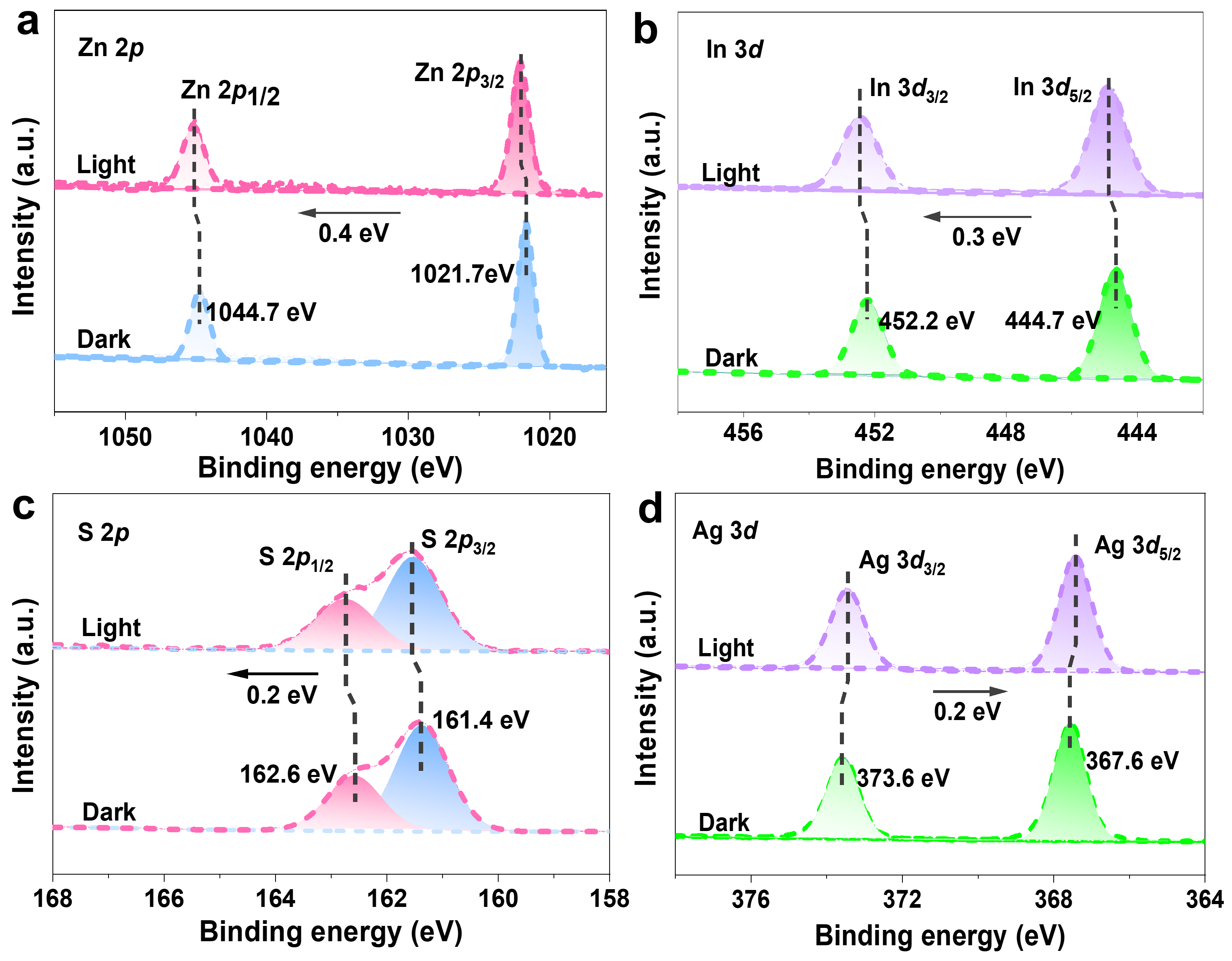
Fig. 6. In-situ high-resolution XPS spectra of Ag/ZIS-VZn for Zn 2p (a), In 3d (b), S 2p (c), and Ag 3d (d).
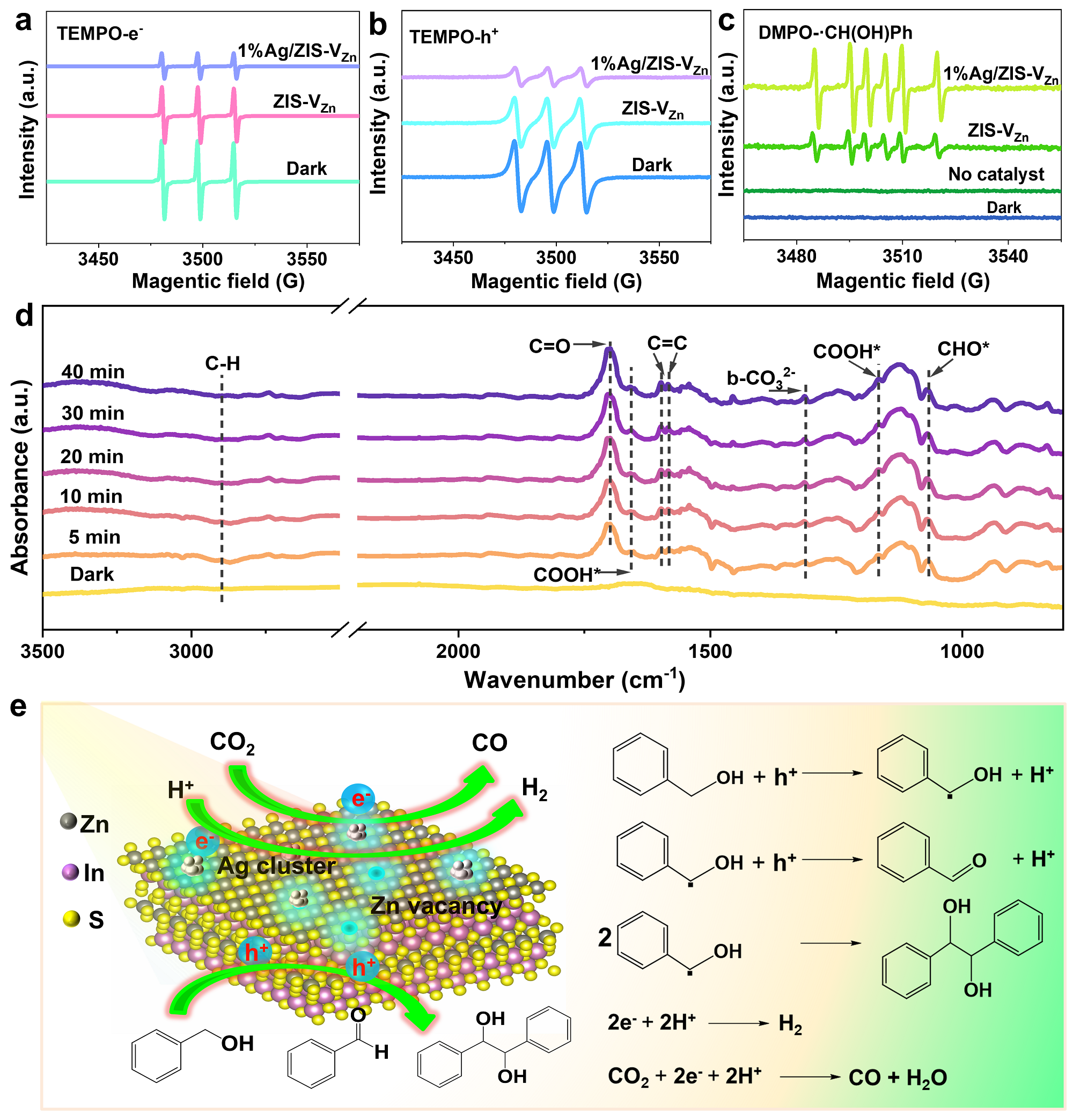
Fig. 7. EPR spectra of TEMPO-e- (a) and TEMPO-h+ (b) of ZIS-VZn and 1%Ag/ZIS-VZn. (c) EPR spectra of DMPO-(•CH(OH)Ph on ZIS-VZn and 1%Ag/ZIS-VZn. (d) In-situ DRIFTS spectra of the optimal 1%Ag/ZIS-VZn catalyst under simulated sunlight with the presence of PhCH2OH and CO2. (e) The proposed photo-redox reaction mechanism over the optimal 1%Ag/ZIS-VZn.
|
| [1] | Yangpeng Zhang, You Wu, Qianfeng Gu, Yue Gao, Chencheng Cai, Haoyu Liu, Yuehan Zhao, Zhonghua Li, Feng-Ming Zhang, Yang Liu, Qichun Zhang. Engineering local electronic asymmetry in isostructural covalent organic frameworks to maximize charge separation for H2O2 photosynthesis [J]. Chinese Journal of Catalysis, 2027, 92(1): 130-144. |
| [2] | Xinyu Song, Wei Wang, Xiaomin Lao, Yitong Liu, Huanmin Liu, Peng Zhou. Anaerobic photocatalytic dihydroxylation of propylene to propylene glycol and hydrogen at ambient temperature and pressure [J]. Chinese Journal of Catalysis, 2027, 92(1): 115-122. |
| [3] | Jiaqi Li, Haojie Song, Yuxin Gao, Xinming Zhang, Jingnan Li, Siyu Wang, Huiquan Gu, Laiyu Luo, Baojiang Jiang. Decoupled active centers on crystalline carbon nitride nanoarrays for synergistic photocatalytic hydrogen peroxide synthesis [J]. Chinese Journal of Catalysis, 2027, 92(1): 157-169. |
| [4] | Shike Wang, Man Lang, Feng Wang, Pengfei Xia, Dieqing Zhang. Recent advances in g-C3N4-based S-scheme photocatalyst [J]. Chinese Journal of Catalysis, 2027, 92(1): 37-64. |
| [5] | Xiaolei Liu, Yinlan Liang, Jinyu Li, Huiliang Li, Zhaoke Zheng, Zeyan Wang, Jianmin Luo, Juan Li, Baojiang Jiang, Baojun Li, Zaizhu Lou. Plasmonic hotspots-mediated C-C coupling drives selective CO2-to-C2H6 photoreduction [J]. Chinese Journal of Catalysis, 2027, 92(1): 237-247. |
| [6] | Banghu Wei, Wei Ren, Jinhe Li, Weikang Wang, Qinqin Liu. S-scheme heterojunctions for coupled redox photocatalysis: Orchestrating electron-hole synergy to unlock dual half-reactions [J]. Chinese Journal of Catalysis, 2027, 92(1): 1-36. |
| [7] | Wenmin Lei, Yan Zhang, Dalin Sun, Lin Ban, Heng Zhou, Song Yang, Liquan Jing, Jinguang Hu, Heng Zhang. Transition-metals photocatalysts for lignin valorization toward sustainable biofuel production [J]. Chinese Journal of Catalysis, 2026, 88(9): 35-85. |
| [8] | Sathi Chatterjee, Hongmei Li, Kang Liu, Zhang Lin, Liyuan Chai, Min Liu. Single-atom catalysts on two-dimensional (2D) materials for photocatalytic CO2 reduction: Fundamentals, design, and emerging strategies [J]. Chinese Journal of Catalysis, 2026, 88(9): 86-128. |
| [9] | Shufang Liu, Fengyu Chen, Siyuan Li, Yu-Xin Ye, Gangfeng Ouyang. Recent advances in oxygen-centered organic radicals: Characterization, synthesis, and applications [J]. Chinese Journal of Catalysis, 2026, 88(9): 183-206. |
| [10] | Xiangfeng Chen, Siyu Huang, Yuhang Yang, Jiahao Ni, Cheng Fang, Yang-Fan Xu, Dai-Bin Kuang. Hybrid photocatalysis with halide perovskite materials [J]. Chinese Journal of Catalysis, 2026, 88(9): 9-34. |
| [11] | Xin Yuan, Linyi Wu, Fengying Cao, Lechu Xu, Peng Wang, Hulin Shi, Shuxian Zhong, Lian Liu, Weihao Mo, Leihong Zhao, Song Bai. Light-switchable product selectivity in CO2 photoreduction over hollow plasmonic TiO2/AuCu@COF core-shell architectures [J]. Chinese Journal of Catalysis, 2026, 87(8): 87-99. |
| [12] | Xiaokang Jiang, Yongze Gao, Bowen Zhang, Xiaodong Yang, Zhimin Yuan, Zhaoning Xu, Bin Sun, Zaiyong Jiang, Guowei Zhou, Enlong Zhou. Built-in electric field coupled with non-noble metal plasma cocatalyst boosts photocatalytic CO2 reduction of MIL-125 [J]. Chinese Journal of Catalysis, 2026, 87(8): 100-112. |
| [13] | Bowen Li, Changlin Lin, Qi Wang, Yongfeng Lun, Jun Fang, Shuqin Song, Yi Wang. Ligand-shell engineering of a Au25 nanocluster boosting CO2 electroreduction to syngas with tunable range proportion [J]. Chinese Journal of Catalysis, 2026, 87(8): 396-409. |
| [14] | Hua Gao, Yong Zhu, Zhibing Wen, Ran Zhao, Zhi Chen, Siyao Wang, Shuanglin He, Kuang Peng, Yiwen Tang, Licheng Sun, Fei Li. Efficient and selective photocatalytic CO2 conversion enabled by FePc nanosheets in a dye-sensitized system [J]. Chinese Journal of Catalysis, 2026, 86(7): 350-362. |
| [15] | Aiyun Meng, Wei Zhong, Miaoli Gu, Xiaoyuan Wu, Weilai Yu, Yaorong Su. Recent advances on CdS-based H2-production photocatalyst [J]. Chinese Journal of Catalysis, 2026, 86(7): 49-76. |
| Viewed | ||||||
|
Full text |
|
|||||
|
Abstract |
|
|||||


